


What does it actually mean to socialize a chihuahua? In one sentence: it means giving your dog calm, positive exposure to a wide range of people, animals, environments, and surfaces during the developmental window when the brain is most ready to file those experiences as "normal." For most puppies, that window opens at around three weeks and starts closing around twelve to sixteen weeks. The science is clearer than the popular advice often suggests, and the practical takeaways for a small breed are specific.
I am going to walk through what the research says, what good socialization looks like for a chihuahua specifically, and the practical week-by-week plan I use with my own clients.
What the research actually says
The classic socialization period in dogs, first described by Scott and Fuller (1965) and updated in the contemporary behavior literature, runs from about three to twelve weeks of age, with a tapering window through about sixteen weeks. During this period, the puppy’s brain is unusually accepting of new experiences; what becomes familiar in this window tends to remain familiar.
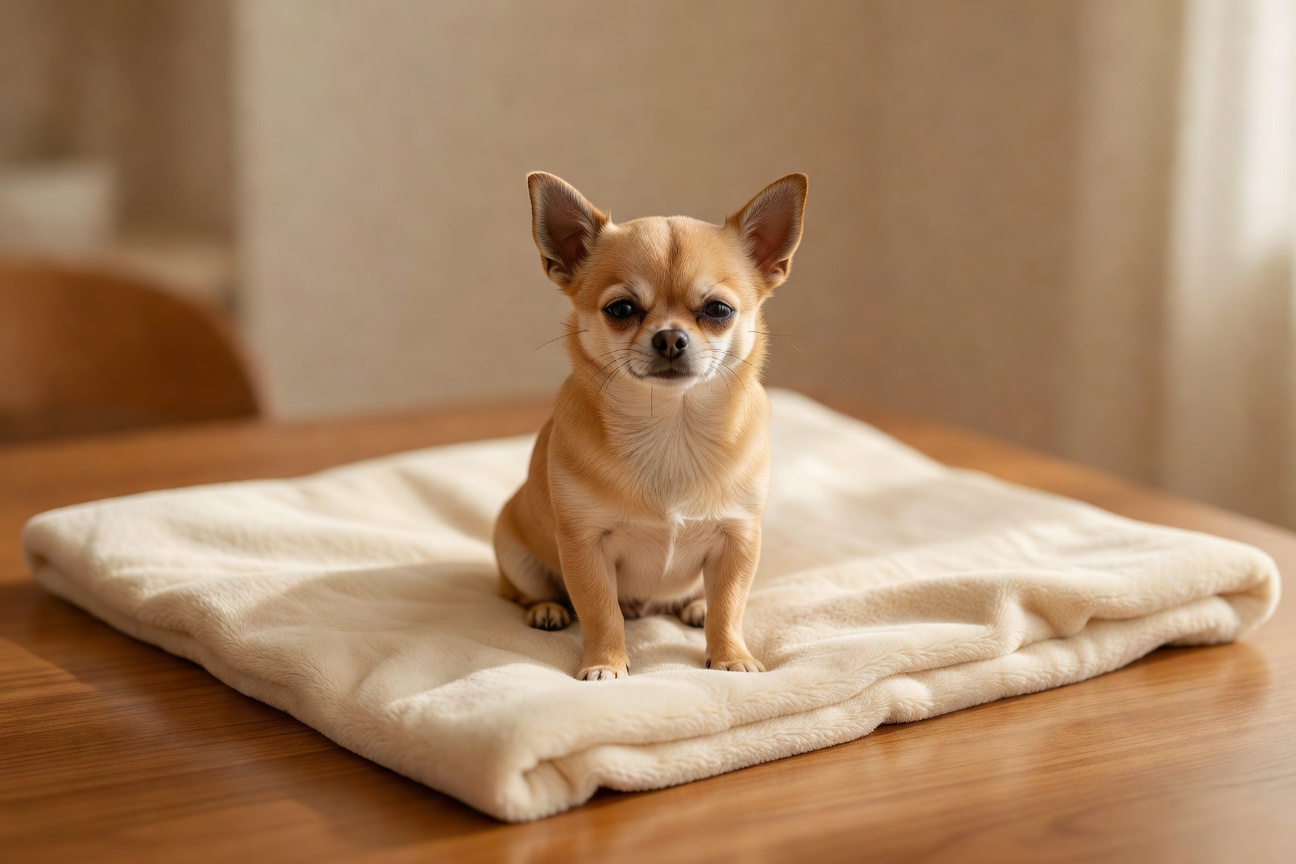
The American Veterinary Society of Animal Behavior position statement on puppy socialization is unambiguous: the behavioral risk of inadequate socialization is greater than the medical risk of carefully managed exposure during the early vaccination series. In plain English, keeping a puppy locked at home until all shots are complete creates a different and harder problem.
This applies to chihuahuas specifically with one important addendum. Toy breeds are over-represented in fearful-aggressive presentations at the behaviorist’s office; this is a known epidemiological pattern (Casey et al., 2014). Some of that is breed predisposition; a great deal of it is undersocialization, often because well-meaning owners avoid exposure to keep a small dog "safe."
What socialization is not
Socialization is not "let everyone pet the dog." It is not flooding, which is the term for forcing a fearful dog to remain in a stressful situation until it stops reacting; flooding can produce learned helplessness and worse fear. It is also not finished at sixteen weeks; ongoing positive exposure through the first year continues to matter, especially for chihuahuas, who often have a second mild fear period around eight to ten months.
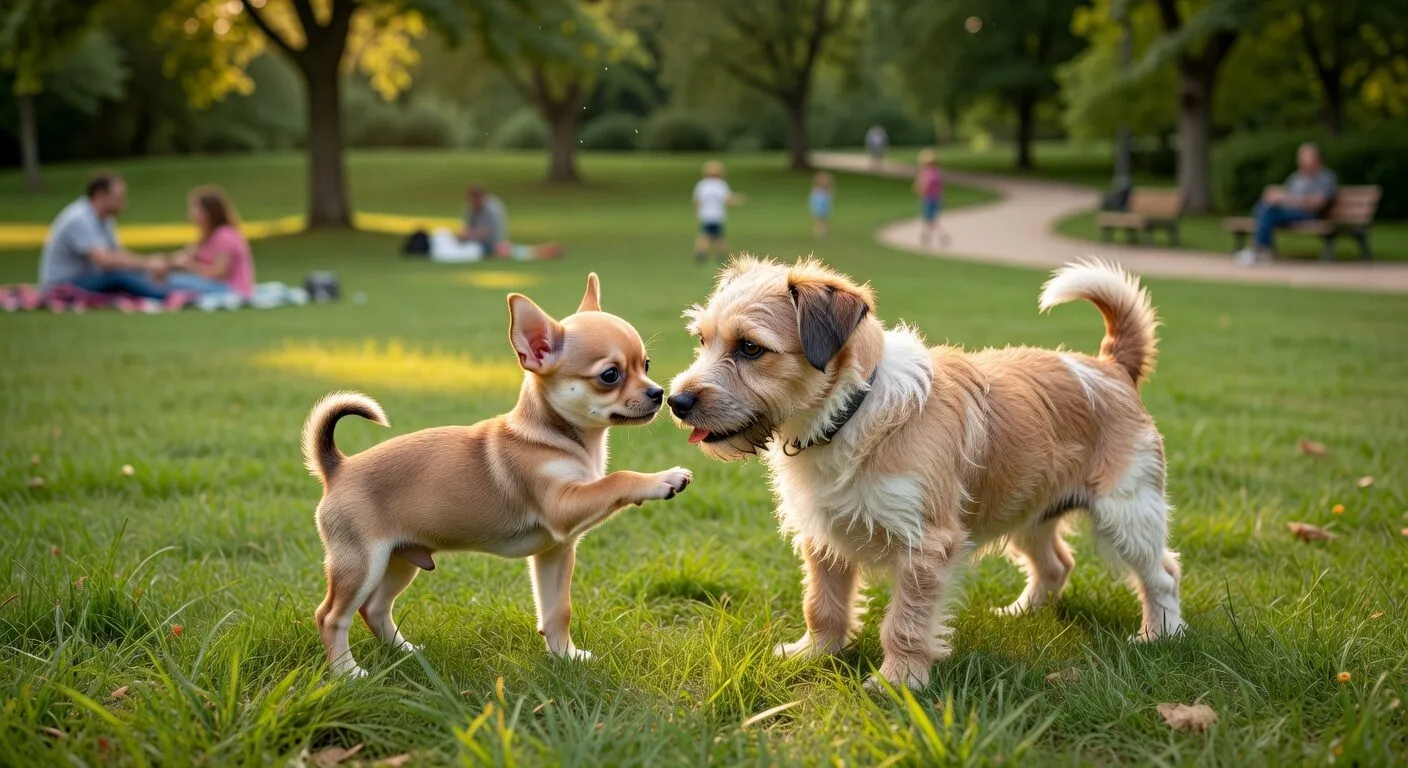
Good socialization is the dog choosing to engage, at the dog’s pace, with novel things, while you control the variables (distance, intensity, duration) and pay attention to body language. The signs you are looking for are loose body posture, a soft mouth, ears in a neutral position, and willingness to take a treat. The signs you are looking out for are tucked tail, lip licking, whale eye, freezing, and refusal of food. The seven signs of nervous escalation in a chihuahua is a useful pre-read.
The eight categories of exposure
When I work with new puppy owners, I use a written checklist drawn from Pluijmakers et al. (2010) and Howell et al. (2015). It runs across eight categories; you are aiming for two to three new positive experiences per category in the first eight weeks home, then maintaining the variety through the first year.
- People. Different ages, sizes, beards, hats, mobility devices. Not "everyone pets the dog"; rather, the dog notices the person and gets a treat from you.
- Other dogs. Calm, vaccinated adult dogs first; rowdy puppy free-for-alls are not the place for a sensitive small breed. A puppy class for toy breeds, if your area has one, is the gold standard.
- Other species. Cats, livestock at a distance, birds. Cat introductions in particular repay an investment.
- Surfaces. Grass, gravel, tile, metal grates, wet pavement. Toy breeds are notably surface-sensitive.
- Sounds. Vacuum, doorbell, traffic, fireworks at low volume on a recording. Pair the sound with a treat at a comfortable distance.
- Handling. Brief, positive handling of paws, ears, mouth. The vet visit and the nail trim are paid in this currency.
- Equipment. Harness, collar, carrier, car. A Y-front harness is the right tool for a chihuahua and is itself a thing to socialize to.
- Environments. Different rooms, gardens, quiet streets, the parking lot of a calm pet store, a friend’s living room. Variety beats volume.
If your chihuahua is already an adult
The window is not a binary. An adult chihuahua who missed early socialization is not "too late"; she is doing remedial work, which is slower and built on counterconditioning rather than introduction. The principles are the same: pair novel things with high-value food at a distance the dog can handle, never push past a fear threshold, and let the dog choose to approach.
The research is mixed on how long behavior-modification protocols take with adult fearful dogs (Tiira and Lohi, 2015), but the consistent finding is that progress is real and often unspectacular: a few minutes a day, four or five days a week, for months. Calm-down protocols and threshold work sit alongside socialization for these dogs.
One thing to do this week
If you have a chihuahua puppy under sixteen weeks, pick a safe public surface (a quiet sidewalk, a friend’s porch, a pet-store parking lot at off-hours) and bring a small bag of high-value treats. Sit. Let your puppy watch the world for ten minutes. Treat for calm observation. That is the whole exercise. Do this four times in the next seven days, in four different locations.
If you have an adult chihuahua who finds the world hard, pick one trigger that is mildly stressful (a person at twenty feet, a quiet street) and do the same exercise at the distance your dog can handle. Stop before your dog stops being able to take a treat.
If at any point your dog cannot eat, the distance is wrong; back up. If at any point you are not sure whether the experience is positive, take a video and watch it back. If you are still not sure, call a credentialed force-free trainer (CDBC, IAABC) before the patterns set.
The work is small, daily, and unglamorous. It is also the single highest-leverage thing you can do for the next decade of your dog’s life.
Gear That Works backpack
Harness (Not Collar)
A step-in harness is safer and more comfortable.
Lightweight Leash
4–6 feet gives freedom without losing control.
Treat Pouch
Keep rewards accessible and distraction-free.
ID Tag & Microchip
Always be prepared in case of separation.
Trainer Tip: Success on walks starts with reading your Chihuahua's signals and respecting their pace.
Was this guide helpful?
Was this guide helpful? Save the guide. Share it with one other chihuahua owner this week.
favorite