
If you walk a chihuahua daily, the research on lead-walking and small dogs is more useful than the popular advice. The key findings, summarized in Companion Animal Psychology's loose-lead reference, are that a Y-front harness produces measurably better outcomes than a collar in toy breeds, that pace-driven walking under-delivers compared with sniff-permitted walking, and that the cues most owners default to (yanking the lead, scolding pulling, jerking when the dog stops) increase, not decrease, the very behaviors they are intended to fix.
The good news is that the alternative is straightforward.
Equipment First
A Y-front harness, sized correctly. The AKC harness reference covers fit; the chihuahua-specific point is that the harness should clear the windpipe and rest on the sternum and shoulder blades, not on the front of the neck. A six-foot lead is the default; retractable leads are not appropriate for toy breeds, both because of the bite-back risk on the cord and because the variable-tension feedback teaches the dog that pulling sometimes produces more line.
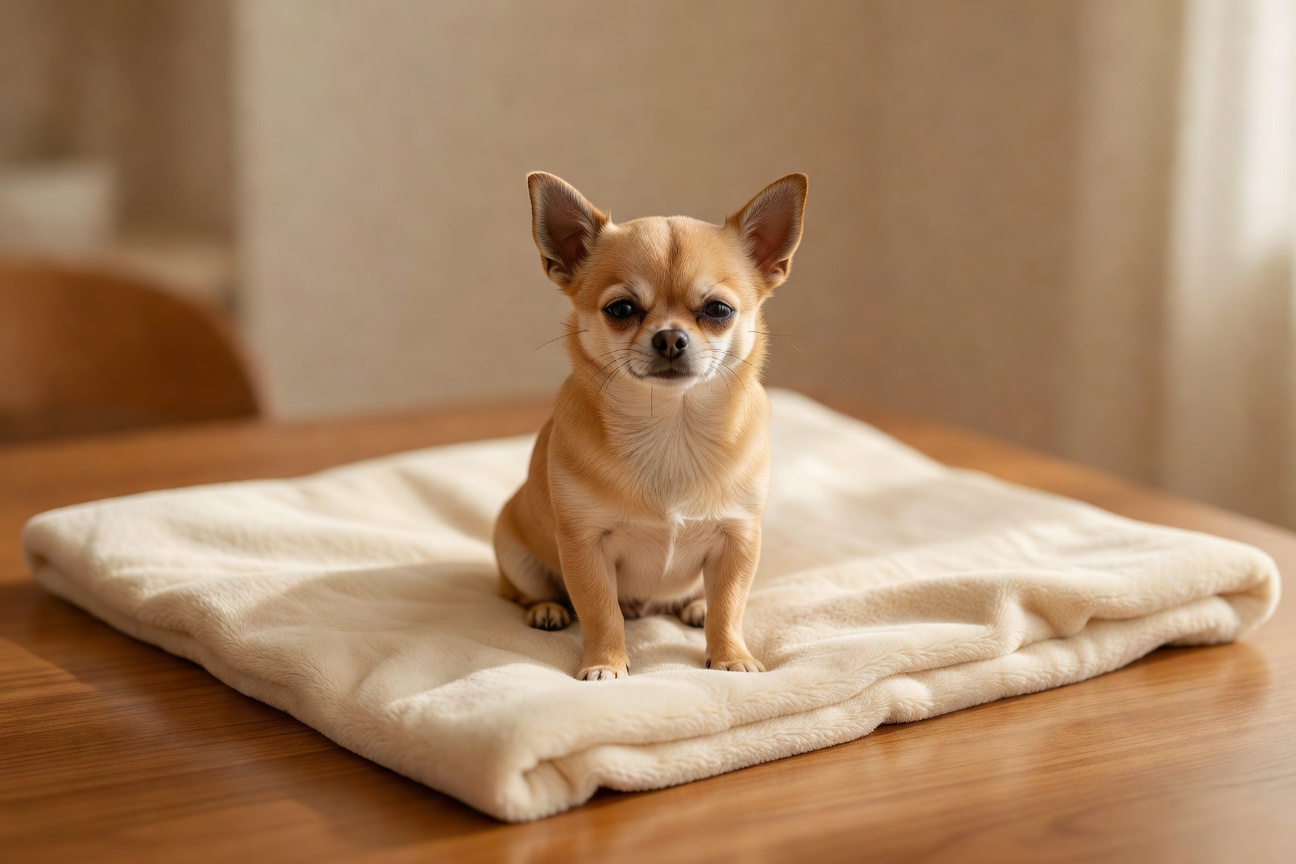
The dog's body is, in this breed, smaller than the failure points of most pet-store hardware. Buy the small-breed-rated harness; replace the worn one before the buckle gives.
What to Do (And What Not to Do) on the Walk
Do: pick the route by sniff value, not by mileage
Twenty minutes on a varied route with three to five permitted sniff stops is more enriching than forty minutes at pace. The 2019 study by Duranton and Horowitz, in Applied Animal Behaviour Science, documented that sniff time correlates with reduced post-walk arousal and increased post-walk rest quality. The companion five chihuahua workouts piece covers the sniffari structure in detail.
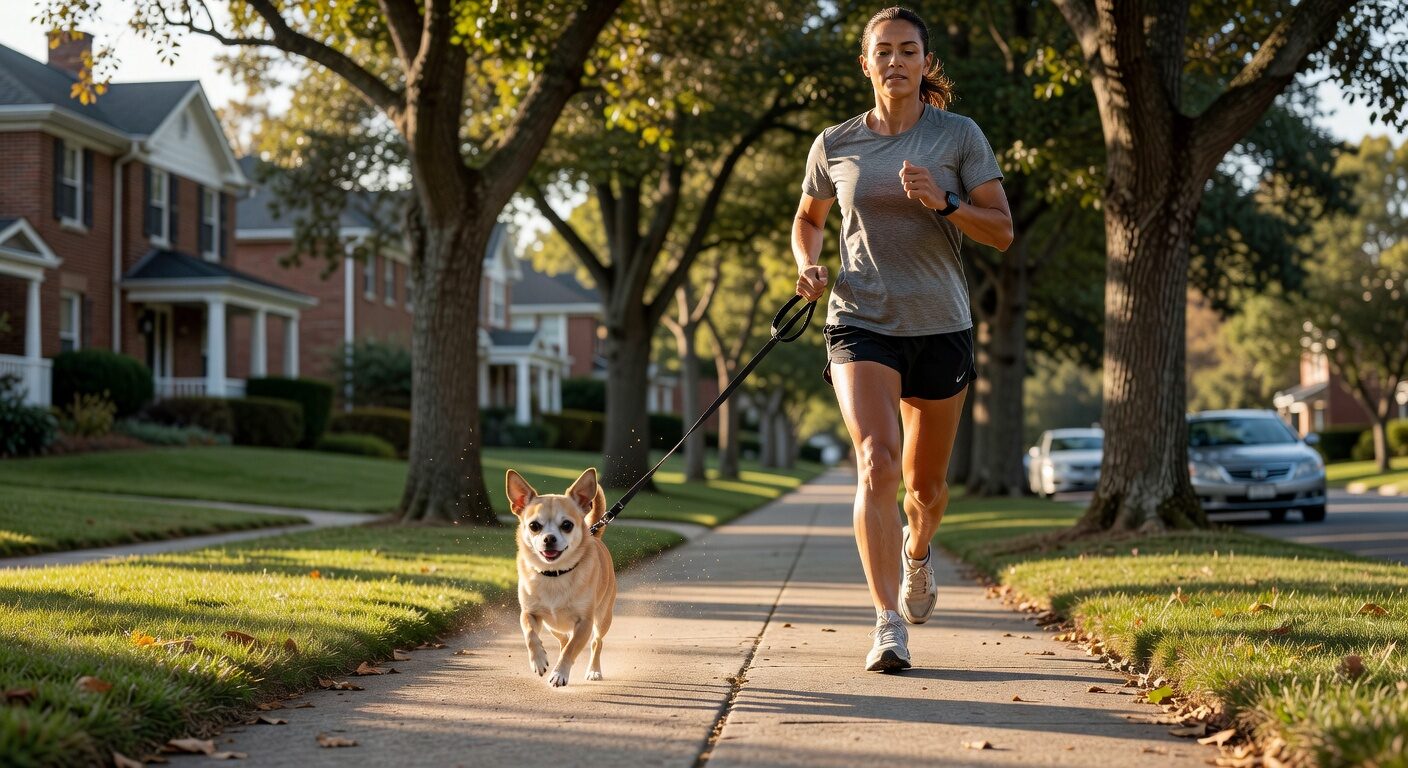
Do: pace the walk to the chihuahua's body, not yours
A brisk human walk is roughly three miles per hour. A brisk chihuahua walk is roughly two. The dog who is consistently behind on the lead is not stubborn; the dog is trying to keep up. Slow your pace.
Do: let the dog stop at her chosen sniff points
Sniff time is enrichment, not delay. A chihuahua who is allowed to sniff a particular tree base for ninety seconds is a chihuahua whose brain is doing more work than it would on a non-stop walk. The 2008 AVSAB position paper on socialization framework treats environmental sampling as a developmental need, not a behavioral indulgence.
Do not: yank the lead
The 2014 Hutchinson study in Journal of Veterinary Internal Medicine documented elevated intracranial and intra-cervical pressure in toy-breed dogs subjected to sudden lead corrections. The mechanical injury is real; the behavioral effect, that the dog associates the walk with sudden discomfort, is also real. The AVSAB position on punishment is unambiguous: aversive equipment and corrections produce more, not fewer, behavior problems in companion dogs.
Do not: walk on hot pavement
The pavement test is straightforward; the back of your hand on the pavement for five seconds is the rule. The companion paw care piece covers the specific temperature thresholds.
Do not: use a retractable lead
The variable-tension feedback teaches pulling, not loose-lead walking. The cord-bite injury risk in toy breeds is also documented in veterinary trauma case reports.
What to Do This Week
One concrete action: replace the collar with a Y-front harness if you have not already, and shorten your route by twenty percent while permitting three sniff stops. The dog will be more tired, the walk will be more pleasant, and the four-week behavioral effect of the change is observable in most chihuahuas.
For more evidence-based training, browse the Training desk or subscribe for the next dispatch.
Gear That Works backpack
Harness (Not Collar)
A step-in harness is safer and more comfortable.
Lightweight Leash
4–6 feet gives freedom without losing control.
Treat Pouch
Keep rewards accessible and distraction-free.
ID Tag & Microchip
Always be prepared in case of separation.
Trainer Tip: Success on walks starts with reading your Chihuahua's signals and respecting their pace.
Was this guide helpful?
Was this guide helpful? Save the guide. Share it with one other chihuahua owner this week.
favorite