

If your chihuahua spends a fair bit of the day watching you, you are not imagining it, and there is nothing wrong with your dog. Staring is one of the main ways dogs communicate with us, and chihuahuas, who tend to orient closely to their person, do a lot of it. The useful question is not whether your dog stares. It is what each stare is asking for, and how you answer.
Most of the time the answer is friendly. Sometimes it is a request. Once in a while it is a sign of confusion or discomfort worth paying attention to. Let us go through the common reasons, from a training and relationship point of view, and what to do about each one.
Your dog is reading you
Dogs watch our faces closely, and they are unusually good at it. They follow human eye gaze and pick up on our cues in ways that are rare among animals. A body of work summarised in the journal Frontiers in Psychology found that dogs are sensitive to human attentional cues, including eye contact, in a way that helps them anticipate what we do next.
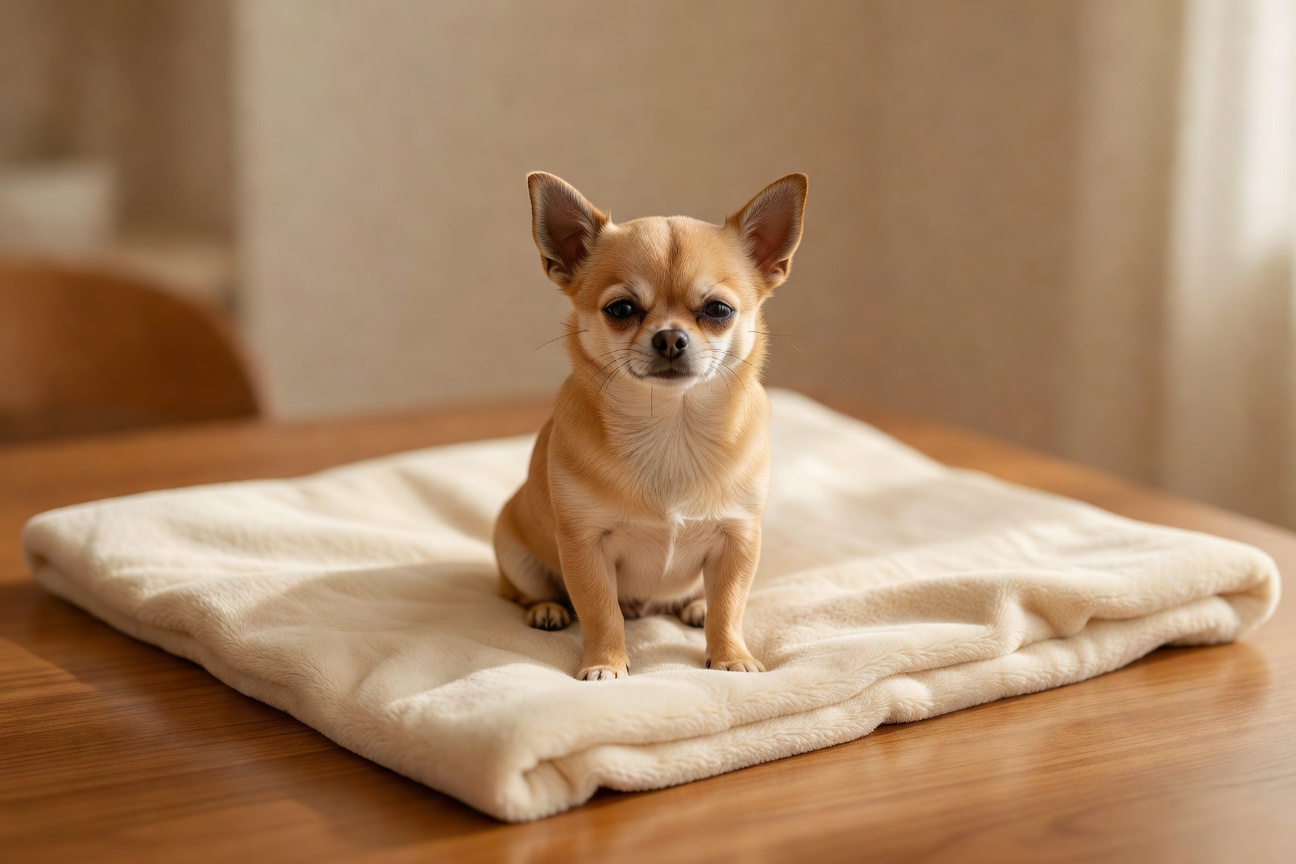
So when your chihuahua looks at you and seems to be waiting, she often is. Are you about to get up? Pick up the leash? Head to the kitchen? Your dog has learned that your face and body predict what happens next, and watching is how she stays one step ahead. This is not dominance and it is not your dog testing you. It is a social animal doing what social animals do, which is keep track of the people who matter to them.
The bonding gaze
Some of that watching is simply affection. A well known 2015 study by Nagasawa and colleagues, published in Science, found that when dogs and their owners shared a mutual gaze, both showed a rise in oxytocin, the hormone linked to social bonding. The same loop appears between human parents and infants. The researchers described it as evidence that dogs have, over thousands of years alongside us, tapped into a bonding system we usually reserve for each other.
What this means for you is encouraging. A soft, relaxed stare from your chihuahua, often with a loose body and maybe a slow tail wag, is a sign of a comfortable, trusting relationship. You do not need to do anything except enjoy it, perhaps with a calm word back.
Your dog is asking for something
A lot of staring is a polite request. Your chihuahua wants out, wants dinner, or wants the corner of your sandwich. Often the stare comes with extra information: a glance toward the door, a paw on your leg, a small whine. Learning to read these little clusters of behaviour is one of the most useful things you can do, because it lets you meet a genuine need before your dog has to escalate.
Here is where training matters, and where it is easy to get tangled. Dogs repeat what works. If your dog stares, then whines, then barks, and the barking is what finally gets her fed, you have taught her that barking is the magic word. This is not your dog being demanding. It is learning, working exactly as it should, just in a direction you did not intend.
The fix is not to ignore your dog into silence, which tends to ratchet up the frustration. The fix is to decide, in advance, which behaviour you want to reward, and to answer that one. If you are happy to let your dog out when she sits quietly by the door and looks at you, respond to the quiet sit. When the stare turns into a demanding bark, wait for a pause, even a short one, and respond to the pause instead. You are not withholding. You are choosing the moment. Over time your dog learns that calm asking gets a faster answer than loud asking.
You may have trained the stare without realising it
If your chihuahua looks at you constantly, there is a good chance you have reinforced it, and that is no bad thing. Many of us, often without meaning to, hand out attention, treats, or eye contact the moment the dog looks up. A dog who offers attention is also a dog who is easy to teach, because she is already checking in with you before each cue.
You can use this. A simple watch-me or attention cue, rewarded with a treat or praise when your dog makes eye contact, channels all that watching into something practical. It gives your dog a clear job, and it gives you a reliable way to get her focus before you ask for a sit or call her away from something. Positive reinforcement, the approach with the strongest evidence behind it for both effectiveness and welfare, does this work without any need for intimidation.
The same logic explains the slightly awkward habit of a dog watching you while she toilets. If house training came with praise and treats for going in the right spot, your dog simply learned to check in with you at that moment, looking for the reward and the reassurance that she has it right.
The stares that mean something is off
Most staring is ordinary and friendly. A smaller share is worth a closer look.
A confused look, often with a head tilt, perked ears, lip licking, or a quick body shake, usually means your dog is not sure what you want. Dogs read our movements more easily than our words, so if a cue is inconsistent, your dog may simply be stuck. This is not stubbornness. It is a dog who finds the request unclear. The kind response is to make your cues simpler and more consistent, and to reward the moment she gets it right.
A hard, fixed stare with a stiff body, a closed mouth, a tucked or still tail, or ears pinned back is a different signal. This is the body language of a dog who feels threatened, and it can appear when a dog is guarding food, a toy, or a resting spot, or when a stranger or another animal has come too close. Chihuahuas rarely aim this at their own family, but it does happen around resources or when a dog is frightened. If you see it, the right move is to give space rather than to lean in. Back off, take away the pressure, and address the underlying worry, ideally with the help of a qualified force-free trainer or a veterinary behaviourist. Punishing a growl or a hard stare only teaches a dog to skip the warning next time, which makes things less safe, not more.
Two patterns deserve a vet, not a training plan. In an older dog, new confusion, getting stuck in corners, pacing, or forgetting familiar routines can be signs of canine cognitive dysfunction, and there are ways to help that work best when started early. And sudden, compulsive staring at walls or into empty space, sometimes called star gazing, can point to pain or a neurological problem. If your chihuahua starts doing this out of the blue, book a veterinary check rather than trying to train it away.
What to try this week
Pick one stare you see often, and decide on purpose how you want to answer it. If it is the friendly bonding gaze, simply enjoy it and offer a little calm attention back. If it is a request, choose the version you want to reward, the quiet sit by the door rather than the bark, and answer that one consistently for a few days. You will likely notice your chihuahua adjusting, asking a little more politely, because you have shown her which behaviour pays. That is the whole of it: your dog is talking to you, and you get to decide which words you reply to.
Gear That Works backpack
Harness (Not Collar)
A step-in harness is safer and more comfortable.
Lightweight Leash
4–6 feet gives freedom without losing control.
Treat Pouch
Keep rewards accessible and distraction-free.
ID Tag & Microchip
Always be prepared in case of separation.
Trainer Tip: Success on walks starts with reading your Chihuahua's signals and respecting their pace.
Was this guide helpful?
Was this guide helpful? Save the guide. Share it with one other chihuahua owner this week.
favorite