


If your chihuahua is stressed, the research is more useful than the folklore. Around forty percent of dogs in companion-animal households show clinically meaningful separation-related distress at some point in their lives, with toy breeds over-represented in surveys, including the work of Sherman and Mills (2008) and the more recent population study by Salonen and colleagues (2020) in Scientific Reports. Chihuahua separation anxiety is not a behavior problem; it is a welfare problem. The four practical responses below are evidence-based and low-cost.
1. Give the dog a small, defended, low-stimulation safe spot
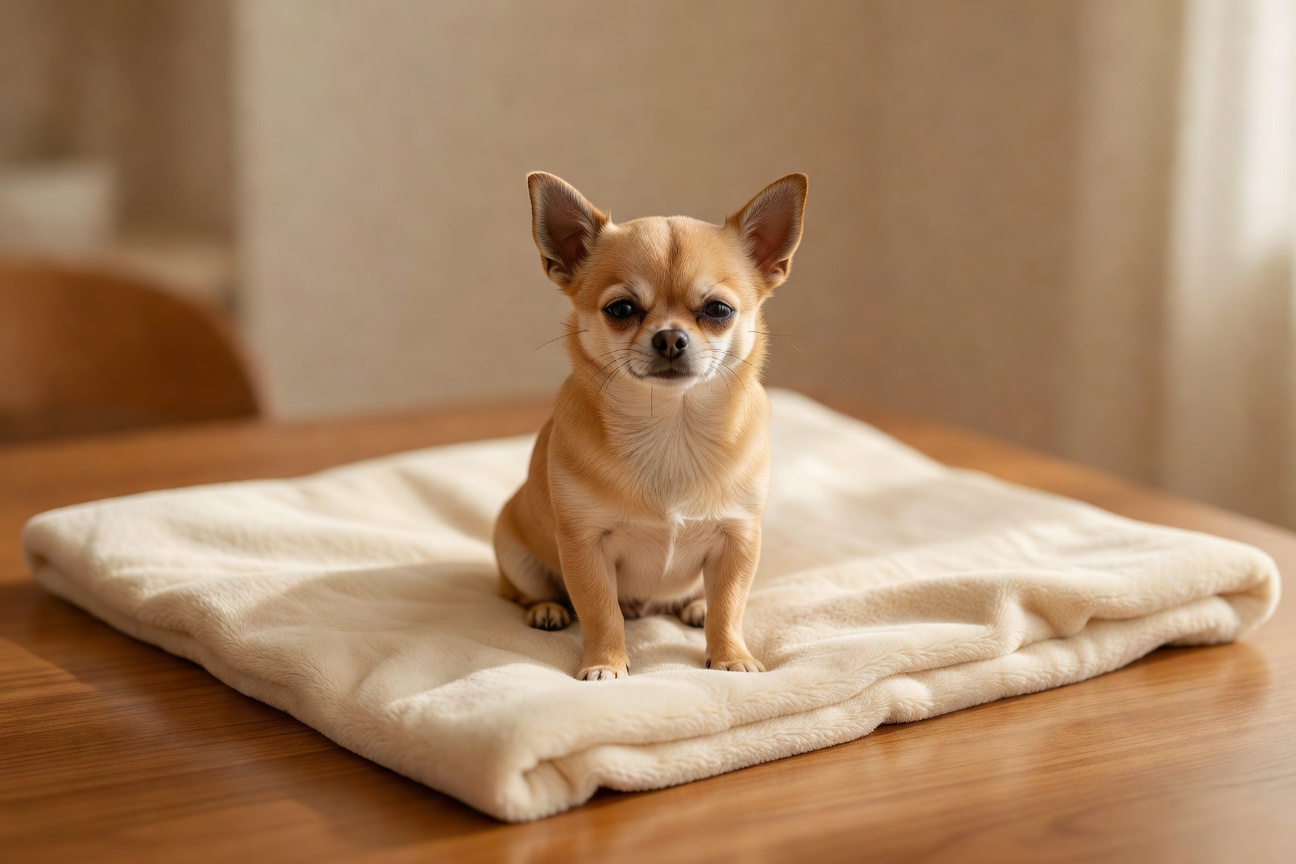
The first thing to do is set up one place in your home where your chihuahua can decompress and where no one follows. A covered crate, a corner under a side table with a soft bed, an x-pen partitioned off from foot traffic. The criteria are simple. Soft bedding. No through-traffic. Out of sightlines from the front door. Companion Animal Psychology summarizes the safe-base research; the practical version, for a chihuahua, is that the dog gets to choose this spot and gets to leave it.
The single most common mistake in this protocol is using the safe spot as a time-out. Don't. The safe spot must be associated only with calm; if your chihuahua is sent there as discipline, it stops working as a regulator and the dog has nowhere to decompress.
2. Lower environmental load before adding training
You cannot train a flooded dog. The first move with a stressed chihuahua is to subtract sources of arousal, not add coping strategies. Lower the lights in the evening. Turn off the television when no one is watching it. Move the food bowl out of high-traffic areas. Keep the crate covered in fabric on three sides if your dog uses one. The 2018 Tiira and Lohi study on canine fear thresholds, summarized in PLoS ONE, shows that environmental load reduction produces faster baseline-cortisol normalization than counter-conditioning alone in the first two weeks.
If the trigger is separation specifically, the first intervention is graduated absences below the threshold of distress. Five seconds of you stepping out of the room. Then ten. Then thirty. The protocol is well documented; the AVSAB position statement on separation-related distress treats it as the standard of care.
3. Use slow, predictable touch (and skip the hugs)
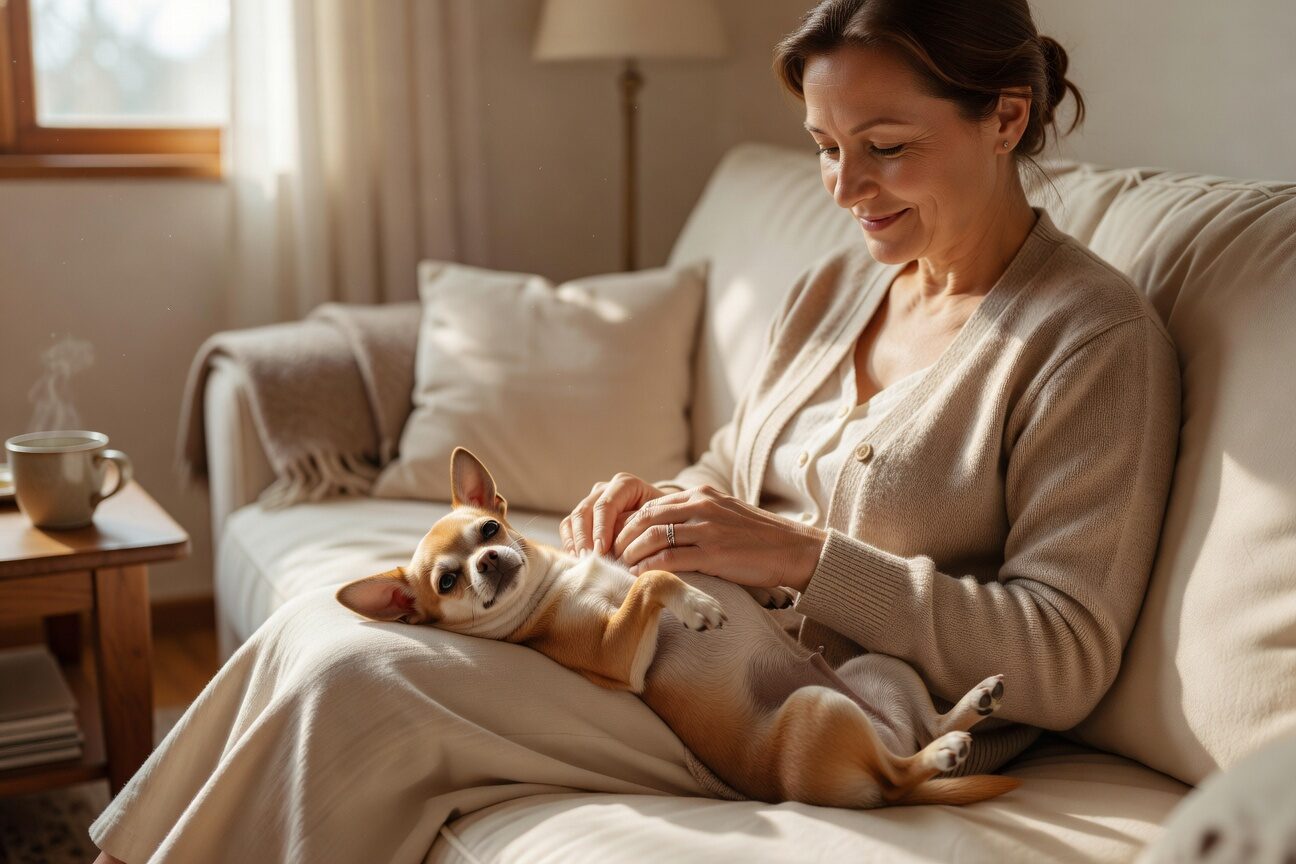
When your chihuahua is in a stressed state, slow strokes along the length of the back, paired with steady breathing, produce a measurable drop in heart rate; the cardiovascular research is compiled in Hekman, Karas, and Dreschel's 2014 work on stress physiology in shelter dogs. What does not work as well as people think it does: tight hugs, face-holding, kissing the top of the head. Those are human reassurance signals. They are not dog reassurance signals.
A pressure wrap (a thin, snug fabric wrap, not a vest) gives some chihuahuas a small but meaningful reduction in stress signs; the research, including the 2014 study by King and colleagues, is mixed on average effect size but consistently positive in the subset of dogs who tolerate the wrap. Try it; if your chihuahua holds her body looser with it on, keep it. If she holds tighter, take it off.
4. Get a behavior consult sooner than you think you need to
If your chihuahua's separation anxiety includes destructive behavior, urination or defecation indoors when you are gone, or self-injury, do not try to manage this alone. Veterinary behaviorists are board-certified specialists; the ACVB referral directory lists them by region. Many cases of moderate-to-severe separation anxiety also respond to medication. The 2008 fluoxetine trial by King and colleagues, replicated several times since, supports its use as an adjunct to behavior modification, not a substitute. Talk to your veterinarian; ask for a referral if needed.
What does not help: punishing the dog after the fact. The 2008 AVSAB position statement on punishment is unequivocal here. Discipline applied even seconds after a stressed dog has urinated on the rug increases the anxiety baseline; it does not reduce the behavior. Use "stubborn," "spiteful," or "guilty" to describe a stressed chihuahua and you will mis-read the signal every time.
What to do this week
One practical action: build the safe spot tonight. Pick the location, set up the bedding, leave the door (or opening) accessible, and stop using the spot as a time-out. The other interventions can layer on top of this one over the next month. The companion piece on reading the seven signs of escalating nervousness covers the body-language vocabulary you will need to track whether your protocol is working.
For more evidence-based training, browse the Training desk or subscribe to get the next study breakdown in your inbox.
Gear That Works backpack
Harness (Not Collar)
A step-in harness is safer and more comfortable.
Lightweight Leash
4–6 feet gives freedom without losing control.
Treat Pouch
Keep rewards accessible and distraction-free.
ID Tag & Microchip
Always be prepared in case of separation.
Trainer Tip: Success on walks starts with reading your Chihuahua's signals and respecting their pace.
Was this guide helpful?
Was this guide helpful? Save the guide. Share it with one other chihuahua owner this week.
favorite