


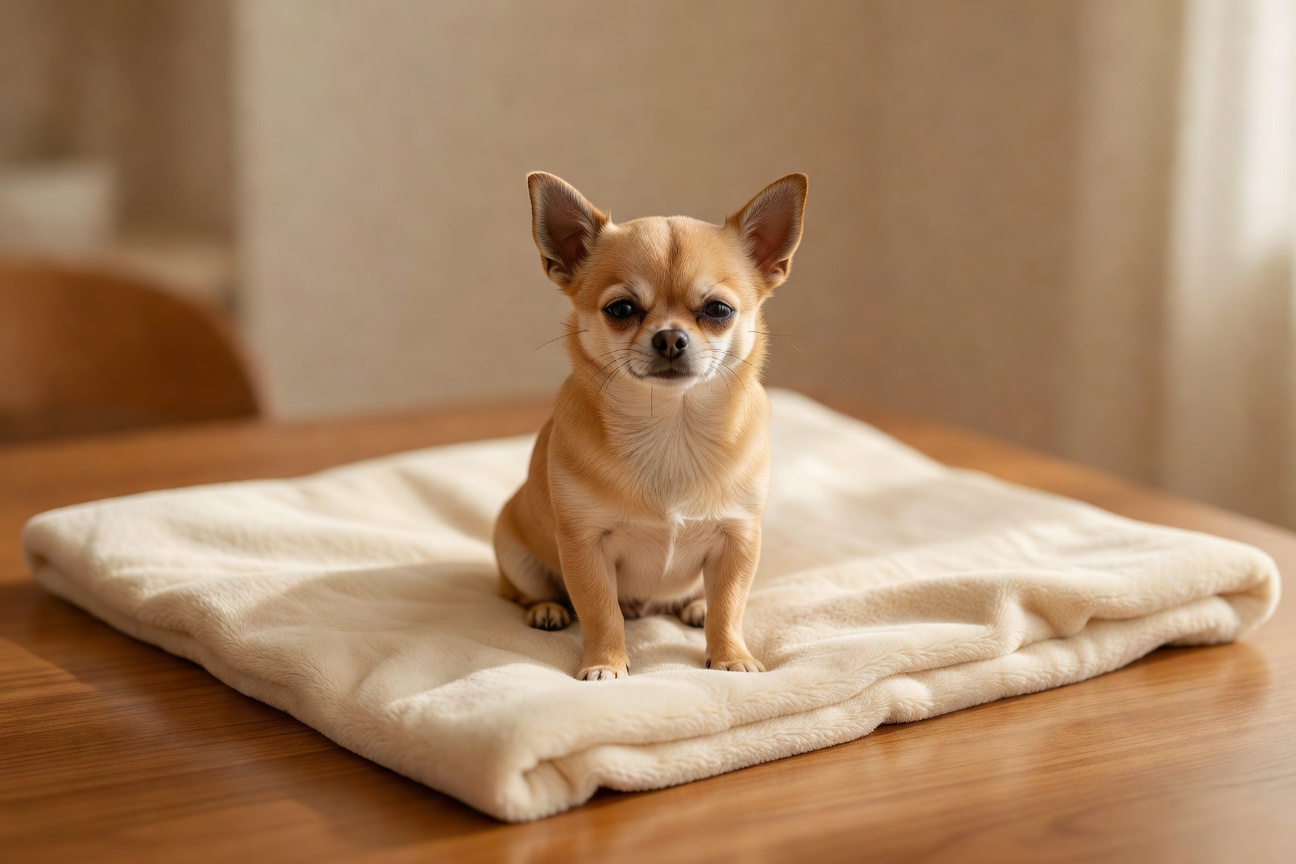
My chihuahua Boomer steals socks. He does this not occasionally and not by accident; he does this with deliberate, calculated intent. He waits until I am not looking, pulls a single sock from the laundry basket, parades it past me with his tail at the angle of a small flag, and bolts when I reach for it. The chase that follows is, on Boomer's accounting, the entire point of the operation. The sock is, in this sense, only the pretext.
Tag @ChihuahuaCorner and use #ChiDrama. Your chihuahua might show up in a future column. Ours is busy guarding a sock.
favoriteFor the first six months I owned Boomer, I treated this behavior as a personality flaw of his. I was wrong. The behavior is, on a more honest examination, a personality flaw of mine that Boomer had identified and was, with some efficiency, exploiting. I am writing this column with the full benefit of having figured this out, and with the additional benefit of having been gently informed of it by a force-free trainer named Carmen who, in the patient voice professionals use for clients who have arrived at the obvious conclusion late, walked me through what was happening.
The pattern, briefly
The sequence in our household, by month four, was approximately:
- Boomer locates an opportunity (laundry basket open, sock visible).
- Boomer waits for the moment when I am visibly not paying attention.
- Boomer extracts a sock and exits the room slowly.
- Boomer parades the sock past my workspace, ensuring I see it.
- I notice; I begin to rise from my chair; Boomer accelerates.
- I chase; Boomer runs; the sock is, eventually, captured at high household-energy expenditure.
- Five to twenty minutes later, Boomer repeats the procedure with a different sock.
I want to be clear that I had, by month four, mostly stopped noticing how much of my time this sequence was consuming. The sequence had become, in the household routine, the way Boomer and I interacted on weekends. I would, if asked, have described it as "his sock thing," in the tone that owners use when describing a feature of their dog rather than a structural household problem.
Carmen's diagnosis, in the patient voice
Carmen came over for an unrelated reason in month seven. She had agreed to help me with a different behavior issue (Boomer's barking at the doorbell). She watched the household for about forty minutes. She then asked me, in the careful neutral tone of someone who is about to say something that the listener will not enjoy, whether I had thought about the sock pattern.
I had, on a reading of the situation, thought about the sock pattern in the sense that I had observed it many times. I had not thought about it in the sense Carmen was asking about. Carmen's question was: who, in the sock-stealing routine, was being rewarded?
I considered this. Boomer was, in the aftermath of each sock-stealing incident, briefly chased and then briefly held while I retrieved the sock. The chase was, on his observable body language, the highlight of his day. The brief hold was, on his observable body language, also the highlight of his day. The chase-and-hold was, in fact, the only sustained physical interaction the two of us had during my home-office workdays. I had, by accident, trained Boomer that sock-stealing produced the most engaging interaction available in his daily routine.
Carmen, having watched me arrive at this conclusion in real time, said, in the tone of a professional confirming something the client had figured out, that yes, that was approximately the diagnosis.
The fix, plainly
The fix Carmen recommended was, on examination, somewhat embarrassingly simple:
- Two structured ten-minute training sessions per day. One mid-morning, one mid-afternoon. Boomer learned a new trick (in the first weeks: "spin"; later: "find it" with hidden treats; later: "place" on a designated mat). The sessions provided the engagement he had been seeking via the sock-stealing.
- Closed laundry basket. The opportunity was removed. This was, on a careful audit of the household, a thirty-second adjustment to the laundry routine.
- An alternative high-value chew during my work hours. A frozen Kong filled with a small portion of his daily food, available during the morning work session, gave him something to do besides plot sock heists.
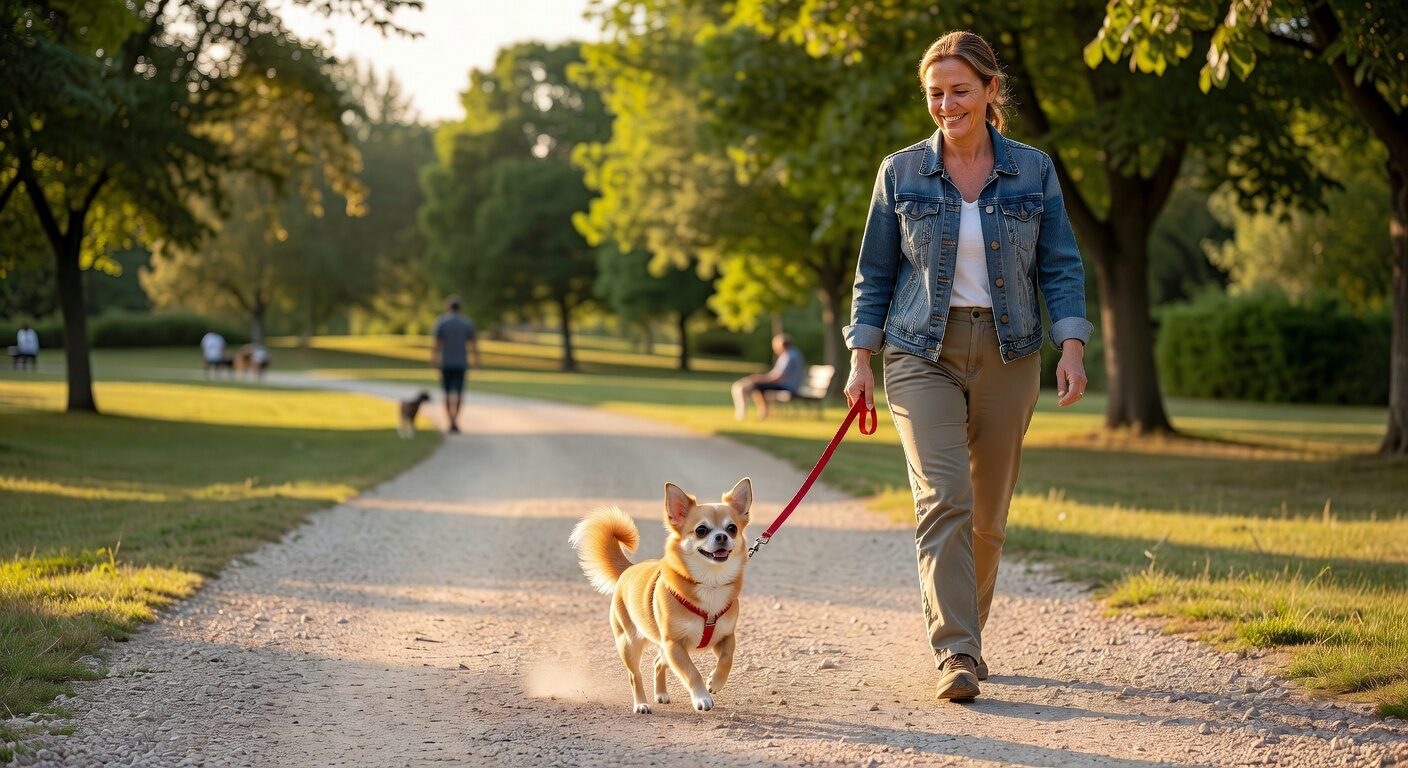
- A scheduled mid-day walk. Twenty minutes outdoors, with sniff-time, broke up the long stretch of human-not-engaging that had been the precondition for the sock-stealing.
The total daily time investment: about forty-five minutes of structured engagement, distributed across the day. The sock-stealing, on Carmen's observation and on mine, dropped to near-zero within two weeks and to zero within four. Boomer was not, on the available evidence, distressed by the change. He was, on every observable measure, calmer. A separate piece on stress management covers the broader behavioral logic.
The sincere paragraph, planted on cue
I will plant the sincere paragraph here, because the column requires one and because Boomer has earned it. The thing about the sock-stealing year, on later reflection, was not that Boomer had been a difficult dog who needed correcting. The thing was that I had been an under-attentive household member who was providing inadequate structured engagement, and Boomer, with the resourcefulness of a small intelligent companion animal, had figured out how to extract the engagement he needed by means of a household-disrupting routine that finally got my attention. The sock-stealing was not, in any sense, his personality flaw. It was a small consistent signal, repeated multiple times daily, that the human in the household was not meeting his needs at a basic level. The dog had, in retrospect, been correctly diagnosing the problem long before the dog trainer arrived and confirmed the diagnosis to the human.
A separate piece on a related household pattern covers the reverse situation, in which the human is over-accommodating; the sock-stealing pattern is, in honest accounting, the under-engaging mirror image.
Why this happens, on the available evidence
There is a real reason chihuahuas in particular are prone to producing this pattern. The breed has, by selection, a high baseline interest in human engagement; the small body size means the dog cannot self-regulate by long exercise like a larger active breed; the household role of "small companion in the home office" means the dog is, structurally, present during long stretches when the human is not engaging. The combination produces a high-engagement-need animal sharing a low-engagement-availability environment, and the dog, in many cases, develops sock-stealing or its equivalent (shoe theft, paper shredding, barking at squirrels through the window) as the available outlet.
The Companion Animal Psychology archive covers the broader engagement-need literature. The household-specific fix is the structured engagement schedule.
The end of the column, briefly
If you are reading this and recognize any version of the sock-stealing pattern in your own household, the diagnosis is most likely the one Carmen gave me. The fix is not, in any sense, a fight with the dog. The fix is a small structured change to the human's daily schedule that gives the dog the engagement she has been signaling she needs. Boomer, as I write this, is on his designated mat with his frozen Kong. The laundry basket is closed. The household is, on the available evidence, calmer. He has not, in three years, looked at a sock with intent. The system, as it turns out, was working all along; I was the variable.
The Chihuahua Drama Checklist pets
How many does your Chi check off today?
- Side-eyed at least one human
- Burrowed like a pro
- Scoffed at their dinner
- Acted offended
- Demanded to be carried
- Gave a dramatic sigh
- Barked at something invisible
- Danced for a treat
- Stole the warmest spot
- Looked adorable while doing it all
Got a dramatic Chi moment we missed? Share your story in the comments. Worst case, our editor laughs at it alone.
favorite

