
A California nail technician's videos of her chihuahua in tiny press-on nails have drawn millions of views and a familiar split in the comments: viewers who found the clips charming, and viewers who called them a welfare problem. The owner has said the nails are props for photos, not everyday wear. The dispute, which resurfaces online every time a small dog turns up in polish or paint, is less about one chihuahua than about a question many pet owners get wrong.
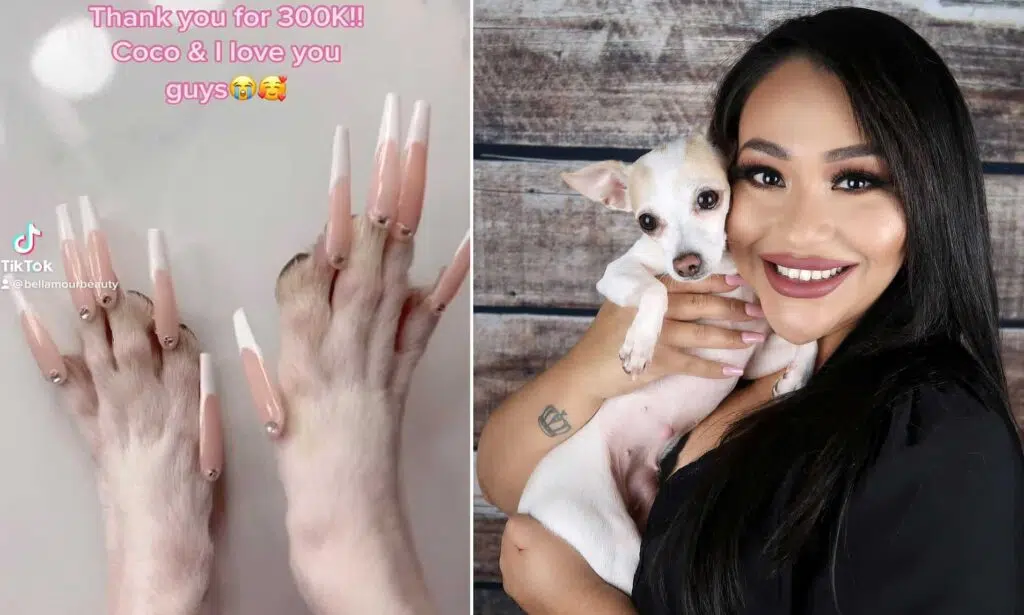
The videos show the owner trimming press-on nails to fit a chihuahua's small paws, painting them a pale pink, adding crystals, and presenting them to the dog in a miniature package. According to the posts, the first clip drew tens of millions of views and several million likes. The owner, who runs a press-on nail business, later added a "mini" nail set marketed for small dogs, with the listing stating the nails are intended as a prop and "not for actual wear."
The backlash was immediate. Some commenters said the nails looked uncomfortable and warned they could interfere with the dog's gait. One commenter who identified as a veterinary technician wrote that the practice could cause lasting harm and disrupt how the dog walks. The owner responded that the dog models the nails only for pictures because they are not practical for full-time wear, and said she would never do anything to harm the animal.
Neither the criticism nor the reassurance settles the underlying question, which is what veterinarians and groomers actually say about putting polish, paint or artificial nails on a dog. The short answer is that the risk depends entirely on the product and the method, and that the most common at-home version, human nail polish, is the one professionals warn about most.

Why human nail polish is the wrong product
Human nail polish is formulated for human nails and human behavior. Dogs lick and chew their paws, and a wet or curing polish puts solvents and pigments close to the mouth. Conventional polishes can contain ingredients such as formaldehyde, toluene and dibutyl phthalate, the chemicals that drive the "3-free" and "5-free" labeling on human products. Veterinary poison resources, including the ASPCA Animal Poison Control Center, treat ingested nail polish and remover as a household toxin worth a call rather than a wait-and-see.
The wet phase is the riskiest. A dog that licks fresh polish can swallow solvents; the fumes can irritate the eyes and airway in a small, low-to-the-ground animal; and acetone-based removers are harsher still. Even products sold as pet nail polish, which are usually water-based and marketed as nontoxic, are meant to be applied to a calm, dry, fully cured nail, not used as a substitute for restraining a squirming dog. "Nontoxic" describes the chemistry, not the stress of the application.
The stress problem groomers flag
The handling matters as much as the chemistry. Dogs do not understand why a paw is being held still while something dries, and for a toy breed already prone to anxiety, several minutes of restraint can register as a threat. Fear Free, the veterinary initiative that trains practitioners to reduce fear and stress during handling, frames cosmetic procedures the same way it frames nail trims: if the animal is struggling, the session should stop, not push through. A dog that has to be pinned for a manicure is telling its owner the manicure is not worth it.
There is also a practical hazard in coating the nail itself. A dog's claws are working tools for traction and digging, and a thick artificial coating or glued-on nail can change how the foot meets the floor. That is the mechanism behind the "messed up walking pattern" the critical commenters raised: not the color, but the added length and rigidity, and the risk that a forced or peeling nail damages the natural claw underneath.
When nail caps are, and are not, appropriate
The nail-cap question is separate, and the most cited example is cats rather than dogs. Soft plastic nail caps, sold under brand names and glued over trimmed claws, are used in cats mainly to prevent destructive scratching, and some veterinarians accept them as a humane alternative to declawing when they are applied and maintained correctly. They are far less common in dogs, where the usual reasons to manage nails, traction and overgrowth, are not solved by a cap.
Where caps have a defensible veterinary use in dogs, it is medical, not cosmetic: a product line of rubber nail grips marketed to help senior or mobility-impaired dogs get traction on slick floors, for example, addresses a real problem rather than a photo. The distinction professionals draw is between a covering that helps the animal and a covering that decorates it. A cap applied for the dog's benefit, fitted properly and checked regularly, is a different proposition from acrylics applied for a camera.
None of this makes a single staged photo a cruelty case, and the owner's own framing, that the nails come off and the dog wears them only briefly, is the framing the guidance would endorse. The problem with viral cosmetic-pet content is the imitation it invites, from viewers who skip the "prop only" caveat and reach for the polish they already own.
For owners who want to do right by their dog's feet, the service version is simple. Keep nails trimmed to the point where they do not click on the floor, and ask a veterinarian or groomer to demonstrate the quick if you are unsure where to stop. Skip human polish and remover entirely. If you want color for a photo, use a water-based pet-specific product on a dry, calm, fully consenting dog, and take it off the same day. Treat nail caps as a medical tool for traction or scratching, applied with veterinary guidance, not as a fashion accessory. If your dog struggles, stop, and read more about low-stress handling through the Fear Free program or your veterinarian. If you think your dog has licked or swallowed polish or remover, call your vet or the ASPCA Animal Poison Control Center.
Sources & Further Reading menu_book
Canine Health Outcomes Institute (2025)
Canine Longevity Study Full Report
View Report arrow_forwardFrequently Asked Questions help
help_outline How do you source your news pieces? expand_more
Every piece names its sources by title and affiliation on first reference. We confirm by phone or email before publication when a story turns on a single account.
help_outline How current is your reporting? expand_more
News pieces are dated and corrected on a rolling basis. The publish date and any updated date appear at the top of the article.
help_outline Can I send you a story tip? expand_more
Tag @ChihuahuaCorner or use the contact form. We follow up on every named lead we can verify.
Stay in the loop Follow the story. We update on the record as new information arrives.
favorite