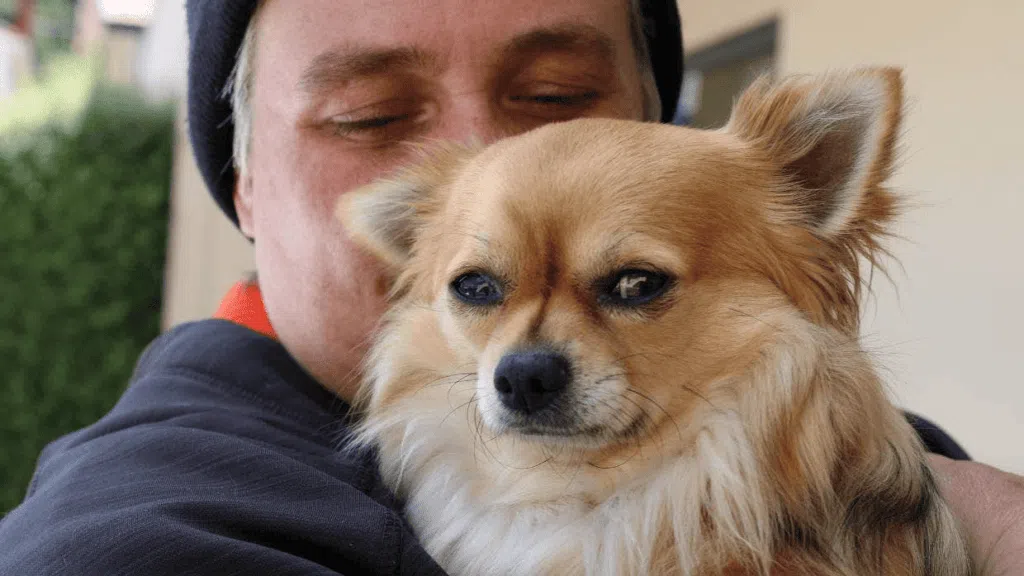

In the back of a transport van, on a January night three years ago, in a parking lot off Interstate 80 in central Iowa, a nine-year-old chihuahua named Harley met grass for the first time. The volunteer driver who had pulled him out of a Missouri puppy mill that morning lifted him from a cardboard carrier, set him on a small patch of ditch grass at a rest stop, and waited. Harley stood with his front feet on the grass and his back feet still on the asphalt for perhaps forty seconds; then he sat down on the asphalt and refused to move further. He had never had a bed; he had never had a name; for nine years he had had a wire cage and a number on a kennel card.
Tag @ChihuahuaCorner or use #TinyButLegendary if you want us to consider your story for an upcoming piece.
favoriteThis is what happens to chihuahua hero stories when they begin in the wrong place.
What Puppy Mills Do to Chihuahuas, Specifically
Chihuahuas are over-represented in commercial breeding operations because of three economic facts: the dogs are small, the litters are profitable per ounce of dog, and the market for chihuahua puppies is steady. The ASPCA puppy-mill page estimates that ten thousand commercial breeding facilities operate in the United States; the toy-breed share is disproportionate. The dogs live in stacked wire cages, often eighteen by twenty-four inches, with limited veterinary care and no socialization.
For a breed selected over centuries for individual companionship, the deprivation is more than physical. The 2017 study by McMillan and colleagues, published in Veterinary Behaviour, documented elevated rates of fear-based aggression, persistent shaking, and house-training failure in dogs surrendered from commercial breeding operations, with toy breeds showing the highest behavioral-deficit scores at intake.
Harley's Specific Story
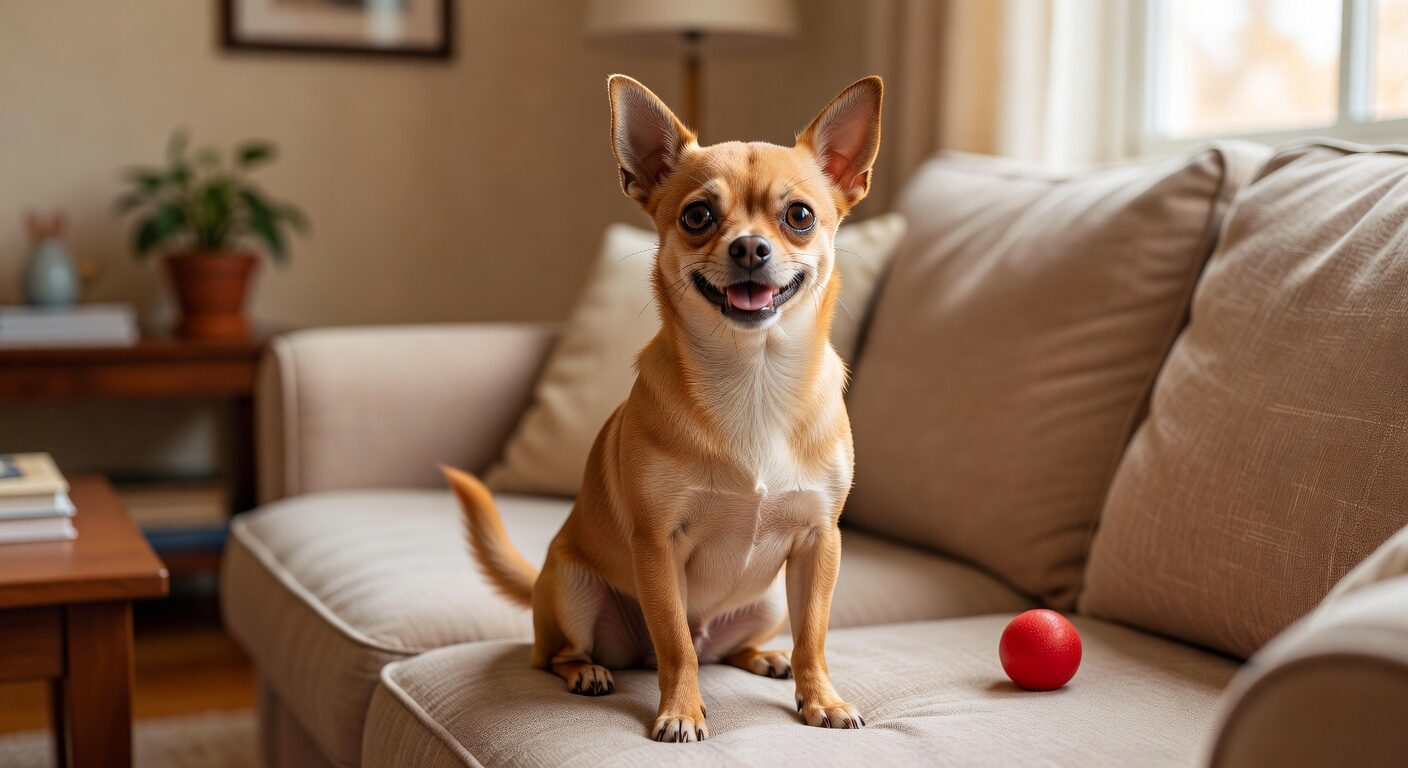
Harley is a smooth-coat tan chihuahua, ten and a half pounds at intake, fifteen teeth lost or rotted, both eyes clouded with cataracts that pre-existed the rescue and could not be reversed. The mill's kennel card listed his date of birth as 2014 and his number as 47-B. The intake form at the rescue, which I have a copy of, listed his temperament as "shutdown" with a parenthetical: "responds to slow voice, will eat from a hand after twenty-four hours."
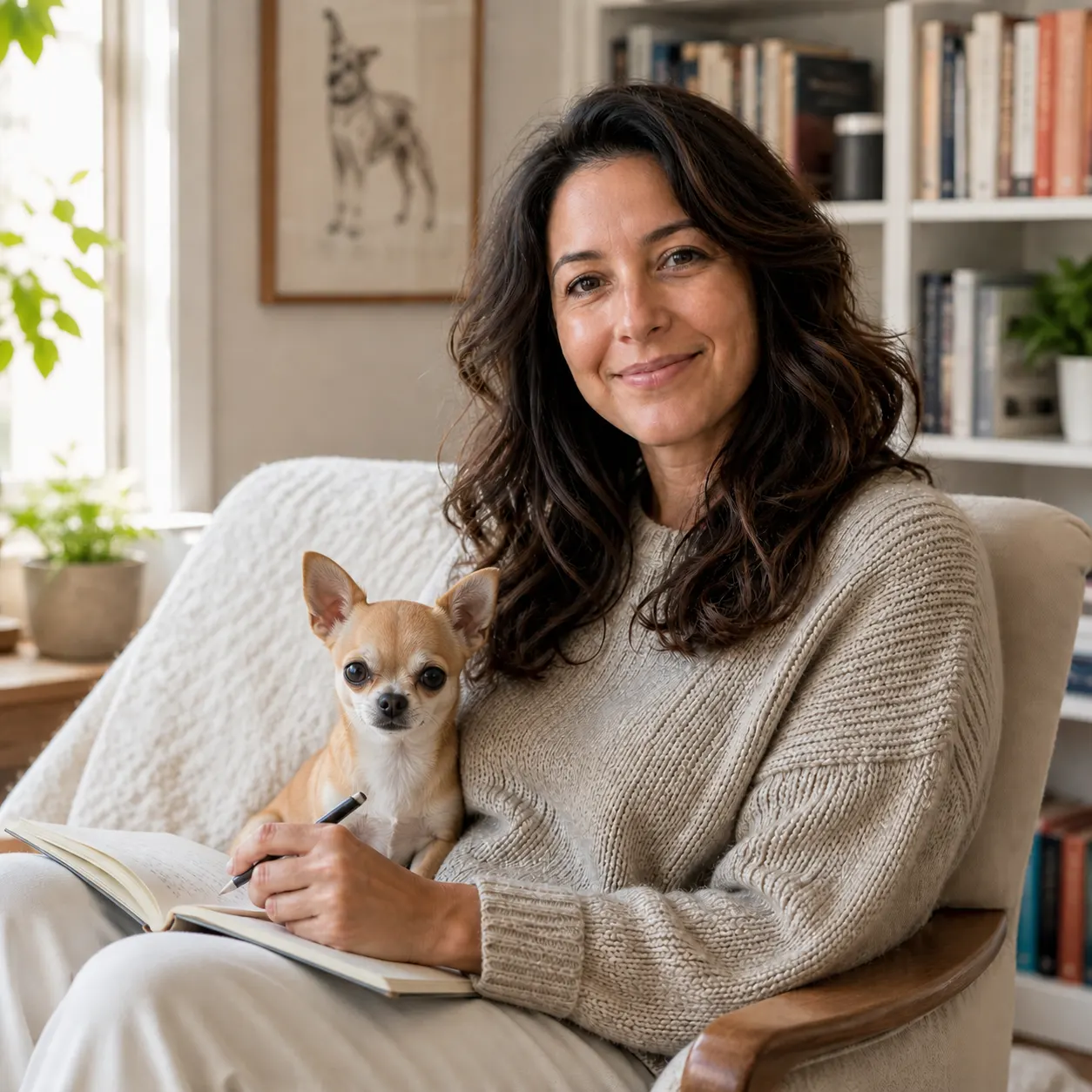
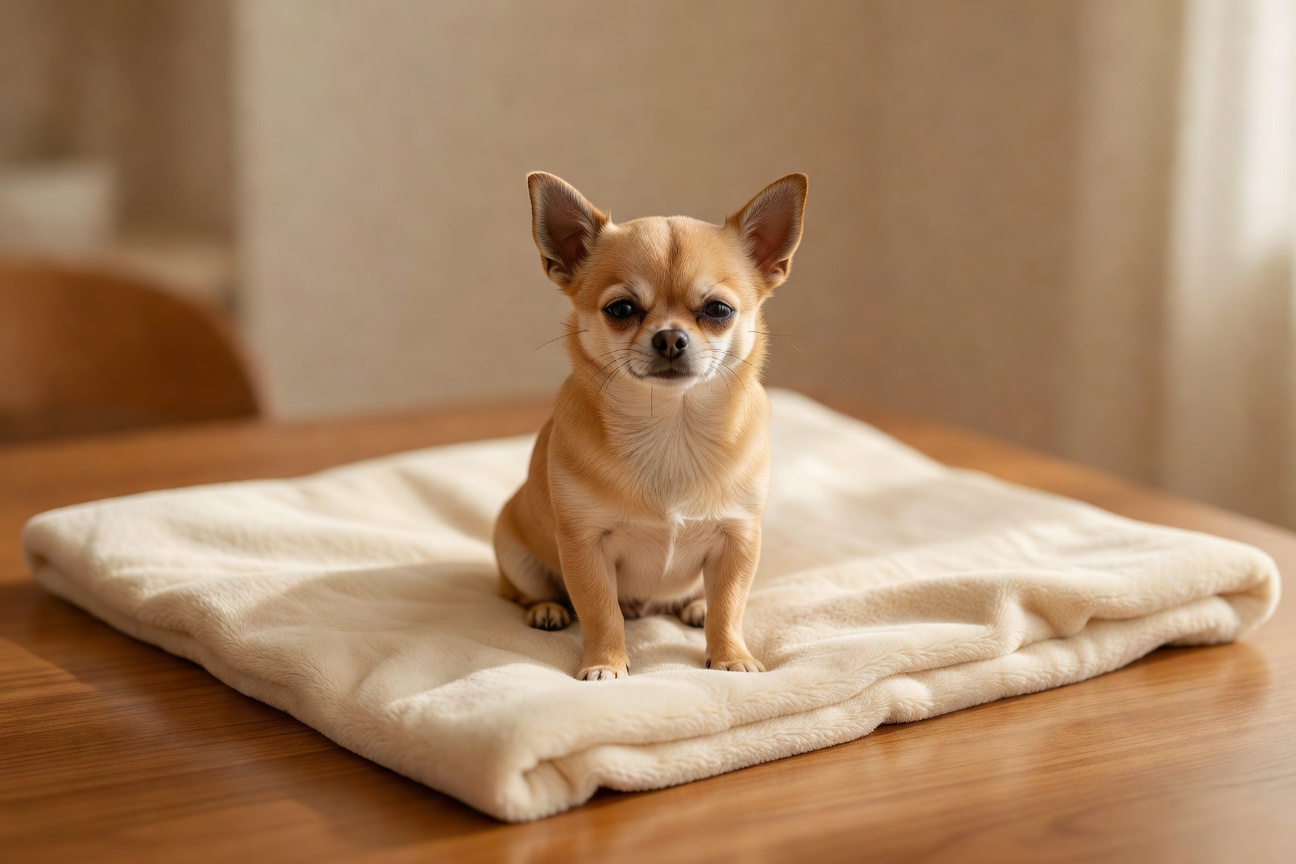
The foster who took Harley home is a retired school librarian named Maureen, in Cedar Rapids, who has fostered chihuahuas for the rescue for nine years. Maureen sets up her foster bed in the living room, three feet from her own armchair, with a low fleece blanket folded into a soft-walled circle. Harley walked to the bed on his second night. He stood at the edge for perhaps ten minutes; he stepped on; he sat down; he stayed.
I am told this is, with rescued mill dogs, often the moment. Maureen described it to me on a phone call in April: "He looked at me like he was checking it was allowed. I said it out loud. I said, you can have the bed."
What the Network Looks Like
The transport pipeline that moved Harley from a puppy mill in Missouri to a foster home in Iowa is one segment of a longer chain. The companion piece on the Penny rescue covers a different node; the memorial piece covers what comes after. The chihuahua-rescue network in this country runs largely on individual fosters, on weekend transport drivers who pay their own gas, and on retired women in Cedar Rapids and Tulsa and Mobile who do the part of the work that the cameras do not photograph.
If you have considered fostering, the math runs in your favor. The average chihuahua foster duration in the small-breed pipeline is three to four weeks; the network needs roughly twice as many fosters as it currently has.
Where Harley Is Now
Maureen adopted Harley on day forty-one. He is twelve and a half years old now. He has had three winters, two summers, six beds, and one couch he has decided he prefers to all of them. The cataracts mean he navigates by smell and memory; Maureen has not moved the furniture since he came home. He sleeps on his back, which a chihuahua only does in places it has decided are absolutely safe. The librarian's living room is one of those places.
A small final image. The first bed Harley ever had, the small fleece-walled circle Maureen put down on his second night, is still in her living room. He no longer sleeps in it. He has moved to the couch. The bed is empty. Maureen leaves it there.
For more reportage from the field, browse the Stories desk or subscribe for the next dispatch.
Community Insights favorite
We asked our readers: Has your Chihuahua done something bold? Here's what you shared.
“My chihuahua chased a raccoon out of our garage. We are still not sure who was more surprised.”
“Tiny but mighty. These dogs have no idea how small they are.”
“Not just a story. The chihuahua spirit, in three pounds.”
Tag @ChihuahuaCorner or use #TinyButLegendary if you want us to consider your chihuahua story for an upcoming piece.
Know a Chihuahua with a legendary story? If you have a chihuahua story we should look into, tell us where it happened.
favorite