

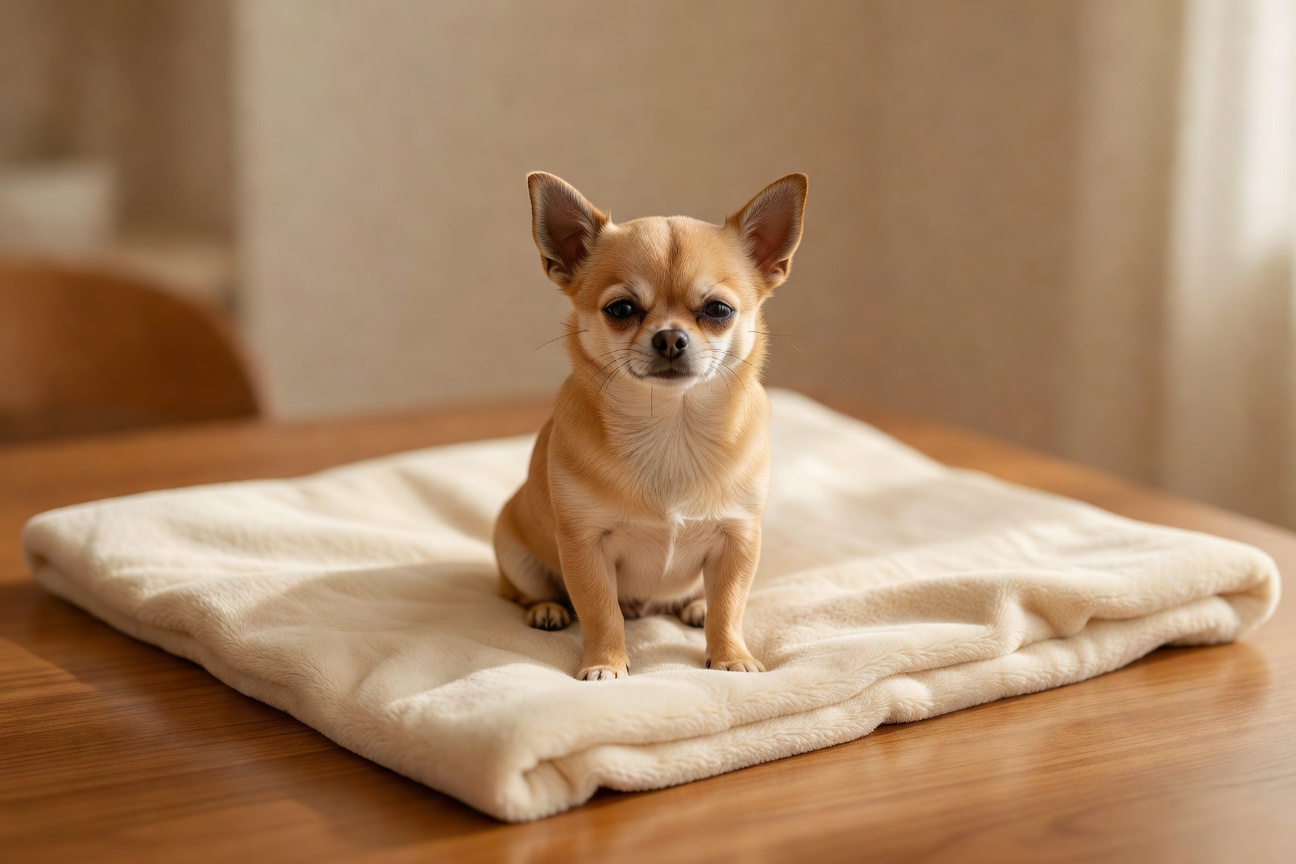
On a Tuesday in March, in a small kitchen in Lincoln, Nebraska, a chihuahua named Loretta turned twenty-one. Her owner, Mary Whitlock, a retired second-grade teacher, served her a tablespoon of plain Greek yogurt with a half teaspoon of honey, the same breakfast she has had every Tuesday since 2014. Loretta is mostly deaf and partially blind; she felt the bowl set down through the floorboards and walked, slowly, the four feet from her bed to her placemat. The yogurt took ninety seconds. Mary wrote the date in a green spiral notebook on the counter.
Tag @ChihuahuaCorner or use #TinyButLegendary if you want us to consider your story for an upcoming piece.
favoriteI have been writing about chihuahuas for a long time, and I had not yet met one who had reached twenty-one. The breed median is twelve to fourteen years; the upper end of the curve, when you find it, is usually fifteen or sixteen. Twenty-one is a different country. I drove out to Lincoln in late March, sat at Mary’s kitchen table, and asked her what twenty-one years of senior chihuahua care actually looked like. The answer was not a list of miracles. It was a notebook.
The notebook
The notebook started in 2009, when Loretta was four. Mary had read a column in a small-breed magazine that recommended an annual weight log; she added meals, supplements, and any change she noticed. By 2014 the entries had become weekly. By 2018 they were daily. The current notebook is the seventh; the first six are in a shoebox in the hall closet.
"I am not a scientist," Mary told me. "I am a teacher. I write things down because that is what teachers do."
The pattern, when you read across the notebooks, is unsentimental. There are no inspirational summaries. There are weights (Loretta was 5.4 pounds in 2009 and is 4.7 today, a small slow loss); there are dates of dental cleanings (six total, one every two years from 2010 to 2020); and there are notes on what Loretta would eat after a vaccination (chicken broth, room temperature, two teaspoons).
The veterinarian, on speed dial
The first thing Mary said to me when I asked what mattered most was not "the diet." It was, "Dr. Patel."
Dr. Anjali Patel runs a two-doctor practice off Cornhusker Highway. She has been Loretta’s veterinarian since 2011. The practice does twice-yearly exams on senior dogs over twelve, with a senior bloodwork panel each visit; the AAHA Canine Life Stage Guidelines recommend the same cadence, and Dr. Patel had been doing it before the guideline made it official.
"Mary calls me when she sees a change," Dr. Patel said over the phone. "Most of my clients call me when they are scared. Mary calls me when she sees the food bowl half-empty for two days. By the time most owners are at fear, Mary is at the chart."
The arithmetic of this is, in retrospect, the whole story. The breed’s median lifespan is in the twelve-to-fourteen-year band; the upper tail belongs, almost always, to dogs whose owners noticed small things early. A six-pound dog has very little reserve. The window between "off" and "in trouble" is short. Mary has spent two decades shortening her own response time inside that window.
What Mary actually does, week to week
I asked Mary if she would walk me through a normal week. She said yes if I would not make it sound dramatic. I said I would try.
- Meals. Three small meals a day, weighed on a kitchen scale; the food is a small-breed senior kibble softened with warm water for ten minutes, plus a teaspoon of plain meat. Loretta has six teeth.
- Walks. Two short walks of about 90 yards each, on grass, on a harness, in good weather. Inside the house in winter; she will not walk in below 35 degrees and Mary does not push it.
- Joints. A small omega-3 capsule with breakfast; her vet added it at year fifteen. The AVMA Senior Pet Care FAQ backs the cadence and the joint focus.
- Sleep. A heated orthopedic bed, a low ramp to the couch, and a small night light. Loretta is up at 6:14 a.m. The notebook records the time most days.
What I took from Lincoln
I drove home down I-80 with my own twelve-year-old chihuahua, Ruthie, in the passenger seat. I had asked Mary, at the end of the visit, whether she had any advice for owners of a younger dog. She had thought for a long minute.
"Start the notebook earlier than you think you need to," she said. "Twelve, ten, even four. The notebook is the dog’s chart, and you are the only one who has it."
I do not believe in pretending the upper tail of any breed’s lifespan is reachable for everyone. Genetics are genetics; luck is luck. Some chihuahuas leave us at twelve, and the grief is the same as the grief at twenty-one. What I do believe, after a kitchen-table afternoon in Lincoln, is that the difference between a chihuahua at twelve and a chihuahua at twenty-one is not, mostly, a miracle. It is a notebook, a vet who picks up the phone, and an owner who has decided to keep noticing.
If you live with a chihuahua over ten and you do not yet have a notebook, start one this week. A green spiral, a kitchen counter, the date and the weight; that is the entire system. Then call your veterinarian and ask, by name, when their senior bloodwork visit is. Mary would tell you the same thing. She told me twice, walking me to my car.
Community Insights favorite
We asked our readers: Has your Chihuahua done something bold? Here's what you shared.
“My chihuahua chased a raccoon out of our garage. We are still not sure who was more surprised.”
“Tiny but mighty. These dogs have no idea how small they are.”
“Not just a story. The chihuahua spirit, in three pounds.”
Tag @ChihuahuaCorner or use #TinyButLegendary if you want us to consider your chihuahua story for an upcoming piece.
Know a Chihuahua with a legendary story? If you have a chihuahua story we should look into, tell us where it happened.
favorite

