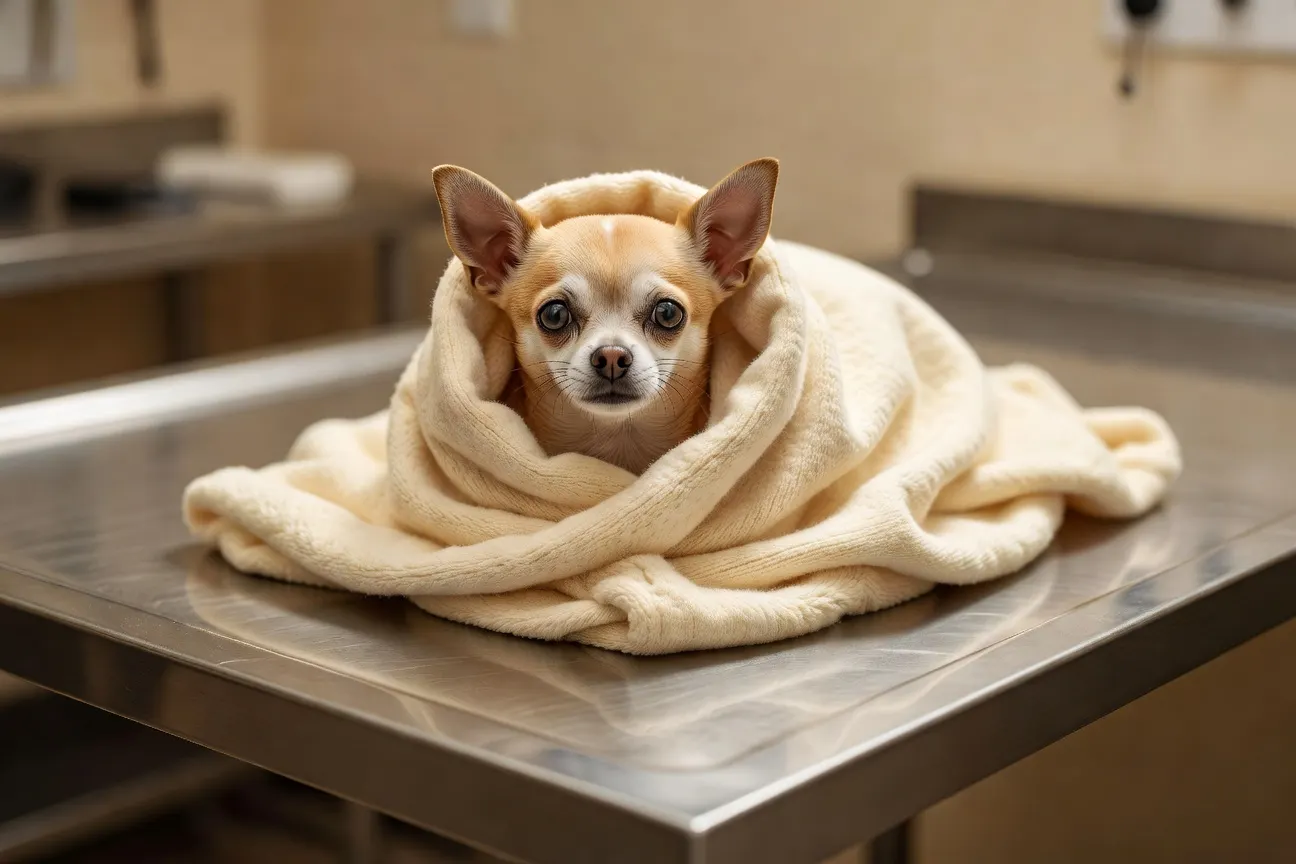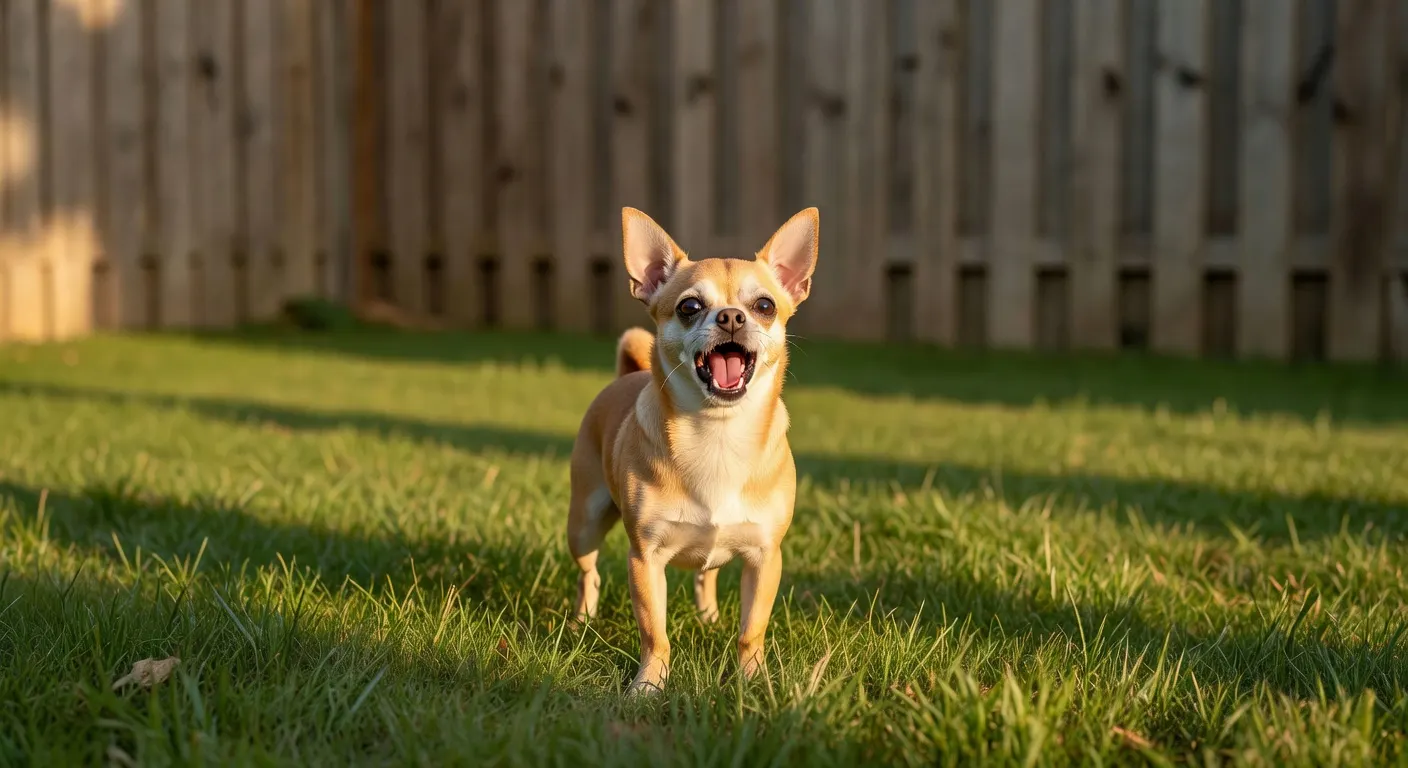


On a Tuesday in October 2024, on a small section of US-101 about three miles south of a trailer park in unincorporated Lane County, Oregon, a small fawn chihuahua about three years old was put out of a moving car. The driver, who has not been identified, did not stop to confirm the dog had cleared the shoulder. Two witnesses in a passing pickup truck saw it happen at approximately 4:47 p.m.; one of them called the highway patrol, who arrived twenty-three minutes later and could not, on a brief search of the shoulder, find the dog.
Share your story with us! Tag @ChihuahuaCorner or use #TinyButLegendary
favoriteThe chihuahua, whose name was eventually established as Daisy, walked the three miles back to the trailer park where she had previously lived. She arrived at approximately 9:12 p.m., on the front porch of a single-wide where she had spent some portion of her early life with a previous household, and where she was, that night, taken in by a woman named Carmen Reyes who had not, in any formal sense, been Daisy's owner.
I am writing about this with Carmen's permission, with details adjusted slightly for privacy. The story is on the rescue beat I cover, even though Daisy's situation does not, technically, fit the standard rescue framework. She placed herself.
The trailer park, briefly
article_in_feed
A handpicked find for your tiny companion.
The trailer park where Daisy ended up sits off Highway 99W in the southern Willamette Valley, about a forty-minute drive from Eugene. There are about forty units. Daisy had, by the accounts I gathered, previously lived in unit 23 with a woman named Karen who had moved out in May 2024. Karen had, by the same accounts, taken Daisy with her when she moved.
What happened between May and October is not, on the available evidence, fully reconstructable. Karen had, by Carmen's account, lived briefly in a different town with a new partner, and the relationship had ended badly. Daisy was, at some point in the late summer or early fall, with a different household whose specific identity Carmen was not certain about. The dumping on US-101 in October was, on the working theory, by someone in that household.
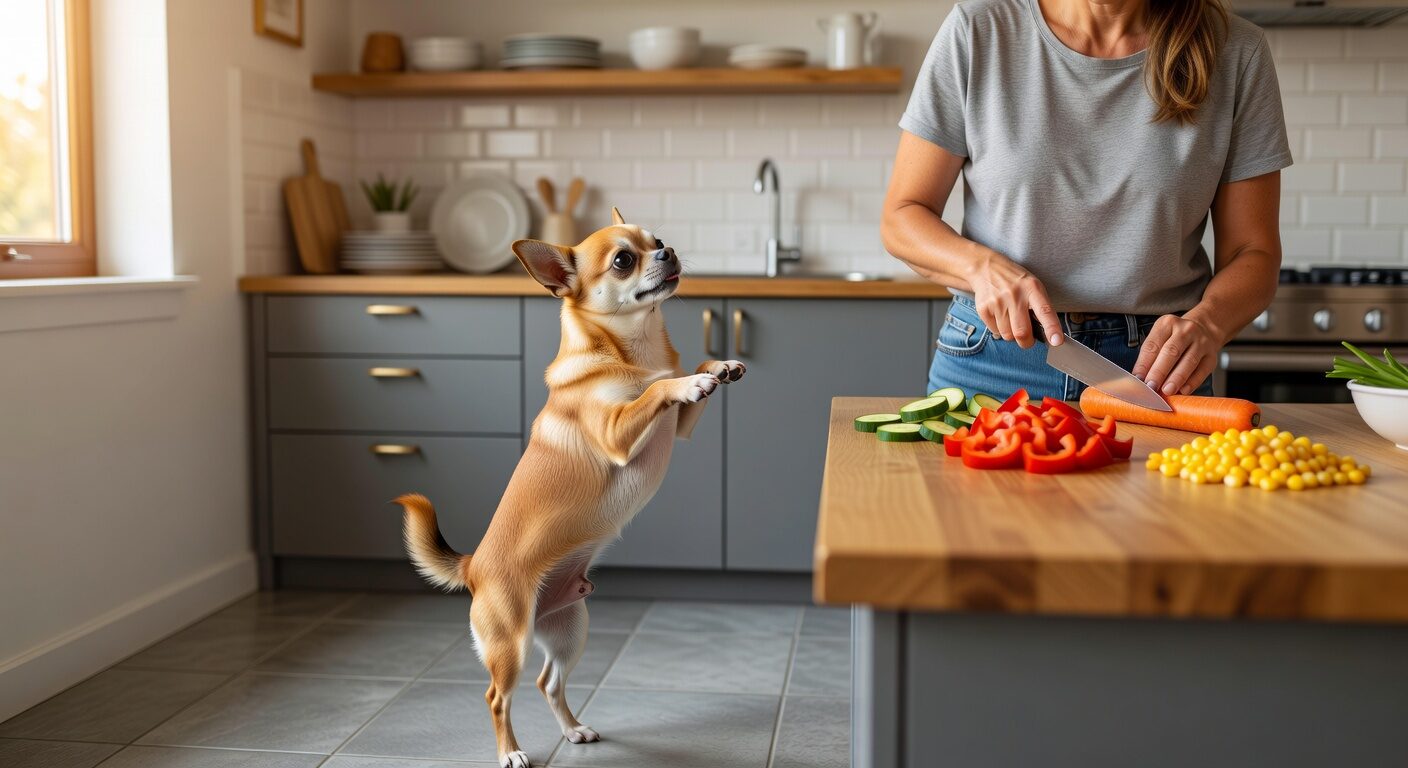
Daisy, during the previous tenure in unit 23, had been a frequent visitor to Carmen's unit (unit 27, four units down). Carmen had, on a number of small specific afternoons in 2023 and 2024, fed Daisy small pieces of chicken and given her a soft place on a fleece blanket on the porch. The relationship had been, in Carmen's framing, a neighborhood-cat kind of arrangement: not formal, not exclusive, but real. A separate piece on rescue adjustments covers the broader frame for informal placements like this.
The night she arrived, plainly
Carmen heard a small scratching sound at the door at approximately 9:12 p.m. on the Tuesday. The porch light was on; she opened the door cautiously; Daisy was on the porch, in a state Carmen described as "she was a mess but she was also Daisy."
The dog had walked, on the working reconstruction, approximately three miles along the shoulder of US-101 from the dumping point. Her paws were raw. Her coat was matted with what turned out to be small bits of dried grass and roadside debris. She had a small cut on her right shoulder. She was, on Carmen's first read, exhausted but oriented. She walked into Carmen's unit, drank water from the bowl Carmen put on the kitchen floor, and lay down on the same fleece blanket she had used on the porch in 2023.
Carmen called the regional emergency vet at 9:34 p.m. The clinic was open until 10:30; she made the drive in twelve minutes; the dog was triaged and admitted at 9:51.
The medical side, briefly
The emergency vet, a Dr. Sarah Whitfield I have spoken with for several stories, found Daisy with paw pad abrasions, mild dehydration, the shoulder cut (which had not become infected), and what was characterized as "remarkably stable" vital signs given the circumstances. She was given fluids, pain management, antibiotics for the shoulder cut, and a small overnight monitoring stay. The total bill ran approximately $640. Carmen paid.
Dr. Whitfield's clinical assessment, which she has shared with me with Carmen's permission, was that Daisy had, on the available evidence, been in reasonable physical condition before the dumping; the three-mile walk had cost her substantially but the baseline before that had been adequate. The dog had not, in other words, been chronically neglected. Whoever had put her out of the car had done so on a Tuesday in October from a household that had been feeding her.
The placement, plainly
Carmen, with the support of a regional small-dog rescue I will not name here, posted notices and conducted searches for the previous household over the following six weeks. No claim was made. The October-dumping household, on the working theory, was not interested in being identified. Karen, whose name was on the original microchip registration but who had moved to Idaho with her new partner by then, declined to take the dog back when contacted.
Daisy was formally adopted by Carmen on December 4, 2024, after the legal hold-and-search period. Carmen had, in the intervening weeks, become the dog's de facto owner; the formal adoption was the paperwork catching up. The microchip was re-registered to Carmen's address on December 6.
The three miles, on careful examination
I want to be careful about how I tell this part. The walk-three-miles-home framing is, on examination, partly true and partly a structural simplification. Daisy did not, in any sense we can verify, choose Carmen's address as a target. She walked from the dumping point, along the shoulder of US-101, and arrived at the trailer park because the trailer park was, on the small-dog navigation evidence, the place she had previously been.
Within the trailer park, Daisy did not, on the available accounts, immediately go to unit 23 (where Karen had lived). She went to unit 27 (Carmen's). The walk from US-101 to the trailer park is the impressive part on the canine-navigation literature; the unit-27-not-unit-23 detail is the part that, on Carmen's reading, was not random.
Karen had, in the year before her move, fed Daisy roughly twice a week. Carmen had fed her, on Carmen's count, almost daily during the same period. The food economy of the trailer park, on Daisy's behavioral economy, had centered on Carmen's porch. The dog had, on the available evidence, been operating with a more accurate map of her household-of-record than the human members had been.
The quiet paragraph, planted on cue
I will plant the quiet paragraph here, because Daisy has earned it and because the column does not work without it. The thing about a small dog walking three miles along a highway shoulder in October is that the navigation is impressive but the underlying story is, on careful reading, more about who she was returning to than about how. She had been, on the available behavioral evidence, paying very close attention to where the food and the soft fleece had come from. The household-of-record, on her accounting, had been Carmen's all along. The dumping had not, in any sense Daisy had voted on, severed that arrangement. The walk was not, on examination, a heroic feat of navigation; it was a small dog returning to her actual household by means that the previous human arrangements had not, on the available evidence, taken into account.
The broader system, briefly
The rescue community in southern Lane County has, over the past several years, seen a rising number of cases like Daisy's: small dogs in transitional or unstable household situations, sometimes cycling through multiple short-term placements before either ending up in shelters or, occasionally, in the more interesting category Daisy occupied, in which the dog identified the actual stable household more accurately than the formal arrangements had. A separate piece on shelter intakes covers the broader pattern; this story is one of the small specific subsets within it.
The Shelter Animals Count national database tracks the broader numbers. In Lane County in 2024, small-breed intake from owner-surrender or stray situations ran approximately twice the rate it had in 2014.
Where Daisy is now, briefly
I sat on Carmen's porch in February 2025, four months after the night Daisy arrived. Daisy was on the same fleece blanket. Carmen was drinking coffee. The porch was, on the morning's accounting, calm.
Carmen mentioned, in passing, that Daisy still occasionally woke at 9:12 p.m. and went to the front door. Carmen did not have a clear theory about why. The pattern was not, in any sense, distressing to Daisy; it was a small specific behavior that had not, on the household's account, been there before the night she arrived. Carmen would, when it happened, get up and check the porch, find no one there, and bring Daisy back to the fleece blanket. The dog would settle. The household would, on the available evidence, run.
Community Insights favorite
We asked our readers: Has your Chihuahua done something bold? Here's what you shared.
“My Chi chased a raccoon out of our garage!”
“Tiny but mighty! These dogs have no idea how small they are.”
“It’s not just a story — it’s the Chihuahua spirit.”
Share your story with us! Tag @ChihuahuaCorner or use #TinyButLegendary
Know a Chihuahua with a legendary story? We’d love to feature them — submit your story.
favorite