

What are the chihuahua-specific training adjustments that separate effective small-dog training from generic dog-training advice? In short: chihuahuas respond to slightly shorter sessions, slightly different reward calibrations, slightly different reinforcement timing, and a household environment that takes the small-dog scale seriously. The eight tips below are the ones I find myself repeating most often with chihuahua-owning clients.
I want to be clear about scope. These tips assume the household is already running force-free training methods; the AVSAB position on humane training is the broader frame. A separate piece on chihuahua reactivity covers the related point that punishment-based methods do not work for this breed.
Tip 1: Train at the dog's eye level
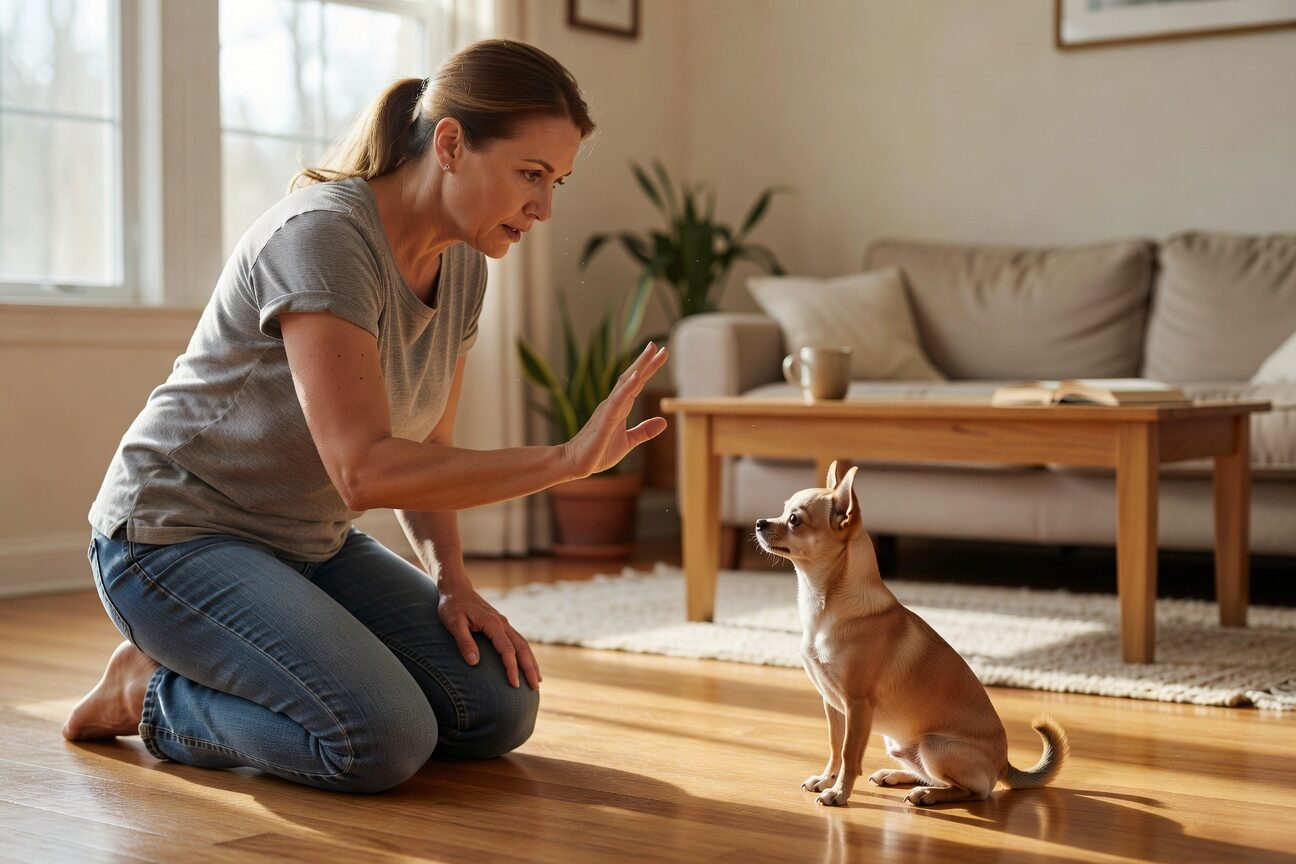
The single most useful structural adjustment for chihuahua training is to get your face down to the dog's level during sessions. Looming over a four-pound dog produces a slightly threatened body posture that competes with learning. Sitting on the floor, kneeling, or working with the dog on a slightly elevated surface (a couch, a low table) puts the household member at or near the dog's eye line and produces calmer focused work.
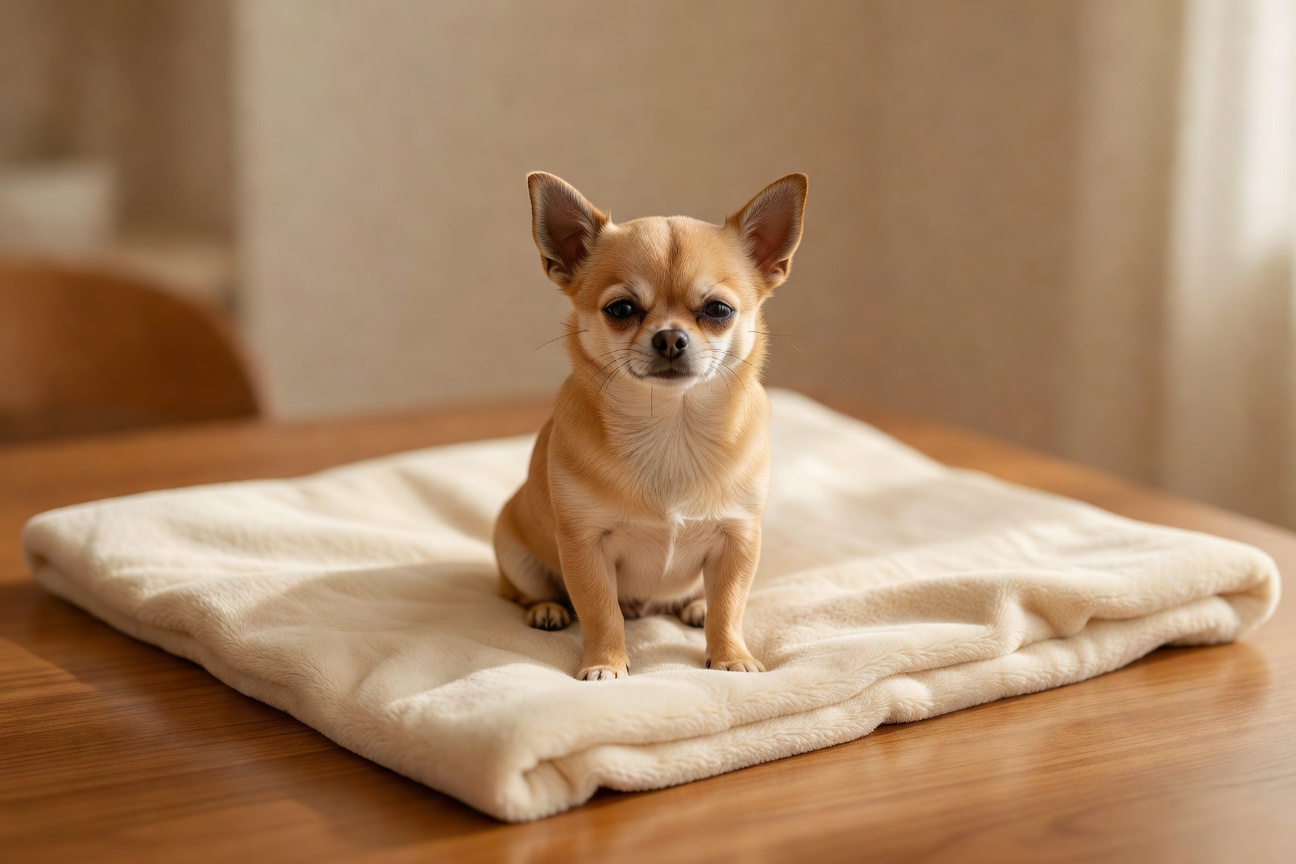
The difference is, on the available behavioral evidence, meaningful. Most clients who shift their training position from standing-over to face-to-face report better engagement within a few sessions.
Tip 2: Calibrate the reward to the actual dog
The "high-value treat" advice in generic training literature underestimates how individual the right reward is. For some chihuahuas, regular kibble works fine. For others, you need a small piece of cheese or chicken. For others, the right reward is a brief tug session or a verbal cue paired with petting.
Spend a session early in the training process figuring out what your specific dog cares about. The strongest reward becomes the training currency for the foreseeable future; weaker rewards are reserved for maintenance.
Tip 3: Keep sessions short
A chihuahua's attention span for focused training is, on the available data, shorter than most owners expect. Five to ten minutes is the right session length for most adult chihuahuas; three to five for puppies. Multiple short sessions across the day produce better learning than one long session.
The signs you have gone too long: the dog is missing cues she normally gets, looking away, sniffing the floor instead of engaging, or asking to leave the area. Stop, reward the last successful rep, and pick up later.
Tip 4: Reward inside the two-second window
The reward timing matters more than the reward itself. The treat should arrive within two seconds of the behavior you are reinforcing. Late rewards reinforce whatever the dog is doing at the moment of reward, which may not be the behavior you intended.
A treat pouch worn at the hip, with treats prepared and accessible, makes the timing achievable. Fishing for a treat in a pocket usually misses the window.
Tip 5: Use a marker word
A consistent marker word ("yes," "good," or a clicker sound) precedes the treat by approximately half a second. The marker bridges the brief gap between behavior and reward and clarifies which exact moment is being reinforced. Chihuahuas pick up marker words quickly, often within a few sessions.
The marker is not a treat; it is the precise signal that a treat is coming. Do not use the marker without delivering a treat shortly after. The connection between marker and treat is what makes the marker work.
Tip 6: One behavior at a time
A common error is to introduce multiple behaviors simultaneously. Chihuahuas, like most dogs, learn faster when one behavior is worked to reliability before adding another. Pick a behavior; work on it for a week or two until it is reliable; add the next.
The reliability standard is roughly: the dog performs the behavior on cue, in the kitchen, with a high reward, four times out of five. Once you have that, generalize to other rooms, then to mild distractions, then to higher-distraction environments.
Tip 7: Generalize, do not assume
Adult chihuahuas do not automatically generalize a behavior across contexts. The "sit" that is reliable in the kitchen may not be reliable on the porch or on a walk. The behavior has to be practiced in each new context.
A practical approach: once a behavior is reliable in the original location, work on it briefly in a second location for a few days, then in a third, then in a fourth. The behavior generalizes after three to five locations in most cases. A separate piece on multi-behavior training covers a related layered approach.
Tip 8: End on success
The last rep of every session should be successful. If the dog is struggling, drop to an easier version of the behavior, get one clean rep, reward, and end. The household's exit from the session is what the dog remembers most clearly; ending on a frustrated rep produces a more reluctant start to the next session.
The corollary: if the session is going well, end while it is still going well rather than pushing one more rep that might fail. The five clean reps you got are more valuable than the sixth that might not.
The broader behavioral frame, briefly
The eight tips above are, on the underlying logic, mostly about reducing friction in the dog's learning process. The chihuahua's small body, fast metabolism, and high attentiveness produce a dog who learns quickly when the training is calibrated to her, and who disengages quickly when it is not. The adjustments are small individually; the cumulative effect is meaningful.
The AVSAB position on humane training covers the broader research base; a separate piece on crate training covers a specific application of the same principles.
When to bring in a credentialed trainer, briefly
A few situations where the eight tips alone may not be enough:
- The dog is not progressing despite consistent application of the tips over several weeks.
- The dog is showing reactivity (barking, snapping) at high enough thresholds that household members are uncomfortable.
- The dog has bitten or near-bitten in a context that warrants professional input. A separate piece on biting covers the broader picture.
- The household's training has produced inconsistent results across household members and the framework needs an outside reset.
The right professional is a credentialed force-free trainer or, for severe cases, a board-certified veterinary behaviorist. Talk to your veterinarian about referrals; the local clinical relationship is the right entry point.
The bottom line, with the usual caveat
Effective chihuahua training is mostly the small-dog adaptations of generic force-free training. The eight tips above are the adjustments I find myself recommending most often. Talk to your veterinarian if anything in your dog's training response is concerning; the general framework is the starting point, and the local read is the refinement.
Gear That Works backpack
Harness (Not Collar)
A step-in harness is safer and more comfortable.
Lightweight Leash
4–6 feet gives freedom without losing control.
Treat Pouch
Keep rewards accessible and distraction-free.
ID Tag & Microchip
Always be prepared in case of separation.
Trainer Tip: Success on walks starts with reading your Chihuahua's signals and respecting their pace.
Was this guide helpful?
Was this guide helpful? Save the guide. Share it with one other chihuahua owner this week.
favorite