


I have, by my best estimate, spent roughly four hundred dollars on chihuahua training books over the past several years. I have watched approximately two hundred YouTube videos about dog behavior. I attended a six-week obedience class with my chihuahua Churro, who, despite my mounting suspicion that she did not need the class, graduated with a certificate that now lives in a drawer because the act of framing it felt, on examination, weird.
Tag @ChihuahuaCorner and use #ChiDrama. Your chihuahua might show up in a future column. Ours is busy guarding a sock.
favoriteAfter all of that, here is the conclusion I have reached: Churro is, on every available measure, well-trained. She has been well-trained, in fact, for most of the time I have known her. The problem in our household, on a more honest examination, has consistently been my own behavioral patterns, which Churro has, with considerable patience, been working around.
I want to walk you through how I figured this out, and why the conclusion is, on retrospective examination, more interesting than the four-hundred-dollar education I had been pursuing.
The graduation moment, briefly
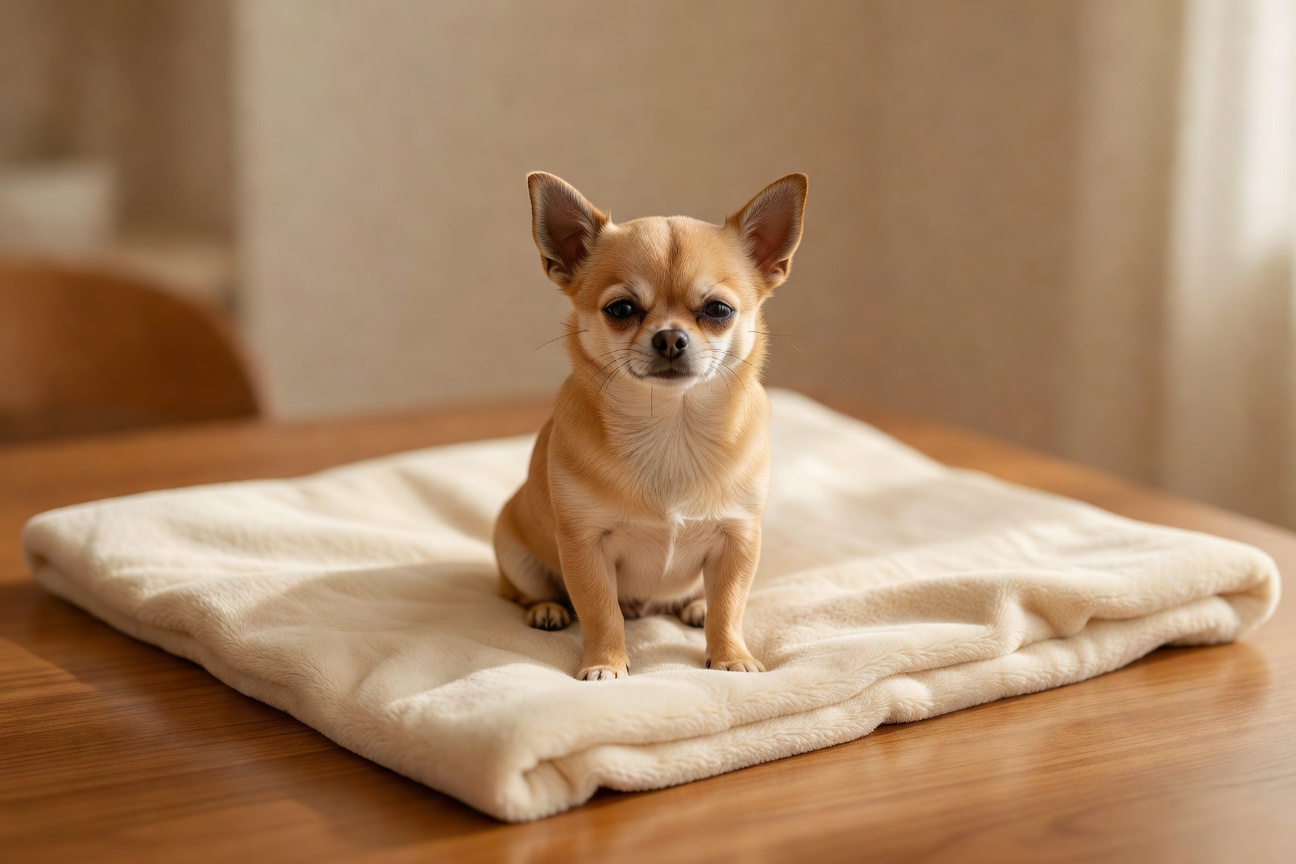
The obedience class graduation took place in a community center in March of a year I am not going to specify. There were eleven dogs in the class. The instructor handed out small certificates with the dogs' names printed on them. Churro received hers in the calm professional manner of a small dog who had, by week three, figured out the structure of the class and was, by week five, performing the assignments before I had given the cue.
The instructor, a woman named Patricia who had been teaching obedience classes for twenty-something years, came over to me at the end of the graduation and said something that I am, in this column, paraphrasing slightly. The gist: Churro was, by Patricia's evaluation, one of the most consistently trained small dogs in the class. The household's behavioral patterns, by the same evaluation, were less consistent.
Patricia did not, in any sense, say "the dog is fine, you are the problem." She did not need to. The implication was, on a careful read of her tone, sufficient.
The patterns I had not been seeing
In the weeks after the graduation, I started keeping a small notebook of household interactions in which Churro had performed the "correct" behavior and I had, in real time, undermined it. The patterns were, on a brief audit, embarrassing.
A short list of the patterns I documented:
- Mid-session redirection. I would ask Churro to sit; she would sit; I would, while she was holding the sit, get distracted by my phone and forget to release her or reward. Churro would hold the sit for an awkwardly long time and then, eventually, get up. I had, in effect, taught her to give up on sit after twenty seconds because I had not been holding up my end of the agreement.
- Inconsistent meal times. The "consistent feeding schedule" the training book recommended had, in my actual practice, varied by up to ninety minutes day to day depending on my work calendar. Churro had, by adaptation, become slightly anxious around meal times.
- The "in a minute" delay. When Churro signaled at the door for a bathroom break, my actual response was somewhere between immediate and "in a minute, let me finish this email." The "in a minute" was sometimes ten minutes. Churro had, in some cases, had accidents that I had then, ungenerously, attributed to her training.
- Mixed cue language. I used "down" sometimes for "lie down" and sometimes for "off the couch." Churro had, on careful analysis of which response I rewarded in which context, basically figured out which "down" meant which thing, but the inconsistency had cost weeks of training time.
The actual fix, plainly
The fix, once I figured out what was going on, was not, in any sense, more dog training. The fix was a small set of household-management changes for the human:
- Phone away during training sessions. Five minutes is, on examination, a manageable phone-free duration.
- Meal times calendared. 7:30 a.m. and 6:30 p.m., set as recurring reminders. The reminders go off; I feed the dog; the dog stops being mildly anxious around meal times.
- The "in a minute" rule. If Churro signals at the door, I get up and let her out. The email can wait three minutes; her bladder cannot. This is, I now realize, completely obvious.
- Consistent cue language. "Down" means lie down; "off" means get off the couch. I wrote a small sticky note for the kitchen with the household's standardized cues. The household members all use the same words.
The total time investment for these changes was, in honest accounting, less than five hours. The training-book-and-YouTube budget would not, on retrospective math, have been needed if I had run this audit in year one rather than year two.
The sincere paragraph, planted on schedule
I will plant the sincere paragraph here, because the column requires one and because Churro has, by my count, earned approximately six of them in the time I have been her household. The thing about chihuahua training, on later reflection, is that the behavioral economics are usually weighted toward the human's behavior rather than the dog's. The dog is, in most cases, paying very close attention and adapting quickly to whatever consistent behavior the human exhibits. The human is, in most cases, paying intermittent attention and exhibiting somewhat inconsistent behavior. The mismatch, when it happens, is not the dog's training problem. It is the household's.
Churro had been, on most of the available measures, ready to be a calm well-trained dog from approximately month four of her life. The remaining variable was, in retrospect, me. A separate piece on a related household pattern covers a similar diagnosis from a different angle; a separate piece on the eight tips covers the actual training framework that, applied consistently, would have saved the four hundred dollars.
Why this pattern is real, briefly
There is, on the available behavioral economics literature, a real reason this household pattern is common. Dogs are, on the comparative-cognition data, attentive associative learners with finer-grained pattern recognition than humans typically credit them with. The dog notices the household's behavioral patterns substantially more carefully than the household notices its own. The training mismatch, when it appears, is therefore typically the dog's accurate adaptation to the household's actual behavior rather than to the household's intended behavior.
The Companion Animal Psychology archive covers the broader literature on canid associative learning; the household-specific application is what the four-hundred-dollar education had been working around.
The end of the column, briefly
If you are reading this and have been quietly suspecting that your chihuahua's training is not quite as inconsistent as you have been describing it, the diagnosis is most likely the one I arrived at after the obedience-class graduation. The dog is, in most cases, fine. The household-management variables are typically the variable that matters. The audit is small and free; the books are not, on retrospective accounting, necessary.
Churro, as I write this, is in her structured nap window, on the bed she has been on for the previous three years. She is, on every available measure, a well-trained dog in a household that has, at long last, figured out how to hold up its end of the agreement. The certificate is, as previously reported, in a drawer.
The Chihuahua Drama Checklist pets
How many does your Chi check off today?
- Side-eyed at least one human
- Burrowed like a pro
- Scoffed at their dinner
- Acted offended
- Demanded to be carried
- Gave a dramatic sigh
- Barked at something invisible
- Danced for a treat
- Stole the warmest spot
- Looked adorable while doing it all
Got a dramatic Chi moment we missed? Share your story in the comments. Worst case, our editor laughs at it alone.
favorite

