


The first long car trip I took with my chihuahua Gizmo was, by any honest accounting, a disaster. Four hours from Eugene to my parents' house in southern Oregon. He threw up twice, somewhere around hour two. He trembled for the first ninety minutes. He barked at every truck that passed. He somehow wedged himself under the passenger seat at hour three, requiring an unscheduled stop at a gas station outside Roseburg for an extraction operation that involved one flashlight, two dog treats, and a kind stranger named Linda who happened to also have a chihuahua and offered tactical advice.
Tag @ChihuahuaCorner and use #ChiDrama. Your chihuahua might show up in a future column. Ours is busy guarding a sock.
favoriteWhen we finally arrived, Gizmo bolted through my mother's front door and hid behind her toilet for forty-five minutes. My mother said, in the patient voice mothers use for their adult children's questionable life decisions, that perhaps I should have done some preparation.
She was right. The second trip, three months later, went substantially better. Below is the honest account of what I changed, in case any of it is useful for your first long trip with a small dog.
The pre-trip preparation I had skipped
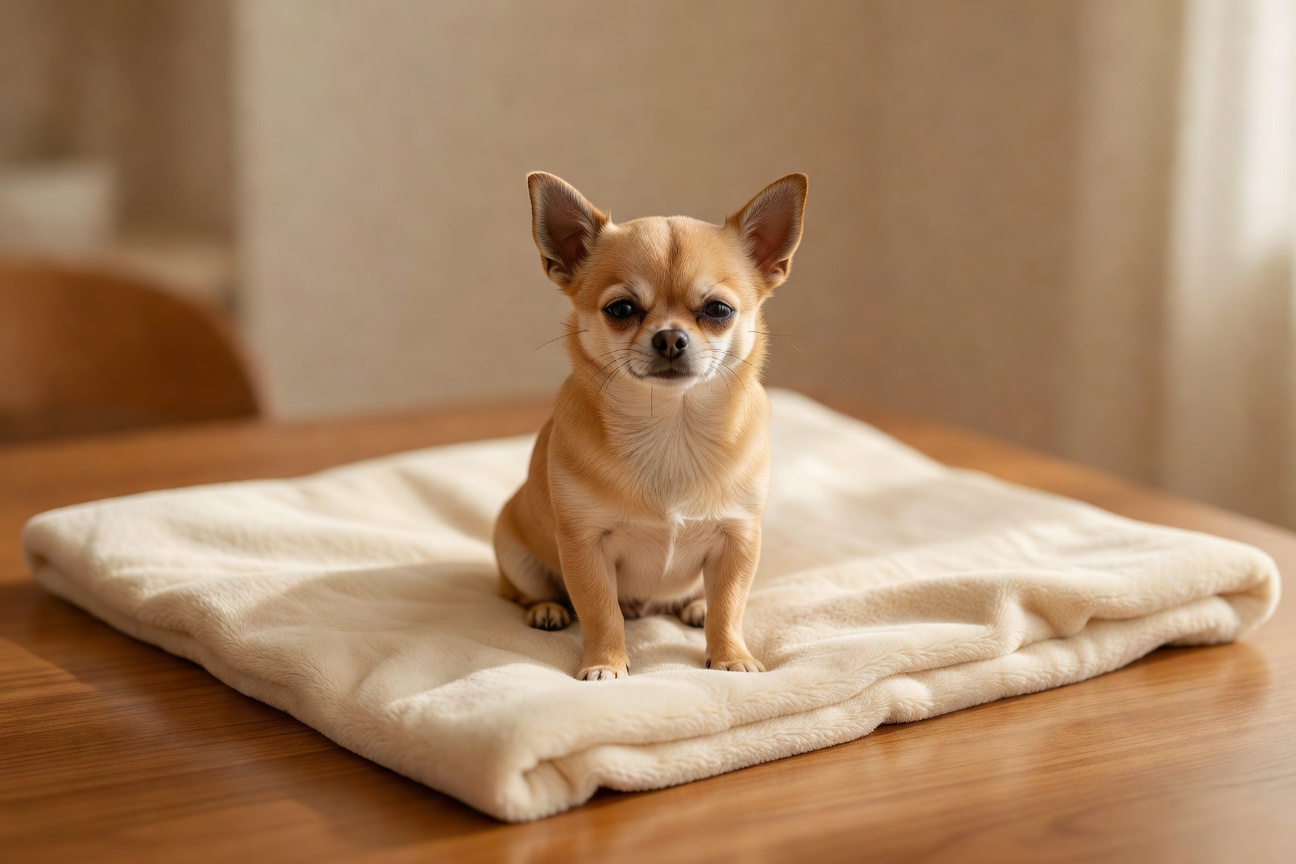
The thing I had not done before the first trip, which I should have done, was let Gizmo experience the car as a normal place rather than as the vehicle that takes him to the vet. He had been in the car perhaps a dozen times in his life, and each of those was either a vet visit or a brief errand. The car was, on his accounting, a high-stress object.
The pre-trip protocol that worked for the second trip, run over about three weeks:
- Brief positive car sessions. Sit in the parked car with him for five minutes, with the engine off, doing nothing in particular. A few treats. A pleasant tone of voice. No actual driving.
- Short positive drives. A five-minute drive around the block, ending at a place that is not a vet. The end-place mattered more than the duration.
- Increasing duration. Twenty-minute drives, then forty-minute drives, ending at parks or friends' houses. The car became, over weeks, associated with arrivals at pleasant places rather than arrivals at the clinic.
This is, I am told by people who do this for a living, basic counterconditioning. The stress-management piece covers the underlying protocol; the road-trip application is just the vehicle-specific version.
The gear, which I had also under-thought
The first trip, I had Gizmo in a soft-sided carrier on the passenger seat, secured by the seat belt going through the carrier handle. This was, by retrospective inspection, both unsafe (the carrier could have shifted in a sudden stop) and uncomfortable (the carrier handle did not maintain the carrier's shape against the seat belt tension).
The second trip's setup, which has held up across several subsequent trips:
- A crash-tested travel crate in the back seat, secured by the seat belt routed through the manufacturer's tie-down points. The Center for Pet Safety publishes crash-test ratings; the difference in safety between a tested and an untested crate is meaningful.
- A small water bowl with a non-spill design, fixed to the crate floor.
- A small chew toy and a familiar fleece from his bed at home, both inside the crate before the drive.
- A mat under the crate to catch any accidents. (The first trip's accidents on the seat upholstery were, on the post-trip cleaning evidence, harder to fully remove than I had anticipated.)
The stops, which I had not planned
A four-hour drive, on the first trip, included exactly one stop, at the Roseburg gas station for the under-seat extraction. This was, in retrospect, far too few stops for a small dog who needs a regular bathroom break and who benefits from the brief reset of being out of the car.
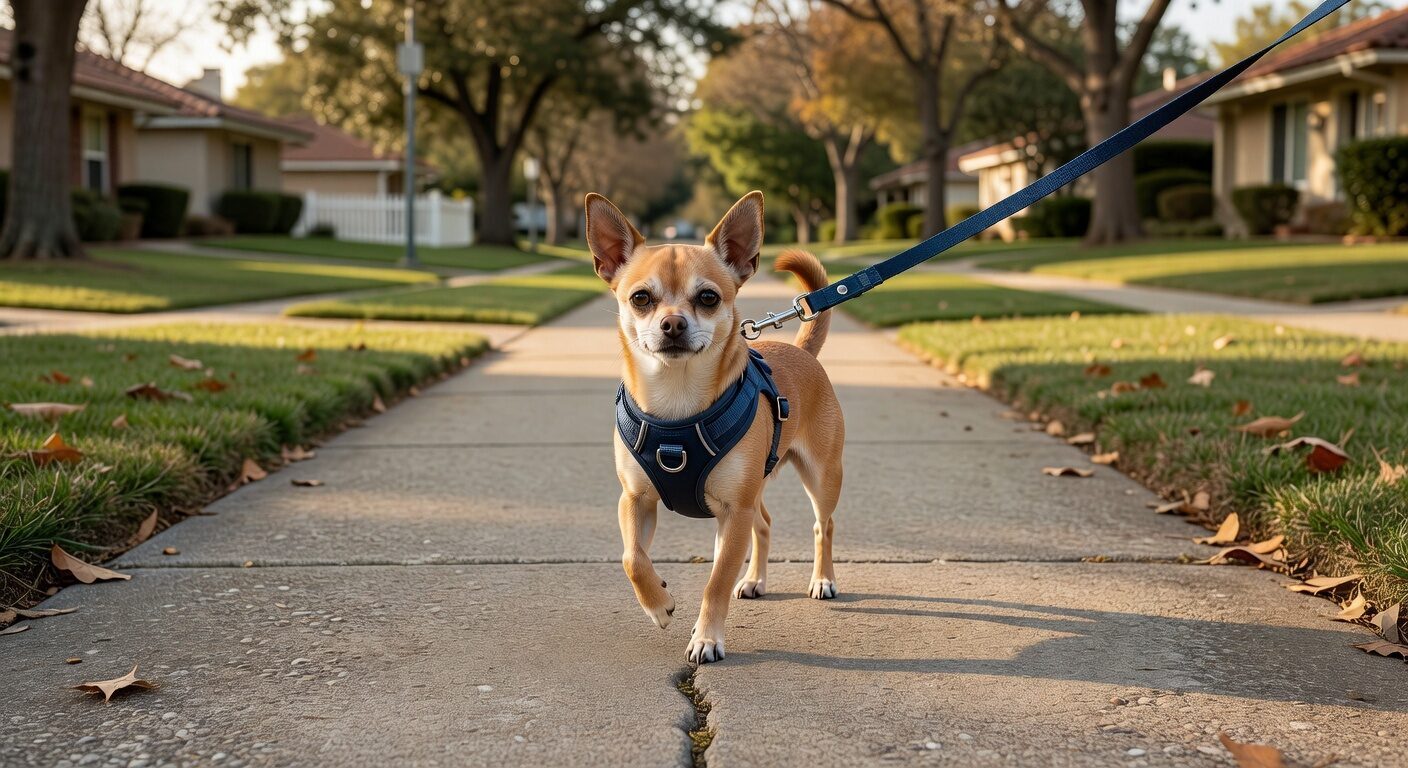
The revised protocol: a short stop every ninety minutes, at a rest area or a quiet pull-off, of about ten minutes. Bathroom break (on a leash, at a safe distance from the road), a few minutes of sniffing on the grass, a small drink of water, back in the crate. The total trip time stretches by about thirty minutes; the trip quality improves substantially.
The AVMA's pet travel guidance covers the broader stop-frequency recommendation; ninety minutes is the upper bound the guidance suggests for most dogs and a reasonable default for chihuahuas.
The sincere paragraph, planted on schedule
I will plant the sincere paragraph here. The thing about that first disaster trip, on later reflection, was that I had treated the car ride as a problem the dog needed to solve, when it was actually a problem the household had not yet prepared for. Gizmo did not, on the first trip, fail to be a good road-trip dog. He had not been given the conditioning, the gear, or the stops to be a good road-trip dog, and he reasonably responded to that situation by being miserable.
The second trip, with the conditioning and the gear and the stops, was a different experience entirely. The dog slept for substantial portions of the drive. The trembling was gone by hour one. The barking at trucks was reduced to a brief comment at the largest of them. We arrived; Gizmo did not hide behind the toilet; my mother said something approving, in the tone mothers use when an adult child has, on a second attempt, gotten something right.
A few other considerations, briefly
A short list of things I did not realize before the first trip:
- The temperature math. Never leave a chihuahua alone in a parked car, even briefly, even in mild weather. The math is much worse for small dogs than for medium-sized ones.
- The vaccination paperwork. If you are crossing state lines or staying at a hotel that has vaccination requirements, bring the rabies certificate.
- The hotel question. Pet-friendly hotels are common but not universal. Confirm before you arrive. Some hotels have weight or breed restrictions even within the pet-friendly category. A separate piece on the flying side covers the broader travel-paperwork frame.
- The motion-sickness conversation. If your dog throws up consistently in the car despite the conditioning protocol, talk to your veterinarian about a short-term motion-sickness medication (typically maropitant). Most chihuahuas do not need it; some do.
The end of the column, briefly
If you are about to take your first long drive with a chihuahua, the practical work is finite. Three weeks of pre-trip conditioning, a crash-tested crate, planned stops every ninety minutes, and an honest acceptance that the first trip will be slower than the trip you take alone. Gizmo, on his most recent trip, slept for two of the four hours; we made the four planned stops; he did not, this time, hide behind any toilets. The system, on the available evidence, runs.
The Chihuahua Drama Checklist pets
How many does your Chi check off today?
- Side-eyed at least one human
- Burrowed like a pro
- Scoffed at their dinner
- Acted offended
- Demanded to be carried
- Gave a dramatic sigh
- Barked at something invisible
- Danced for a treat
- Stole the warmest spot
- Looked adorable while doing it all
Got a dramatic Chi moment we missed? Share your story in the comments. Worst case, our editor laughs at it alone.
favorite

