


My neighbor watched me carry my chihuahua Pepper through a pool-noodle obstacle course in the backyard last Tuesday. She did not, on the available evidence, say anything. She slowly closed her blinds. I have, in the time since, considered her response carefully and concluded that, by any reasonable observer's framework, the obstacle course is one of the more low-key items on the list of activities I do with Pepper that look certifiably unhinged from outside the household.
Tag @ChihuahuaCorner and use #ChiDrama. Your chihuahua might show up in a future column. Ours is busy guarding a sock.
favoriteBelow is the full inventory, in case any of these are useful for your own household and in case any of them help you, the reader, feel less alone if you have already been doing them and, like me, have been gradually working out the social-defensibility math.
1. The pool-noodle obstacle course
Three pool noodles, cut into segments of varying length, arranged in the backyard to produce a small course that includes one curved chute, one elevated step, and one low arch. Pepper completes the course in approximately twenty seconds. The reward at the end is a small treat. We do this three times. Total time: about three minutes per session, four times a week.
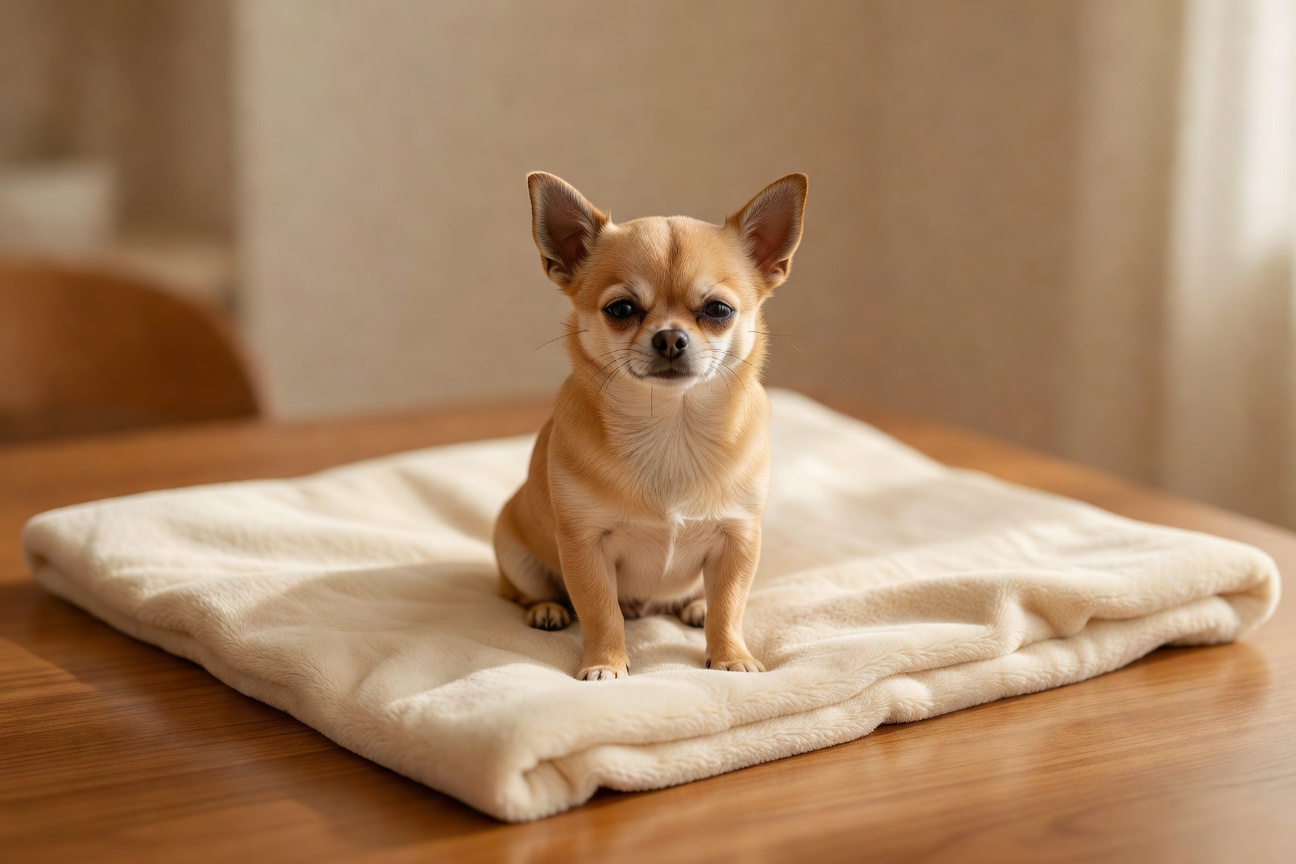
The neighbor's slow blind-closure was, on examination, reasonable. The activity is, however, on the structured-enrichment literature, exactly the kind of low-impact problem-solving exercise small dogs benefit from. The general socialization piece covers structured enrichment in more depth.
2. The morning treasure hunt
Five small pieces of training kibble, hidden around the living room while Pepper is in her crate. She is then released to find them. The hunt typically takes four to seven minutes and produces, on her body language, the most engaged version of Pepper available in the household. She uses her nose; she covers the room methodically; she returns to me at the end with an air of small professional accomplishment.
The activity, in case you were wondering, scales. The five-piece beginner version becomes, after some weeks, a ten-piece intermediate version, with a subset of the pieces hidden inside cardboard boxes that Pepper has to learn to open.
3. The reading-aloud session
For about ten minutes most evenings, I read aloud from whatever book I am currently reading. Pepper sits on my lap. The content of the book is, on her account, unimportant; the cadence of human voice is, on her account, the entire point. Pepper has been read aloud to from a small pile of books that includes, for the record, several novels, two non-fiction books about urban planning, and one cookbook that I read aloud over a period of weeks because I was in a particular mood.
The activity is, on the available behavioral evidence, mildly enriching for the dog and substantially enriching for the human. The household member doing the reading reports lower stress on the days the reading happens.
4. The shoe conference
When I return home, I sit on the floor of the entryway and Pepper sniffs each shoe I have removed for approximately two minutes per shoe. The sniff inspection appears to be, on Pepper's accounting, a critical update on what the human has been doing all day. I have come to think of this as the household's debrief meeting.
The activity is, on the canine olfaction literature, exactly what a small attentive dog uses to update her model of the household. Skipping the shoe conference produces, in Pepper's case, a brief follow-up sniff investigation later in the evening, often initiated when I am already in bed.
5. The park-bench observation period
About once a week, on a Saturday morning, Pepper and I walk to a bench at a quiet local park, sit on the bench for fifteen to twenty minutes, and watch the world go by. Pepper sits on my lap. We do not, in any active sense, do anything. She watches; I watch; the morning passes. The other park visitors who notice us probably do not realize this is a structured activity.
The activity is, on the available evidence, substantially calming for both of us. A separate piece on bonding covers the underlying logic; the bench observation is one of the household's standing components of the bond practice.
6. The pillow-fort nap arrangement
Once or twice a week, on cold afternoons, I build a small pillow fort on the couch with three pillows and a blanket. Pepper occupies the fort for approximately ninety minutes. The fort is not, on examination, structurally necessary; the couch alone would be sufficient. The fort is, however, on her body language, substantially more satisfying than the couch alone.
I have stopped trying to explain the pillow fort to visitors. I just build it on cold afternoons and let Pepper occupy it. The visitor, if observant, may notice the fort and may not. The dog notices, on every available measure.
7. The laundry-folding sit
When I fold laundry on the bed, Pepper is, by household tradition, on the bed with me. She is not, in any sense, helping. She is occupying a small specific corner of the bed, watching the folding, occasionally stretching, and providing the steady company that distinguishes laundry-folding-with-Pepper from laundry-folding-alone. The activity adds approximately zero to the laundry's efficiency. It adds, on every reading I can produce, meaningful value to the laundry-folding experience.
The sincere paragraph, planted on schedule
I will plant the sincere paragraph here, because the column requires one and because the seven activities have earned it. The thing about the seven activities, on later reflection, is that none of them are actually ridiculous. They are, in honest accounting, the small structural moments of attentive engagement that distinguish a household-with-a-dog from a household with a dog who is mostly an object in the corner. The pool-noodle course is fifteen minutes a week. The shoe conference is two minutes a day. The pillow fort is the work of three minutes to assemble. None of these are, individually, large investments. The accumulated set is, however, the difference between a chihuahua who is enriched and a chihuahua who is bored.
The neighbor who closed her blinds is, on the available evidence, mostly noticing the visible ridiculousness of an adult human carrying a small dog through a pool-noodle course. She is not, on the available evidence, noticing the underlying behavioral economics. The dog is, in our household, calmer and happier than she would be without the activities. The pool-noodle course, in this sense, is not, despite appearances, the unhinged activity. The unhinged activity would be having a small attentive companion animal and not engaging her on a structured schedule. A separate piece on bonding covers the broader frame; Companion Animal Psychology covers the literature.
The end of the column, briefly
If you are reading this and recognize a few of the seven activities in your own household, you are, on the available evidence, normal. The activities look ridiculous from outside; they are, from inside the household, structural. Pepper, as I write this, is in the laundry-folding sit, despite there being no laundry. The fort is empty in the next room, awaiting the next cold afternoon. The system, on the available evidence, runs.
The Chihuahua Drama Checklist pets
How many does your Chi check off today?
- Side-eyed at least one human
- Burrowed like a pro
- Scoffed at their dinner
- Acted offended
- Demanded to be carried
- Gave a dramatic sigh
- Barked at something invisible
- Danced for a treat
- Stole the warmest spot
- Looked adorable while doing it all
Got a dramatic Chi moment we missed? Share your story in the comments. Worst case, our editor laughs at it alone.
favorite

