

Confession to start. I have lived with chihuahuas for nineteen years and the bond I have with my current dog, a smooth-coat male called Nacho, took the better part of two months to lock in. He came to me as an adoption at three; he watched me from the far end of the room for the first six weeks; the bond, when it arrived, did not arrive as a moment but as a series of small permissions granted on his terms. The chihuahua personality is not a generic toy-breed temperament. It is a specific, deliberate set of behaviors selected over centuries, and the way you bond with the dog has to respect that.
This piece is the field version of three approaches that work in this breed, drawn from my own dogs, the dogs I have shown, and the published canine cognition literature.
1. Build Predictability Before You Build Affection
The first thing to understand about chihuahua personality is that the breed runs on routine. Why? Because the chihuahua's working memory is unusually high for its size, and a dog with a long memory is a dog that benefits from a predictable environment. Bradshaw and Casey's 2011 work on canine attachment, summarized in AKC's loyalty profile of small breeds, shows that consistent feeding and walking schedules correlate with reduced cortisol baselines in toy breeds.
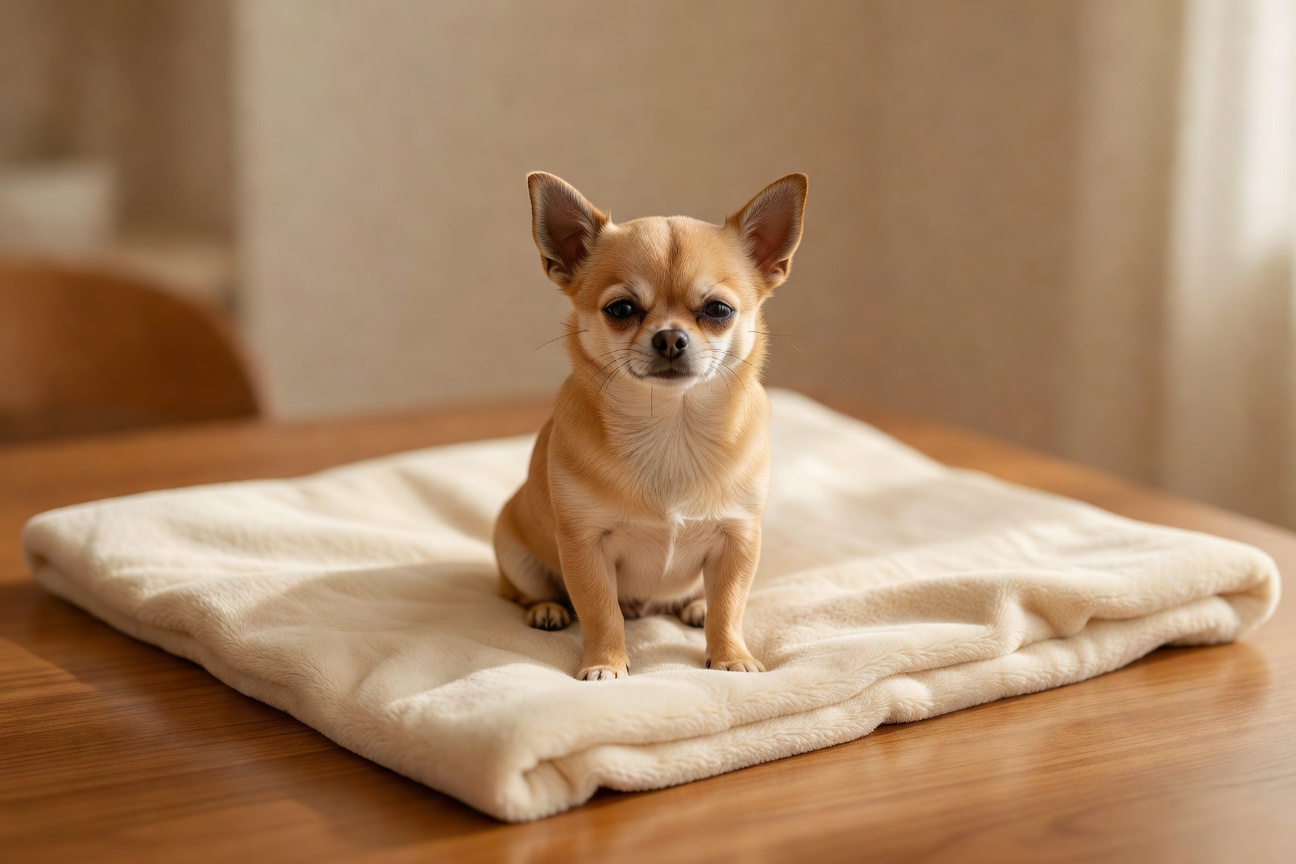
I am not arguing for a minute-by-minute schedule. I am arguing for a rhythm. Breakfast at roughly the same hour. The first walk at roughly the same time. A quiet block in the middle of the day. Evening play. Dinner. Predictability is the substrate; the bond grows on top of it. Nacho started relaxing his shoulders, which had been locked in a low-grade vigilance for weeks, the day he could anticipate the order of the day without watching me to confirm it.
If you are still working through reading the dog, the field guide on the seven signs of nervous-to-aggressive escalation covers the body-language cues that tell you whether the dog is settling or still calculating.
Hand-feeding as a starting protocol
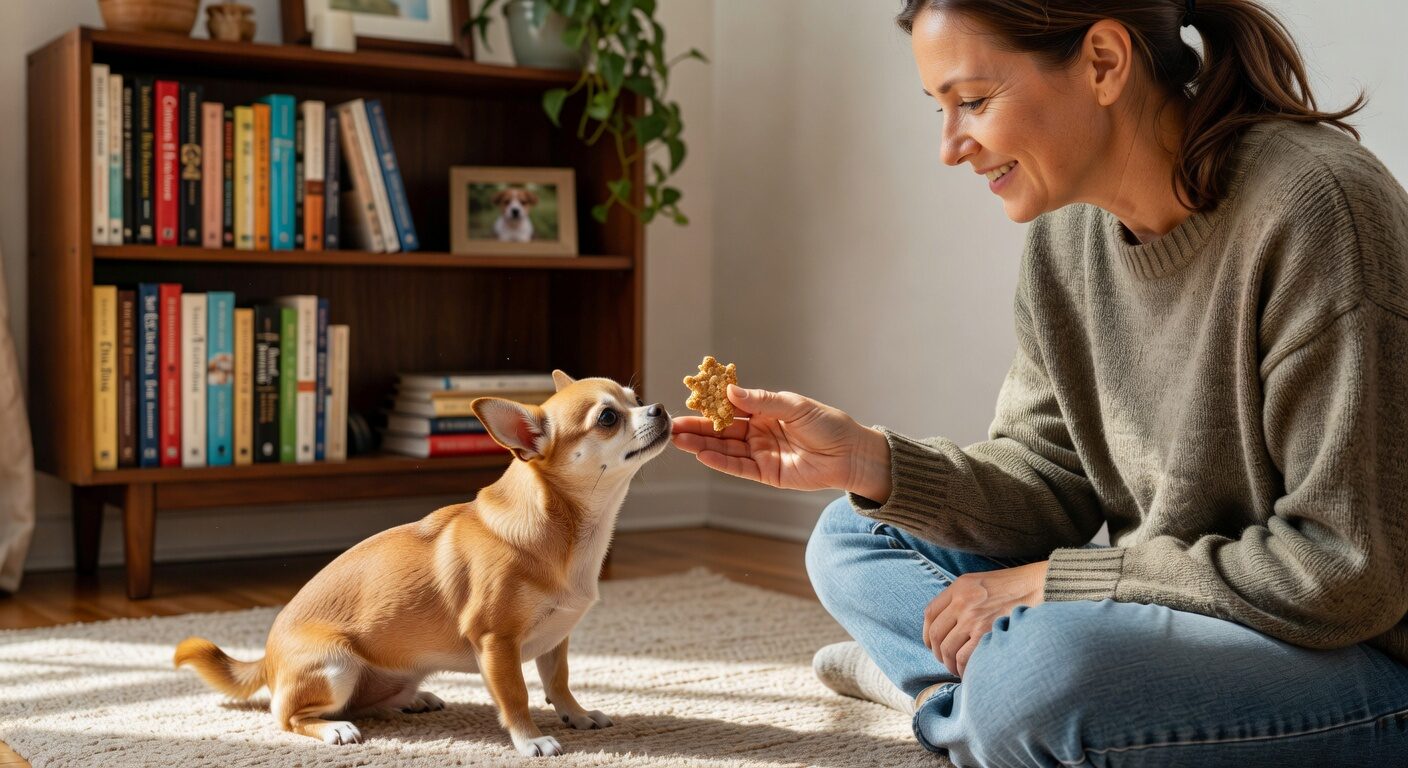
For the first three weeks Nacho ate every meal from my hand. Not from a bowl I held; from my open palm. (This is the protocol behavior consultants call "value transfer," and the citation usually points to Donaldson, The Culture Clash, 2005.) The dog learns that the resource flows through your hands. The bond compounds, slowly, daily, without a single command being asked of the dog.
2. Earn Trust Before You Ask for Behavior
Most owners try to train the chihuahua before the dog has decided who they are. The breed reads this and pushes back. The chihuahua personality holds back compliance until it has decided you are reliable, and that decision is on the dog's clock, not yours.
The practical move is to spend the first month, sometimes two, doing almost no formal training. Sit for meals if it comes naturally; otherwise, just feed. Let the dog approach you rather than you approaching the dog. Crouch sideways rather than leaning over. Avoid direct eye contact with a dog who has just met you, because in the chihuahua's threat-assessment software, a hand reaching down with eye contact registers as something an unsocialized dog evolved to dodge. The companion piece on twenty-five chihuahua facts covers the breed-history reasons why this register is hard-wired.
Touch on the dog's timeline, not yours
I did not pick Nacho up for the first five weeks. He came up onto my lap when he was ready. The first time he did, he stayed for forty seconds and then left; the second time, three minutes; by the eighth week, he was asleep on my chest. Companion Animal Psychology, Zazie Todd's evidence-based behavior site, has a useful summary of the touch-tolerance research that informs this approach.
3. Walk Together. Often. Slowly.
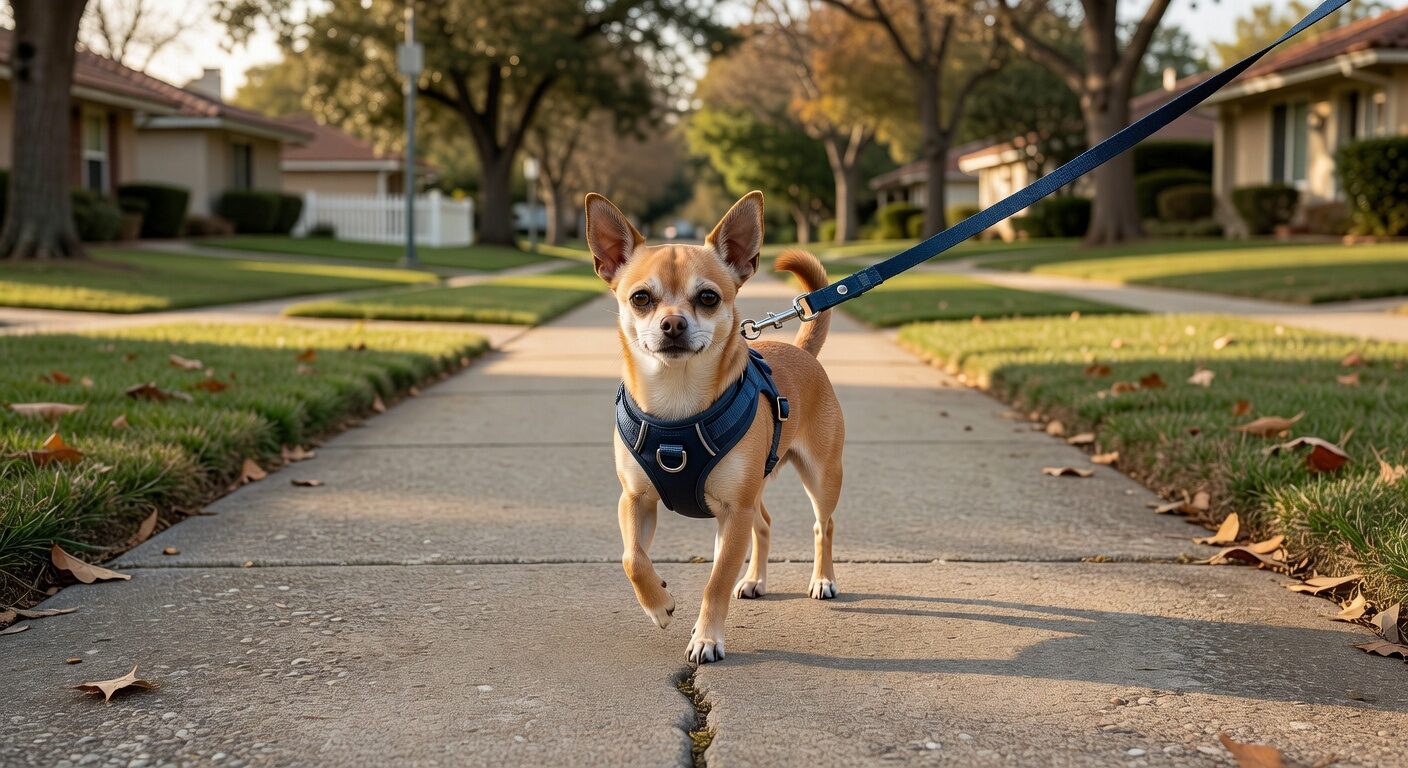
The third lever is shared movement. A chihuahua walked daily, on lead, in the same neighborhood, with the same handler, develops an attachment style that the cognition literature calls "secure base"; AKC body-language reference treats loose-lead walking with neutral ears and a soft tail set as the visible signal of that bond.
This is not high-mileage exercise. A chihuahua needs short walks, on grass when possible, with frequent permission to sniff. The breed's sensory bandwidth is much larger than its physical stride; ten minutes of unhurried sidewalk-and-grass with sniff stops is more bonding than thirty minutes of pace-driven exercise.
The chihuahua personality is, in plain terms, the temperament of a small dog who has been bred for ten centuries to bond hard with a single person and to defend that bond with whatever cards she has. The bond is not built by force; it is built by repetition, restraint, and a willingness to let the dog choose. For the next layer, the chihuahua lifespan piece covers the small daily habits that protect the years of that bond.
A small final observation. The morning Nacho settled was unremarkable. He came onto the couch, leaned against my hip, and went to sleep. No ceremony. (Why? Because in this breed, the bond signals quietly. If you are watching for it, you will miss it. If you are living with it, it is already here.)
For more on the breed, explore the Breed desk or subscribe for the next dispatch.
Is this Chihuahua right for you? auto_awesome
Want to learn more about your Chihuahua? Compare breeds, check the standard, and find the chihuahua that matches your home.
favorite