

Confession to start. I have owned chihuahuas for nineteen years. I have judged them at three sanctioned breed events. I still find new things in the AKC breed standard every time I read it. The point of this piece is not to dazzle you with twenty-five trivia items; it is to make a small case for the chihuahua as a breed worth taking seriously, supported by twenty-five things I learned the hard way.
Some of these facts will be familiar. A few will be new even to people who have lived with the breed for a decade. One or two changed how I bred and showed.
Origin: a breed that predates the state it is named for
Start with the obvious one. The chihuahua takes its name from the Mexican state of Chihuahua, but the dog itself is older than the political boundary. Spanish chronicles from the 1500s describe small companion dogs in the region; archaeologists tracing the Techichi dogs of the Toltec record artifacts dating to roughly 900 CE; modern mitochondrial DNA work, including the 2013 study published in PNAS by Castroviejo-Fisher and colleagues, confirms a pre-Columbian lineage that survived European contact largely intact. Why does this matter? Because most popular toy breeds were engineered in the last hundred and fifty years. The chihuahua is not. (1) Pre-Columbian lineage. (2) Named for a state, not a kennel. (3) One of the oldest registered breeds in the Americas, recognized by the AKC in 1904.
The Aztecs treated these dogs as spiritual companions; in some funerary contexts, the dog accompanied the owner into the afterlife, a role recorded in the Florentine Codex. (4) The dog was a religious actor, not just a pet. (5) The breed survived the conquest. (6) The early American press first popularized the breed in the 1880s after tourists brought specimens north from Mexican border markets. None of this is what most owners think of when they hear "chihuahua."
Anatomy: the breed standard and the trivia underneath it
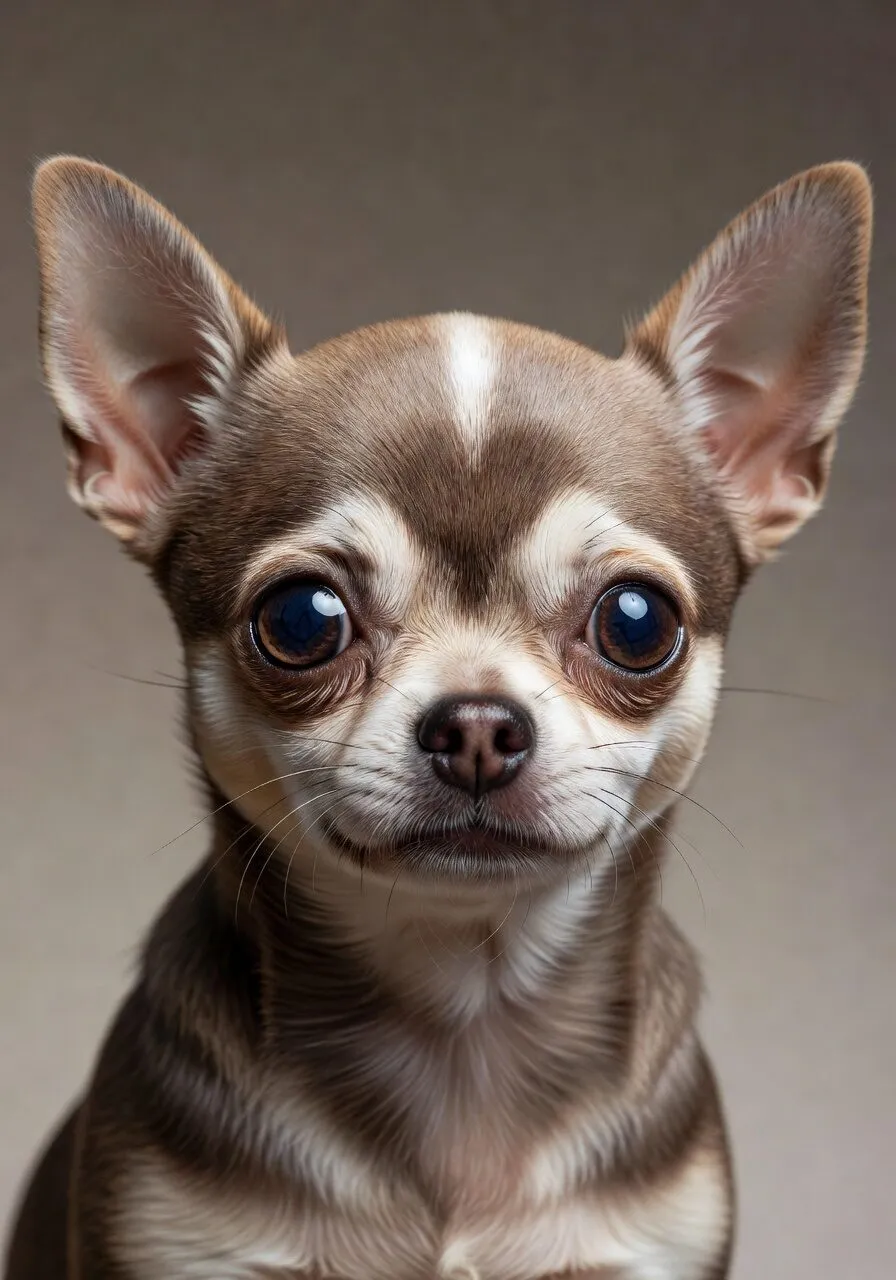
Read the AKC standard slowly. (7) The "apple dome" skull is the breed's defining cranial feature; (8) the molera, an open fontanel where the parietal bones never fully close, is breed-typical and benign in most adult chihuahuas, though it deserves protection during rough handling. (9) The trachea is narrow; collapsing trachea is a documented predisposition in toy breeds and a reason to use a Y-front harness rather than a collar on lead. (10) The breed's resting heart rate runs 100 to 140 beats per minute, the highest of any AKC-recognized breed, per veterinary cardiology references including the 2018 ACVIM consensus statement on cardiac disease in small dogs.

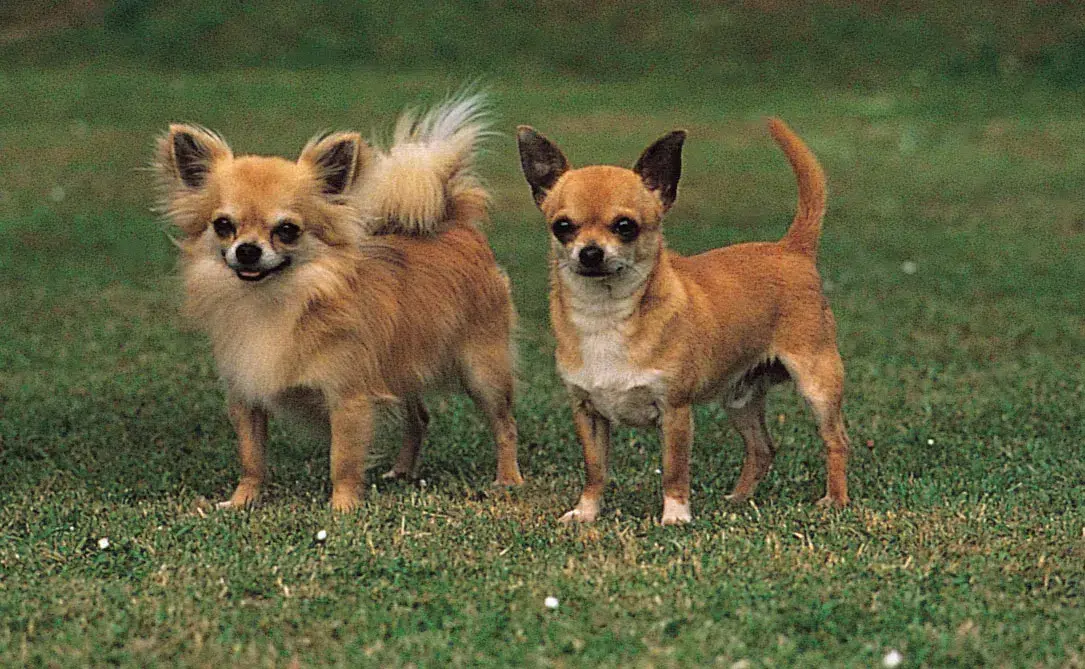
(11) Brain-to-body ratio: among the highest in Canis familiaris, a fact that gets quoted constantly and explains less than people think. High ratio does not equal high trainability; it correlates with environmental vigilance, which is exactly what you see at home. (12) Two recognized head types within the standard: apple head, which is the show ring's preference, and deer head, which is common in companion lines and disqualified in the conformation ring. (13) Two recognized coats: smooth and long. They are interchangeable in pedigrees. A smooth-coat litter can produce a long-coat puppy when both parents carry the recessive.
Temperament: the part most owners get wrong
The breed's reputation for being "yappy" or "nervous" is not innate aggression; it is the practical output of a small dog with a long working memory and very few physical defenses. (14) Chihuahuas bond hard, often to one person, a pattern documented in companion-breed literature going back to Coile's 2009 reference work. (15) They are not a pack-cooperative breed; (16) they were selected for individual companionship for centuries. (17) That bond is not insecurity; it is design.
(18) The breed scores well on object permanence and short-recall tasks but poorly on novel-stranger sociability without early socialization. (19) The optimum socialization window for chihuahua puppies, per the AVSAB position paper of 2008 and reaffirmed by current behavior consensus, is three to fourteen weeks. Miss it and you do not get it back; manage it well and you get a confident dog. If you want the field guide for the warning signs that something has gone sideways, the companion piece on the seven signs of nervous-to-aggressive escalation covers each cue in order.
Health and longevity: the practical facts that change husbandry
(20) Average lifespan is 14 to 16 years, with documented outliers into the late teens; the breed sits near the top of the toy-dog longevity tables, which I covered in detail in the companion chihuahua lifespan piece. (21) Periodontal disease is the most common chronic condition in the breed; forty-two adult teeth in a small jaw produces crowding, and crowding produces tartar. (22) Patellar luxation incidence has been reported as high as thirty percent in small-breed surveys; the AKC parent club's health survey tracks this annually.
(23) Hypoglycemia is a real and time-sensitive risk in puppies and very small adults; (24) the breed's narrow tracheal lumen makes brachycephalic-style heat sensitivity a concern in summer, even though the chihuahua is not a brachycephalic breed; (25) the open fontanel, when persistent into adulthood, is not in itself pathological but warrants a cautious approach to roughhousing and overhead play.

A small final observation. The AKC's national breed standard takes about ninety seconds to read. The breed itself takes a lifetime. The first standard I read at twenty-six told me about head shape; the standard I read this morning, after nineteen years and several hundred chihuahuas through the show ring, told me about the dog asleep on the couch in the next room. Same standard. Different reader. That is the whole game.
If you want more from this beat, explore more chihuahua breed dispatches or subscribe to get the next one in your inbox.
Is this Chihuahua right for you? auto_awesome
Want to learn more about your Chihuahua? Compare breeds, check the standard, and find the chihuahua that matches your home.
favorite