
What can you do at home about chihuahua bad breath? More than most owners realize, and less than the home-remedy aisle would suggest. Chihuahua dental care is the single highest-leverage habit in the breed, and bad breath is usually the first visible sign that the underlying dental disease has been progressing for months.
This piece is the practical version. None of it is a substitute for a dental examination by your veterinarian.
Why Chihuahuas Have Bad Breath More Often Than Other Breeds
Forty-two adult teeth in a small jaw. The crowding produces tartar, the tartar produces gingivitis, and the gingivitis produces halitosis along with the inflammatory cascade that drives early tooth loss. AKC's periodontal disease reference treats this as the most common chronic condition in toy breeds; the 2019 AVMA dental survey reported that more than eighty percent of dogs over three years old show clinically meaningful periodontal disease, with toy breeds over-represented.
article_in_feed
A handpicked find for your tiny companion.
Home Practices That Actually Help
1. Daily tooth brushing
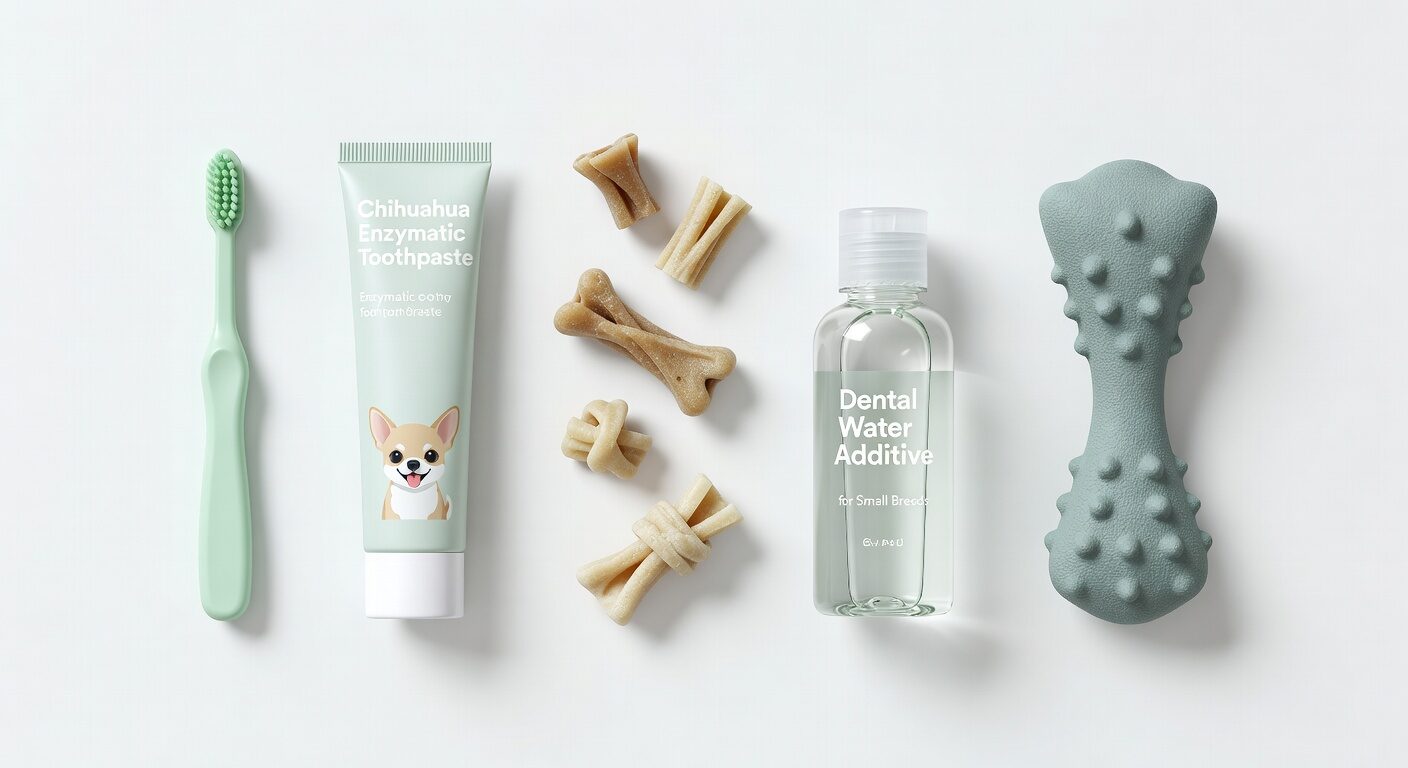
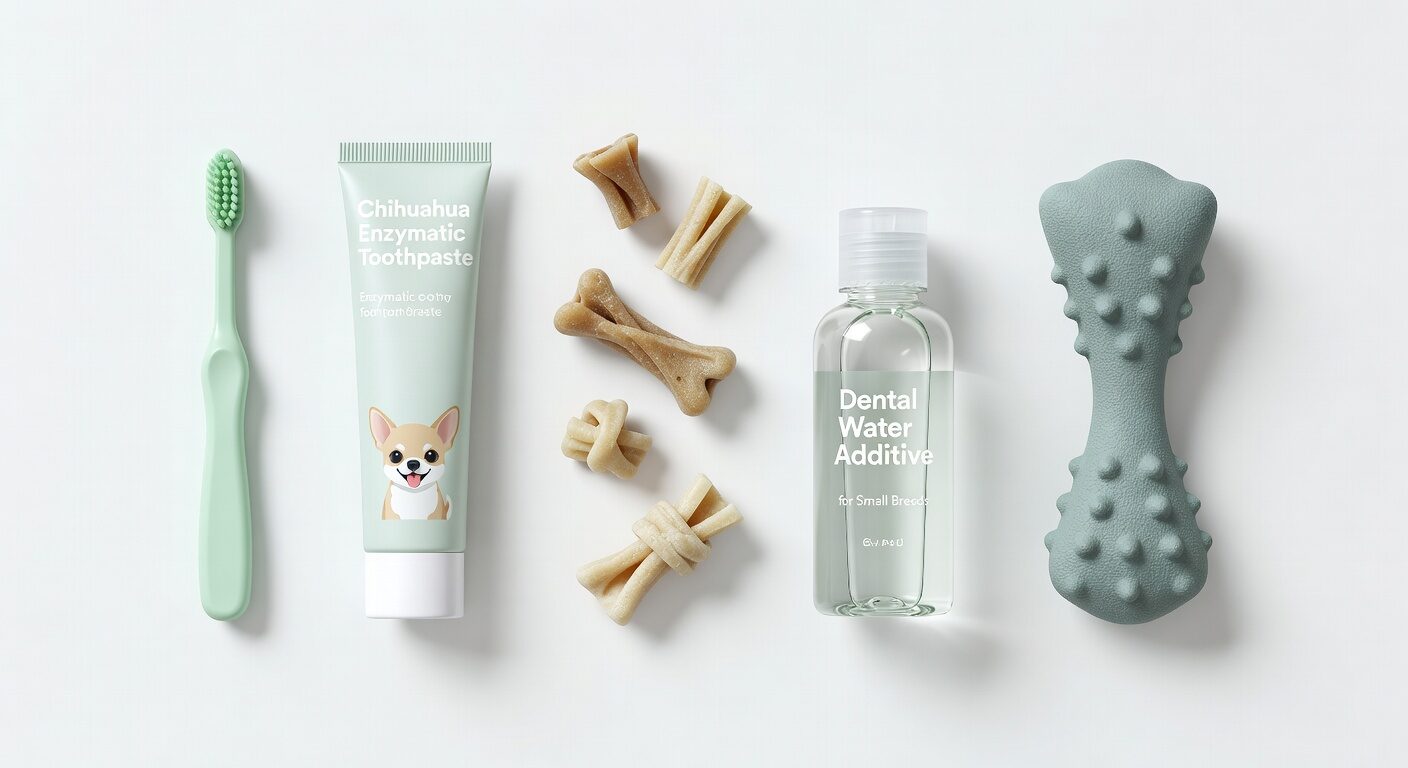
The most boring recommendation is the most effective one. Daily brushing with a chihuahua-sized toothbrush and an enzymatic, pet-safe toothpaste reduces tartar accumulation and pushes out the timing of the next professional cleaning by months. The Merck Veterinary Manual treats daily brushing as the gold-standard home intervention. Human toothpaste is not appropriate; it contains fluoride at doses that are toxic to dogs.
2. Dental chews and water additives
The Veterinary Oral Health Council maintains a list of products with documented efficacy. Chews and additives that carry the VOHC seal have demonstrated tartar or plaque reduction in independent trials. Products that do not carry the seal may still help; they have not been tested.
For a chihuahua, dental chews need to be sized for toy breeds. A chew designed for a Labrador will be both ineffective at the chihuahua's tooth contact and a choking hazard.
3. Professional cleanings on the cadence your vet recommends
Most chihuahuas need a professional cleaning every twelve to eighteen months from age three onward. The cleaning is performed under anesthesia and includes scaling above and below the gum line, polishing, and any extractions of teeth that cannot be saved. The companion piece on chihuahua lifespan covers the long-arc reasons this cadence matters.
When Bad Breath Is a Vet Visit, Not a Home Remedy
Same-day reasons: blood at the gum line, an obviously broken tooth, a dog refusing food due to mouth pain, or sudden facial swelling. Within the week: persistent halitosis that has not improved with two weeks of consistent home care; visible tartar that you can scrape with a fingernail; receding gums; dental pain on chewing.
Bad breath that is genuinely sudden and severe, particularly in a chihuahua who is otherwise behaving normally, can occasionally signal kidney or liver disease. AAHA's pet dental page covers the differential.
What to Do This Week
One practical step: pick a chihuahua-sized toothbrush and an enzymatic toothpaste, and brush for thirty seconds tonight. Build to a full minute over a week. Daily, not perfect.
For more clinical explainers, browse the Health desk or subscribe for the next dispatch. Talk to your veterinarian about anything that does not look right at home.
Health at a Glance: What to Watch monitor_heart
| Condition | Key Signs | Prevention Tips |
|---|---|---|
| Dental Disease | Bad breath, tartar, red gums | Daily brushing, dental treats |
| Patellar Luxation | Limping, skipping, leg lifting | Weight control, avoid high jumps |
| Tracheal Collapse | Dry cough, gagging | Harness walking, avoid smoke |
| Heart Disease | Coughing, fatigue, fainting | Regular check-ups, heart-healthy diet |
| Hypoglycemia | Shaking, weakness, lethargy | Small, frequent meals |
Community Insights – FAQ help
help_outline What should every Chihuahua owner know about Health? expand_more
Stay observant — small changes in routine, energy, or appetite are usually the first signal something needs attention.
help_outline Is a tailored approach really necessary for Chihuahuas? expand_more
Yes. Their tiny size means smaller portions, gentler activity, and more frequent check-ins than larger breeds.
help_outline How often should we revisit our routine? expand_more
At least quarterly, and any time you notice a change. Small dogs, small adjustments — early and often.
Have a health question? Ask in the comments and we’ll bring it up with our vet team.
favorite