

For the first six months I had my chihuahua Banjo, I treated his "walks" as bathroom trips: open the back door, let him go in the yard, call it done. Exercise accomplished. Walk complete. Box checked. Except, on closer examination, none of those were true. Banjo was bored, under-stimulated, and increasingly restless because his entire world was the small backyard. The actual walk, when I finally started doing them, changed his behavior pattern measurably within two weeks.
Below is what I have figured out in the years since about walking a chihuahua well. The honest version is that walking a four-pound dog is not the same as walking a forty-pound dog, and the small-dog specifics matter.
Why structured walks matter for chihuahuas, briefly
The behavioral and physical benefits compound. A few specifics:
- Mental stimulation. The variety of smells, sights, and small environmental changes during a walk produces, on the canine cognition literature, more enrichment than a same-amount of yard time.
- Calmer baseline. A chihuahua with two daily walks tends to be calmer in the household than one without. A separate piece on digging covers a related under-stimulation pattern.
- Socialization. Sidewalk encounters with neighbors, other dogs at distance, and varied environments reinforce the early socialization work. The socialization guide covers the underlying frame.
- Physical conditioning. The breed is small but the cardiovascular and joint maintenance needs are real.
The harness, briefly
A chihuahua's walks should attach to a Y-front harness, not a collar. The cervical and tracheal anatomy of the breed makes collar pressure during walks a meaningful clinical risk. A separate piece on collars and necks covers the underlying anatomy. The harness should fit:
- Two finger-widths under the neck strap.
- Chest strap two finger-widths behind the front legs.
- Soft padded fabric at all contact points.
- Front-clip ring for dogs who pull; back-clip for calm walkers.
Route choice, plainly
The route matters more than most owners realize. A few practical points:
- Quiet streets first. A chihuahua on a busy main road is in sensory overload most of the time; the quiet residential street produces a calmer walk and better socialization opportunities.
- Vary the route. The same loop every day produces a less stimulated dog than alternating among three or four routes.
- Sniff time. The "sniff walk" (slower pace, dog leads on direction within reason, pauses for scent investigation) is, on the canine enrichment literature, more useful than a brisk pace.
- Avoid known reactive triggers until the dog has done the threshold work. Walking past the yard with the unfriendly dog every day is not, on the available evidence, exposure therapy; it is repeated stress.
Weather considerations, plainly
A four-pound dog's thermoregulation math is not the same as a forty-pound dog's. The temperature thresholds tighten:
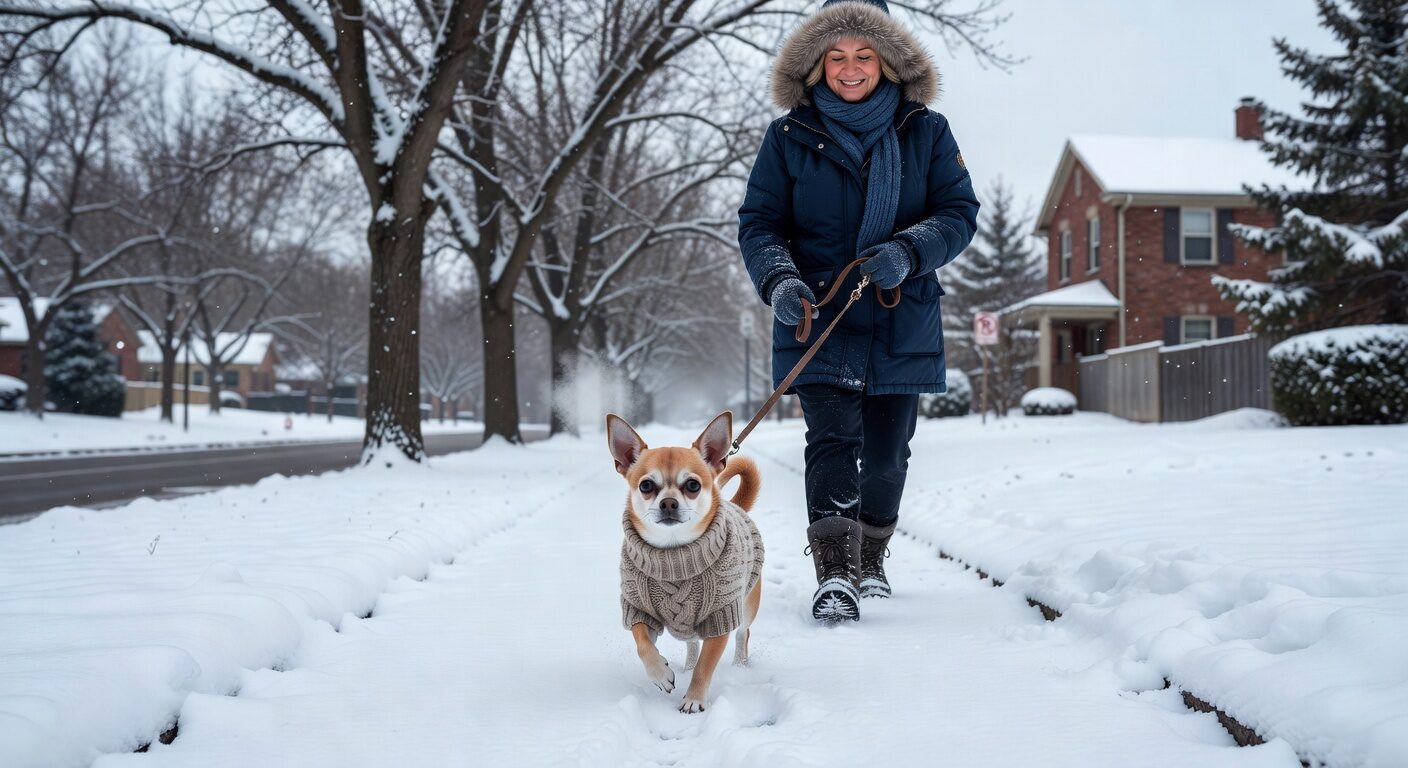
Cold weather (below 50°F). Most chihuahuas need a fleece-lined coat. Below 32°F, also consider paw protection or limited duration. Below 20°F, very brief outdoor time only.
Hot weather (above 80°F). Walks at cooler hours (early morning, evening). Test the pavement with your hand for ten seconds; if it is uncomfortable to your palm, it is dangerous to her paw pads. A separate piece on cooling covers the broader thermal management.
Wet weather. Many chihuahuas refuse to walk in rain. A small raincoat, a covered area, or indoor enrichment as a substitute on heavy-rain days. A separate piece on housebreaking covers the related rain-and-bathroom question.
Snow. Many chihuahuas tolerate brief snow walks with a coat and paw protection; salt and chemical de-icers are toxic and require either booties or a thorough paw rinse on return.
Duration, plainly
The right walk duration depends on the dog's age and conditioning level. Reasonable defaults:
- Puppies (under 6 months): Two short walks per day, 5 to 10 minutes each. Avoid overexertion.
- Young adults (6 months to 2 years): Two walks per day, 15 to 25 minutes each.
- Adults (2 to 8 years): Two walks per day, 20 to 30 minutes each, with weather and conditioning adjustments.
- Seniors (8+ years): Adjusted to comfort. Some seniors do well with two 15-minute walks; some need shorter walks or fewer per day. The senior-care primer covers the broader picture.
The variable that matters more than absolute duration is consistency. Two 15-minute walks at 7 a.m. and 6 p.m. produces a more settled dog than one 30-minute walk at variable times.
Leash handling, briefly
A few specific points on the leash itself:
- Length. Four to six feet is the practical range. Retractable leashes are not, on the safety evidence, recommended for chihuahuas; the inability to manage the dog quickly during a sudden encounter is a real risk.
- Material. Soft webbing or padded leash. The thin nylon "training" leashes can produce hand burns on a sudden lunge.
- Carry the leash with both hands available. In an unexpected encounter, you may need to pick the dog up quickly.
The leash-training primer covers the broader handling skill.
Other dogs, strangers, and unexpected encounters
A few practical strategies:
- Pick the dog up before close encounters with unfamiliar large dogs. The size differential math is unforgiving; the pickup is not coddling, it is risk management.
- Step off the path or behind a barrier when an off-leash dog is approaching. Many off-leash dogs are friendly; many are not, and the math during the brief uncertainty does not favor a chihuahua.
- Stranger interactions should happen on the chihuahua's terms. A stranger who wants to pet the dog should kneel down and wait for the dog to approach rather than reach toward her.
- Read the body language. A separate piece on body language covers the cues you are watching for.
The bottom line, with the usual caveat
Walking a chihuahua well is mostly about the small-dog specifics: harness fit, route choice, weather thresholds, duration, and the management of unexpected encounters. The structured walk produces a meaningfully calmer dog at home; the bathroom-only yard trip does not. The AKC's general dog-walking guidance covers the broader category; the chihuahua-specific math tightens the thresholds. Talk to your veterinarian about your specific dog if you have any concerns about exercise tolerance; the wellness exam is the right place to refine the plan.
Health at a Glance: What to Watch monitor_heart
| Condition | Key Signs | Prevention Tips |
|---|---|---|
| Dental Disease | Bad breath, tartar, red gums | Daily brushing, dental treats |
| Patellar Luxation | Limping, skipping, leg lifting | Weight control, avoid high jumps |
| Tracheal Collapse | Dry cough, gagging | Harness walking, avoid smoke |
| Heart Disease | Coughing, fatigue, fainting | Regular check-ups, heart-healthy diet |
| Hypoglycemia | Shaking, weakness, lethargy | Small, frequent meals |
Community Insights – FAQ help
help_outline When should I call my vet about a behavior change? expand_more
Sooner than feels reasonable. A change in appetite, energy, or routine that lasts more than 48 hours is worth a phone call, not a wait-and-see.
help_outline How often should a healthy adult chihuahua see the vet? expand_more
Once a year through age seven. Twice a year from eight on. Dental checks are part of every visit.
help_outline Do chihuahuas need different care than larger breeds? expand_more
Yes. Smaller medication dosing, more frequent dental work, and closer monitoring for tracheal and patellar issues are standard in toy-breed care.
Have a health question? Ask your question in the comments. We will bring it up with the vet team.
favorite