

Why does my chihuahua flatten her ears in some situations and not others, and what is she actually communicating with the wagging-tail-but-stiff-body posture I had been reading as friendly? In short: chihuahua body language is more legible than most owners realize, the cluster-of-signals reading is more reliable than any single cue, and the skill is the single most useful thing a household can develop for living well with the breed. The dog who bites the visitor "out of nowhere" was, in nearly every case I have reviewed in clinic, signaling clearly for some seconds before the bite; the household just had not been reading the signals.
I want to walk through the main body-language clusters in chihuahuas, what each one indicates, and the specific patterns that warrant a different household response than the one most owners default to.
Why clusters matter more than single cues
A wagging tail, taken alone, is not a meaningful indicator of the dog's emotional state. A wagging tail paired with a relaxed body, soft eyes, and approach behavior is a friendly signal. A wagging tail paired with a stiff body, hard stare, and forward weight distribution is a different signal entirely. Reading individual cues without their cluster context is, on the available behavioral evidence, the single most common owner error.
The four main clusters, in approximate frequency:
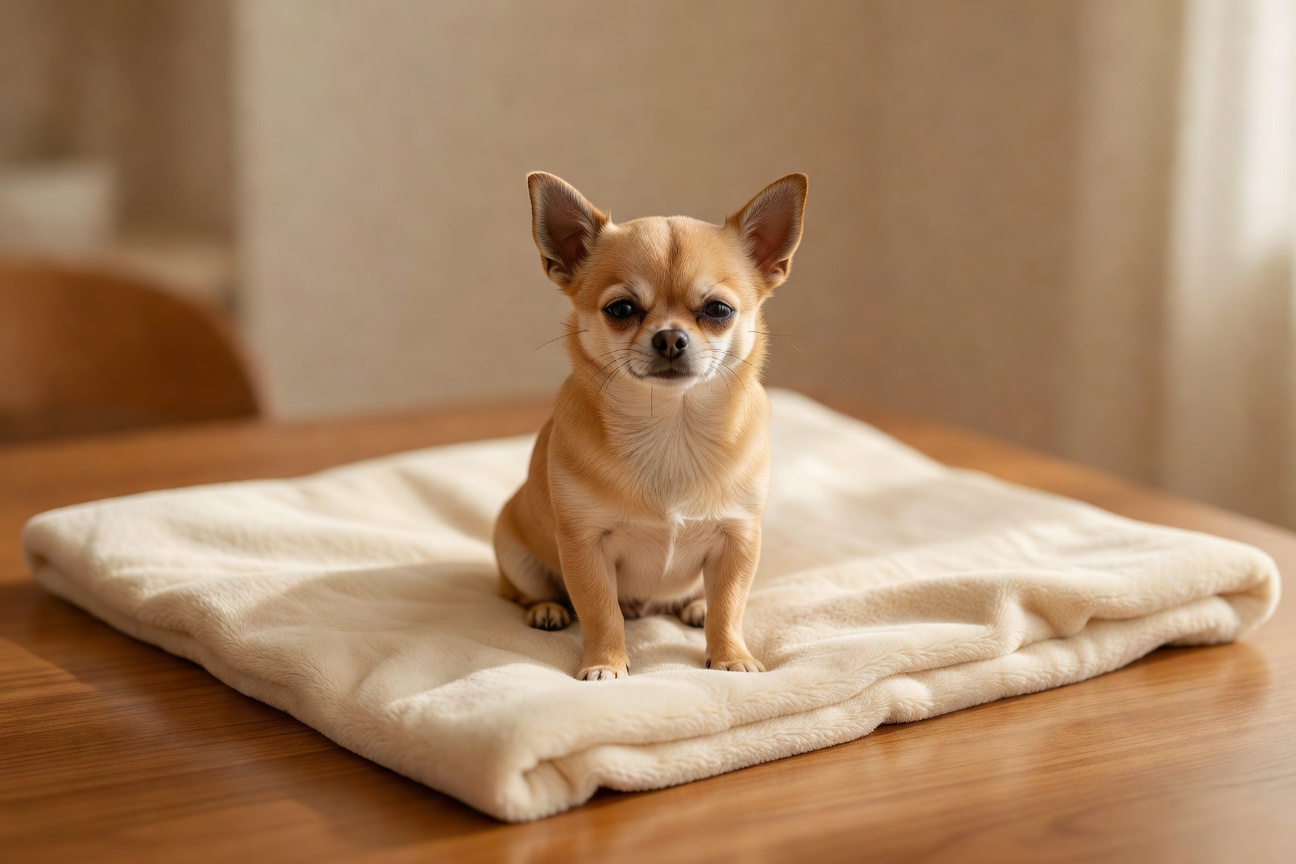
Relaxed and content. Loose body, soft eyes, mouth slightly open or relaxed-closed, ears in neutral position, tail in neutral or gently wagging position. The household-baseline state.
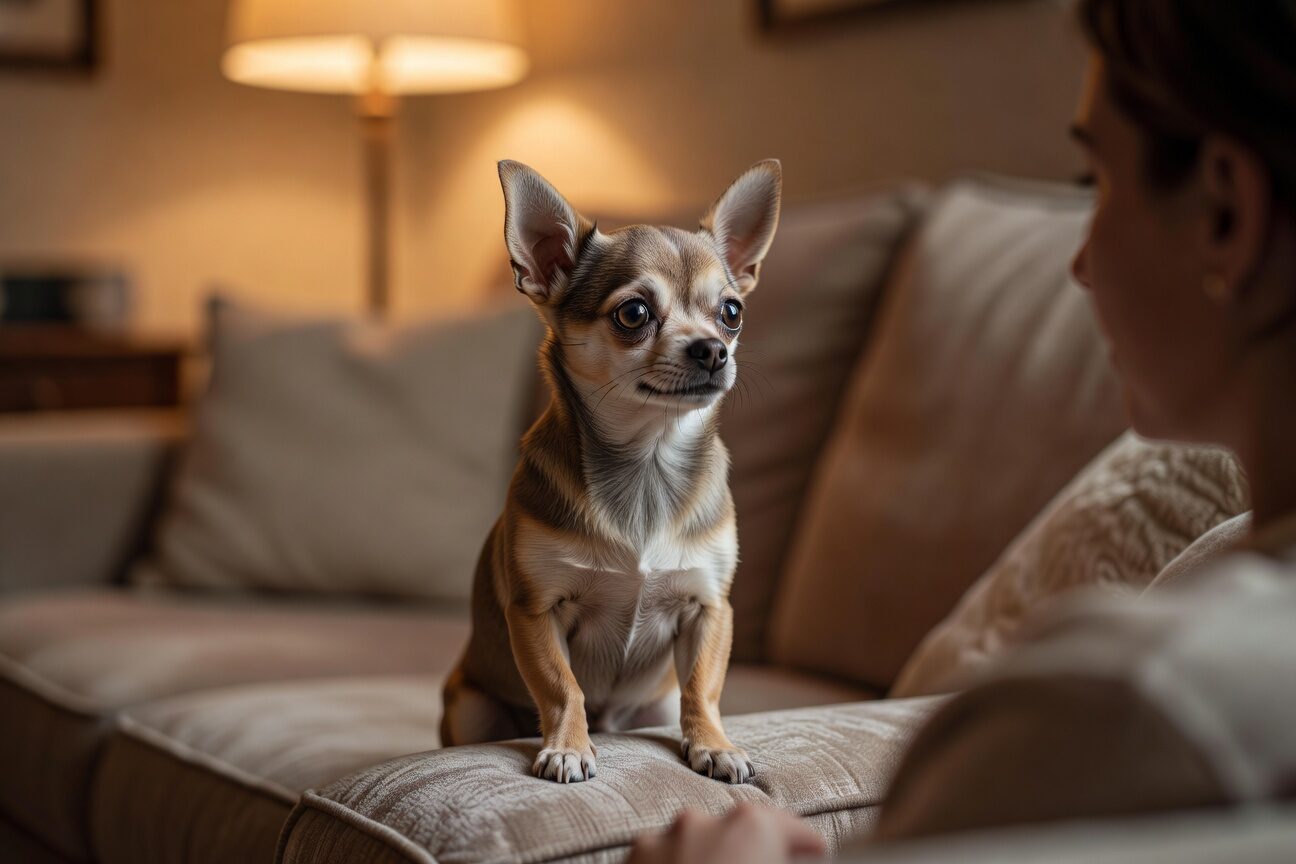
Alert and interested. Body weight slightly forward, ears forward, eyes wide and bright, tail elevated and possibly wagging in larger arcs. Engaged, focused, often pre-play or pre-investigation.
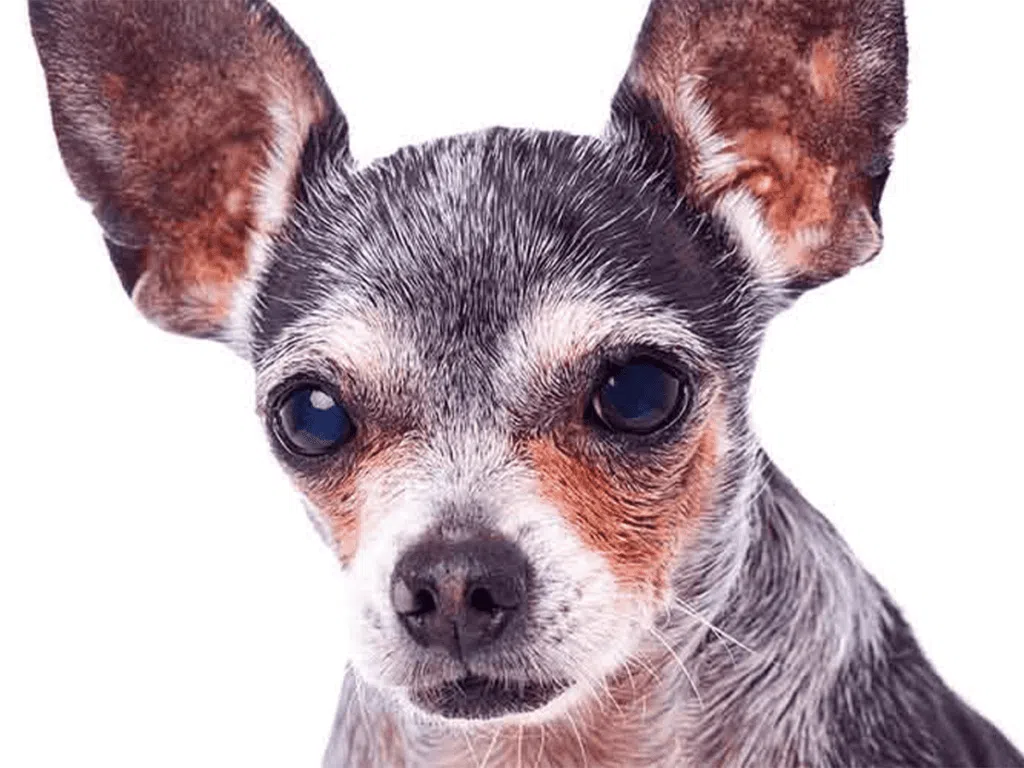
Stressed or fearful. Body lowered, ears flattened or pinned back, lip licks, yawns, tail tucked or low, eyes showing whites (whale eye), tendency to retreat. The household-management state.
Aroused or defensive. Body stiff, ears forward (sometimes rotated), hard stare, tail high and stiff (sometimes still, sometimes vibrating rapidly), forward weight distribution, lifted lip or visible teeth. The household-de-escalate state.
The stress signals owners most commonly miss
A short list of cues that, in my training experience, are most often missed:
- Lip licks. A quick tongue flick over the nose, often paired with other stress signals. Frequently the first signal that the dog is uncomfortable.
- Yawns. When the dog is not tired, yawns are stress signals. A yawn during a handling session or a stranger interaction is meaningful.
- Whale eye. The whites of the eyes visible at the corners. The dog is tracking something while keeping her body oriented elsewhere; she is monitoring a threat.
- Looking away. The dog turning her head away from a person or another dog is asking for space. Honor the request.
- Slow blinks or extended squints. A calming signal, often given by the dog to indicate she is not a threat.
- Stiff body during a wagging tail. A common confusing combination. The wag does not override the stiffness; the dog is in a complex state with both stress and engagement components.
A separate piece on stress management covers what to do when these signals appear; this piece is the diagnostic side.
The defensive cluster, in detail
Because the consequences of misreading the defensive cluster are larger than the consequences of misreading the others, it is worth spending more time on it. The progression of signals before a bite, in the typical chihuahua escalation:
Stage 1: Avoidance. The dog tries to leave the situation. Looking away, moving away, retreating to a corner.
Stage 2: Communication. Lip licks, yawns, whale eye, freeze. The dog is communicating discomfort while still trying to avoid escalation.
Stage 3: Threat display. Lifted lip, visible teeth, low growl. The dog is now telling you, clearly, that she is uncomfortable and wants the situation to change.
Stage 4: Snap. A quick mouth movement that does not make contact. A warning bite.
Stage 5: Bite. Contact with the teeth.
The household that reads stages 1 and 2 has many opportunities to de-escalate. The household that reads only stages 3 and 4 has fewer. The household that reads only stage 5 has a problem that has, in retrospect, been brewing for some time. A separate piece on chihuahua biting covers the protocol after a bite has occurred.
The tail, briefly
The tail position and movement give substantial information when read with the rest of the body:
- Tail held low or tucked under: nervous, fearful, or submissive.
- Tail in neutral position with relaxed wag: content, friendly.
- Tail held high with broad wag: excited, often pre-play or pre-greeting.
- Tail held very high with stiff small fast wag: aroused, possibly defensive. The fast small wag is often misread as friendliness; the stiffness is the diagnostic feature.
- Tail held still and high above the body line: alert and tense, often pre-defensive.
The ears, briefly
The chihuahua's relatively large upright ears are unusually expressive:
- Ears in neutral position: calm, baseline.
- Ears forward and erect: alert, interested.
- Ears slightly back: mild stress or appeasement.
- Ears flat against the head: significant stress or fear.
- Ears rotated outward: often a precursor to a defensive response.
The mouth, briefly
The mouth is one of the most informative single areas:
- Mouth slightly open, relaxed: calm.
- Mouth tightly closed: tense or focused.
- Lip puckering or commissures pulled back: stress.
- Lifted lip showing teeth: threat display.
- Repeated lip licks: stress signal.
- Yawn (when not tired): stress signal.
Reading in context, briefly
The same physical signals can mean different things depending on context. A tail tucked low during a thunderstorm is fear; a tail tucked low during a vet visit is the same fear directed at a different trigger. The behavioral diagnosis is what the dog is communicating; the contextual diagnosis is what the dog is communicating about.
A few specific household contexts to read carefully:
- Greeting at the door: relaxed-and-engaged versus alarmed.
- Stranger approaching: confident interest versus cautious freeze versus pre-defensive arousal.
- Other dog encountered: play-bow signals versus stiff-body alert.
- Handling session: relaxed acceptance versus active avoidance versus defensive freeze.
- Resource near another animal: relaxed sharing versus stiff-body resource guarding.
A separate piece on chihuahua instincts covers the underlying ancestral behavioral toolkit that produces many of the signals; the reading is the household-level skill that interprets them.
Developing the skill, briefly
The body-language reading skill is, on the available data, mostly developed through observation and feedback over months. Practical advice for households starting out:
- Spend a few minutes each day actively watching the dog without doing anything else. The patterns become legible with practice.
- Take videos of any specific situation that confused you; review them later with the cluster framework.
- Read the cues in clusters, not individually.
- Trust the dog's communication; if she is signaling discomfort, give her space rather than persisting.
The Companion Animal Psychology archive covers the broader literature on canine body language; the chihuahua-specific application is mostly the same with a smaller scale.
The bottom line, with the usual caveat
Chihuahua body language is legible when read in clusters, with attention to the specific signals that owners commonly miss (lip licks, yawns, whale eye, stiff-body wags). The skill is the single most useful one a chihuahua household can develop. Talk to your veterinarian or a credentialed force-free trainer if anything in your dog's signaling pattern is concerning; the in-person read is more reliable than any general article.
Gear That Works backpack
Harness (Not Collar)
A step-in harness is safer and more comfortable.
Lightweight Leash
4–6 feet gives freedom without losing control.
Treat Pouch
Keep rewards accessible and distraction-free.
ID Tag & Microchip
Always be prepared in case of separation.
Trainer Tip: Success on walks starts with reading your Chihuahua's signals and respecting their pace.
Was this guide helpful?
Was this guide helpful? Save the guide. Share it with one other chihuahua owner this week.
favorite