

My chihuahua Doris has, by my count, claimed the left side of the couch. Not formally; there was no paperwork. But every member of the household understands that the left cushion is, on the household's tacit constitution, Doris's. If you sit there, she will stand on the armrest and stare. If you remain, she will sigh in a way that is, by any honest reading, performative. If you persist, she will sit on you, which technically resolves the conflict in your favor while functionally resolving it in hers.
I have spent most of my career writing about breeds, and the chihuahua is, on the available genetic and behavioral evidence, an unusually intact small dog. The Plassais et al. 2019 work on canid genetics, paired with the older Ní Leathlobhair 2018 mitochondrial DNA studies, traces the breed's lineage back through Mexican Techichi dogs to Asian and Siberian dog populations that pre-date most modern breeds. The result is a small body with a remarkably intact ancestral behavioral toolkit. Below is the working summary.
What the genetic record actually shows
The chihuahua's genetic provenance is, on the published phylogenies, in the "ancient" cluster of dog breeds rather than in the modern reconstructed-from-recent-types cluster. The Techichi lineage from pre-Columbian Mexico, while substantially admixed with European dog populations after Spanish contact, retained enough of its original genetic profile that the modern chihuahua tests as one of the more distinctive breeds in mitochondrial DNA studies.
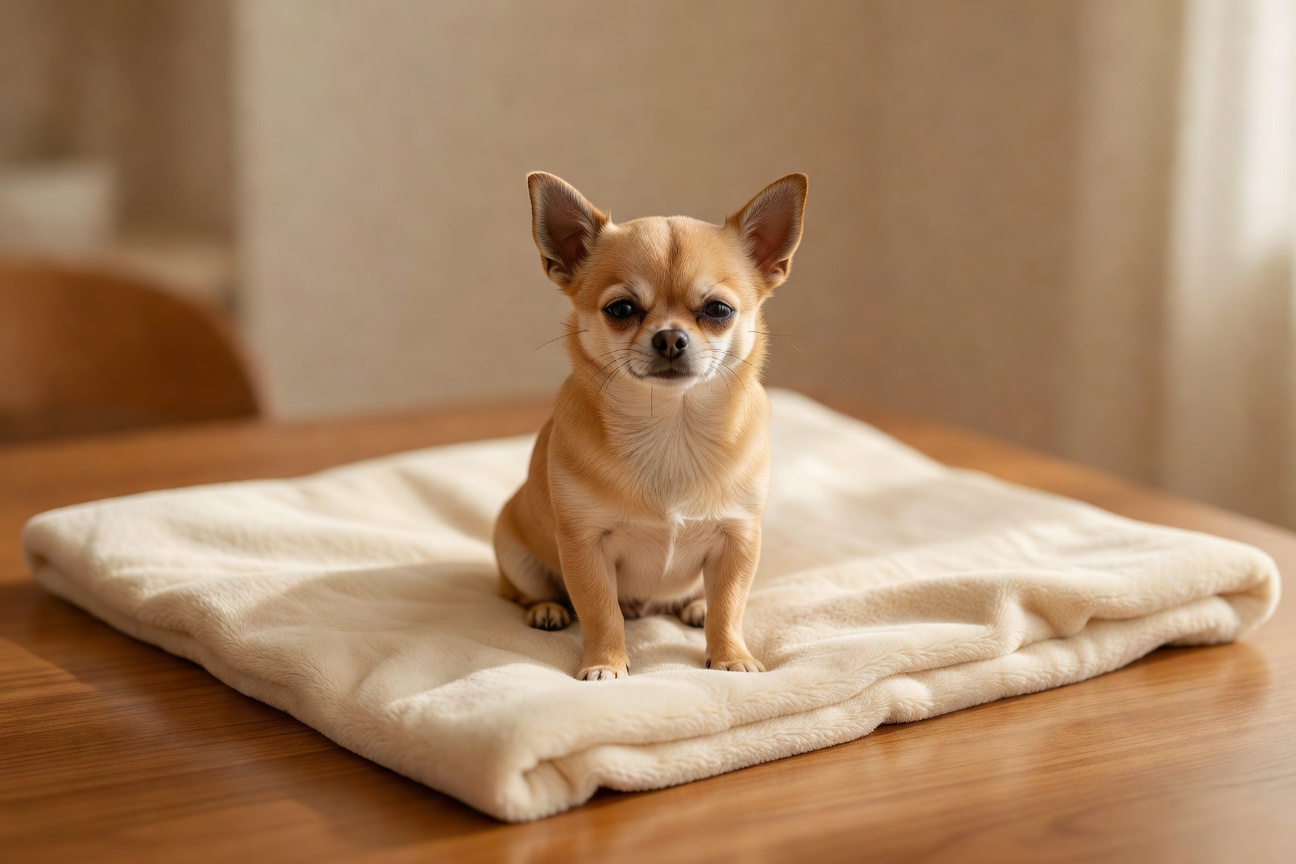
The behavioral implication of this is, on careful examination, that the chihuahua's behavioral package is closer to the ancestral wolf-like ground-state than many modern breeds. The retrieving and herding modifications that European breeds underwent over centuries did not, in large part, run through the chihuahua's lineage. The dog you have on your couch is, in honest accounting, a small intact predator with a household veneer.
The territorial instinct, plainly
The left-cushion behavior I described in the opening is, on the behavioral analysis, not an idiosyncrasy of Doris. It is a manifestation of the territoriality that the species inherited from its wolf ancestors and that domestic breeding, in the chihuahua's lineage, did not substantially attenuate.
A few specific manifestations of the territorial instinct in chihuahuas:
- Resource claiming. A specific bed, a specific cushion, a specific corner of the kitchen. The dog selects; the household ratifies.
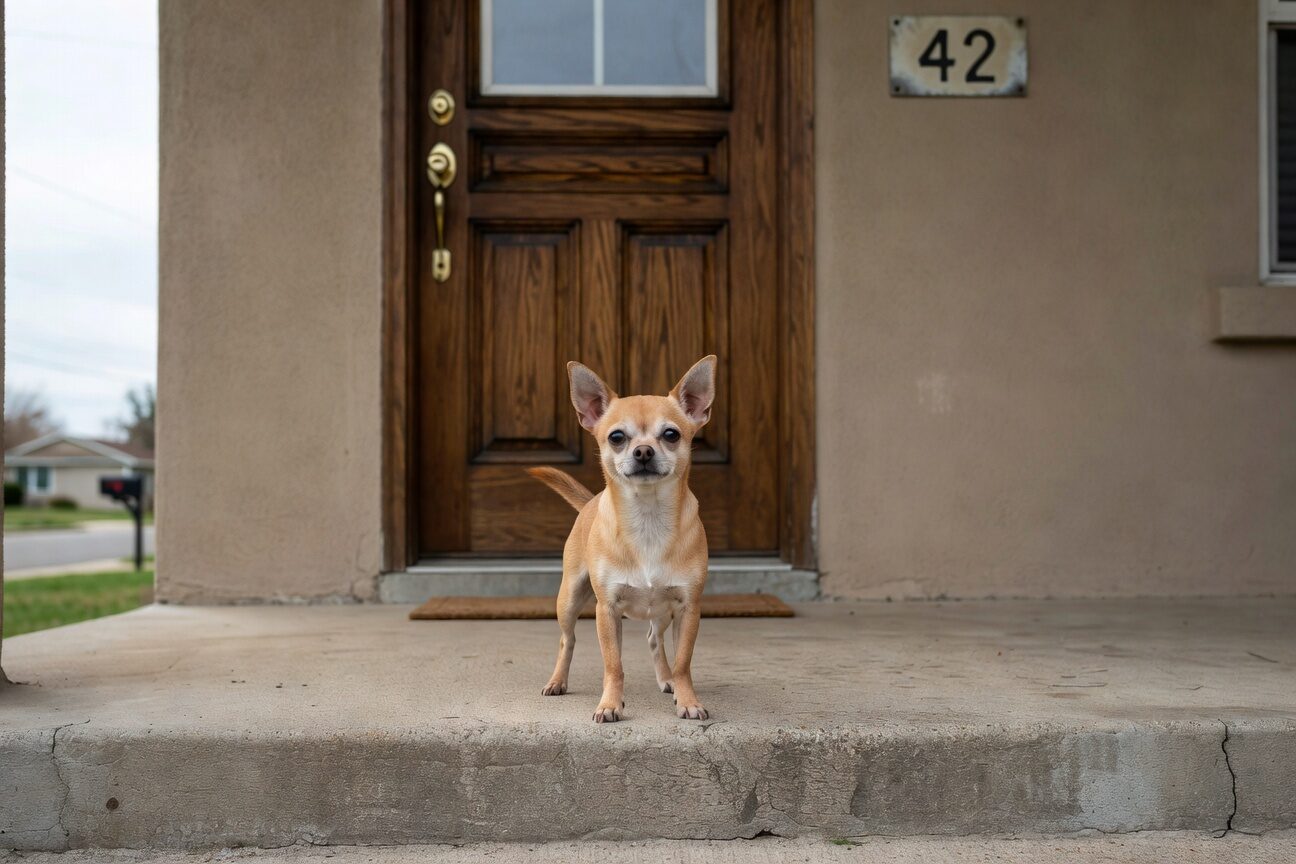
- Threshold guarding. Many chihuahuas alert at any approach to the household perimeter (front door, window line, gate). The behavior is consistent with the ancestral camp-watching role.
- Possessive behavior over food and toys. The chihuahua's disposition to guard a chew or a meal is, on the available behavioral evidence, more pronounced than in many small breeds.
A separate piece on multi-dog dynamics covers how the territorial instinct interacts with the household's behavioral economy.
The pack orientation, briefly
A second instinct that runs strongly in chihuahuas: pack orientation. The breed shows, on the available behavioral data, an unusually strong attachment to its household members and a corresponding distrust of non-household humans. The "one-person dog" reputation, while not literal, points at something real.
The Plassais work and subsequent canine cognition research support a distinction between breeds whose social orientation is generalized (a Labrador greets all humans similarly) and breeds whose social orientation is specifically directed at the in-group (a chihuahua's relationship with her household members is qualitatively different from her relationship with strangers). The chihuahua is, by selection, in the second category.
The household implication: a chihuahua who is reactive to strangers is not, in any sense, behaving anomalously. She is expressing the breed's intact pack-discrimination behavior, calibrated for a small body in a household where the household members are, on her behavioral economy, the actual pack.
The prey drive, surprisingly real
A four-pound dog has, on the surface, no business with a meaningful prey drive. The chihuahua, on the available behavioral evidence, does not, on examination, agree with this assessment. The breed shows:
- Strong chase responses to small fast-moving objects: squirrels, birds, blowing leaves, the household cat in motion.
- Persistent stalking behavior in some individuals; a pre-pounce stillness that is unusually intact for a companion breed.
- Vermin response. The breed's history in rural Mexican villages included, by historical record, vermin control of small rodents and lizards. The retained behavior is observable in modern chihuahuas, who often locate and pursue insects and small mammals with considerable focus.
The household implication: a chihuahua's interest in moving objects is not simply playful. It is the residue of a real working role, expressed at small scale.
The sleep architecture, briefly
A less obvious ancestral retention: chihuahua sleep architecture. The breed shows, on the available canine sleep research, the polyphasic sleep pattern characteristic of wild canids: many short sleep periods across the day rather than one long consolidated sleep. The fourteen-hour daily sleep total is normal; the distribution across many sub-periods is the ancestral pattern.
The pre-settle circle behavior most chihuahuas perform before lying down is, by behavioral analysis, the inherited grass-flattening behavior from wild ancestors. The couch is not, of course, grass; the genetic instruction is, however, not aware of the substitution.
The vocal toolkit, briefly
The chihuahua's range of vocalizations, on the comparative-canine literature, is wider than most small breeds. The barks, growls, whines, and yips are joined, in many individuals, by the high-pitched alert call that is, on the behavioral analysis, similar to the alarm calls used by wild canid groups to signal a perimeter incursion.
A separate piece on chihuahua vocalizations covers the household-side decoding; the breed-history side is that the toolkit is, again, more ancestral than the dog's size suggests.
What the instincts do not explain
I want to be careful about overreach here. The intact ancestral toolkit explains some of the chihuahua's distinctive behaviors. It does not explain:
- Anxiety patterns specific to the dog's individual history. A chihuahua who is fearful of strangers may be expressing breed-typical pack-discrimination, but she may also have an undertrained socialization period or an aversive history. A separate piece on socialization covers the household-side variable.
- The sock-stealing pattern many chihuahuas develop. This is, on examination, a household-engagement variable rather than an ancestral one. A separate piece covers the underlying engagement question.
- Any specific health condition. Genetic predispositions to dental crowding, patellar luxation, and mitral valve disease are real but separate from the behavioral toolkit. The common health-issues primer covers the conditions.
The honest bottom of the question
The modern chihuahua is, on the genetic and behavioral evidence, a small dog with an unusually intact ancestral behavioral package. The territorial instinct, the pack orientation, the prey drive, the sleep architecture, the vocal toolkit are all closer to the wolf-like ground state than the package the average modern breed shows.
This is, in my view, part of why chihuahuas reward attentive handling. The dog is, on the available behavioral economics, doing meaningful work in the household: watching the perimeter, monitoring the in-group, alerting to incursions. The work is a small specific contribution to the household's situational awareness, and the dog is, by selection, well-suited to it. Doris, on her left cushion, is not being difficult. She is on watch. The AKC breed standard covers the formal description; the behavioral side is what the household actually lives with.
The bottom line, briefly, from the breed-history desk
The chihuahua's instincts are real, more intact than the dog's size suggests, and worth understanding for the household that wants to live well with the breed. A separate piece on the broader breed history covers the chronology; this column covers the behavioral residue. Talk to your veterinarian about any specific behavioral concerns; the breed-typical and the individual signals can be hard to separate without a clinical read.
Is this Chihuahua right for you? auto_awesome
Want to learn more about your Chihuahua? Compare breeds, check the standard, and find the chihuahua that matches your home.
favorite