

A few weeks ago I wrote a short history of the chihuahua. A handful of readers wrote in asking for more, particularly on the colonial-period gap, the 20th-century AKC era, and the breed’s modern moment. The full picture is, in fact, more interesting than the short version, with the caveat that the historical record has gaps that no honest breed history can paper over.
I am going to walk through the chihuahua’s history era by era, with the practical and ethical questions each era raises.
Era 1: The pre-Columbian dog of central Mexico (300 BCE to 1521)
The Techichi, the small companion dog of pre-Columbian central Mexico, is the closest documented ancestor of the modern chihuahua. The archaeological record places the Techichi in Toltec, Aztec, and earlier Mexica cultures, with widespread ceramic, mural, and burial-site evidence dated from roughly 300 BCE through the Spanish conquest in 1521.
A few specific findings worth knowing. The 2018 paper by Ní Leathlobhair and colleagues in Science established the genetic distinctness of the indigenous American dog population and traced the chihuahua’s modern signature to it. The breed retains more pre-Columbian American dog ancestry than most other modern breeds, though less than the Xoloitzcuintli and the Peruvian Inca Orchid.
What we do not know: the precise role of the Techichi in Aztec culture beyond companion-and-burial-dog, the relative population size, and the breeding practices. Spanish chroniclers wrote in passing; archaeology has more to say than primary text.
Era 2: The colonial gap (1521 to 1850)
Between Spanish conquest and the mid-19th century, the documentary record on the Techichi-descended dog is thin. The European colonial period was catastrophic for indigenous American dog populations; the 2018 Ní Leathlobhair paper documents a near-total replacement of the indigenous dog gene pool by European-introduced dogs in this period, with the chihuahua and the Xolo as the principal exceptions.
What this means in practice is that the modern chihuahua’s lineage is a thin thread, not a continuous one. Small populations of Techichi-descended dogs persisted in rural northern and central Mexico, especially in the state of Chihuahua, but the population was small and the breeding records nonexistent.
Era 3: The 19th-century formation (1850 to 1900)
The recognizable proto-chihuahua emerges in the historical record in the 1850s, in the Mexican state of Chihuahua, where small dogs of the Techichi-descended lineage were being kept by rural families. American visitors crossing the border began purchasing them as souvenirs and pets; the dogs were sold from Chihuahua, and the geographic name stuck.
By the 1880s, small numbers of these dogs were appearing in the United States, particularly in Texas and California. The earliest American dog show records mention "chihuahuas" by the 1890s, though without standardization.
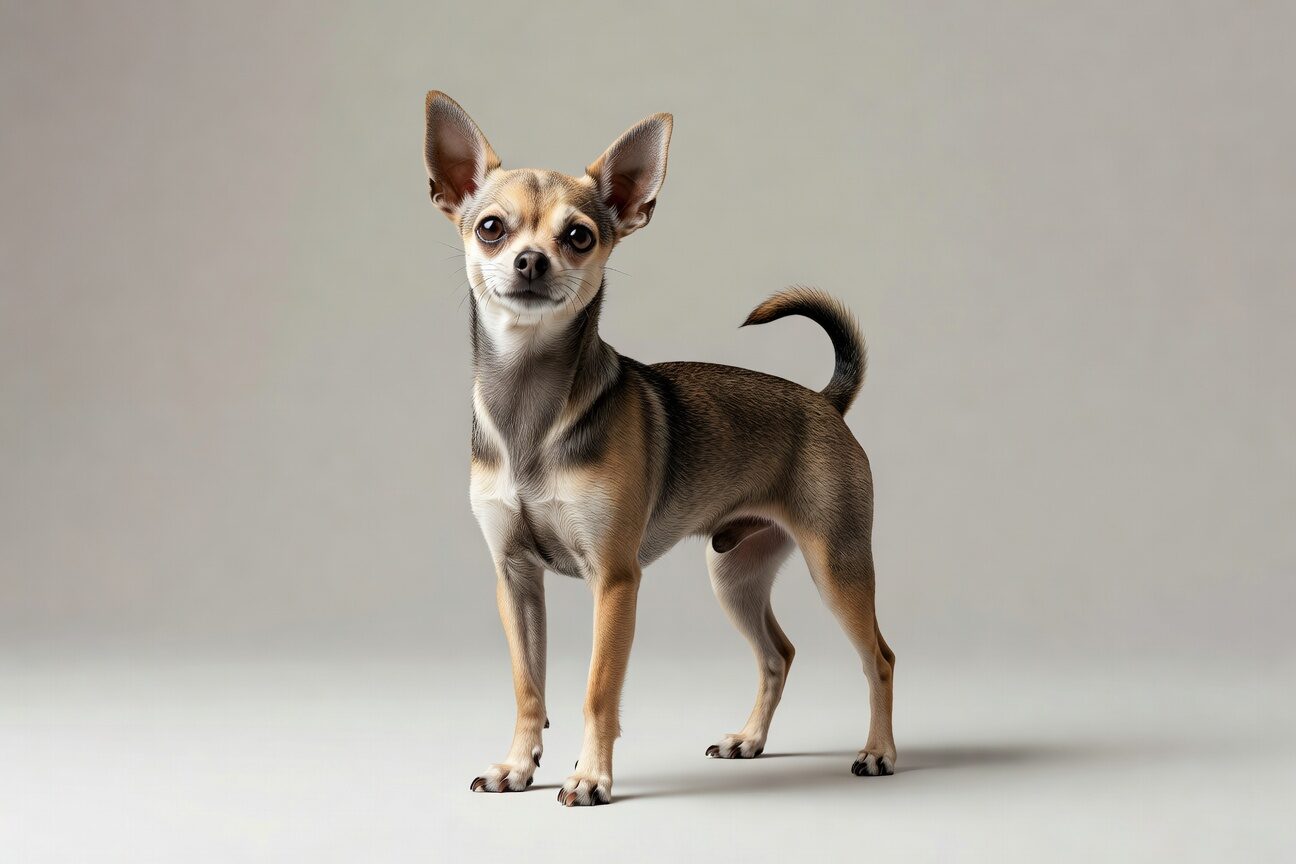
Era 4: The early AKC era (1900 to 1950)
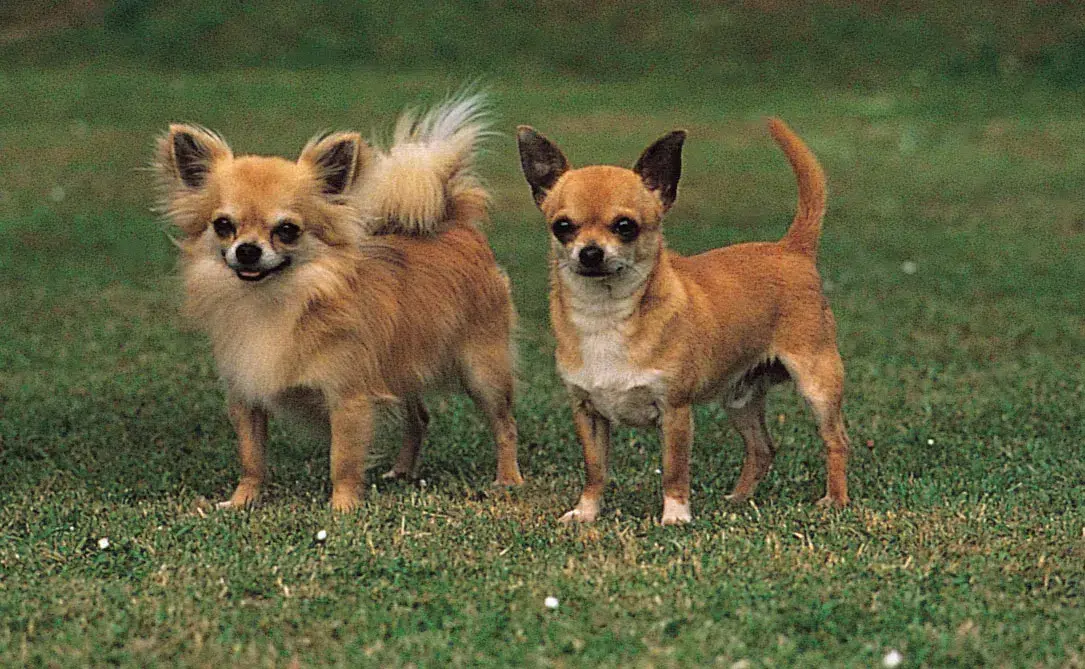
The American Kennel Club registered its first chihuahua, a dog named Midget, in 1904. The early American breeders, working primarily in Texas and California, began standardizing the type around the smooth-coat short-haired specimen. The first AKC chihuahua club was formed in the 1920s; the long-coat variety was officially recognized as a coat variation rather than a separate breed in the 1950s.
The founding population was small. The genetic bottleneck of the modern AKC chihuahua dates to this period and has consequences. Inbreeding-related conditions in the breed (hydrocephalus, patellar luxation, mitral valve disease) are partly the legacy of that founder effect, and the breed’s responsible-breeding community has spent the last several decades working on it.
Era 5: The mid-century rise (1950 to 2000)
The chihuahua became one of the AKC’s most popular toy breeds in the 1950s and 1960s, helped by Xavier Cugat’s celebrated public appearances with his chihuahuas and a wave of cultural visibility. By the 1970s, the breed was firmly established in the American household, with breed-club registrations climbing through the 1990s.
The 1990s and early 2000s brought a popularity peak driven, in part, by celebrity ownership and the breed’s appearance in films. This is the era owners aged thirty and over remember; the chihuahua became, briefly, a fashion accessory in a way that was not always good for the dogs. The boom produced a downstream rescue problem, the consequences of which the rescue community is still working through. A typical rescue arc from this era is documented elsewhere on the site.
Era 6: The modern moment (2000 to present)
The breed’s popularity has stabilized at a high but lower level since the early 2000s peak. The most significant development of the last twenty years has been the welfare conversation around extreme miniaturization (the "teacup" trade) and the responsible-breeder community’s response. The AKC standard remains six pounds; the under-three-pound trade is widely understood, in the breed-club community, as a marketing pattern with documented welfare consequences.
Genetically, the 2019 Plassais et al. paper in Cell Reports mapped canine size to a small number of large-effect loci, including IGF1; the chihuahua sits near the smallest end of the size distribution, with the IGF1 variant fixed in the breed. The current taxonomy of breed variants is a contemporary read on the conformational spectrum.
What this history asks of an owner
I do not think breed history changes daily care much. What I think it does is make an owner a slightly more thoughtful steward of a dog whose lineage runs through several centuries of accident, conquest, marketing, and quiet preservation. The chihuahua is, in the end, an old lineage with a young breed standard, a small dog with a long memory in her genome and a six-pound ceiling in her chart. The AKC breed page is the contemporary reference; the rest is on the bookshelf.
If you have a chihuahua in the next room as you read this, the breed history I have just walked through is hers. She does not know it. You now know slightly more of it, and the two of you can sit with it on the couch, which is, in my experience, where most chihuahua-history reading actually happens.
Is this Chihuahua right for you? auto_awesome
Want to learn more about your Chihuahua? Compare breeds, check the standard, and find the chihuahua that matches your home.
favorite