

Confession to start. The American Kennel Club recognizes two chihuahua varieties: smooth coat and long coat. The breed standard is unambiguous on this point. The chihuahua meetup at the local park, however, will produce thirteen visibly distinct dogs whose owners will all describe their dogs as different "types." Both descriptions are correct. The standard is two; the colloquial typology, the language owners actually use, runs to roughly thirteen.
This piece is the breeder-exhibitor reconciliation between the two.
The Two Official Chihuahua Varieties
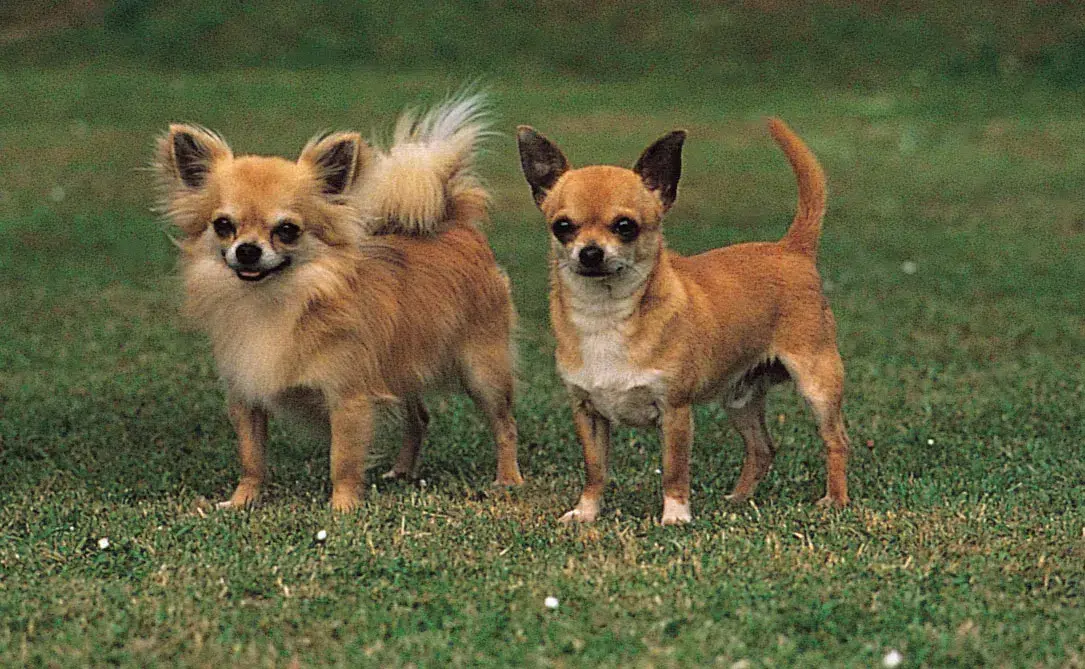
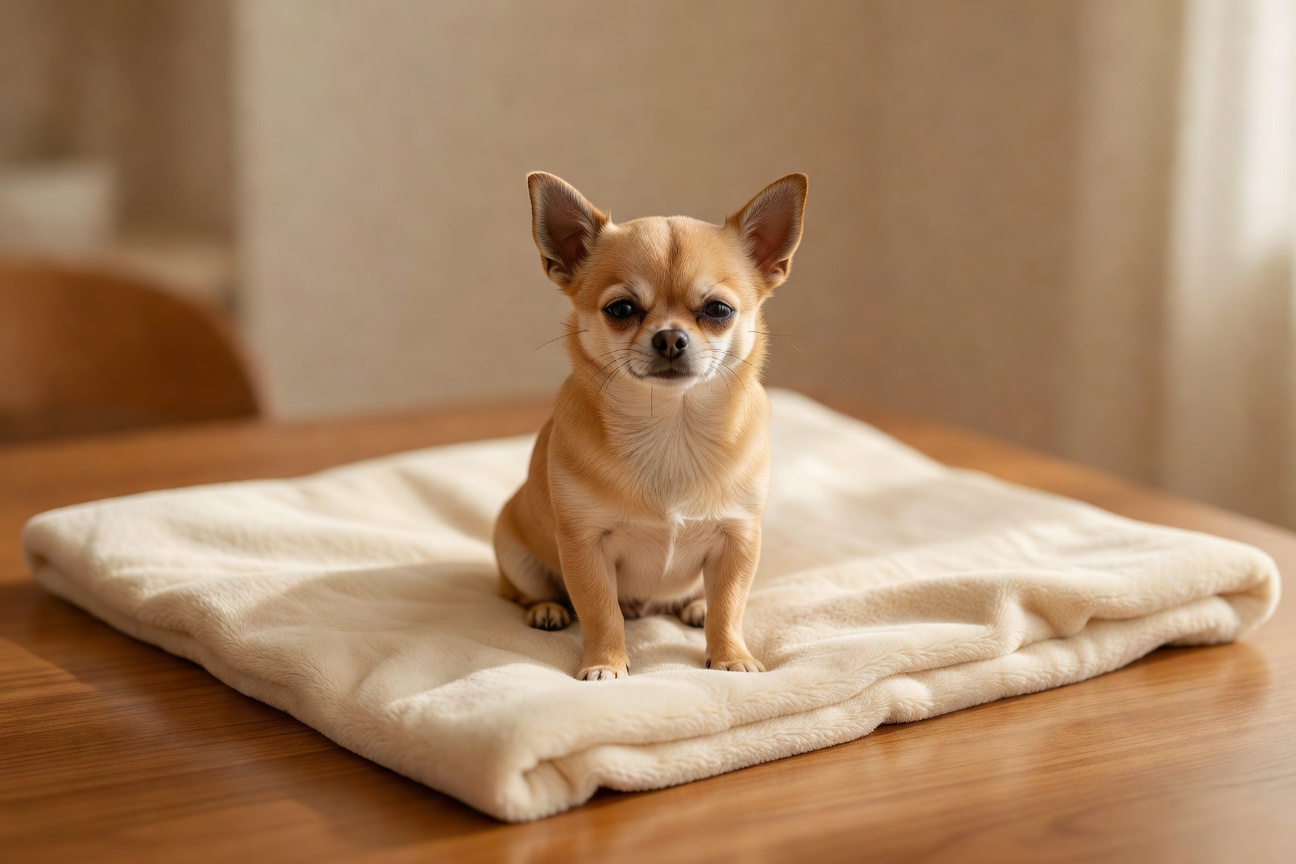
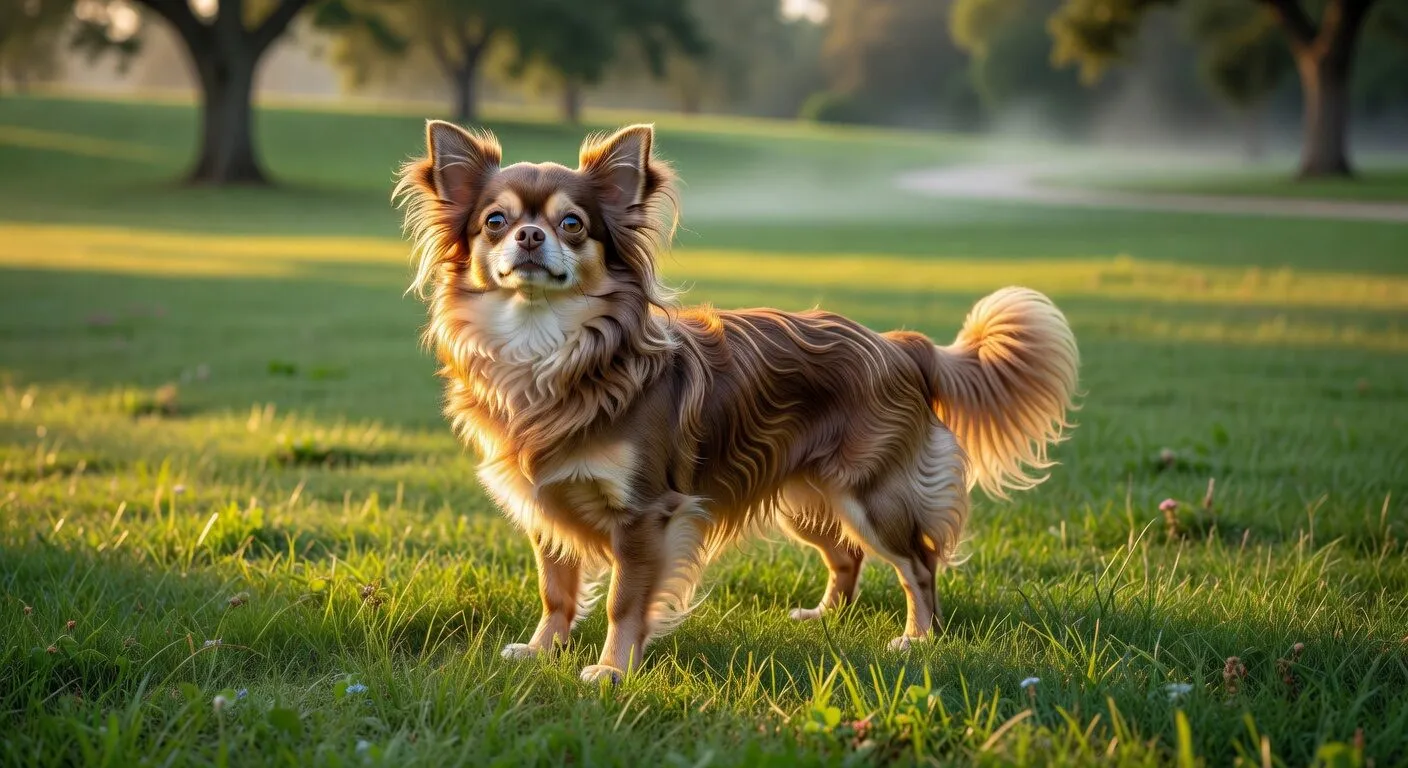
The standard, AKC chihuahua breed page, distinguishes only by coat. Smooth coat is the short, close-lying variety; long coat is the soft, slightly wavy variety with feathering on the ears, legs, and tail. Both varieties share the same body conformation, the same head profile, and the same temperament profile. They are interchangeable in pedigrees; a smooth-coat-to-smooth-coat breeding can produce a long-coat puppy when both parents carry the recessive.
The Eleven Colloquial "Types" Owners Distinguish
These are not breed varieties. They are descriptive subdivisions owners use, and they are useful because they capture variation the standard does not name.
By head shape: apple head (the AKC-preferred dome) and deer head (longer muzzle, flatter skull, common in companion lines, disqualified in conformation). The companion twenty-five chihuahua facts piece covers the head-shape genetics.
By size, within the standard: standard (four-to-six pounds, the breed-standard range), and the unsanctioned subcategories owners variously call "teacup" or "micro" (under three pounds). Teacup is not an AKC variety; the term describes dogs at the smaller end of the standard or, more often, at-risk dogs bred below the healthy weight floor. ASPCA puppy-mill guidance flags micro-breeding as a welfare concern.
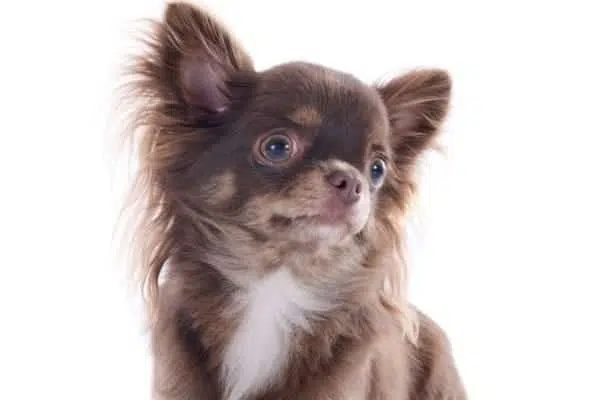
By coat color: the AKC standard accepts any color or pattern. The colloquial typology distinguishes solid colors (fawn, chocolate, black, white, cream), parti-color (white-and-color), tricolor, brindle, merle, sable, and "blue" (a dilution of black). Merle is contested in the breed; the merle gene is associated with health risks at homozygous expression and the merle chihuahua is therefore a controversial type, with the parent club discouraging merle-to-merle breeding for documented welfare reasons.
Why the Colloquial Typology Persists
The standard is breeder-facing; the colloquial typology is owner-facing. An owner needs vocabulary to describe the dog she has at home, and "smooth-coat apple-head fawn" is more precise than "chihuahua." The companion chihuahua-and-cats piece covers the temperament side, which is more uniform across types than the visual variation suggests.
Two practical clarifications. First, deer-head chihuahuas are not a separate breed; they are within-breed variation that the show ring does not reward. Second, "teacup chihuahua" is not a breed variety; it is a marketing term applied to dogs at the lower end of the standard or below it, and the under-three-pound range carries documented health and longevity risks.
A Small Final Observation
The chihuahua specialty I attended last spring had perhaps forty dogs in the ring across both varieties. Twelve of them were close enough to the standard that I could not tell which would win without watching the gait. The other twenty-eight were companion dogs the owners had brought to a meet-and-greet, and the typological variation across them, head shapes, sizes, coat patterns, was wider than across the show ring by an order of magnitude. Both groups were chihuahuas. The standard is two; the breed in the wild is many.
For more on the breed, explore the Breed desk or subscribe for the next dispatch.
Is this Chihuahua right for you? auto_awesome
Want to learn more about your Chihuahua? Compare breeds, check the standard, and find the chihuahua that matches your home.
favorite