


Last July, I watched my chihuahua Scout spend an entire afternoon relocating across the kitchen tile, lying down for about ten minutes in each spot before getting up and moving to a slightly cooler section. By 4 p.m. she had circumnavigated the entire kitchen. The performance, while entertaining, was a clear signal that the household needed a better thermal-management solution. We bought a cooling mat that week. Below is what I have learned, since then, about which cooling products work for a small dog and which do not.
The honest version is that the small-dog heat-regulation math is meaningfully different from the larger-dog version, and many "cooling" products marketed for dogs are calibrated for the larger end of the size spectrum. A four-pound chihuahua needs a different surface area, weight activation, and material than a forty-pound dog. The product that works for the Lab does not, in many cases, work for the chihuahua.
Why the small-dog heat math is different
A chihuahua's surface-area-to-mass ratio is much higher than a larger dog's. Heat dissipates faster in absolute terms but the body's thermal reserve is also smaller. The net result: a chihuahua heats up faster and cools down faster than a larger dog, and the cooling intervention has to provide consistent thermal contact over the dog's resting period rather than briefly knocking the temperature down once.
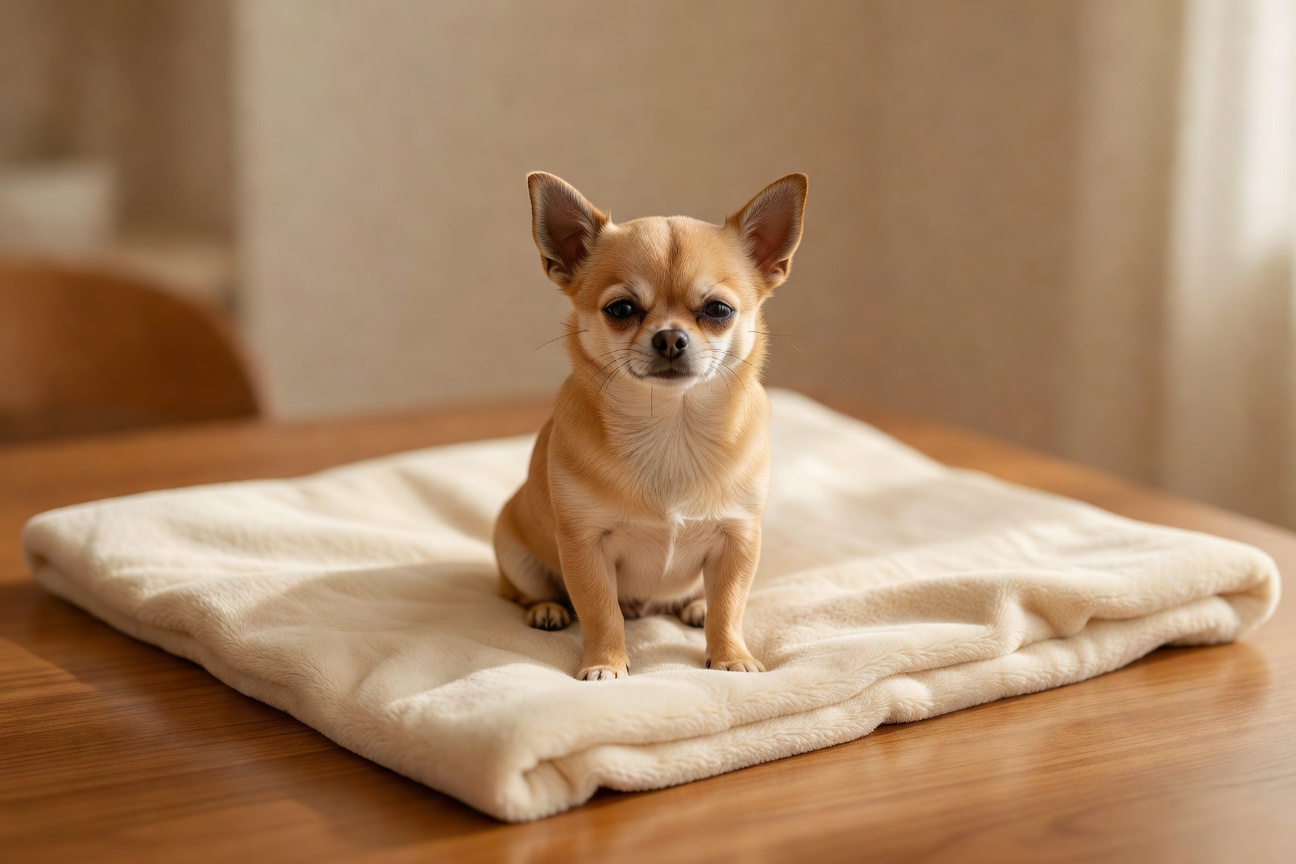
The other variable is body position. A chihuahua's typical resting position (curled with the chest tucked) provides smaller surface contact with whatever she is lying on than the splayed position a larger dog often takes in heat. The cooling product needs to work at small-dog contact area or to encourage the splayed position.
The product categories, plainly
Three main categories on the market:
Pressure-activated gel mats. A gel layer that absorbs body heat when the dog lies on it, providing several degrees of cooling for an hour or two before re-charging. The most common category and, for chihuahuas, the most reliable.
Water-filled mats. A flat plastic mat filled with water that stays at room temperature. Provides modest cooling against a hot ambient temperature; less effective in well-cooled rooms.
Elevated mesh beds. A raised frame with a mesh fabric stretched across it, allowing airflow underneath. Most effective in moving-air situations (a fan, a breeze, a porch); less effective in still-air conditions.
A fourth category, freezer-stored cooling pads, has limitations that make them not generally useful for chihuahuas; the cold is too intense for a small dog and the freeze-stored pads often produce condensation that wets the dog's coat.
What works specifically for chihuahuas
In our household, after several rounds of trial:
The pressure-activated gel mat. Look for one rated for "small dogs" or "cats" rather than the larger-dog version. The activation pressure on the larger-dog product is sometimes too high for a four-pound chihuahua to trigger consistently. The smaller versions activate at lower pressure and work as advertised.
A cool tile surface, in a shaded part of the floor, is in some ways the simplest solution. A bath mat over hardwood is too warm; the bare ceramic tile in a shaded kitchen or bathroom is genuinely cool. Many chihuahuas naturally seek these surfaces; you can support the behavior by clearing the area.
A small elevated mesh bed on a porch or in a room with airflow works for some chihuahuas, particularly those who like a slightly more structured rest position. The mesh size matters; too large and small paws fall through, too small and the airflow is reduced.
The environmental side, briefly
A cooling product is only one component of a thermal-management plan. The other components matter:
- Air conditioning or fan in summer; a target indoor temperature of 72 to 76°F is comfortable for most chihuahuas. Above 80°F indoor, the cooling-product math shifts substantially.
- Shade outdoors, always. A chihuahua in direct sun in summer reaches uncomfortable surface temperatures within minutes.
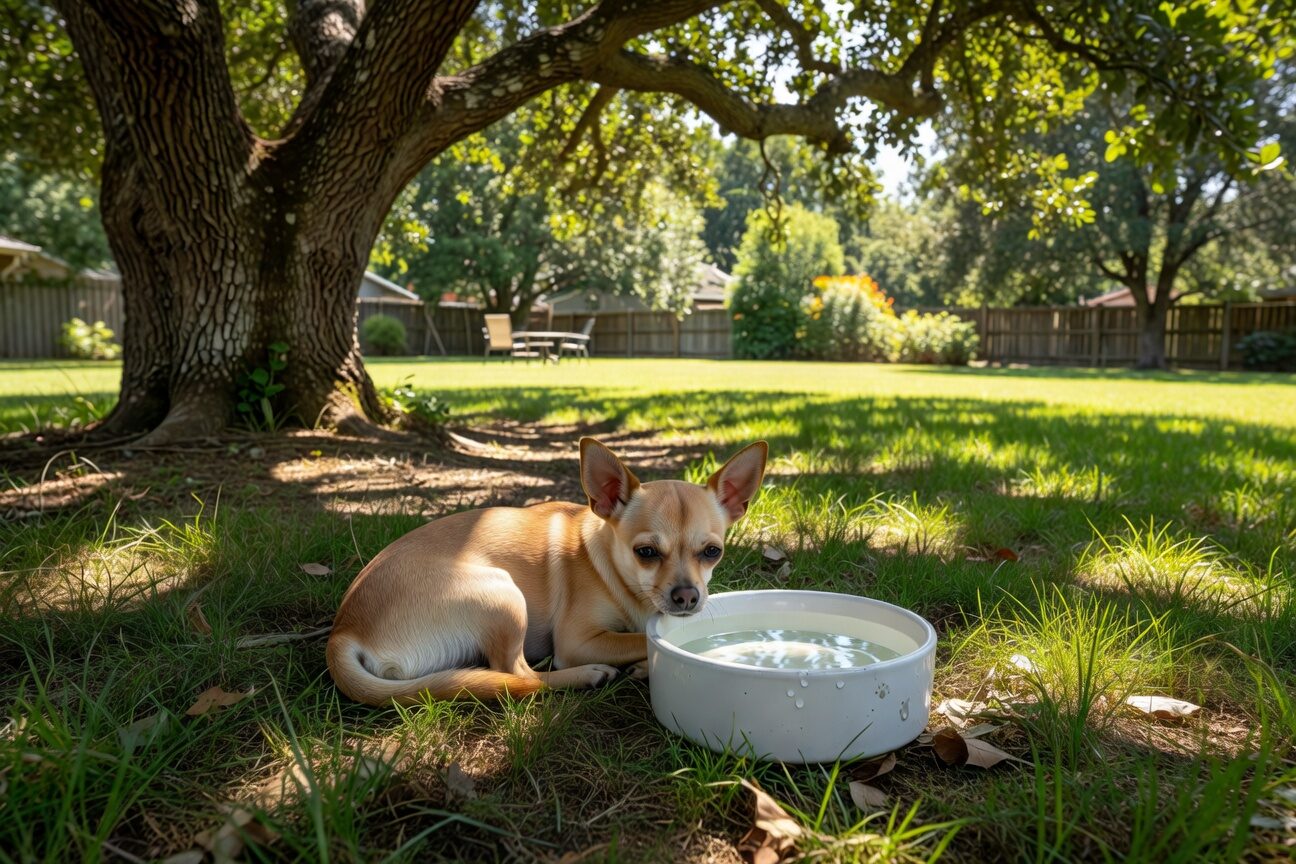
- Water access, always, with multiple bowls in summer. Hydration is the single most important variable.
- Walks at cooler hours, typically before 9 a.m. or after 7 p.m. in mid-summer. The hot-pavement math is brutal at four pounds; the surface temperature several inches off the ground is several degrees higher than at adult-walking height.
The ASPCA hot-weather safety guidance covers the broader picture; the chihuahua-specific math tightens the thresholds somewhat.
Signs of overheating, with thresholds
A chihuahua showing any of the following needs immediate cooling intervention and, for the more severe signs, a same-day vet call:
- Excessive panting that does not resolve with rest in a cool space.
- Very red gums or bright pink tongue.
- Drooling beyond the usual baseline.
- Lethargy or reduced responsiveness after sun exposure.
- Vomiting or diarrhea following heat exposure.
- Collapse or near-collapse: emergency.
The cooling intervention for moderate overheating: move to a cool space, offer water, place a damp cool (not cold) towel over the dog's body, and call the clinic. Severe overheating in a chihuahua progresses quickly; the threshold for calling is low.
A seasonal strategy, briefly
For chihuahua households, a typical summer plan:
- One cooling mat, in the room the dog spends most of her time.
- A second cool spot (tile or a second mat) in a low-traffic backup location.
- Walks at cool hours, with paw-pad checks before any walk on potentially hot surfaces.
- Air conditioning or fan running on hot days.
- Multiple water bowls, refilled twice a day.
- A familiar fleece available for the brief overcorrection moments when the AC is on too high.
The total household cost, on the cooling-product side, is modest (typically $40 to $80 for a quality mat; $60 to $120 for an elevated mesh bed). The seasonal benefit is meaningful for a small dog.
The bonding piece covers the household routine that supports a small dog's overall well-being; a separate piece on safe temperatures covers the underlying thermal range that the cooling-product math is calibrated to.
The bottom line, with the usual caveat
Cooling products work for chihuahuas when they are sized appropriately and combined with a broader thermal-management plan. The pressure-activated gel mat in a small-dog version is the most reliable option; the cool tile surface is the simplest; the elevated mesh bed works for households with airflow. Talk to your veterinarian if your chihuahua is showing heat intolerance beyond the seasonal range; underlying conditions can change the math.
Health at a Glance: What to Watch monitor_heart
| Condition | Key Signs | Prevention Tips |
|---|---|---|
| Dental Disease | Bad breath, tartar, red gums | Daily brushing, dental treats |
| Patellar Luxation | Limping, skipping, leg lifting | Weight control, avoid high jumps |
| Tracheal Collapse | Dry cough, gagging | Harness walking, avoid smoke |
| Heart Disease | Coughing, fatigue, fainting | Regular check-ups, heart-healthy diet |
| Hypoglycemia | Shaking, weakness, lethargy | Small, frequent meals |
Community Insights – FAQ help
help_outline When should I call my vet about a behavior change? expand_more
Sooner than feels reasonable. A change in appetite, energy, or routine that lasts more than 48 hours is worth a phone call, not a wait-and-see.
help_outline How often should a healthy adult chihuahua see the vet? expand_more
Once a year through age seven. Twice a year from eight on. Dental checks are part of every visit.
help_outline Do chihuahuas need different care than larger breeds? expand_more
Yes. Smaller medication dosing, more frequent dental work, and closer monitoring for tracheal and patellar issues are standard in toy-breed care.
Have a health question? Ask your question in the comments. We will bring it up with the vet team.
favorite