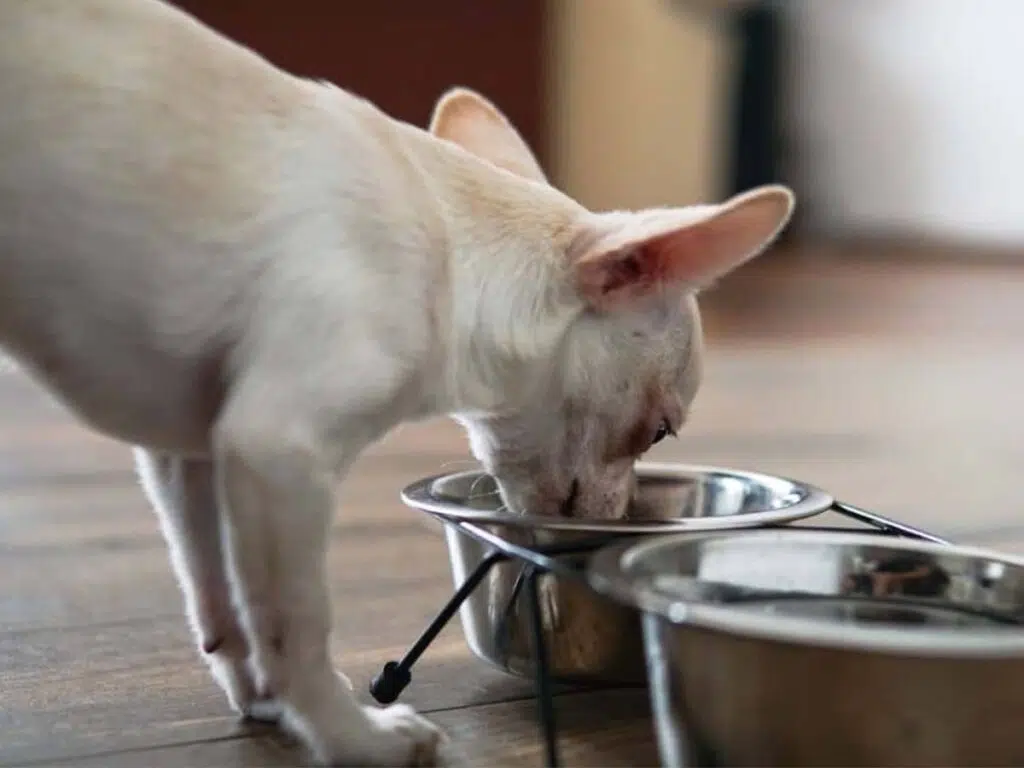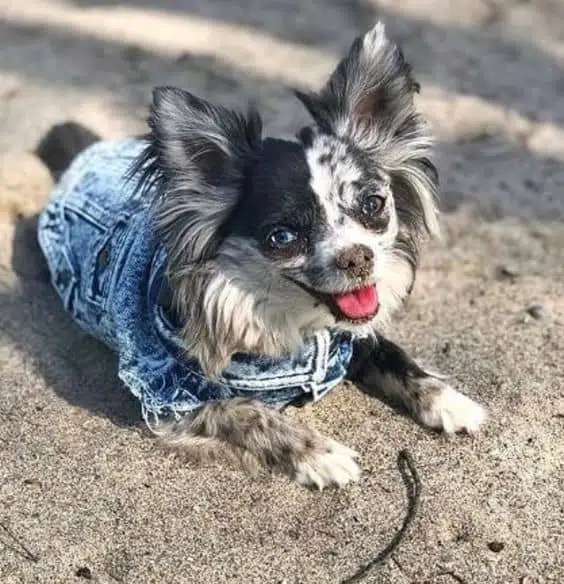


Are chihuahuas always cold? Functionally, yes, more often than larger breeds. The chihuahua's small body mass, high surface-area-to-volume ratio, and minimal subcutaneous fat make her unusually temperature-sensitive on both ends of the dial. The practical version: most chihuahuas are uncomfortable below fifty degrees Fahrenheit and at risk below forty; on the hot end, panting and overheating begin earlier than most owners expect.
This piece is the practical safe-temperature reference. None of it is a substitute for an examination by your own veterinarian.
Cold-Weather Thresholds
Below 50°F: most chihuahuas begin showing low-grade discomfort. Tucked tail, slow movement, reluctance to step onto cold surfaces. This is not yet a medical risk, but it is a comfort signal.
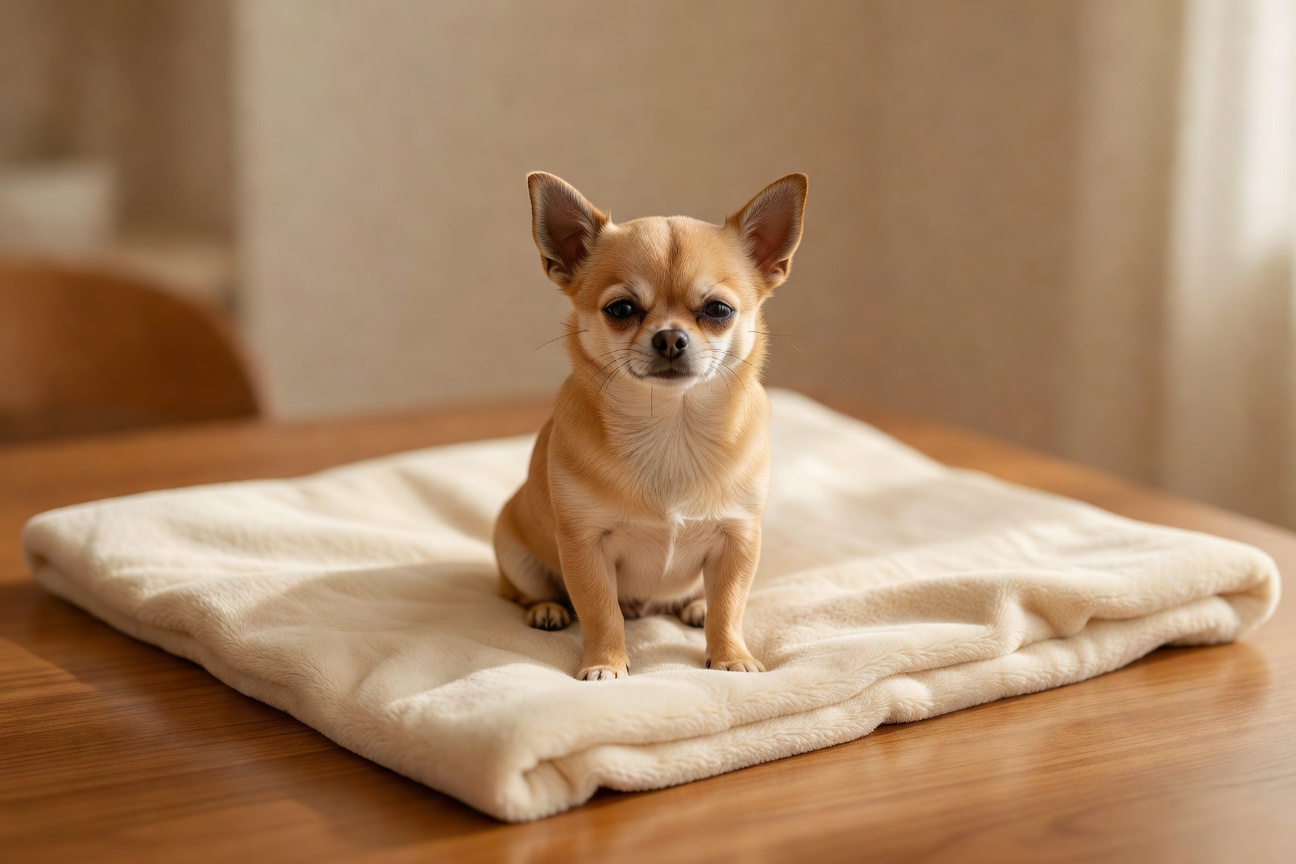
Below 40°F: walking time should be brief. A fleece-lined jacket helps; a sweater alone is usually insufficient on a windy day. Wind chill is significant in this breed because the cold reaches the skin faster through a thin coat than through a thick one.
Below 35°F: hypothermia risk rises sharply, particularly for puppies, very small adults, and seniors. The Merck Veterinary Manual treats core temperatures under 99.5°F as the threshold for clinical hypothermia in dogs; small-breed body cores can drop below that within minutes of sustained cold exposure.
Below 30°F: keep walks under five minutes, with a jacket and ideally a snood or hood. Carry the dog across long stretches of icy or salted pavement. AKC has a usable cold-weather chart that confirms the toy-breed thresholds.
Chihuahua shivering: cold or something else?
Shivering is not always thermal. The breed shivers from excitement, mild stress, hypoglycemia, or pain. The discriminating signs: a thermal shiver responds to warming (jacket, blanket, indoor heat) within ten to fifteen minutes; a non-thermal shiver does not. Persistent shivering in a warm room is a vet conversation, not a sweater problem.
Hot-Weather Thresholds
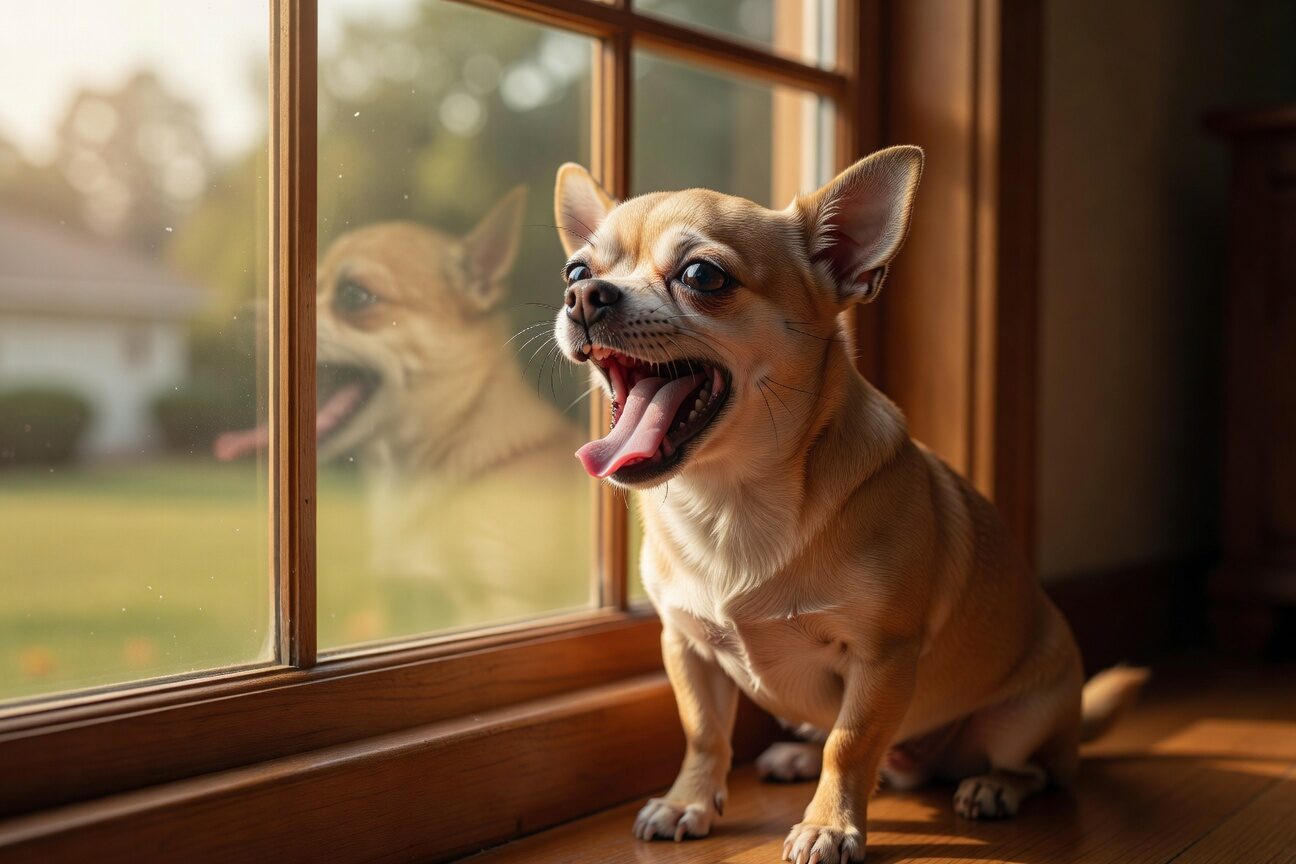
The breed handles heat less well than its sun-soaked image suggests. Above 80°F: outdoor walks should be brief, on grass, in shade, with water available. Above 85°F: morning and evening only.
Above 90°F: avoid outdoor activity in the middle of the day entirely. Asphalt at 86°F ambient can reach 135°F surface; the pavement-burn risk is covered in the companion chihuahua paw care guide.
Signs of overheating to act on
Heavy, fast panting that does not slow with rest in shade. Excessive drooling. Bright red gums or tongue. Weakness, stumbling, or collapse. Vomiting. ASPCA hot-weather guidance treats any of these as a same-day emergency in a small dog. Move the dog to shade, offer cool (not iced) water, wet the belly and paws, and call your veterinarian immediately.
What to Do at Home
For the cold side: a fleece-lined jacket, used routinely, is more impactful than a thicker coat used occasionally. A heated bed with a low-setting pet heating pad placed under a folded blanket gives the dog a thermal retreat she can choose; the safety rule is that the dog must be able to leave the heat source. Never use human heating pads or heated blankets without supervision.
For the hot side: a cooling mat (the gel kind, not the ice kind) on the floor in summer. Fresh water in two locations. Avoid leaving the dog in a parked car, ever, even briefly; the interior temperature climbs roughly twenty degrees above ambient within ten minutes.
When to Call Your Veterinarian
Same-day reasons: any signs of heat stroke (the list above); persistent shivering not relieved by warming; cold extremities (paws, ears) that do not warm with thirty minutes of indoor temperature; any change in mental status. Within-the-week reasons: a chihuahua who has stopped wanting to walk in cold weather she previously tolerated; a chihuahua whose post-walk shivering takes longer to resolve than it used to.
The chihuahua lifespan piece covers the long-arc context for the breed-typical cardiac and respiratory considerations that overlap with thermal regulation; the three things every owner must know guide covers the broader risk profile.
A Routine You Can Start This Week
One practical step: check the weather forecast at the same time you check your own calendar in the morning. If the high is below 50°F, plan a jacket walk; if above 85°F, plan the walks before nine and after sunset. The dog will not advocate for herself on the dial; the breed needs the owner to do the math.
For more clinical explainers, browse the Health desk or subscribe for the next dispatch. Talk to your veterinarian about anything that does not look right at home.
Health at a Glance: What to Watch monitor_heart
| Condition | Key Signs | Prevention Tips |
|---|---|---|
| Dental Disease | Bad breath, tartar, red gums | Daily brushing, dental treats |
| Patellar Luxation | Limping, skipping, leg lifting | Weight control, avoid high jumps |
| Tracheal Collapse | Dry cough, gagging | Harness walking, avoid smoke |
| Heart Disease | Coughing, fatigue, fainting | Regular check-ups, heart-healthy diet |
| Hypoglycemia | Shaking, weakness, lethargy | Small, frequent meals |
Community Insights – FAQ help
help_outline When should I call my vet about a behavior change? expand_more
Sooner than feels reasonable. A change in appetite, energy, or routine that lasts more than 48 hours is worth a phone call, not a wait-and-see.
help_outline How often should a healthy adult chihuahua see the vet? expand_more
Once a year through age seven. Twice a year from eight on. Dental checks are part of every visit.
help_outline Do chihuahuas need different care than larger breeds? expand_more
Yes. Smaller medication dosing, more frequent dental work, and closer monitoring for tracheal and patellar issues are standard in toy-breed care.
Have a health question? Ask your question in the comments. We will bring it up with the vet team.
favorite