

Why does your chihuahua plant her feet on the doorstep, lock her elbows, and refuse to move? In one sentence: the breed is sensitive to surface, weather, and pressure, and a small dog who has had even one bad walking experience often generalizes to "walks are bad." The fix is gear, gradient, and patience, not pulling on the leash.
I am going to walk through why chihuahuas resist the leash, the protocol for retraining a resistant dog, and the gear that actually works for a small body.
Why a chihuahua resists, structurally
A few reasons the breed often arrives at "I will not walk":
- Cold or wet ground. A four-pound dog loses heat fast through the paws. A walk in below-50°F weather without a coat is, for the dog, genuinely uncomfortable.
- Surface aversion. Toy breeds are notably surface-sensitive. Cold concrete, gravel, metal grates, and wet pavement all produce hesitation.
- Collar pressure. A collar pulled by a leash creates direct trachea pressure; in a breed predisposed to tracheal collapse, this is uncomfortable and quickly trains a "the leash hurts" association.
- One bad experience. A close call with a larger dog, a loud truck, a slip on ice. One event can produce weeks of refusal.
- Indoor preference. Some chihuahuas, particularly those who use a pad or a yard for elimination, do not have a strong intrinsic motivation to walk.
The work of leash training a resistant chihuahua is to address each of these factors and to rebuild the dog's positive association with the leash.
Gear, the things that actually work
A few specific items, in order of priority:
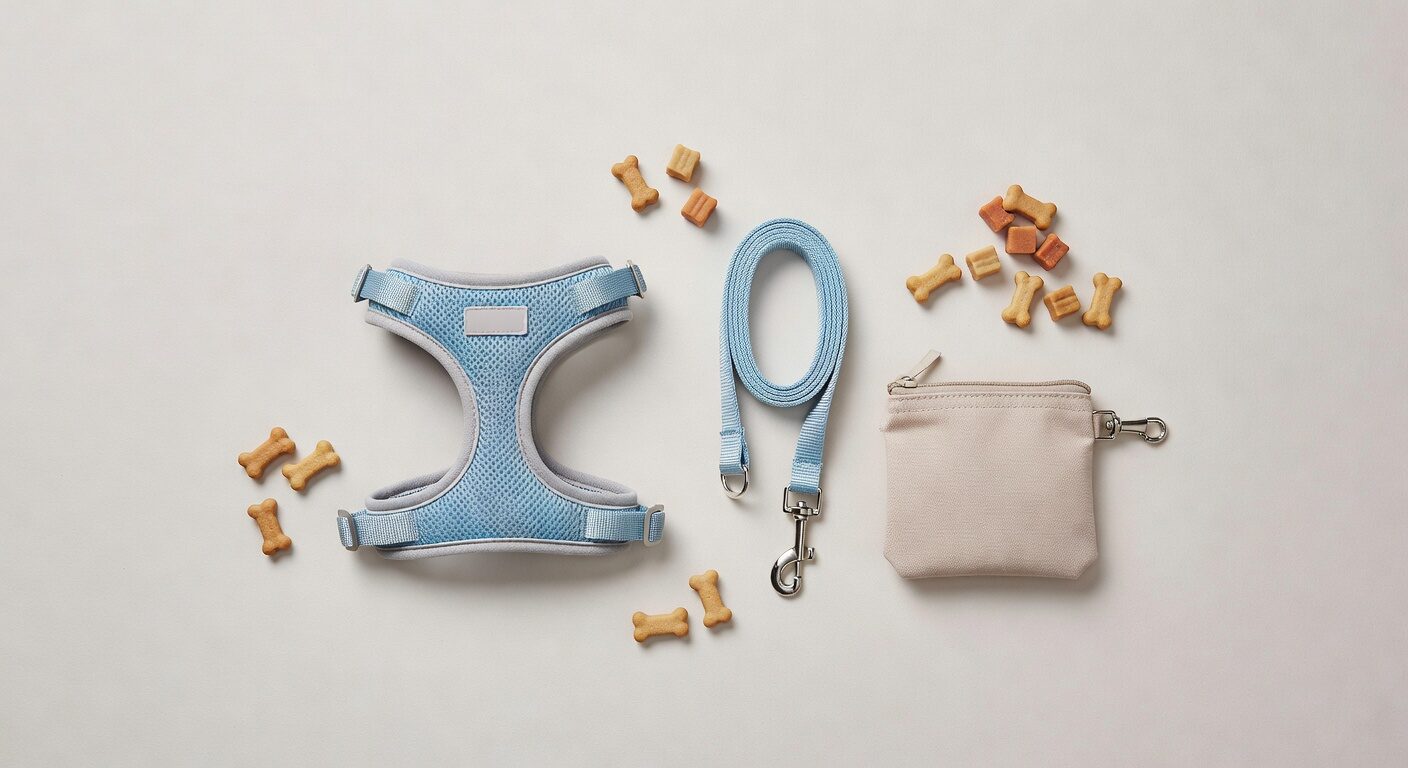
- A Y-front harness. The single most important piece of equipment. The harness distributes pressure across the chest rather than the throat. The general care primer covers the harness recommendation.
- A 4-to-6-foot flat leash. Long enough for the dog to move at her own pace, short enough to maintain control near traffic. Avoid retractable leashes; the variable tension confuses the cue.
- A small sweater or coat for cold weather. Essential below 45°F; helpful below 55°F. Many resistant chihuahuas are simply uncomfortable.
- Boots, optional. For salted winter sidewalks or hot summer asphalt. Many dogs object to boots initially; introduce gradually if they are needed.
- High-value treats in your pocket. The reinforcement that rebuilds the walk.
The protocol for a resistant dog
The plan I run with leash-resistant chihuahuas has four stages.
- Indoor harness comfort. Put the harness on the dog inside the house, with the leash attached and trailing on the floor. Reward calmly. Take it off after two minutes. Build up to ten minutes inside, with the dog moving freely. Run for three to seven days.
- Indoor leashed walking. Pick up the leash inside. Walk the dog to the kitchen, reward, walk back, reward. Build to short circuits inside the house. The dog learns that leashed movement produces rewards.
- The doorstep, briefly. Walk to the front door, open it, sit on the threshold with the dog, reward calmly. Do not pull the dog outside. Sit for thirty seconds, return inside, reward.
- The first short walks. A two-minute walk, ending at a calm point of return. Build duration over weeks. Never extend a walk that is going badly; end on a small win, reset the next day.
What not to do, briefly
A few patterns that derail the protocol:
- Pulling on the leash. Reinforces the "leash means pressure" association. The dog plants harder.
- Carrying the dog out and putting her on the ground far from home. The dog is now in unfamiliar territory with a route home; some dogs walk back, others freeze. Either way, it does not build the door-association you need.
- Dragging the dog in any way. Damages the relationship and the trachea, in that order.
- Treating refusal as defiance. The dog is signaling a real issue (cold, surface, pain, fear). The general stress-reduction protocols belong in the same toolkit.
Weather, and what counts as a walkable day
A surprising number of leash refusals are weather refusals. A chihuahua's surface-area-to-volume ratio means she loses heat fast and gains heat fast; the operating window is narrower than for a Labrador.
A practical guide:
- Below 45°F: Sweater required. Below 35°F, consider an indoor pad day or a very short outdoor break only. The AKC's cold-weather guidance covers thresholds across breed sizes.
- 45 to 80°F: Generally fine. Most dogs walk happily in this range with appropriate gear.
- Above 80°F: Walk in early morning or late evening. Asphalt above 85°F can burn a chihuahua's pad in 30 seconds; test with the back of your hand before walking.
A dog who refuses on a 38-degree morning may not be defying the leash; she may be informing you that the conditions are not currently suitable for a four-pound body. Listen.
Medical issues that look like leash refusal
If a previously walk-loving dog suddenly refuses, the first call is not the trainer. A few medical conditions present as walk refusal:
- Patellar luxation (knee pain).
- Tracheal collapse (cough on collar pressure).
- Paw injury or pad damage.
- Arthritis in seniors.
- Eye issues affecting outdoor light tolerance.
A vet exam, with attention to the joints and the paws, is the first step. The general warning-signs primer covers the broader set of clinical mimics.
One thing to do this week
If you have a leash-resistant chihuahua, do the simplest possible thing tonight: put the harness on her inside the house, drop a treat on the floor, take it off after two minutes. By Friday, the harness is associated with a small reward. By the end of the second week, the leash is on inside. By week three or four, you are at the front door.
The protocol is not fast. The compounding, by month two, is real. Most leash-resistant chihuahuas, in my caseload, are walking calmly within six weeks of this plan. The shortcuts, on the available evidence, do not work; the gradient does.
Gear That Works backpack
Harness (Not Collar)
A step-in harness is safer and more comfortable.
Lightweight Leash
4–6 feet gives freedom without losing control.
Treat Pouch
Keep rewards accessible and distraction-free.
ID Tag & Microchip
Always be prepared in case of separation.
Trainer Tip: Success on walks starts with reading your Chihuahua's signals and respecting their pace.
Was this guide helpful?
Was this guide helpful? Save the guide. Share it with one other chihuahua owner this week.
favorite