
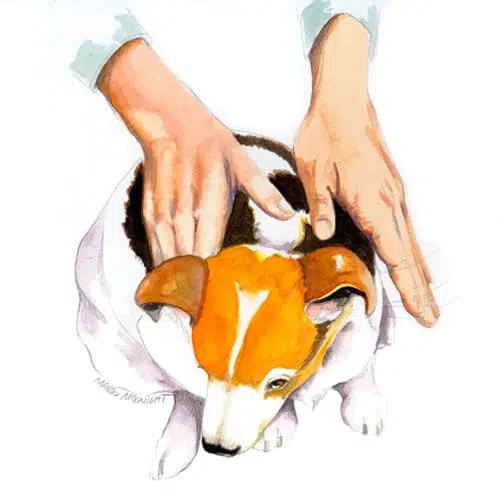
Can you safely massage a Chihuahua? Yes, and once you know where the fragile spots are, it becomes one of the gentlest things you can do for a tiny dog. A few quiet minutes of slow, flat-handed touch can ease a stiff senior, calm a nervous greeter, and quietly tell you when something on your dog's body has changed. The trick with a toy breed is restraint. Less pressure, fewer minutes, and a great deal of attention to how your dog responds.
Why massage helps a small dog
Gentle massage works on a few fronts at once. The most immediate is the nervous system. Slow, rhythmic stroking encourages the body to shift out of its fight-or-flight state and into the rest-and-digest mode that supports sleep, digestion, and tissue repair. For an anxious Chihuahua, that can mean a calmer response to thunderstorms, nail trims, or a houseful of visitors.
There is a circulation benefit too. Light, moving touch helps blood and lymph flow through muscle tissue, which is part of why bodywork is used (alongside veterinary care, not instead of it) for dogs recovering from injury or living with arthritis. For senior Chihuahuas, who are prone to stiffness and to conditions like patellar luxation and intervertebral disc disease, easy massage can be a comfortable way to keep muscles loose between vet visits. The American Animal Hospital Association recognizes rehabilitation and physical methods as part of multimodal pain management, the kind of plan your veterinarian builds for an aging dog.
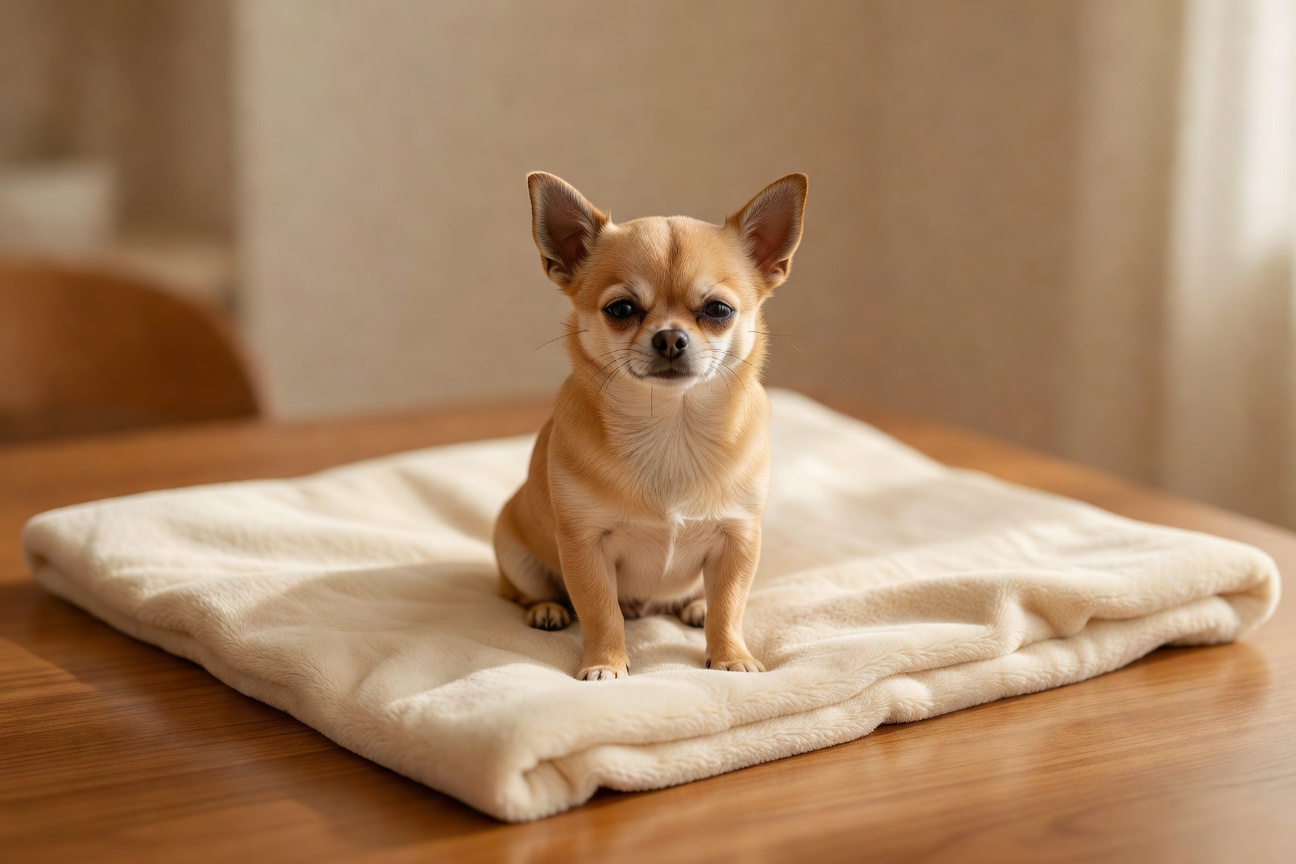
Then there is the bonding, which is not a soft add-on. The same slow handling that relaxes your dog also lowers stress for you. And because your hands are moving over the whole body, you become the person most likely to notice a new lump, a sore spot, or a patch of heat early, while it is still a question for your veterinarian rather than an emergency.
A gentle step-by-step for a tiny, fragile body
Pick a calm moment when your dog is already relaxed, not wound up or hungry. Settle your Chihuahua on your lap or on a soft surface where they can leave if they want to. The ability to walk away matters: a dog that can opt out is a dog that learns to trust the routine. Keep the whole session short, roughly five minutes for a small dog, and stop sooner if interest fades.
- Start with flat-palm strokes. Rest a flat, relaxed hand on the top of the head or the side of the neck and make long, light sweeps along the length of the back toward the tail. Repeat slowly several times. This is barely more than mindful petting, and for a Chihuahua that is the point.
- Use a fingertip touch, not a grip. Toy-breed muscles are small. Use one or two fingertips in slow circles over the big muscle groups: the shoulders, the thighs, the muscles alongside (never directly on top of) the spine. Think ounces of pressure, not pounds.
- Let your dog set the pressure. If your dog leans in and softens, you can add a little. If they tense, freeze, or pull away, lighten up or move on.
- Be careful at the legs. You can gently cup a lower leg in your fingers and release, but do not pull, extend, or rotate a Chihuahua's delicate joints. Their kneecaps and discs are vulnerable, so leave joint work to your veterinarian or a certified canine rehab practitioner.
- Finish with stillness. Rest one hand softly at the base of the skull and the other over the hips, and simply let them sit there for a breath or two. It is a calm, low-key way to close the session.
The cautions that matter most
This is where the clinical reality comes first. A Chihuahua's small size means the margin for error is smaller too, so a few rules are worth following every single time.
- Avoid the throat and the front of the neck. Toy breeds are prone to tracheal collapse, and the windpipe runs right down the front of the throat. Keep pressure off that area entirely. Stick to the sides of the neck and the back of the head.
- Never massage over an injury, a lump, or a painful spot. If you find swelling, a new mass, heat, or a place that makes your dog flinch, stop and note it for your veterinarian. Working a sore or injured area can make things worse and can hide a problem that needs to be examined.
- Do not press straight down on the lower back. The lower spine is a vulnerable zone in a breed prone to disc disease. Work the muscles to either side, gently, rather than pushing down on the spine itself.
- Stop the moment your dog resists. Pulling away, stiffening, lip-licking, yawning, whale eye (showing the whites), or a low growl are all your dog saying "not now." Honor it. Forcing the issue teaches your dog that hands are something to fear.
- Massage is not a treatment for pain. This is the big one. If your Chihuahua is limping, crying out, reluctant to jump or be picked up, or seems painful anywhere, that is a reason to call your veterinarian, not a reason to rub it out at home. Massage is comfort and connection. It is not a substitute for a diagnosis.
A note from the vet's side of the table
Gentle massage is a lovely habit, and the body-mapping it gives you (knowing what your dog's normal feels like) genuinely helps me when you bring your dog in. But please treat it as a wellness routine, not a fix. If you notice a new lump, persistent stiffness, any sign of pain, or your dog suddenly objecting to being touched somewhere they used to enjoy, talk to your veterinarian within a few days, and sooner if your dog seems acutely uncomfortable. For an arthritic or senior Chihuahua, ask your veterinarian whether a certified canine rehabilitation therapist would be a good addition to the plan. Your hands at home and a professional's hands at the clinic work best together.
Health at a Glance: What to Watch monitor_heart
| Condition | Key Signs | Prevention Tips |
|---|---|---|
| Dental Disease | Bad breath, tartar, red gums | Daily brushing, dental treats |
| Patellar Luxation | Limping, skipping, leg lifting | Weight control, avoid high jumps |
| Tracheal Collapse | Dry cough, gagging | Harness walking, avoid smoke |
| Heart Disease | Coughing, fatigue, fainting | Regular check-ups, heart-healthy diet |
| Hypoglycemia | Shaking, weakness, lethargy | Small, frequent meals |
Community Insights – FAQ help
help_outline When should I call my vet about a behavior change? expand_more
Sooner than feels reasonable. A change in appetite, energy, or routine that lasts more than 48 hours is worth a phone call, not a wait-and-see.
help_outline How often should a healthy adult chihuahua see the vet? expand_more
Once a year through age seven. Twice a year from eight on. Dental checks are part of every visit.
help_outline Do chihuahuas need different care than larger breeds? expand_more
Yes. Smaller medication dosing, more frequent dental work, and closer monitoring for tracheal and patellar issues are standard in toy-breed care.
Have a health question? Ask your question in the comments. We will bring it up with the vet team.
favorite