
If you want to know about chihuahua give birth, you are in the right place. Understanding how to overweight chihuahua starts with what actually happens in real life. I want to be clear about something right away. If your chihuahua is pregnant and you are reading this article hoping it will prepare you for a home birth, please also have your vet’,s phone number on speed dial. You should also have the address of the nearest emergency animal hospital saved in your car’,s GPS.
Chihuahuas have one of the highest rates of birthing complications among all dog breeds. Their narrow hips, the relatively large heads of chihuahua puppies, and their small body size mean that things can go wrong quickly and seriously. This article is not a substitute for veterinary care. It is a companion to it.
Before the Birth: Preparation Is Everything
A chihuahua’,s pregnancy lasts approximately 58 to 68 days, with most delivering around day 63. By the time you are in the final week, you should have had at least two veterinary checkups. Ideally that includes an X-ray or ultrasound to determine how many puppies there are and whether a cesarean section might be needed. According to PetMD, dystocia, or difficult birth, is more common in brachycephalic and toy breeds, and chihuahuas check both boxes.
Related: Chihuahua body language.
Set up a whelping box in a quiet, warm area of your home at least a week before the due date. The box should have low sides that your chihuahua can get in and out of but that will contain the puppies. Line it with clean towels or washable puppy pads. Keep the room warm, around 80 degrees for newborn chihuahua puppies, because they cannot regulate their own body temperature for the first few weeks.
Signs That Labor Is Starting
In the 24 hours before labor begins, your chihuahua’,s body temperature will drop below 99 degrees Fahrenheit. Normal for dogs is 101 to 102.5. Take her temperature rectally twice a day during the last week so you can catch this drop. The AKC chihuahua breed information has additional information on this topic.
Additionally, she may refuse food, become restless, pace, dig at her bedding, and pant heavily. Some chihuahuas become extremely clingy and will not let you out of their sight. Others seek isolation. Caring for a pregnant chihuahua means watching for these behavioral shifts and staying close.
The Three Stages of Labor
Stage One: Contractions Begin
This stage can last six to twelve hours. Your chihuahua will have uterine contractions that are not visible but cause restlessness, panting, shivering, and nesting behavior. She may vomit. She will look uncomfortable and may whine or seek your attention.
Your job during stage one is to be present, stay calm, and not intervene unless something seems wrong. No loud noises, no strangers, no chaos. Just you and your dog.
Stage Two: Delivering Puppies
Active pushing begins, and the first puppy should arrive within one to two hours of visible straining. Each puppy comes enclosed in a membrane that the mother should break open and clean. She will also chew the umbilical cord. If she does not break the membrane within a minute or two, you will need to do it gently with clean hands. Tear it open near the puppy’,s face and clear mucus from the nose and mouth with a clean cloth.
Subsequent puppies can arrive anywhere from fifteen minutes to two hours apart. If your chihuahua is actively straining for more than thirty minutes without producing a puppy, call your vet immediately. This is dystocia, and in a chihuahua, it often requires an emergency cesarean section.
Stage Three: Passing the Placentas
A placenta follows each puppy, usually within fifteen minutes. Count them. You should have as many placentas as puppies. A retained placenta can cause serious infection. Your chihuahua may eat some or all of the placentas, which is normal instinctual behavior even though it looks revolting. It is not harmful in small quantities.
Emergency Warning Signs
Call your vet or go to the emergency clinic if: your chihuahua has been straining for more than thirty minutes with no puppy, more than two hours pass between puppies, there is heavy bright red bleeding, or your chihuahua becomes lethargic or collapses. Also call if a puppy is stuck in the birth canal, or your chihuahua shows signs of extreme pain including screaming or biting at herself.
, chihuahua births that go wrong go wrong fast. The margin for error is slim with a dog this size.
After the Birth
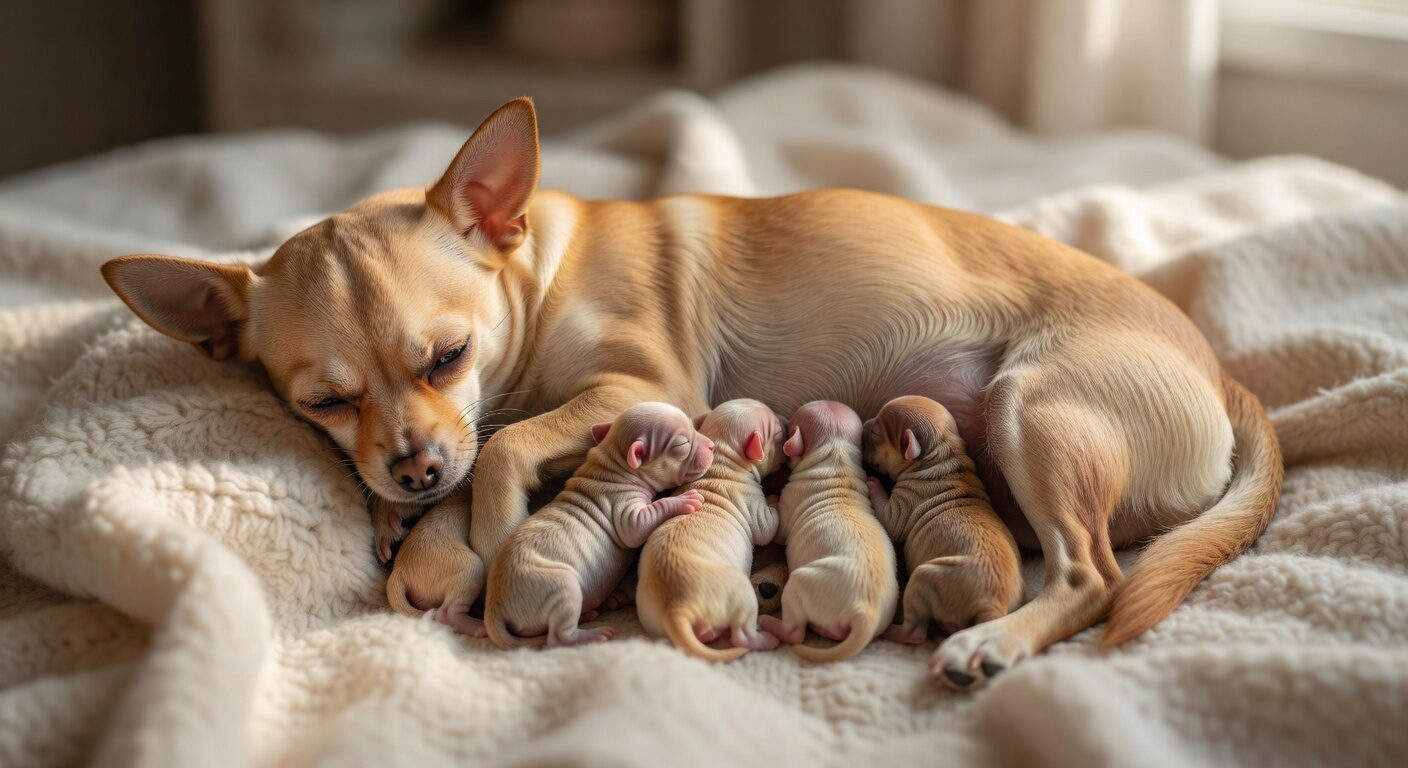
Once all puppies are delivered, make sure each one is breathing, warm, and nursing. Newborn chihuahua puppies need to nurse within the first hour for colostrum, the nutrient-rich first milk that provides needed antibodies. Weigh each puppy and monitor their weight daily. A chihuahua puppy who is not gaining weight is a puppy in trouble.
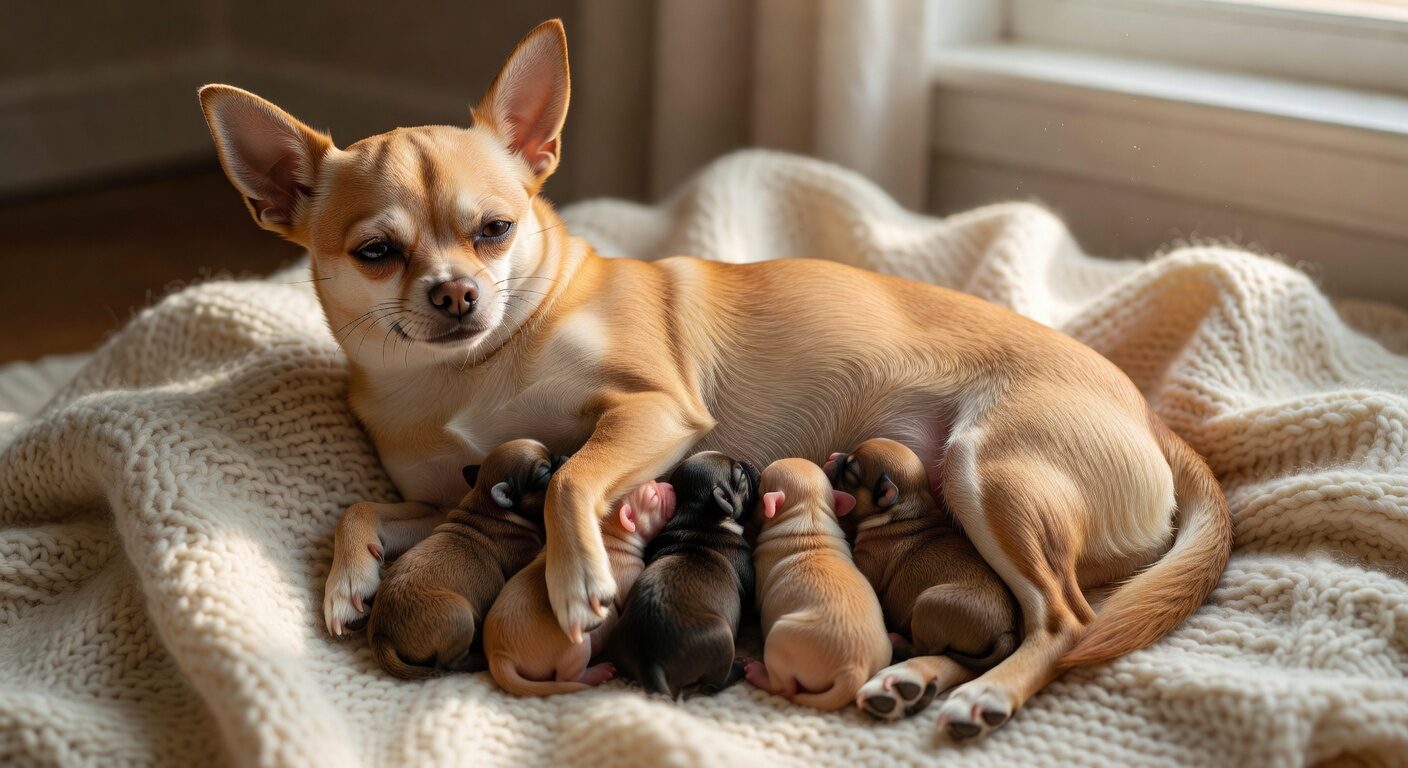
Schedule a vet visit within 24 to 48 hours after birth for both the mother and puppies. Chihuahua health after delivery requires monitoring for infection, adequate milk production, and recovery from the physical demands of birth.
Meanwhile, the mother will be exhausted and hungry. Feed her high-quality food in small, frequent meals and make sure she has constant access to fresh water.
Helping a chihuahua give birth is one of the most stressful and rewarding experiences a dog owner can have. The key is preparation, a calm environment, knowing when to intervene, and knowing when to get professional help. Your chihuahua is counting on you to be ready. Make sure you are. com/the-anti-anxiety-medication-i-gave-my-chihuahua-almost-made-everything-worse/” title=”The Anti-Anxiety Medication I”>The Anti-Anxiety Medication I.
Understanding Why Your Chihuahua Needs Help in the First Place
Before you can effectively help your chihuahua with any issue, you need to understand what is actually driving the behavior or condition you are trying to address. I learned this the hard way with my first chihuahua when I spent weeks trying to fix what I thought was a behavioral problem only to discover it was rooted in a medical issue.
She was snapping at me when I picked her up, which I interpreted as aggression. It turned out she had a luxating patella that was causing pain whenever her back legs were positioned a certain way. Once we addressed the physical problem, the snapping stopped entirely.
This taught me a lesson I carry with me to this day. Always rule out medical causes before assuming a behavioral solution is what is needed. Chihuahuas are stoic little dogs who often hide pain in ways that manifest as behavioral changes rather than obvious signs of distress.
For example, a chihuahua who suddenly stops eating might not be picky. They might have a dental issue causing pain when they chew. A chihuahua who becomes aggressive with other dogs after years of being friendly might be experiencing vision or hearing loss that makes them feel vulnerable. The first step in helping any chihuahua is a thorough veterinary examination, and I mean thorough, not just a quick listen to the heart and a pat on the head.
Building Trust With a Chihuahua Who Has Been Through a Lot
Many of the chihuahuas who need the most help are the ones who have been through difficult situations. That could be a shelter environment, a previous home with neglect or mistreatment, or simply a lack of socialization that has left them fearful of the world. Building trust with these dogs requires a fundamentally different approach than what works with a confident, well adjusted chihuahua.
I supported a chihuahua named Bean who had been found as a stray and spent four months in a shelter before coming to me. For the first two weeks in my home, she would not come out from under the bed except to eat and use the bathroom. Even then she would bolt back to her hiding spot the moment she was done.
I did not try to coax her out or force interaction. Instead, I sat on the floor near the bed every evening and just read a book out loud in a calm voice. I placed treats in a trail from under the bed to where I was sitting and let her decide when to follow it. On day nine, she ate a treat from my open hand for the first time. On day fourteen, she sat next to me while I read. By the end of the month, she was sleeping on my lap.
Honestly, the point of this story is that helping a chihuahua who has been through difficult experiences is not about grand gestures or intensive training programs. It is about showing up consistently, being patient beyond what feels reasonable, and letting the dog set the pace of the relationship.
Resources That Actually Help Chihuahua Owners
Over the years I have compiled a mental list of the resources and approaches that have actually made a difference when I needed to help my chihuahuas. The single most valuable resource is a veterinarian who has real experience with toy breeds. Not all vets are equally comfortable with chihuahuas, and the ones who see them regularly understand the breed specific health risks and behavioral tendencies in ways that a general practitioner might not.
I switched vets after my first chihuahua’,s dental problems were dismissed as cosmetic rather than the serious health issue they actually were. Finding a vet who took small breed dental disease seriously changed everything.
For behavioral help, look for trainers who are certified in positive reinforcement methods and who have worked with fearful or reactive small dogs specifically. The techniques that work for a confident medium sized dog can backfire spectacularly with a fearful chihuahua if the trainer does not understand the nuances.
Additionally, online communities can be surprisingly helpful, but be discerning about which ones you trust. I have found that the best chihuahua owner groups are the ones moderated by people with real experience who do not tolerate misinformation, rather than the ones that just post cute pictures all day.
Finally, never underestimate the value of connecting with other chihuahua owners in your local area. The advice that comes from someone who lives in your climate, uses the same local vet options, and deals with the same neighborhood challenges is often more practical than anything you will find in a book.
Chihuahuas are one of the longest-lived dog breeds with an average lifespan of 14 to 16 years. Some reach 20 years with proper care. Regular vet checkups, dental care, a healthy diet, and maintaining proper weight all contribute to longevity. The oldest recorded chihuahua lived to be 22.
Chihuahuas can be good family dogs in homes with older children who understand gentle handling. They are too fragile for rough play with toddlers. Chihuahuas bond deeply with their family but may be wary of strangers. Proper socialization from a young age helps them be more accepting of new people.
Two 15 to 20 minute walks per day plus some indoor playtime meets most chihuahuas’ needs. They have more energy than people expect but tire out faster than larger breeds. Mental stimulation through puzzle toys and training sessions is just as important as physical exercise for this intelligent breed.
The most common health issues include dental disease, patellar luxation, heart murmurs, hypoglycemia in puppies, tracheal collapse, and hydrocephalus. Regular vet visits catch many of these early. Dental care is especially important because chihuahuas are prone to tooth loss and gum disease throughout their lives.
Chihuahuas bark because they are alert, protective, anxious, or bored. Their hearing is sharp and they react to sounds other dogs ignore. Training a reliable quiet command helps. Ignore demand barking completely. Address the underlying cause rather than just the noise. A tired chihuahua barks less than a bored one.
How long do chihuahuas live on average?
Chihuahuas are one of the longest-lived dog breeds with an average lifespan of 14 to 16 years. Some reach 20 years with proper care. Regular vet checkups, dental care, a healthy diet, and maintaining proper weight all contribute to longevity. The oldest recorded chihuahua lived to be 22.
Are chihuahuas good family dogs?
Chihuahuas can be good family dogs in homes with older children who understand gentle handling. They are too fragile for rough play with toddlers. Chihuahuas bond deeply with their family but may be wary of strangers. Proper socialization from a young age helps them be more accepting of new people.
How much exercise does a chihuahua need?
Two 15 to 20 minute walks per day plus some indoor playtime meets most chihuahuas’ needs. They have more energy than people expect but tire out faster than larger breeds. Mental stimulation through puzzle toys and training sessions is just as important as physical exercise for this intelligent breed.
What health problems are common in chihuahuas?
The most common health issues include dental disease, patellar luxation, heart murmurs, hypoglycemia in puppies, tracheal collapse, and hydrocephalus. Regular vet visits catch many of these early. Dental care is especially important because chihuahuas are prone to tooth loss and gum disease throughout their lives.
Why do chihuahuas bark so much?
Chihuahuas bark because they are alert, protective, anxious, or bored. Their hearing is sharp and they react to sounds other dogs ignore. Training a reliable quiet command helps. Ignore demand barking completely. Address the underlying cause rather than just the noise. A tired chihuahua barks less than a bored one.