
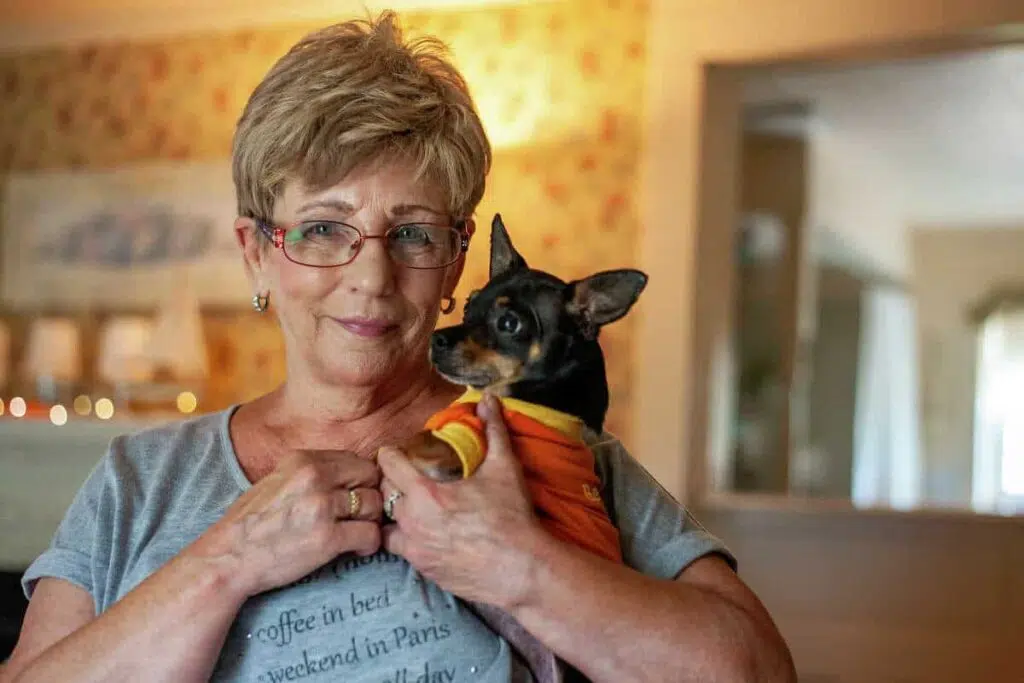
A 4-year-old Chihuahua named Buddy is back home in Midland, Michigan, after spending nearly a month on the run and turning up severely dehydrated and malnourished inside an abandoned car, his owner said.
Dawn Hartley had searched for the six-pound dog for three weeks, posting on Facebook and contacting neighbors, before she got the call that an animal rescuer had found him near her home, she said. Buddy weighed about half his normal body weight when he was recovered, Hartley said.
Buddy slipped out of Hartley's backyard gate one day in the second week of August, she said. Neighbors soon reported spotting him on his own, and sightings tracked him crossing Lyon and Patrick roads before he moved through Dow property toward the Tittabawassee River, near Dow Diamond and the I-Park, an area that includes industrial operations.
Workers at the I-Park spotted the dog repeatedly but could not catch him, according to Hartley and Gwen Drake, founder of the Midland County Pit Stop animal rescue group, who said they stayed in contact with security and workers during the search.

"They were watching for him, but they could never find him," Hartley said. "(Buddy) was very evasive."
Rachel Miner, DuPont production leader of APT in Midland, said workers posted missing-dog pictures on a building bulletin board after seeing a post about Buddy in a local Facebook group.
"Not long after they did that, we saw him run by the building," Miner said. "Everyone was like, 'Oh my gosh, it's Buddy!'"
One of Miner's engineers put out food and a dog bed to try to lure him in, she said, but the dog ran off each time workers approached. Drake said Buddy likely went into survival mode while loose and may have tried to hunt for food.
"The resiliency (of Buddy) is amazing to me," Drake said. "The fact that this dog was not hurt by an animal, hit by a car, (or) anything like that is huge."
A resident found the dog inside an old car near a local business and alerted people who had been helping with the search, Hartley said. She took Buddy to an animal clinic for water, food and rest. In the weeks since, he has been eating regularly and has regained most of his weight, she said.
What to do when a dog goes missing
Pet owners whose animals go missing should post photos and descriptions in local lost-pet Facebook groups and contact nearby animal shelters, Drake said. She also urged anyone who sees a loose dog to step in.
"If you see a dog out, it should not be out," Drake said. "Whether you can stop and help that dog or not, find some help (and) do something."
Beyond the search, animal-welfare guidance generally points to a few steps that improve the odds of a reunion. The American Society for the Prevention of Cruelty to Animals recommends filing reports with local shelters and animal control, searching the immediate area first because frightened dogs often stay close, and using familiar scents such as bedding to draw a skittish dog back, according to its lost-pet guidance.
Why microchipping matters
Drake recommends that pet owners microchip dogs and cats and keep the registration current so lost animals can be returned sooner. A microchip is a permanent form of identification, but it only works if the contact information on file is up to date, according to the American Veterinary Medical Association, which advises owners to register the chip and update it after any move or change of phone number.
Refeeding a recovered dog safely
A dog that has lost a significant amount of weight while lost should be checked by a veterinarian before resuming normal meals. Drake said owners should have a recovered pet tested for parasites, since a long-missing animal may have been eating dead animals or trash.
Veterinarians generally caution against feeding a starved animal too much too quickly. Reintroducing food in small, frequent amounts under veterinary supervision lowers the risk of refeeding syndrome, a potentially dangerous shift in fluids and electrolytes that can occur when a malnourished animal eats a large meal, according to veterinary guidance from the American Animal Hospital Association.
If your pet goes missing, file a report with your local animal shelter and animal control, post photos in community and lost-pet groups, and search the area close to home first. Microchip your dog or cat and keep the registration current. If you find a lost or recovered animal, have a veterinarian examine it before resuming a normal diet. For more guidance, see the ASPCA's lost-pet resources and the AVMA's microchipping FAQ.
Sources & Further Reading menu_book
Canine Health Outcomes Institute (2025)
Canine Longevity Study Full Report
View Report arrow_forwardFrequently Asked Questions help
help_outline How do you source your news pieces? expand_more
Every piece names its sources by title and affiliation on first reference. We confirm by phone or email before publication when a story turns on a single account.
help_outline How current is your reporting? expand_more
News pieces are dated and corrected on a rolling basis. The publish date and any updated date appear at the top of the article.
help_outline Can I send you a story tip? expand_more
Tag @ChihuahuaCorner or use the contact form. We follow up on every named lead we can verify.
Stay in the loop Follow the story. We update on the record as new information arrives.
favorite