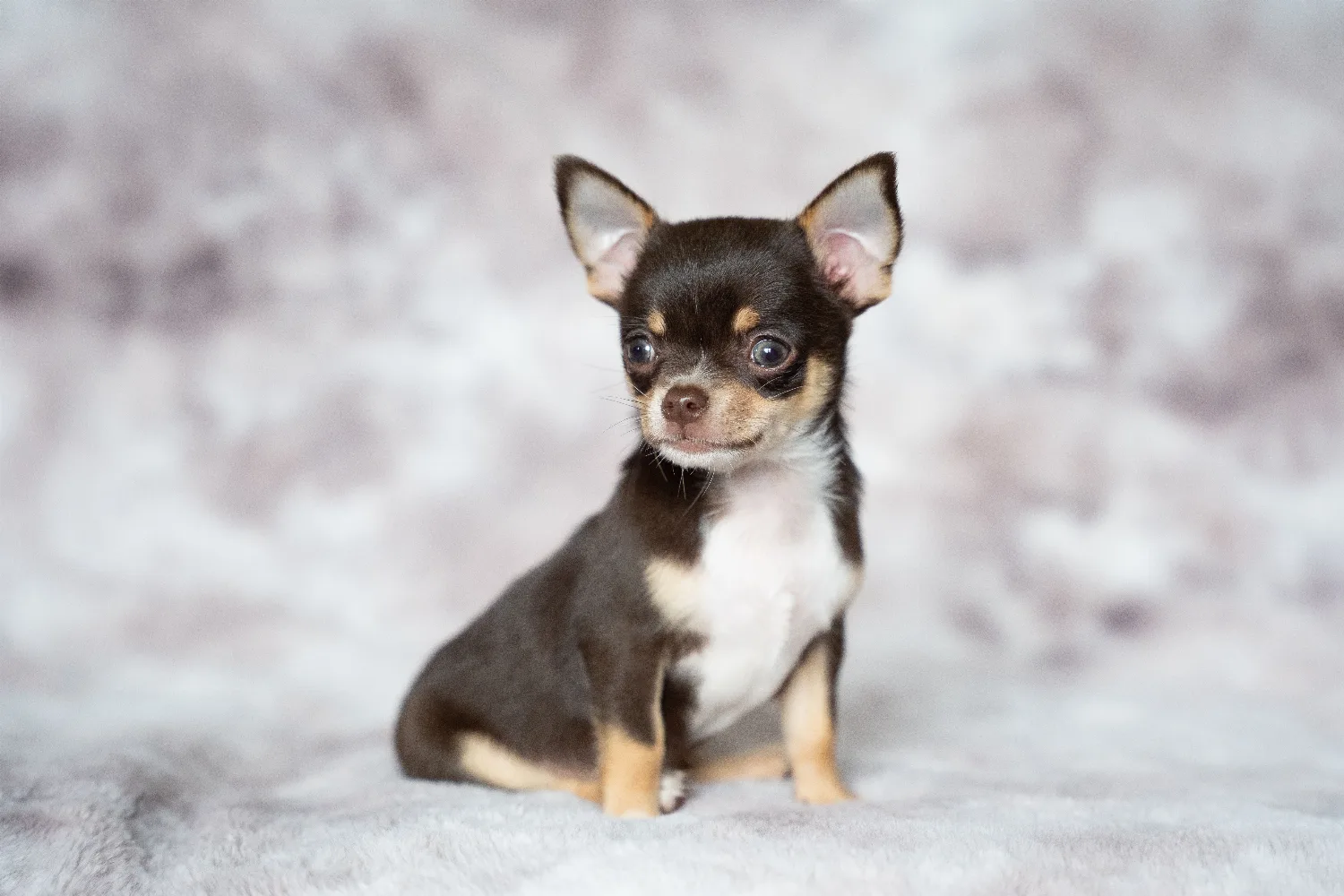
A chihuahua puppy weighs about a pound and a half and arrives convinced it weighs ninety. This is the founding fact of chihuahua puppyhood, and everything else follows from it. What you are holding is not a small dog. It is a regular dog that went through some kind of shrinking incident and is deeply annoyed about it.
My chihuahua, Nacho, came home at nine weeks, at which point his entire training program was me saying his name while he stared at a wall. The internet promises a fully trained chihuahua by Sunday; the internet is dreaming. Training is a timeline that unfolds over months, and I have the chewed phone charger to prove I survived it.
Quick answer: A chihuahua puppy weighs about a pound and a half and behaves like a full-sized dog, and training one is a timeline that unfolds over months rather than a weekend. The work is staged by age rather than crammed into a first week, which is how this guide runs it.
Weeks 8 to 10: a pound and a half of weather
Most puppies come home between eight and twelve weeks, and the first jobs are smaller than you expect. You are teaching the puppy its name, that hands are good news, and that the crate is a bedroom rather than a dungeon. Do the handling now, while the puppy is too disoriented to complain: touch the paws, touch the ears, peek at the teeth.
Skip it and every one becomes a shrieking ordeal later, a lesson I paid full price for and wrote up in trimming a chihuahua's nails without the drama. Potty training begins here too. The American Kennel Club's rule of thumb is that a puppy holds its bladder for roughly its age in months, counted in hours; some get the idea in days, others in months. Chihuahuas, with tiny bladders and firm opinions about cold grass, sit at the patient end. Set a timer. Trust nothing.

Weeks 10 to 16: the window that actually matters
If you skim one section, do not let it be this one. The American Veterinary Society of Animal Behavior calls the first three months of life the primary socialization period, the most important window in a dog's behavioral life. Whatever the puppy meets now, calmly and pleasantly, it files under "normal." Whatever it does not meet, it reserves the right to bark at later with its whole body. So stack up gentle experiences: odd floors, umbrellas, the vacuum from a polite distance, calm vaccinated dogs, and humans of every shape.
AVSAB is clear that this should begin before the vaccine series is finished, because behavioral problems, not infections, are the leading cause of death in dogs under three. That is exactly why the window matters; the full method is in how to socialize a chihuahua. One rule I cannot repeat enough: put the puppy down.
Chihuahuas are so portable that owners carry them past every frightening thing, and a dog carried past the scary thing never learns it is fine. Let it walk on a harness rather than a collar. The most confident chihuahua on my block knows two cues; the most anxious knows nine. Socialization beat obedience, and it was not close.
Months 4 to 6: teeth, and the first small rebellion
Around four months the baby teeth start falling out, the adult set in by six or seven months, and your puppy will try to eat your home. This is teething, it is normal, and the only real defense is a pile of chew toys and the calm acceptance that one shoe is going to be lost. Choose the shoe in advance if it helps you sleep. Leash manners get serious now, and puberty arrives around six months with the faint sense that your puppy has begun to have Ideas. Hold that thought.
Months 6 to 12: the chihuahua teenager arrives
Here it is, the phase nobody warns you about. Somewhere between six and twelve months, your beautifully behaved puppy appears to forget everything. The recall you drilled evaporates. The "sit" earns a long, insolent stare. The barking returns. You will be certain you broke your dog.
You did not. A 2020 study in Biology Letters, led by Lucy Asher, tracked dogs through adolescence and found their response to a "sit" command dipped around eight months, but only when the command came from their own caregiver, not a stranger. Your teenage dog tunes out you in particular, as a developmental stage, and recovers by about a year.
Keep reinforcing the rules through the eye-rolling, resist the urge to quit, and the trained dog comes back. This is also, not coincidentally, the age when many chihuahuas land in rescue, surrendered by owners who mistook the teenager for the finished product. Wait it out.
One year and up, and the cue that fought back
Most chihuahuas count as adults by a year, finished growing around nine or ten months, and the agreeable dog resurfaces with a fully installed adult brain. Nacho now comes when called about ninety percent of the time, which for a chihuahua is essentially a doctorate. The cue that took longest, nearly every owner agrees, is recall, and the reason is economics: outside there are squirrels, smells, and other dogs, and you are offering kibble and your personality.
You have been outbid. My two classic mistakes: calling the dog only for things it dislikes until "come" predicts disappointment, and chasing it when it runs, which it files as the greatest game ever invented. The fix is to become, briefly, the most interesting thing in the yard.
The tip I would mail back to week nine
If I could send one paragraph back to day one, it would be about treat size. A chihuahua has a mouth roughly the size of a thimble, and a large biscuit takes forever to chew, which detonates the dog's focus mid-lesson. Switch to pea-sized, soft scraps the dog can swallow in one gulp and the session tightens up. There is a health angle too: because chihuahuas are prone to low blood sugar and do best on small, frequent meals, tiny treats happen to suit the breed better than big ones.
The runners-up are unglamorous and real. Keep sessions to a few minutes and run several a day rather than one long slog. Mark the exact instant the dog gets it right with a clicker or a crisp "Yes." Say the cue once, then wait, because chanting "sit, sit, sit" teaches the dog the word is optional.
Underneath all of it is the real shift: treat the chihuahua like an actual dog, not a handbag accessory. That permissiveness is where so-called small-dog syndrome comes from, a tiny dog nobody ever asked to have manners. The barking, if it is running your household, has its own guide in chihuahua barking: causes and solutions.
Here is what nobody mentions at week nine, while you hold a pound and a half of trembling opinion and quietly wonder what you have done. The training never entirely ends, because the dog never entirely stops being a chihuahua. But the frantic part does. One day you look up and the puppy has become a small, portable, weirdly competent adult who comes when called, more or less, and believes you personally hung the moon. You did most of the work. The dog took most of the credit. That, I have come to understand, is the whole arrangement.
