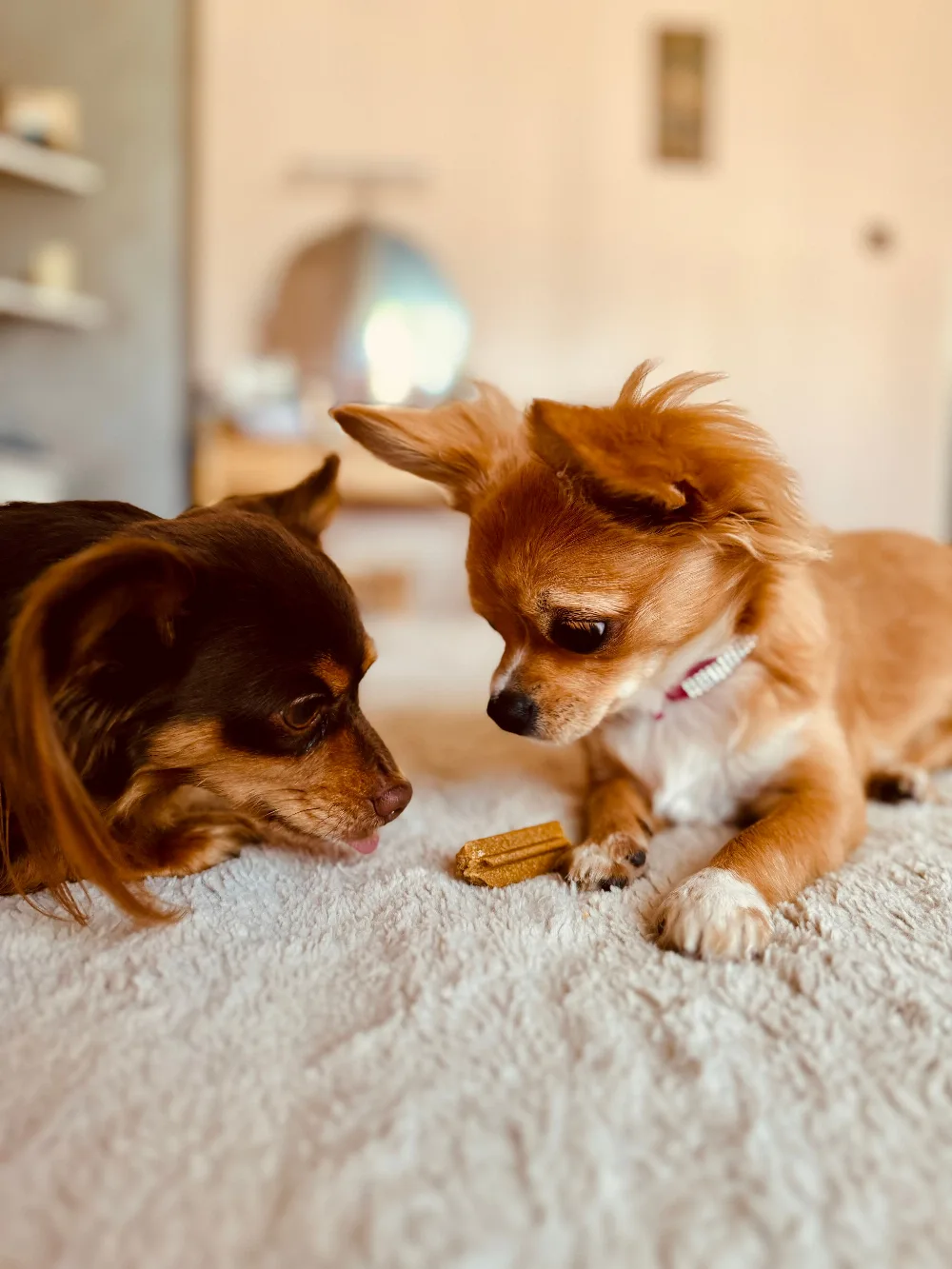
My thesis, formed years ago in a pet boutique while holding a ninety-dollar dog trench coat, was that the pampered-pet economy had lost its mind. I want to report on that economy today as a journalist should: from deep inside it, wearing its lanyard, holding its loyalty cards. The trench coat hangs in our closet. It has a hood. This is the field report.
The market is not small
Americans spend well over a hundred billion dollars a year on their pets, a figure the American Pet Products Association tracks with the seriousness of a commodities desk, and the small-dog sector punches above its weight class for an obvious reason: everything fits indoors, travels in a tote, and photographs well. Nobody is monogramming a mastiff's stroller. The chihuahua, four pounds of dog with the bearing of a deposed royal, is the sector's natural flagship product, and the sector knows it.

The inventory of my own collapse
It started responsibly. A harness, per the safety file. A sweater, per the cold-weather regulations, which I want it noted are real regulations for this breed and not fashion. But the line between equipment and lifestyle is drawn in pencil, and somewhere after the second sweater I crossed it at a jog: the raincoat, the travel sling, the elevated food bowl described on its packaging as "mid-century," the birthday cupcake from a dog bakery that also sells, and I have seen it, a charcuterie board. Our gear desk maintains a sober list of what a chihuahua actually needs. I keep a copy. I keep it next to the receipts for everything else.
The frontier keeps moving
The sector's outer provinces now include dog spa days, pet photographers with lighting rigs, and dog meditation sessions, which I attended once, for journalism, and where Nacho achieved a state of total transcendence in nine seconds because lying motionless on a warm mat is his entire personality, per the sleep bureau's longstanding findings. He was the best student in the class. The class cost more than my gym membership. I have been back twice.
The sensible counterargument
My friend Dave, a man with a labrador and a functioning prefrontal cortex, points out that the dog cannot tell a boutique bed from a laundry pile, which our own field study confirms, and that the entire luxury tier is humans purchasing feelings and calling them supplies. Dave is right. The cost desk is right too: the money that matters goes to the veterinarian, the dental fund, and the emergency line, and no cupcake ever moved those needles. I have absorbed these arguments completely. I can recite them.
The subscription layer
Above the boutique tier sits the recurring-revenue tier, and I am here to report that it has my card number. There is a monthly box of toys curated, the website says, for his play style, a phrase I pay twelve dollars a month to avoid examining. There is a treat-of-the-month program our safe-foods ledger vets on arrival and Nacho vets in four seconds flat. There was, briefly, an app-connected feeder that photographed him eating and sent me the photographs at work, a service I cancelled not because it was absurd but because he learned to stare into the camera while begging, a maneuver the begging file specifically warns rewards the behavior, and I was rewarding it by push notification. The economy's genius is that it never bills you for the dog. It bills you, forever, in small amounts, for the feeling of being a slightly better owner than last month, and it has correctly calculated that I will not audit that feeling.
The resale market does not exist
A word on depreciation: there is none, because there is no exit market. The outgrown harness cannot be sold, because it was his first harness. The rejected bed cannot be donated, because he sat in it once, in 2024, and the precedent stands. Every purchase in this economy converts instantly from goods to archive. My closet holds a museum of a four-pound dog's brief opinions, and the museum, like all museums, only acquires.
The one line item that always pays
For the record, and against the entire spirit of this piece: the spending that actually returns something is dull. A toothbrush. A well-fitted harness rather than a collar. The scale you weigh her on monthly to catch the creep before it loads her joints. None of it photographs well, none of it arrives in tissue paper, and all of it outperforms the trench coat by a distance that would embarrass me if I were capable of embarrassment on this subject.
The part where I refuse to learn anything
And yet. The dog spent millennia being bred to sit on a human and be adored, per the origins file, and I spend forty hours a week at a desk earning money I cannot take with me. Somewhere between those two facts, a cupcake with a bone on it stops being irrational and starts being the most defensible line item in the budget. The economy is ridiculous. I am a fully vested participant. Nacho, seated in the good chair in his dry-clean-only coat, declines to comment, which is what a flagship product does.
