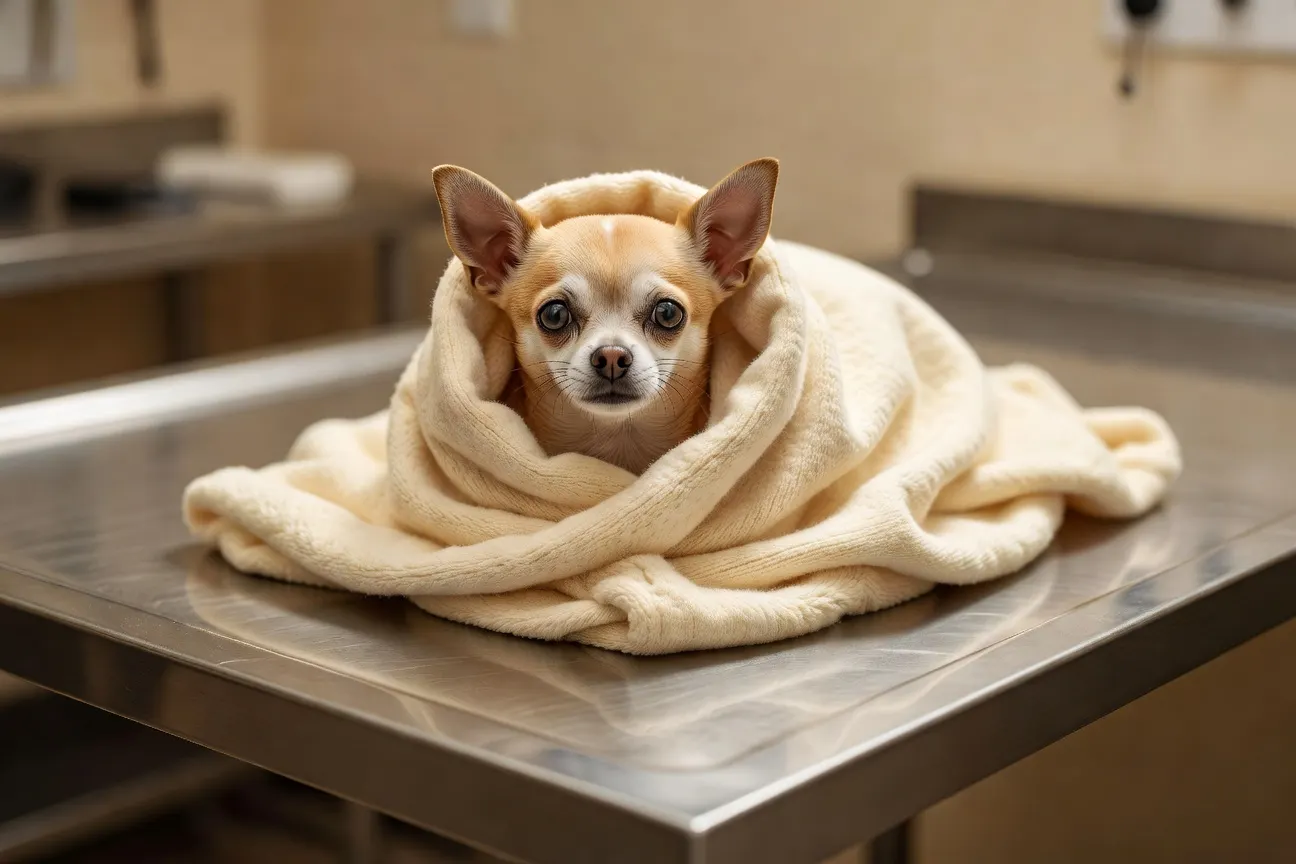

There is a story I have been sitting on for a few months because I was not sure how to write it without making myself sound either credulous or dramatic. The story is true. I have the dermatology report. I am also, by inclination and by the column's general policy, allergic to dramatic claims about small dogs. So I am going to tell it as flatly as possible and let you decide.
Share your story with us! Tag @ChihuahuaCorner or use #TinyButLegendary
favoriteA friend of mine named Karen has a chihuahua named Beans. In November of last year, Beans began, persistently and in a manner Karen had never seen before, sniffing one specific spot on Karen's left forearm.
The spot, as Karen described it
The spot was a small mole, approximately the diameter of a pencil eraser, that Karen had had for about a decade. It was, until November, unremarkable. It was also, Karen said, not visibly different in November than it had been in October, by her own reading.
article_in_feed
A handpicked find for your tiny companion.
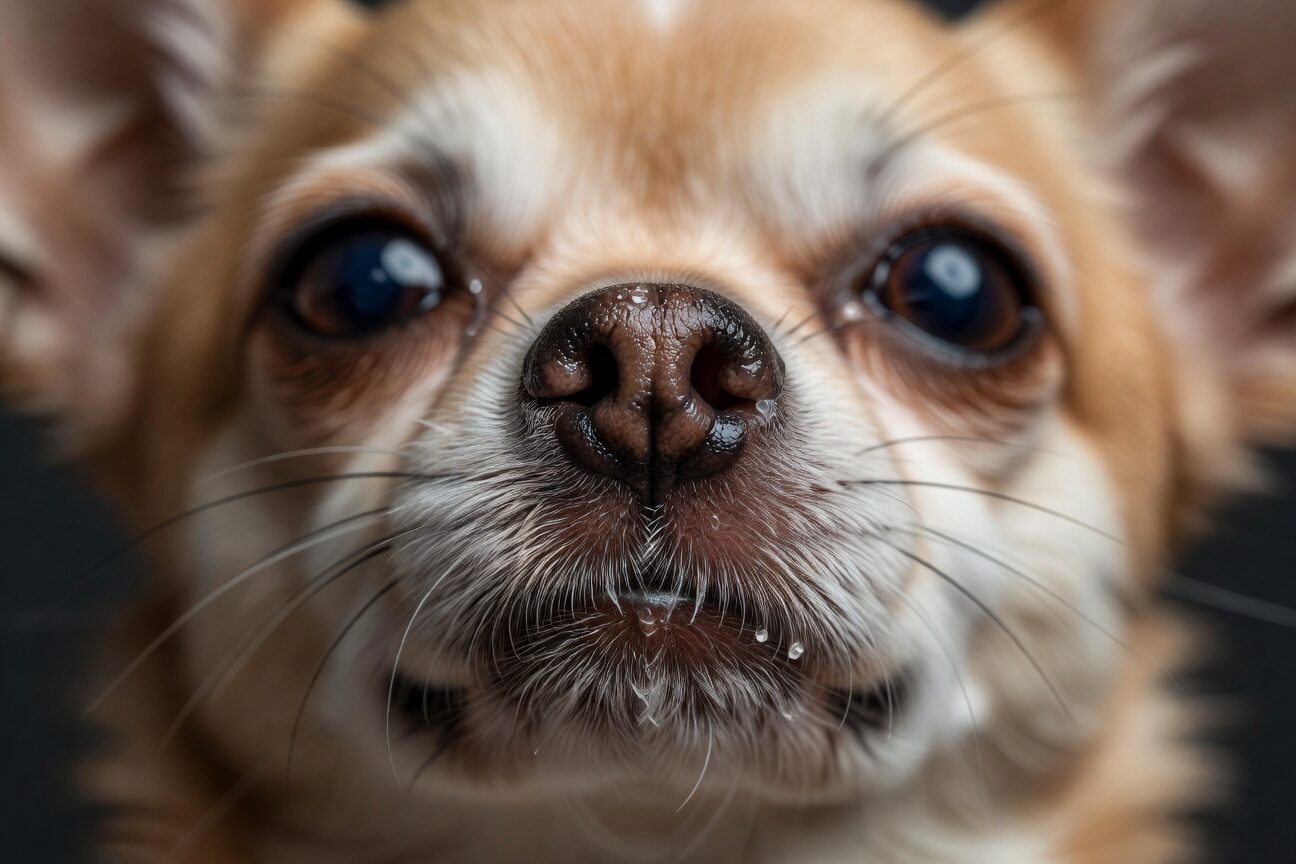
What was different, she told me over the phone in early December, was Beans. Beans had begun, on the couch in the evenings, walking deliberately to Karen's left arm, sniffing the mole for approximately ten seconds, then sitting back. The behavior was not, Karen emphasized, a constant lick or worry. It was a specific, repeated, deliberate inspection. Beans had performed this inspection, Karen estimated, several dozen times across November.
Karen, who is a careful person, made a dermatology appointment. She told the dermatologist, in passing and slightly embarrassed, about Beans. The dermatologist, who has been a dermatologist for nineteen years, did not laugh. She took a closer look at the mole, asked questions about its history, and biopsied it.
The biopsy came back as an early-stage melanoma.
What the research actually says, briefly
I am going to plant the boring paragraph here, because the boring paragraph is the responsible part of this column. The peer-reviewed evidence on dogs detecting human cancer is real but limited. The National Cancer Institute has summaries of the work; trained scent-detection dogs have demonstrated, in controlled studies, the ability to identify lung, breast, colorectal, prostate, and melanoma samples at rates well above chance.
The work on melanoma specifically is older and more limited (Williams and Pembroke, 1989, The Lancet; subsequent case reports in dermatology literature). It is not, in any sense, a substitute for clinical screening. It does, in a small number of documented cases, line up with anecdotes like Karen's.
I am not going to claim Beans was running a deliberate diagnostic protocol. The honest version is that a dog with a sensitive nose noticed something on a familiar human and acted on the noticing repeatedly, and the human, eventually, paid attention. The clinical sequence that followed was driven by the human and her dermatologist. The dog, on her own, would not have called the appointment.

What I have told Karen, since
I have, in the months since the biopsy and the small surgical excision that followed, told Karen the following things in roughly this order. First, that the timing was lucky. Second, that the dog is, by any reasonable read, a credit to the household. Third, that I would not, in writing this column, suggest readers rely on their dogs for medical screening, because the column would be irresponsible and one of you would write me a letter about it.
What I will say, without overstating, is that paying attention to a sustained behavior change in a dog is not, on the available evidence, foolish. A separate primer on what dogs notice in their own bodies is the inverse of this story; the same nose works in both directions.
The sincere paragraph, planted on schedule
I will plant a sincere paragraph here, because the column needs one. I have lived with a chihuahua named Doris for nine years. Doris has not, to my knowledge, detected any cancer, but Doris has, on at least three occasions, sat on my chest at 11 p.m. on a Tuesday after a hard day in a manner that suggested she had read the room more accurately than I had. I am not going to claim this was clinical. I am going to claim that the practice of living closely with a small attentive animal is, in some quiet structural way, a form of distributed noticing, and that the noticing occasionally produces a useful signal you would not have produced on your own.
The bottom line, with the disclaimer attached
If your chihuahua starts sniffing a spot on your body she has not, in all your years together, sniffed before, and continues to do this for several weeks, do what Karen did. Do not panic. Do not assume cancer. Do go to your physician (or in this case, dermatologist) and mention it. Mention the dog. The doctor, in my experience, has heard versions of this before and will not, on the available evidence, laugh.
Beans is, as of this writing, asleep on Karen's lap on a Saturday afternoon. The spot on Karen's forearm is a small flat scar. The dermatologist has scheduled a six-month follow-up. The bond between a small dog and a person is, in this case, made of attention. The attention, occasionally, points at things.
I would not, in any responsible sense, suggest you rely on your dog for medical care. I would, in this specific case, suggest you keep the dog and the dermatologist on speaking terms.
Community Insights favorite
We asked our readers: Has your Chihuahua done something bold? Here's what you shared.
“My Chi chased a raccoon out of our garage!”
“Tiny but mighty! These dogs have no idea how small they are.”
“It’s not just a story — it’s the Chihuahua spirit.”
Share your story with us! Tag @ChihuahuaCorner or use #TinyButLegendary
Know a Chihuahua with a legendary story? We’d love to feature them — submit your story.
favorite