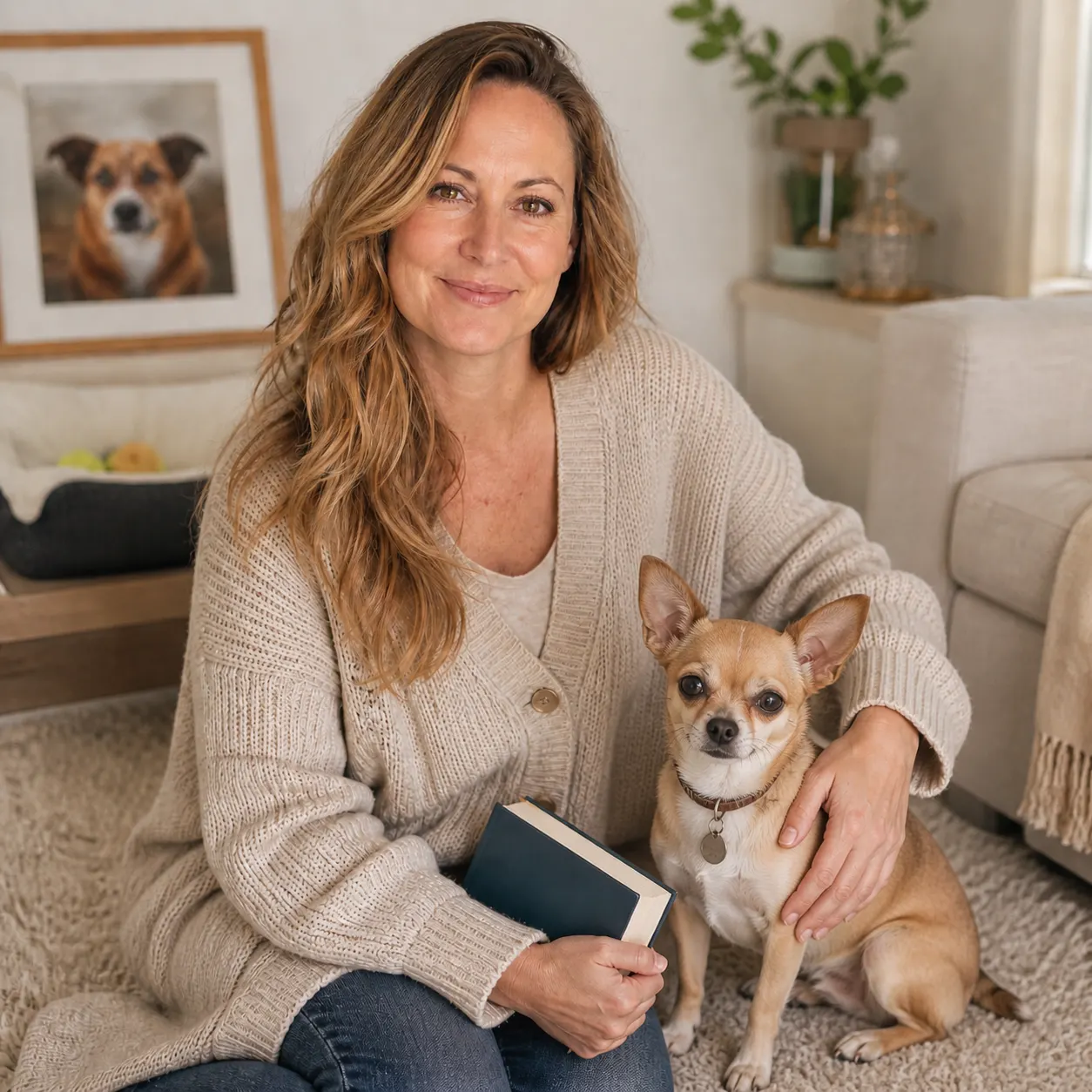
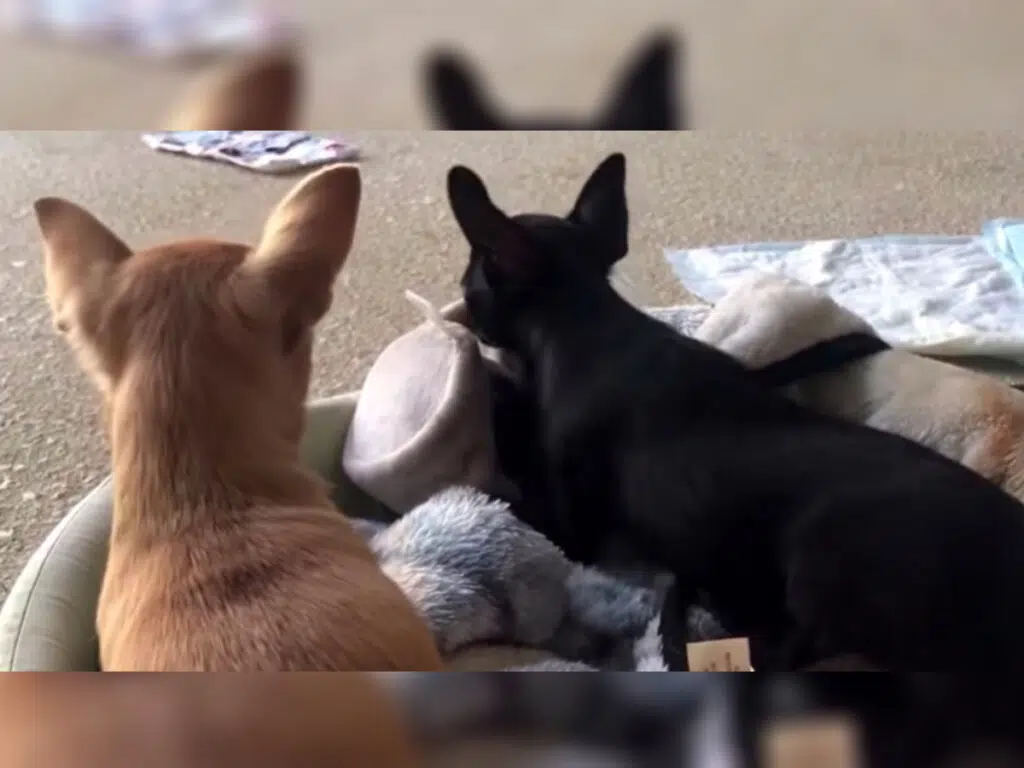
If your chihuahua growls, stiffens, or guards a toy when another dog comes near, you are not looking at a jealous dog. You are looking at resource guarding, and it is one of the most normal behaviours in the dog world.
Resource guarding is the set of behaviours a dog uses to keep something valuable away from someone else. The valuable thing can be a toy, a chew, a food bowl, a sleeping spot, or even a favourite person. The behaviours sit on a ladder, from a quiet freeze all the way up to a snap. Reading that ladder is the whole game, because the earlier you spot it, the easier it is to help.
Why chihuahuas guard their toys
Guarding is not a character flaw, and it is not your dog being spiteful. It is an emotion. The dog has something it values, it expects to lose it, and it acts to keep it. Researchers describe this as canine possessive aggression, and a large owner survey by Jacobs and colleagues, published in 2018 in Frontiers in Veterinary Science, found that guarding is common across many breeds and is best understood as a normal, evolved response rather than a defect.
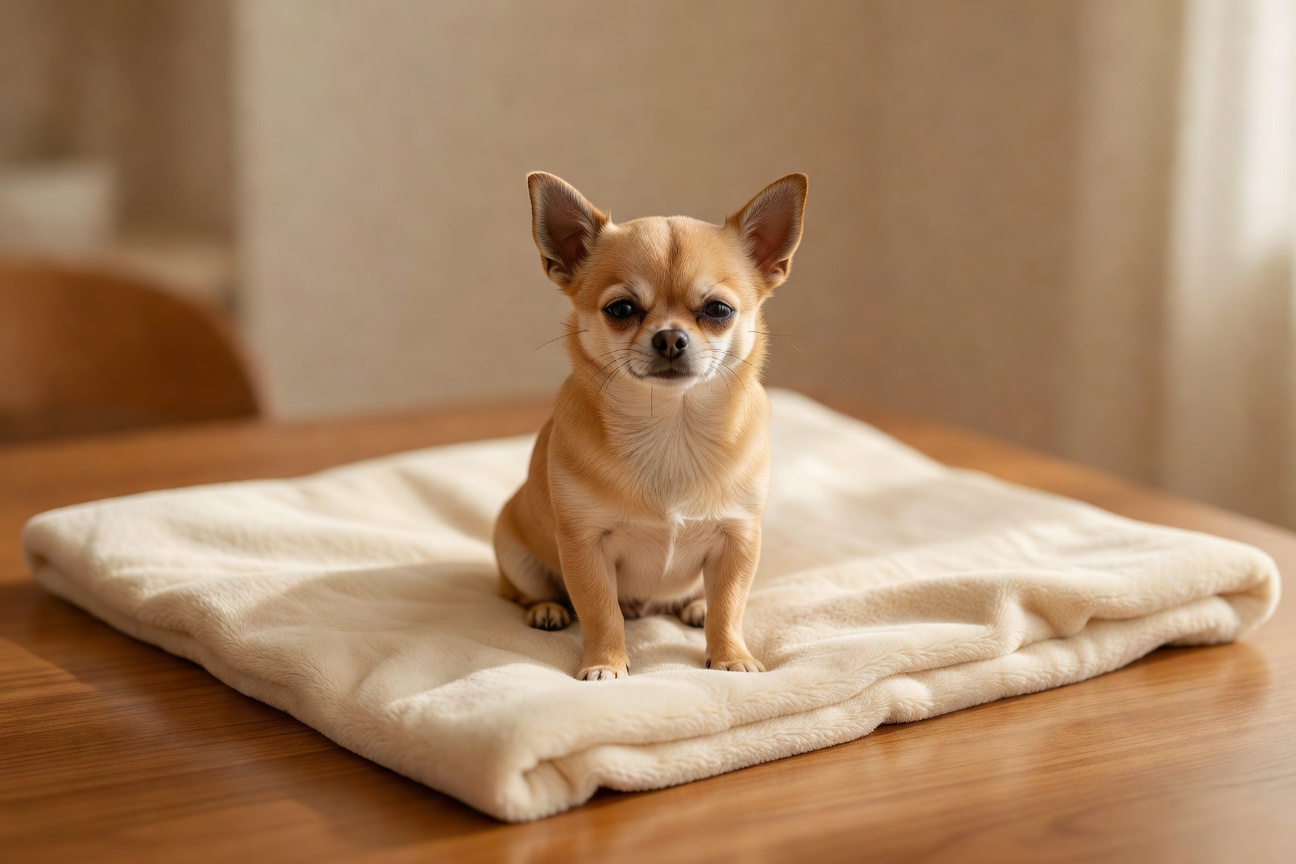
Two things make it more likely to show up in a small dog. First, chihuahuas are often under-trained. People can pick a small dog up and physically move it out of trouble, so they skip the slow, kind teaching a larger dog would get. The behaviour never gets addressed, and it grows. Second, a tiny dog living among bigger dogs, or among littermates competing for the same handful of toys, learns early that good things disappear fast. Guarding works for that dog, so the dog keeps doing it.
It is also worth saying plainly: punishment makes guarding worse. A study by Casey and colleagues, published in 2014 in Applied Animal Behaviour Science, found that confrontational handling is linked with more aggression, not less. When you take the toy away by force, you confirm the dog's fear that a person approaching its toy means the toy is gone. The growl was the warning. Punish the warning enough times and some dogs stop warning and go straight to the bite.
Reading the early warning signs
Most guarding tells you it is coming long before any teeth are involved. The early signals are quiet, and they are the ones to watch for:
The dog freezes or goes still over the item. It hovers, lowering its head and body over the toy. It eats or chews faster when someone approaches. It carries the toy away to a corner or behind furniture. You might see a hard stare, a whale eye with the whites showing at the corner, a stiff tail, or a low rumble of a growl.
The growl is not the problem. The growl is information. It is your dog telling you, in the only language it has, that it is uncomfortable. The goal is never to silence the growl. The goal is to change the feeling underneath it, so the dog no longer needs to guard at all.
A positive-reinforcement plan
The aim of every step below is to change your dog's expectation. Right now, a hand or a dog near the toy predicts loss. We want it to predict something even better arriving. This is desensitisation and counter-conditioning, and it is the approach the welfare science supports.
1. Start with management. Before any training, lower the daily rehearsals. Every time the dog guards successfully, it gets a little better at guarding. So feed dogs in separate rooms. Pick up the high-value chews when other dogs are loose. Use baby gates or crates so the resource and the rival are never in the same space unsupervised. Management is not failure. It is the foundation that makes the rest possible.
2. Teach the trade-up. This is the core skill. Approach your dog while it has a low-value item, and toss something clearly better, a small piece of chicken or cheese, a short distance away. The dog leaves the item to get the treat. While it does, you can calmly pick up the original toy, then give it right back. The lesson lands fast: a person approaching my things means I gain, and I usually get my thing back too. Practise this when the dog is relaxed, never in the middle of a tense standoff.
3. Add a cue. Once the trade is smooth, attach a word like "drop" or "swap" just before you toss the treat. Over many repetitions the word alone comes to mean good things, come and get them, and you have a voluntary release instead of a tug of war.
4. Work the distance, slowly. For dog-to-dog guarding, the principle is the same but the trigger is the other dog. Keep both dogs far enough apart that your chihuahua notices the other dog but stays loose and can still eat. The moment the other dog appears, food rains down for your chihuahua. The other dog leaving means the food stops. The other dog becomes the thing that predicts chicken, not the thing that predicts theft. Close the gap by inches over days and weeks, never by feet in one session. If your dog stiffens or stops eating, you have moved too close. Back up and make it easier.
What not to do
A few common reactions reliably backfire, and it is worth naming them clearly.
Do not punish the growl. You are not removing the emotion, only the warning system. Do not forcibly take the item out of the dog's mouth or stand over the dog to show it who is boss. Confrontation raises the stakes and, as Casey's work found, raises the risk of a bite. Do not stick your hand in the food bowl while the dog eats in the belief that it teaches tolerance; for a guarding dog it teaches that hands near food are a genuine threat. And please skip the dominance and alpha framing entirely. It is not how dogs see resources, and it points you toward exactly the confrontational methods the evidence warns against.
When to call a behaviorist
Plenty of toy guarding improves with patient trade-up training at home. But some situations call for professional help, and reaching for it early is a sign of good ownership, not failure.
Call a qualified, force-free professional if the guarding involves any bite or near-bite, if it is aimed at people including children, if it is escalating despite your work, if it covers many resources at once, or if there are other dogs in the home and you cannot keep everyone safe. Look for a certified, fear-free or force-free trainer or a credentialed behaviour consultant, and if aggression is in the picture, ask your veterinarian for a referral to a veterinary behaviourist who can rule out pain and, where appropriate, discuss whether medication would help the learning along.
One thing to try this week: pick the lowest-value item your dog guards, and start the trade-up game with something delicious, three or four calm repetitions a day. You are not taking anything away. You are teaching your chihuahua that you approaching its treasures is the best news of its day. For more on the science behind this approach, the American Veterinary Society of Animal Behavior position statements are a calm, reliable place to read further.
Gear That Works backpack
Harness (Not Collar)
A step-in harness is safer and more comfortable.
Lightweight Leash
4–6 feet gives freedom without losing control.
Treat Pouch
Keep rewards accessible and distraction-free.
ID Tag & Microchip
Always be prepared in case of separation.
Trainer Tip: Success on walks starts with reading your Chihuahua's signals and respecting their pace.
Was this guide helpful?
Was this guide helpful? Save the guide. Share it with one other chihuahua owner this week.
favorite