If you are worried your chihuahua is carrying a little too much weight, you are not alone, and there is plenty you can do about it. The good news is that the techniques that work are simple, repeatable, and well within reach for a dog this size. They are also kinder than the crash-diet approach you may have heard about, because they rely on small daily habits rather than willpower.
Weight matters more in a toy breed than people expect. A few extra ounces on a four-pound dog is the proportional equivalent of a large amount on a person, and the research links excess weight to a shorter, less comfortable life. A study by Salt and colleagues, published in 2019 in The Journal of Veterinary Internal Medicine, found that overweight dogs across many breeds had measurably shorter lifespans than dogs at a healthy weight. So this is worth getting right. Before you change anything, talk to your vet. A two-minute body condition score at your next appointment tells you whether your dog actually needs to lose weight, and rules out a medical cause for any recent gain.
Measure the food. Do not eyeball it
The single most useful change you can make is to stop guessing. A 2011 study by German and colleagues, published in The Journal of Nutrition, found that people are surprisingly inaccurate when they portion food by eye, and that the error tends to run in the direction of overfeeding. With a chihuahua, the margin for error is tiny. The same generous scoop that barely registers on a Labrador can be a quarter of your dog's daily ration.
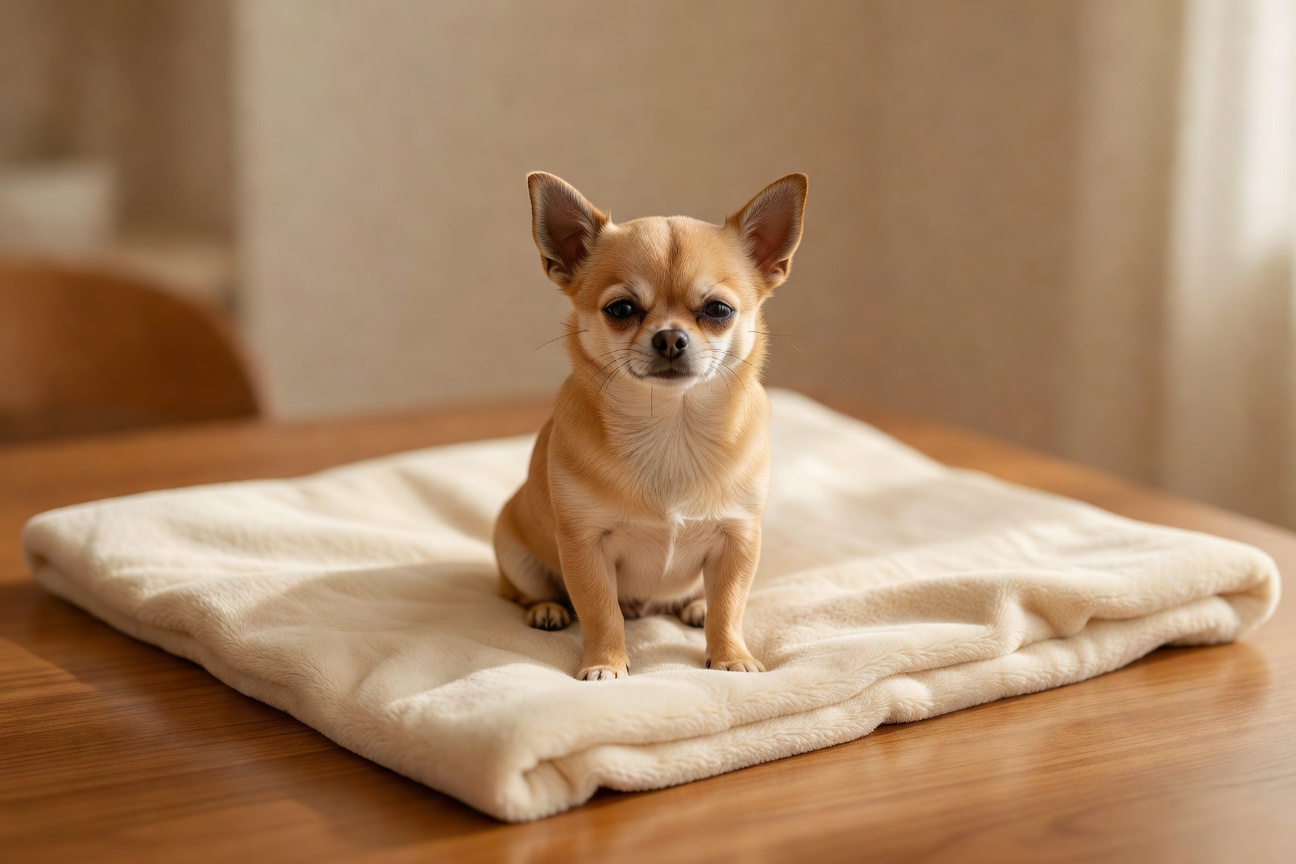
Use a kitchen scale rather than a cup. Weigh the food in grams, follow the feeding guide on the bag as a starting point, and adjust based on what your vet recommends for your dog. Portion the whole day at once into a small container in the morning. Everything your dog eats, including training rewards and the bite that falls off the counter, comes out of that container. When the container is empty, the day's feeding is done.
Treat smart, and let kibble do the work
Treats are where small dogs quietly gain weight, because the calories are easy to underestimate. The fix is not to stop rewarding your dog. Rewards are central to force-free, positive-reinforcement training, and you want to keep training. The fix is to change what the reward is.
Set aside a portion of your dog's measured daily kibble in a pouch and use that for training and treating throughout the day. Your chihuahua does not care whether the reward is a fancy biscuit or a single piece of her own dinner. She cares that good things follow good behaviour. Using kibble means you can reward generously, train often, and add zero extra calories, because it all comes out of the day's ration. Save higher-value treats for genuinely hard moments, like vet visits or recall practice in a distracting place, and break them into pieces the size of a pea. A reward this small still works. The evidence on reinforcement is consistent that the frequency of the reward matters more than its size.
Move every day, at a chihuahua's scale
A chihuahua does not need a five-mile hike, and a tiny dog's joints and windpipe are not built for being pushed hard. What this breed needs is regular, gentle, daily movement. Two short walks a day, at your dog's pace, do more for healthy weight than one exhausting outing on the weekend.
Keep the harness, not the collar, for walks. A harness spreads pressure across the chest rather than the delicate throat, which matters in a breed prone to a collapsing trachea. On cold or wet days, when a small dog genuinely should not be outside for long, you can get the same movement indoors. Toss a piece of kibble across the room and let her chase it. Walk her up and down the stairs a few times under supervision. Movement is movement, and your dog does not know the difference between a park and a hallway.
Feed the mind, not just the body
Enrichment does two jobs at once. It burns a little energy, and it slows down eating, which helps a dog who inhales her food feel satisfied. Both support a healthy weight, and the welfare research consistently links enrichment to lower stress and better behaviour.
Use part of the daily ration to make your dog work for her food. A snuffle mat, a small puzzle feeder, or kibble scattered across a towel turns a thirty-second meal into a ten-minute hunt. You can play a simple game of hide-and-seek with a few pieces of kibble around one room. None of this requires extra calories or expensive equipment, and it gives a clever little dog a job. A chihuahua who has something to do is less likely to sit beside you asking for snacks out of boredom.
Build a routine you can actually keep
The reason most weight plans fail is not that they are wrong. It is that they are too much to sustain. A routine only helps your dog if you can repeat it on an ordinary Tuesday when you are tired. So make it small.
Decide on set mealtimes rather than free-feeding, because a predictable schedule helps you track exactly how much your dog is eating. Weigh the food once, in the morning. Walk at roughly the same times each day. Agree as a household that nobody slips the dog food from the table, because a four-pound dog being fed by three different people adds up fast. Reweigh your dog every couple of weeks and keep a note, so you can see the trend rather than reacting to a single number. Small, boring, consistent habits are what move the needle, and they are the habits a busy person can actually keep.
What to do this week
If you do one thing after reading this, make it this: buy a small kitchen scale and weigh tomorrow's food in grams instead of scooping it. Set aside a handful of that measured kibble in a pouch and use it for every reward and treat for the rest of the day. That one change, repeated, does more than any single diet ever will. And before you make any real change to how much you feed, book a quick body condition check with your vet so you and your dog are starting from the right number. For a deeper look at how a vet assesses your dog's weight, the World Small Animal Veterinary Association nutrition guidelines are a calm, reliable place to start.
Gear That Works backpack
Harness (Not Collar)
A step-in harness is safer and more comfortable.
Lightweight Leash
4–6 feet gives freedom without losing control.
Treat Pouch
Keep rewards accessible and distraction-free.
ID Tag & Microchip
Always be prepared in case of separation.
Trainer Tip: Success on walks starts with reading your Chihuahua's signals and respecting their pace.
Was this guide helpful?
Was this guide helpful? Save the guide. Share it with one other chihuahua owner this week.
favorite