If your young chihuahua growls at his toy, the first thing to know is that a growl is not a bad word. It is information. It tells you how your dog feels in that moment, and that is exactly what you want him to be able to do. The goal is never to silence the growl. The goal is to understand it, and then make the situation feel safe enough that he no longer needs it.
Puppies growl for several different reasons that can look almost identical to a worried owner. Here are the three most common ones, how to tell them apart, and a gentle, evidence-based plan you can start this week.
Play-growling, resource guarding, and frustration: three different things
The first and most common reason a puppy growls at a toy is simply play. Play-growling is loud, bouncy, and paired with a loose, wiggly body. You will often see a play bow, the front end down and the back end up, and a relaxed mouth. He may shake the toy, toss it, and pounce again. This growl says "this is fun," and it is completely normal. A 2017 study by Farago and colleagues, published in Royal Society Open Science, found that the growls dogs make during play are acoustically different from threatening growls, and that listeners can often tell them apart. Your puppy is communicating, not warning.
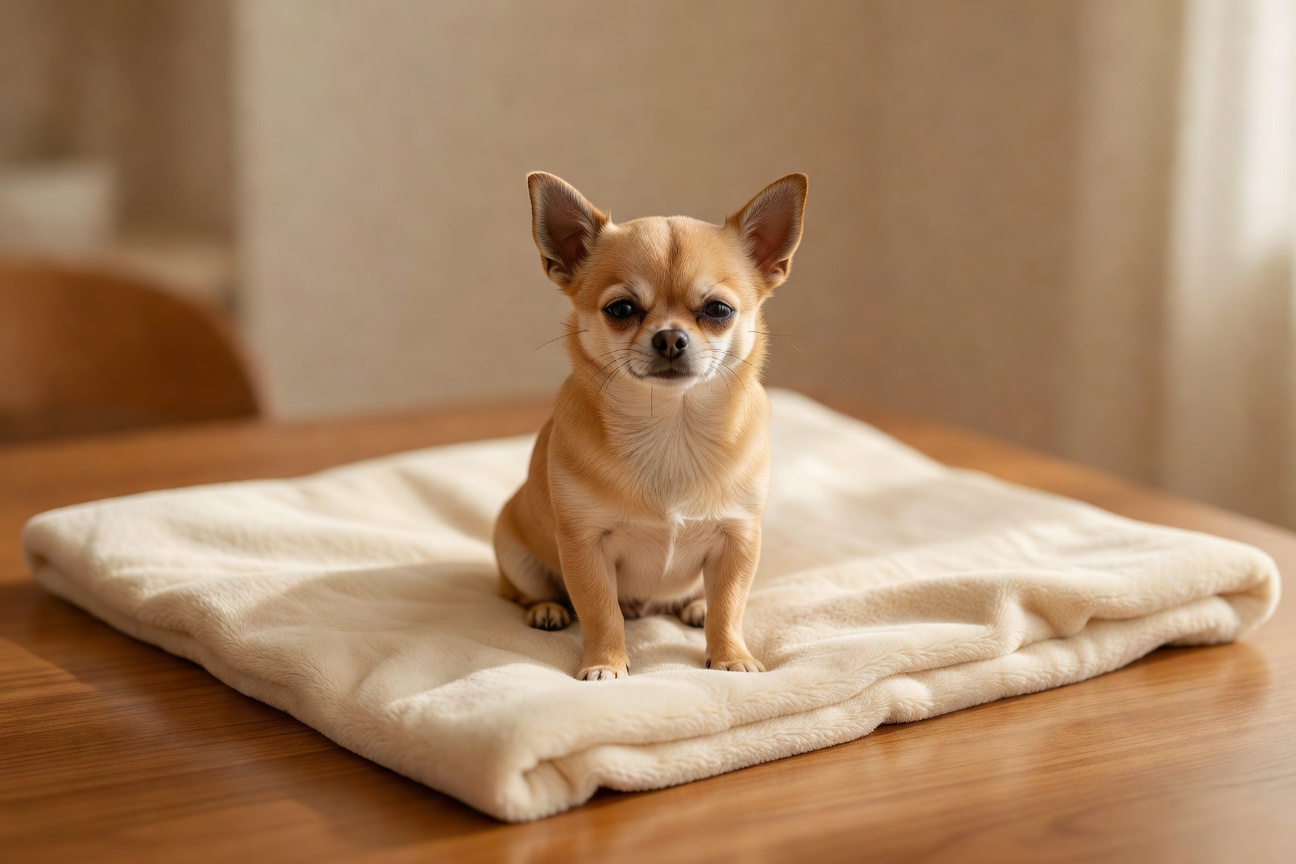
The second reason is early resource guarding. Here the body changes. Instead of loose and bouncy, your puppy goes still. He may freeze over the toy, lower his head, hard-stare, or chew faster when you come near. The growl is lower and more sustained. This is your dog saying "please do not take this from me." Resource guarding is normal canine behaviour, not a sign of a "bad" or "dominant" dog. It is a survival instinct around things that matter. The good news is that early, mild guarding in a young puppy responds very well to the right approach, and the research is clear that the right approach is not confrontation.
The third reason is frustration. A puppy who growls at a toy that will not squeak, or a treat stuck inside a puzzle, is often frustrated, not guarding and not playing. The body language here is busy and a little agitated. He may paw at the toy, bark in short bursts, and growl between attempts. This growl says "this is not working and I do not know what to do."
How to read your puppy in the moment
The fastest way to tell these apart is to watch the whole body, not just the sound. Ask yourself three questions.
Is the body loose or stiff? Loose, wiggly, and bouncy points to play. Frozen and still points to guarding. A relaxed dog carries his weight evenly and his mouth is soft. A guarding dog plants himself over the item and goes quiet in the body even while the growl continues.
What is he doing with the toy? In play, the toy gets tossed and chased. In guarding, it gets covered, hovered over, or carried away from you. In frustration, the toy is the obstacle itself, and the growl is aimed at the problem rather than at you.
What happens when you approach? This is the most useful test, and you can do it gently. Walk past at a normal distance and watch. If he keeps playing, it was play. If he freezes, speeds up, or moves the toy away, that is guarding, and it tells you where his comfort line is. You do not need to push past that line to learn this.
A gentle, positive-reinforcement plan
Whatever the cause, the foundation starts with one firm rule: do not punish the growl. If you scold or grab your puppy for growling, you do not teach him to feel calm. You teach him that the warning gets him in trouble, so he may skip the warning next time and go straight to a snap. The American Veterinary Society of Animal Behavior has been clear on this: punishment-based methods are associated with increased fear and aggression, not less. A growl is a gift. Thank it by listening.
For guarding, the core technique is the trade-up. Instead of taking the toy, you teach your puppy that your approach predicts something better arriving, not something good leaving. This counter-conditioning protocol comes from Jean Donaldson's work in Mine! (2002). Here is the version you can start with a young chihuahua:
1. When he has a low-value item, toss a small, high-value treat a little distance away, so he leaves the item on his own to get it. You are not taking anything. You are adding something.
2. Repeat until your approach makes him look up at you happily, expecting the treat. The picture you want is a puppy who thinks "oh good, you are here" rather than "oh no, you are here."
3. Only when he is relaxed, add a cheerful word like "drop" as he turns toward you, then deliver the treat. Over weeks, the word, the happy turn, and the reward become one smooth routine.
4. Practise with higher-value items only as his comfort grows. Never grab. The whole point is that giving things up is safe and pays well.
For play-growling, you do not need to fix anything. Just teach a tidy "drop" with the same trade-up game so you can end games cleanly. For frustration, lower the difficulty: an easier puzzle, a toy he can succeed with, and a reward for the calm moments. A puppy who learns that effort pays off becomes a more patient adult dog.
Underpinning all of this is security. Toy-breed puppies are often undertrained, because they are small enough to simply pick up and move. The 2010 work by Mehrkam and Wynne on breed differences reminds us that small dogs have the same behavioural needs as large ones, and skipping their training is how small problems grow. Give your chihuahua predictable routines, his own safe space to chew undisturbed, and steady, force-free practice. A secure dog guards less, because he has less to worry about.
When to call a professional
Most early, mild growling in a young puppy improves with the plan above and a few weeks of consistency. But some signs deserve professional eyes sooner. If the growling escalates to snapping, lunging, or any bite, even a small one, stop your own training and consult a qualified professional. The same is true if the guarding is intense, if it appears around food and people and other dogs all at once, or if it is getting worse rather than better despite your steady, kind work.
Look for a certified behaviour professional who uses fear-free, force-free methods, and rule out pain or illness with your veterinarian first, since discomfort can make any dog more guarded. You can search the directory at the American Veterinary Society of Animal Behavior or read more on guarding from Companion Animal Psychology.
One thing to try this week: the next time your chihuahua growls at his toy, do not react. Watch his body for ten seconds and name what you see, play, guarding, or frustration. That single habit, observing before acting, is the foundation of every good training plan.
Gear That Works backpack
Harness (Not Collar)
A step-in harness is safer and more comfortable.
Lightweight Leash
4–6 feet gives freedom without losing control.
Treat Pouch
Keep rewards accessible and distraction-free.
ID Tag & Microchip
Always be prepared in case of separation.
Trainer Tip: Success on walks starts with reading your Chihuahua's signals and respecting their pace.
Was this guide helpful?
Was this guide helpful? Save the guide. Share it with one other chihuahua owner this week.
favorite