
What toys actually work for a chihuahua? The research on canine play preferences, summarized in Companion Animal Psychology's play research review, is unambiguous: dogs have individual preferences, the preferences are stable over time, and the toys that succeed in toy breeds are the ones that match the dog's mouth size, jaw strength, and prey-drive style. The chihuahua-specific corollary is that ninety percent of the dog-toy aisle is sized wrong for the breed.
Below are the five toy categories with documented benefit, and the practical rules for picking within each.
1. Small-Breed Squeaky Toys
The squeak triggers a prey-drive response that is breed-typical and reliable. The chihuahua-appropriate version is roughly the size of a tennis ball or smaller, with a soft fabric exterior and a single concealed squeaker. Avoid the loud high-pitched plastic squeakers; some chihuahuas find them aversive and stop engaging. AKC's small-breed toy reference covers brand-level options.
article_in_feed
A handpicked find for your tiny companion.
The companion ten games piece covers the indoor-fetch protocol that uses these toys.
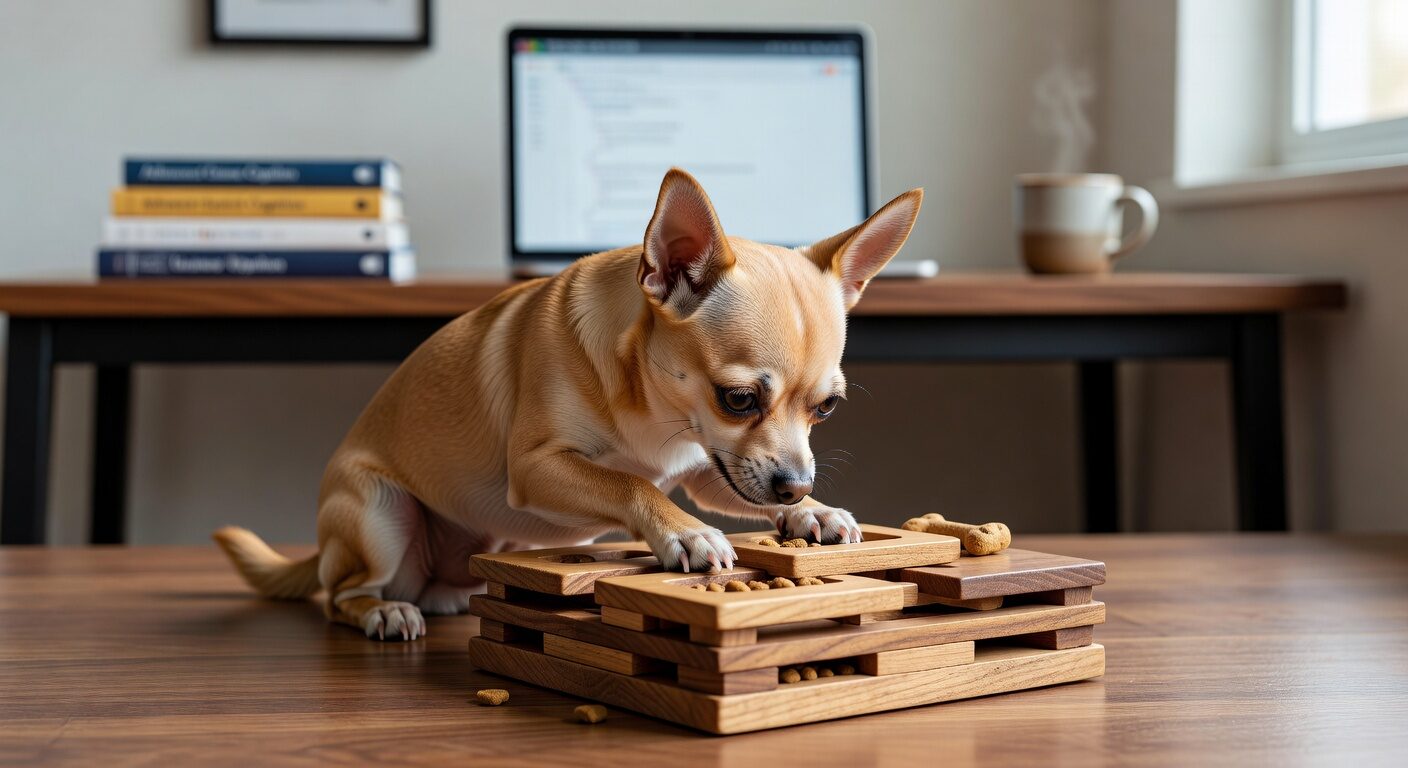
2. Treat-Dispensing Puzzle Toys
The single highest-return toy category in this breed. The Nina Ottosson small-breed line, the Outward Hound Hide-A-Squirrel, and the standard Kong stuffed with a kibble-and-pumpkin mix are the three that produce reliable engagement across most chihuahuas. Rotate them; a puzzle the dog has memorized is no longer a puzzle.
The 2014 study by Pongrácz and colleagues, in Applied Animal Behaviour Science, documented measurable reductions in stereotypic behaviors (pacing, repetitive barking) in toy breeds with regular puzzle-feeder use. The effect is observable within two weeks.
3. Chew Toys Sized for Toy Breeds
A small dog cannot work a chew toy designed for a Labrador. The chihuahua-appropriate chew is small enough for the dog to carry, soft enough not to fracture a tooth, and durable enough to last more than three sessions. Bully sticks (sized for toy breeds), small Kongs, and rubber-textured chews from the small-breed lines are the categories with documented dental benefit; the Veterinary Oral Health Council list flags products with measured tartar reduction.
Avoid: hard nylon bones, antlers, and bones harder than the dog's teeth, all of which produce slab fractures of the carnassial teeth in toy breeds at non-trivial rates.
4. Plush Toys for the Carry-and-Comfort Behavior
Many chihuahuas carry plush toys around the house, deposit them on the bed, and sleep with them. The behavior is bond-related and harmless. The chihuahua-appropriate plush is soft, machine-washable, and sized for the dog's mouth. Some chihuahuas will eviscerate plush toys; replace, do not punish.
5. Snuffle Mats
A snuffle mat is a fabric mat with concealed pockets where you hide kibble. The dog uses her nose to find the food. Companion Animal Psychology has a primer on use and DIY construction. The cognitive load is high, the energy expenditure is low, and the mat is appropriate for chihuahuas of all ages, including dogs with mobility limitations.
Toys to Avoid
Tennis balls (too large for the chihuahua mouth, choking risk if the ball compresses). Rope toys built for medium-to-large dogs (jaw strain, fiber ingestion). Hard antlers and dried bones (slab fractures). Anything with small detachable parts (eyes, squeakers, ribbons that the dog can ingest). Laser pointers (the unresolvable-prey-drive cycle is documented to produce stress in some dogs; AKC's laser-pointer reference covers the welfare argument).
What to Do This Week
One concrete action: pick a single new puzzle toy from the small-breed line and run a five-minute session before each meal for the next seven days. Within two weeks, the behavioral effect on bored-chihuahua barking and destructive chewing is observable in most households.
For more evidence-based training, browse the Training desk or subscribe for the next dispatch.
Gear That Works backpack
Harness (Not Collar)
A step-in harness is safer and more comfortable.
Lightweight Leash
4–6 feet gives freedom without losing control.
Treat Pouch
Keep rewards accessible and distraction-free.
ID Tag & Microchip
Always be prepared in case of separation.
Trainer Tip: Success on walks starts with reading your Chihuahua's signals and respecting their pace.
Was this guide helpful?
Was this guide helpful? Save it for later or share with a fellow Chi parent.
favorite