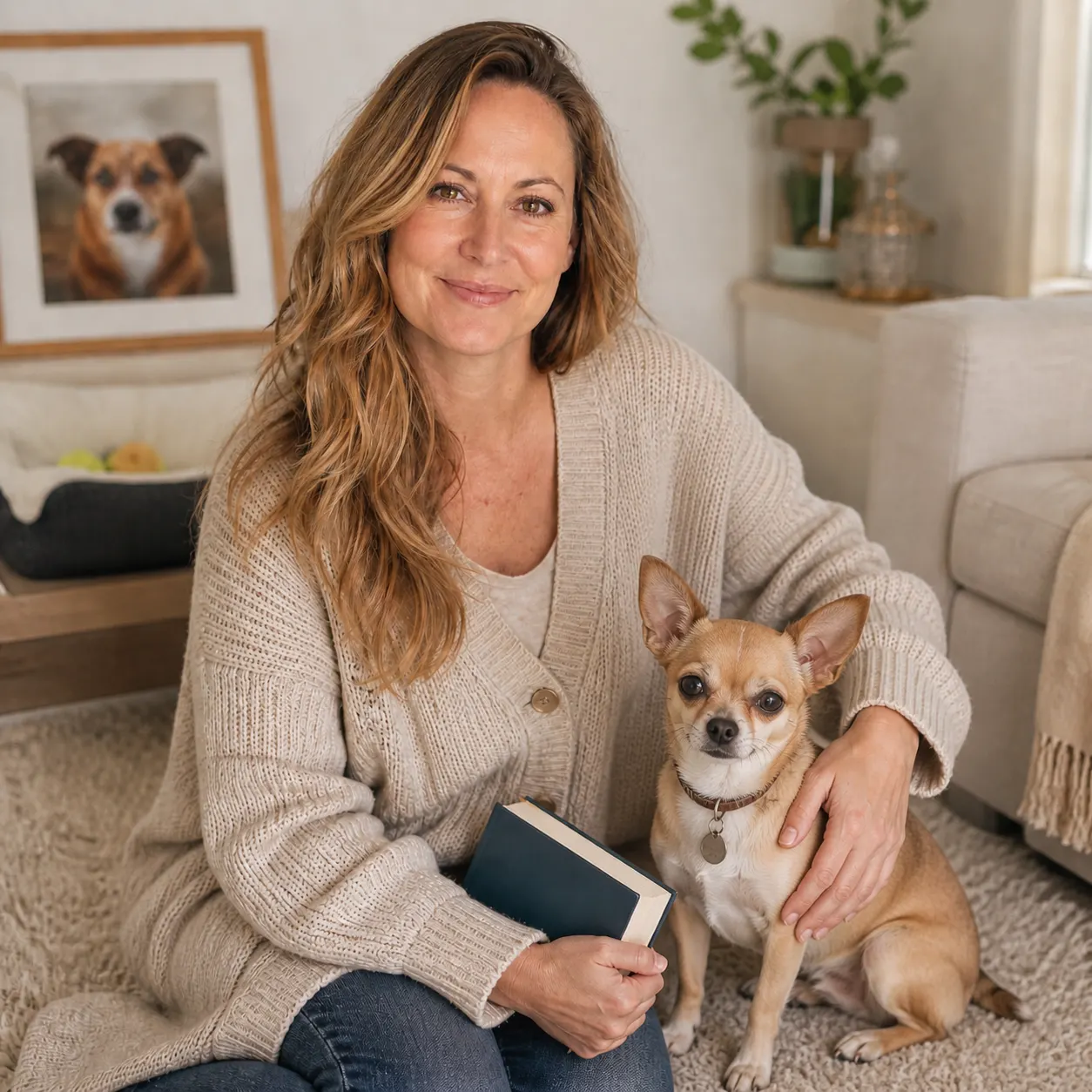

If your chihuahua follows you into the bathroom, presses against your leg while you cook, and watches the shower door as though you might not come back, you do not have a problem dog. You have a chihuahua doing precisely what the breed was shaped to do. The research on why is more interesting, and more useful, than the usual advice to simply ignore it.
The Bond Is Built In, Not Broken
Chihuahuas are predisposed to form intense bonds with a single person. The breed descends from the Techichi, a companion animal kept close for warmth and company for centuries, and dogs that bonded tightly to their people were the ones that were kept and bred. What you are seeing is a breed trait, not a behaviour fault, and that distinction matters because it changes the fix. You are not correcting a problem; you are shaping a tendency that is already deeply set.
What the Science Says About the Velcro Effect
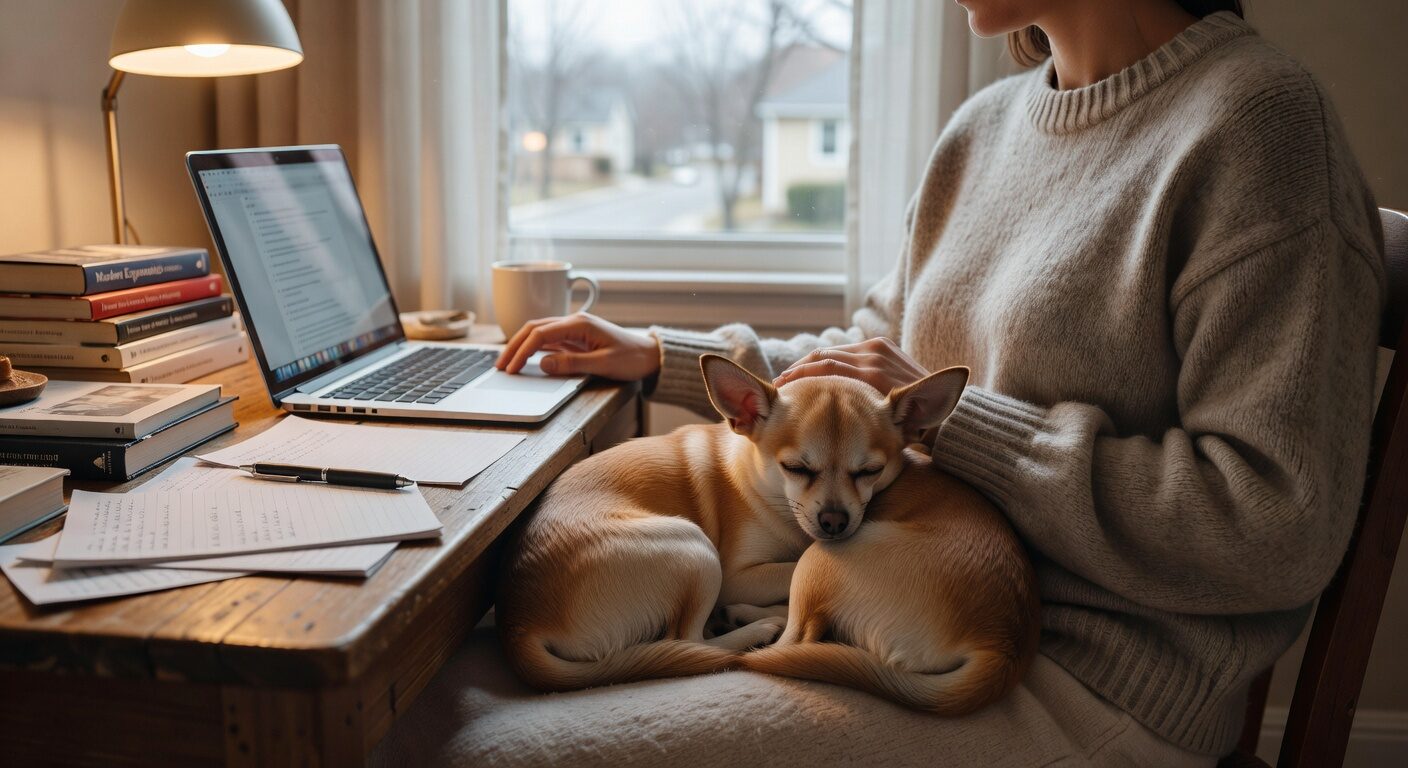
There is a measurable, chemical side to all of this. In a 2015 study published in the journal Science, Nagasawa and colleagues found that mutual gazing between dogs and their owners raised oxytocin — the same bonding hormone involved in parent-infant attachment — in both the dog and the person. For a small dog in near-constant physical contact with one human, that feedback loop runs for much of the day. Your chihuahua is not only emotionally attached to you; on a neurochemical level, your presence is genuinely rewarding to them, which is part of why your absence can feel, to them, like an alarm going off.
Why You, and Not the Whole Household
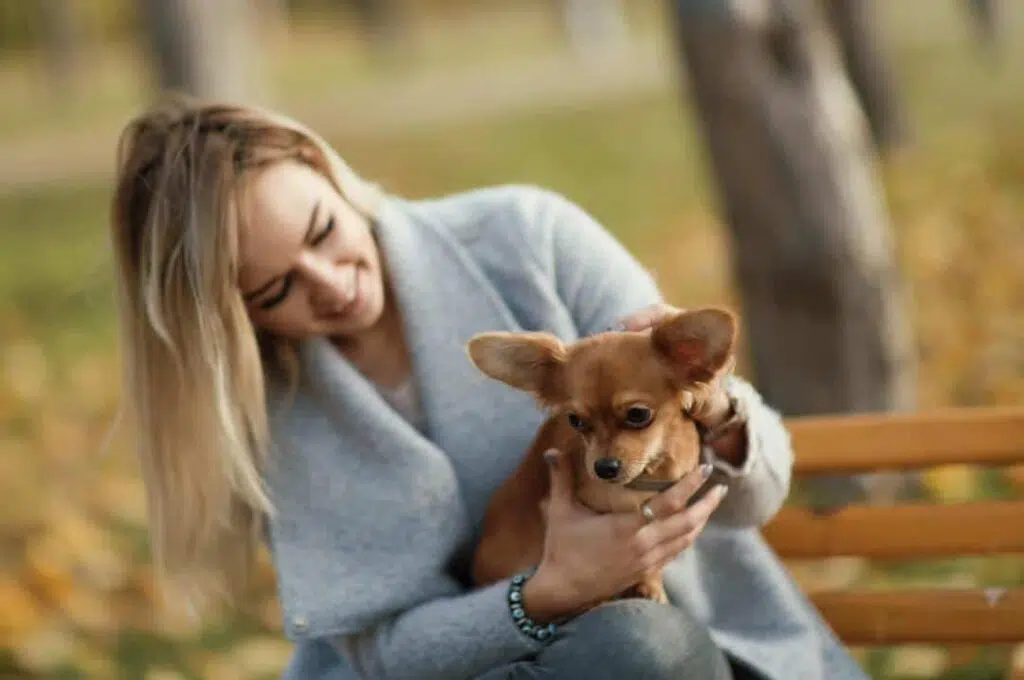
Chihuahuas tend to choose one person and orbit them, which can feel flattering until the rest of the family starts wondering what they did wrong. The answer is usually nothing. The breed imprints on a primary person — often whoever provides the most food, walks, and quiet company — and invests its deepest bond there. It is not that your dog dislikes everyone else; it is that one relationship is doing most of the emotional work. You can widen that circle on purpose. Have other household members handle some of the feeding, the treats, and the best walks, so your chihuahua builds good associations with more than one set of hands. Keep those moments calm and rewarding rather than forced, since pushing a wary small dog into contact tends to backfire. The primary bond will probably always be the strongest, but it does not have to be the only one.
Where Attachment Ends and Anxiety Begins
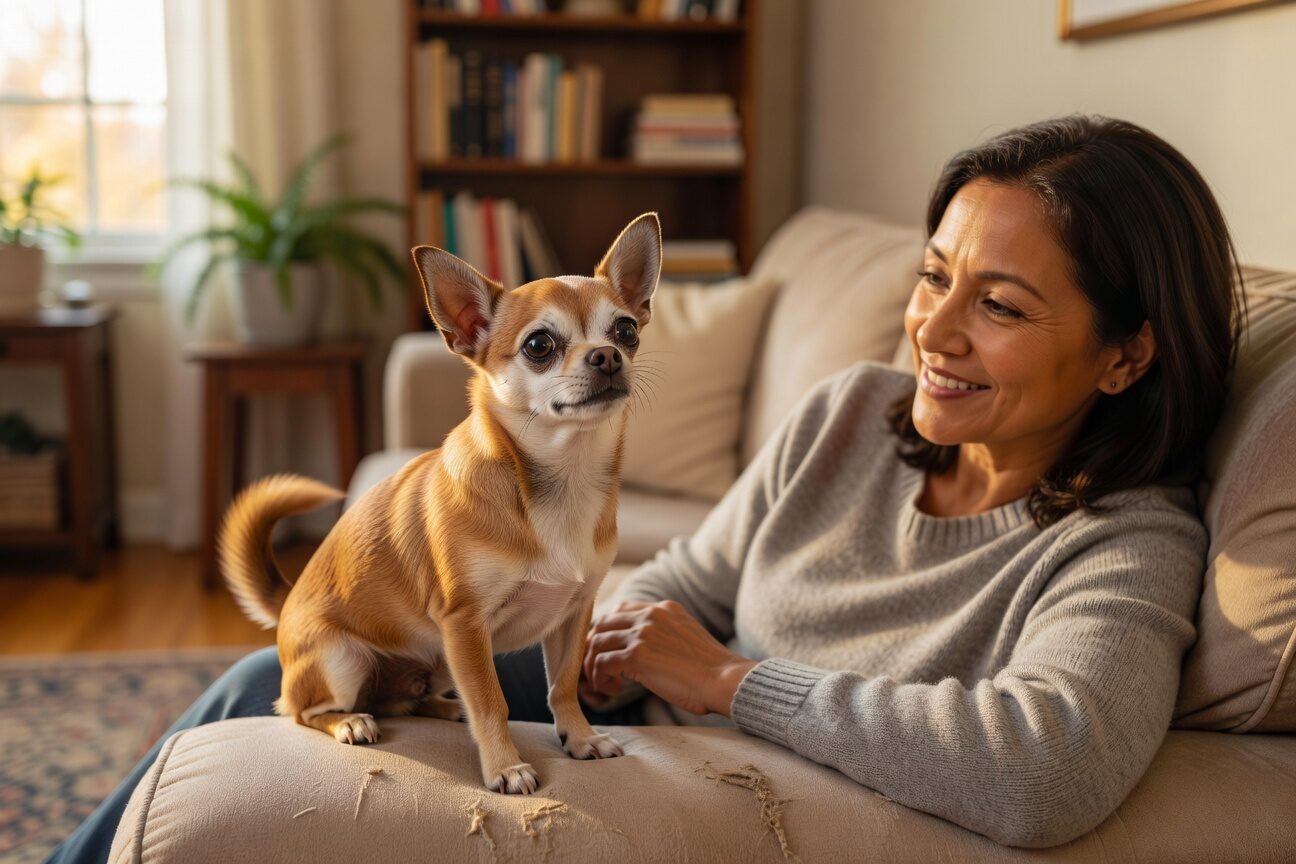
There is a line between healthy attachment and separation anxiety, and some chihuahuas cross it. Devotion is company. Separation anxiety is panic. The tell is whether the behaviour happens specifically when you are gone: destructive chewing, relentless barking or howling, house-soiling in an otherwise trained dog, refusing to eat, or trembling and panting that begins the moment you reach for your keys. If those signs appear only in your absence, you are likely looking at anxiety rather than ordinary clinginess.
What to Do This Week
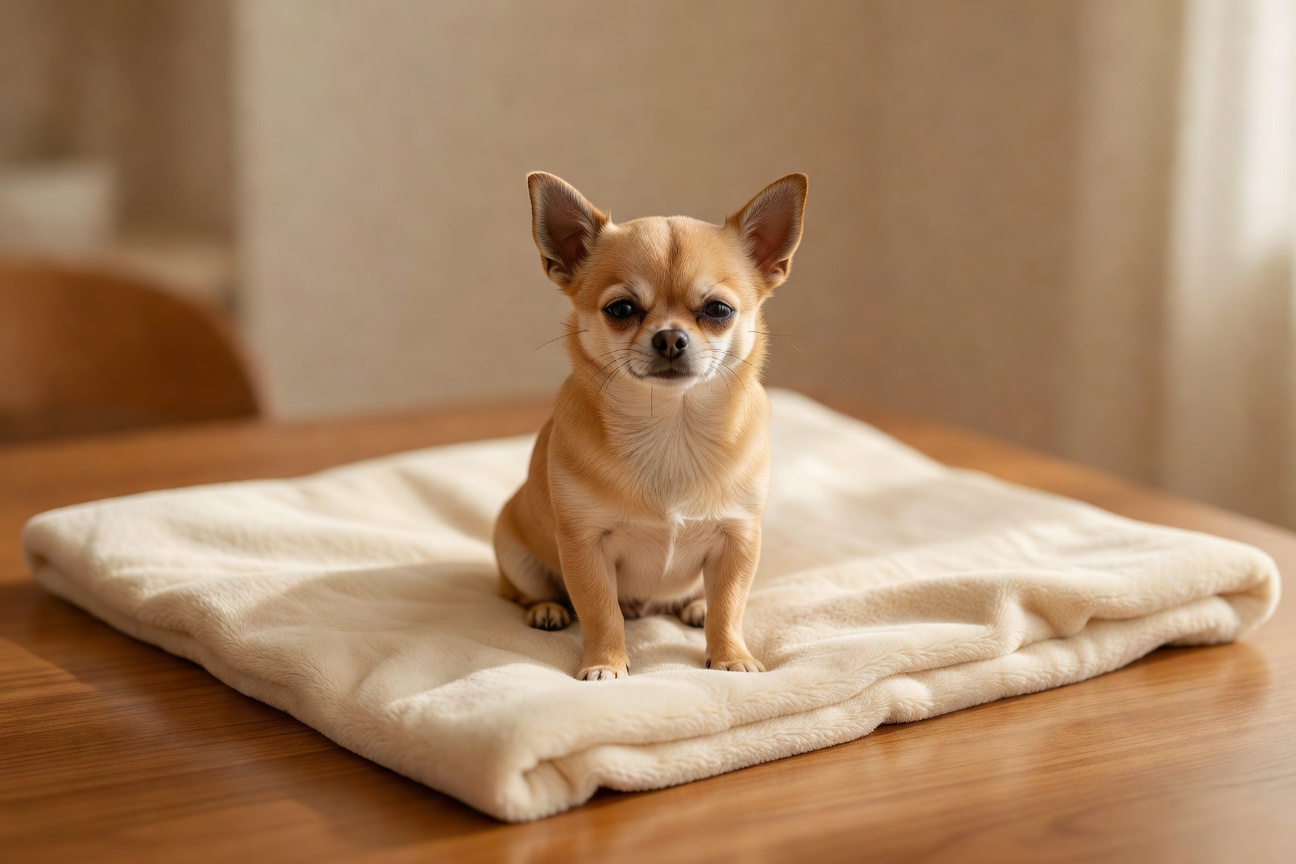
Build independence the way you would build any other skill: in small, boring repetitions. Leave the room for thirty seconds and come back without ceremony. Keep departures and arrivals flat — no long goodbyes, no theatrical hellos, since both teach your dog that your comings and goings are a big deal. Give them a comfortable resting spot of their own and a food puzzle or stuffed toy that makes alone time mildly pleasant rather than frightening. A concrete goal for the next seven days: three short, undramatic absences a day, each ending in a calm, low-key return. You are not breaking the bond. You are teaching your dog that your leaving is survivable and temporary. If your dog struggles even with thirty-second absences, shrink the step rather than forcing it: move to the doorway and back, then just out of sight and back, building tolerance in pieces small enough to succeed every time. Progress here is rarely a straight line, and one bad afternoon does not undo the work. What you are after is a dog who has learned, through dozens of low-stakes repetitions, that closed doors reliably open again.
When to Get Help
None of this is about loving your chihuahua less, and none of it requires the old dominance scripts, which the behaviour research set aside two decades ago. If the signs of genuine distress show up the moment you stand near the door, loop in your veterinarian or a veterinary behaviorist for a proper assessment. For the wider picture, here are the behaviour problems small-dog owners run into most, and what actually helps when a chihuahua is stressed. Start small, stay consistent, and let the confidence build on its own schedule.
Gear That Works backpack
Harness (Not Collar)
A step-in harness is safer and more comfortable.
Lightweight Leash
4–6 feet gives freedom without losing control.
Treat Pouch
Keep rewards accessible and distraction-free.
ID Tag & Microchip
Always be prepared in case of separation.
Trainer Tip: Success on walks starts with reading your Chihuahua's signals and respecting their pace.
Found this guide useful? Pass it on.
Was this guide helpful? Save the guide. Share it with one other chihuahua owner this week.
favorite