
I should confess up front: I dressed my own chihuahua in a small fleece sweater this morning, and the sweater is, by any honest reading, a fashion item as well as a functional one. The "chihuahuas as fashion" question is therefore not an abstract one for me; it is a question I have personal stake in, and the historical record is more complicated than the easy version of the story (Paris Hilton ruined everything) suggests. Below is the breed-history desk's read.
The chihuahua-as-accessory phenomenon predates Paris Hilton by several decades, accelerated dramatically between 2000 and 2008, peaked around 2010, and has since settled into a quieter steady state. The downstream effect on shelter intakes was real and is part of why the breed is overrepresented in municipal shelters today.
Prehistory: small dogs as status objects, generally
Small dogs as status accessories is, in the historical record, an old phenomenon. Lapdogs in eighteenth-century European court paintings (the King Charles spaniel, the maltese, various toy poodles) appear in roughly the same role: a small companion, often gendered female, indicating leisure and means. The chihuahua, as the breed is now recognized, joined this category relatively late.
article_in_feed
A handpicked find for your tiny companion.
The American Kennel Club admitted the chihuahua in 1904. The breed's first widespread visibility in American popular culture came through a few specific moments: Xavier Cugat's chihuahua appearances on television in the 1950s; the various Ren and Stimpy and other animated chihuahua appearances in the 1980s and 1990s; and the Taco Bell advertising campaign of 1997 to 2000. Each of these moments produced small upticks in the breed's visibility but did not, in the available data, produce comparable upticks in shelter intakes.
The 2004 inflection: visibility and a particular handbag
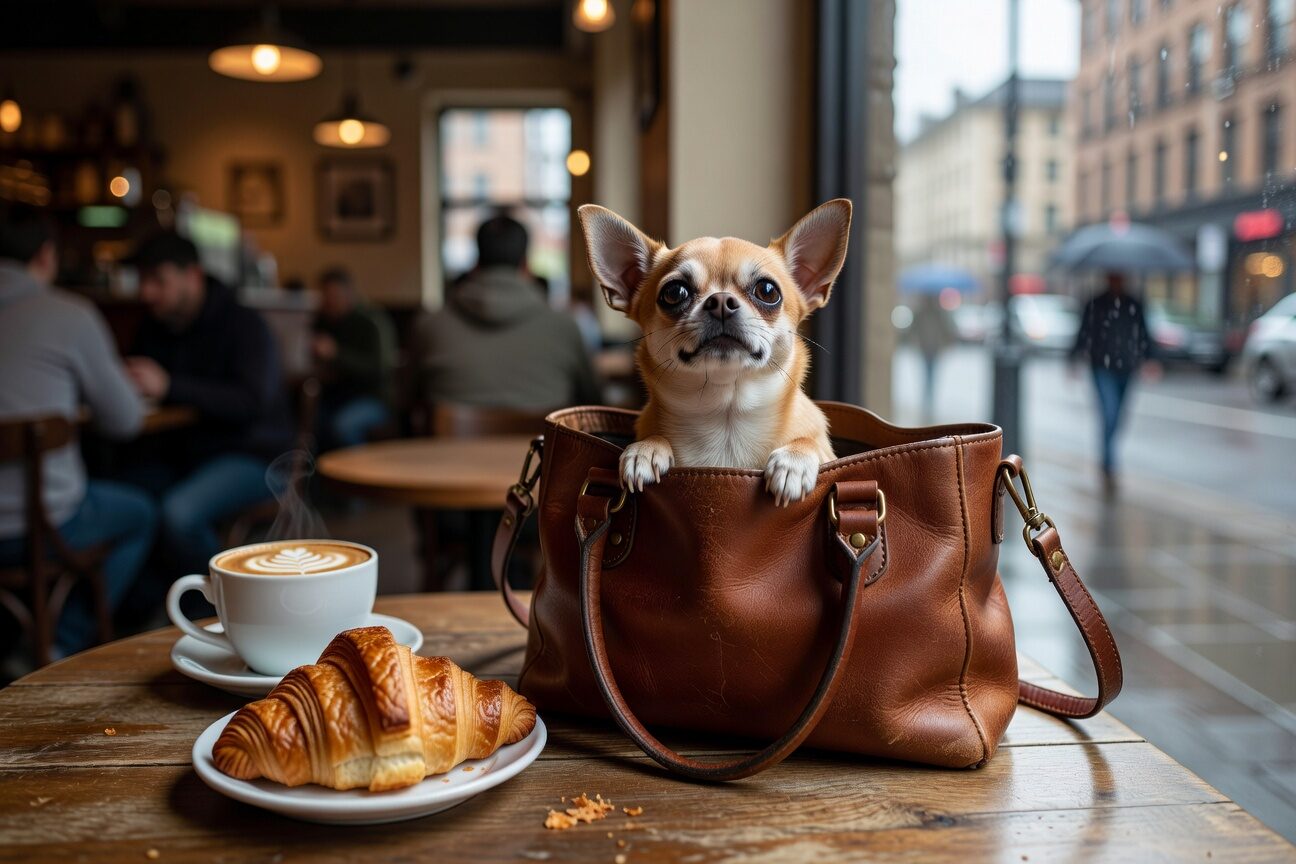
The single largest cultural inflection point in the breed's accessory phase is, on the available evidence, the period roughly 2003 to 2008. The specific catalyst is well-documented: a series of high-visibility celebrity photographs (Paris Hilton, Britney Spears, several others) showing the celebrity carrying a small chihuahua in a handbag. The photographs ran on tabloid covers and, in the new world of mid-2000s internet image circulation, traveled further than any previous chihuahua-related media moment.
The downstream effect on consumer demand was substantial. Pet-store chihuahua sales rose; backyard breeding rose with it; the broader supply infrastructure (the third category I have written about in the honest breeder-versus-adopt comparison) expanded substantially in California, Texas, and Florida.
The shelter aftermath, plainly
The effect on shelter intakes lagged the celebrity-handbag phase by about three to five years. By 2010, California municipal shelters were reporting that chihuahuas and chihuahua mixes accounted for roughly thirty percent of small-dog intakes, up from around eighteen percent in 2003. The increase has not entirely reversed; the breed remains overrepresented in shelter populations across the United States, particularly in the Southwest. A separate piece on the surrender drivers covers the present-day dynamics.
The mechanism is, on the available data, mostly supply-side. The handbag-era celebrity photographs created consumer demand, which producers met with volume; when the trend cooled and the dogs aged out of the puppy phase, a substantial fraction were surrendered. The fashion phase, in this sense, was not in itself the problem; the problem was that the fashion phase pulled supply through a low-quality production pathway whose dogs ended up in shelters when the fashion cycle moved on.
The functional question, briefly: are sweaters bad?
I want to separate two distinct questions. The first is whether the chihuahua-as-fashion-accessory cultural phenomenon contributed to bad outcomes for the breed. The honest answer, on the supply side, is yes.
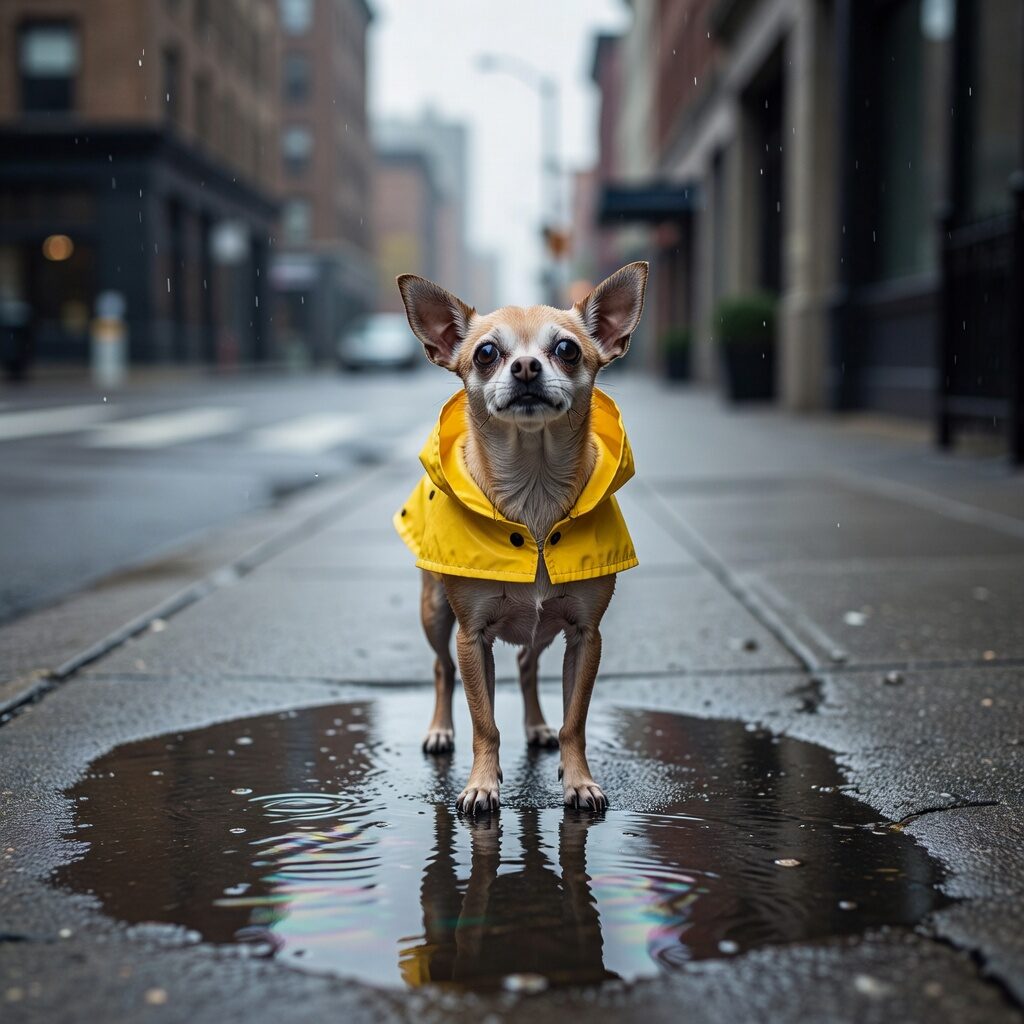
The second question is whether dressing a chihuahua in a sweater is, in itself, bad for the dog. The honest answer here is no, and in many cases the sweater is functional rather than purely decorative. A four-pound dog in a 65-degree house is colder than a thirty-pound dog in the same house, and a fitted fleece is genuinely useful for thermoregulation. The line between "fashion" and "function" runs through the household's actual use of the item, not through the existence of the item itself.
The clothing items that are not functional and that are, in some cases, bad for the dog: tight-fitting decorative outfits that restrict movement; costumes worn for extended periods rather than brief photographs; anything that interferes with the dog's ability to relieve herself or to drink water. The AKC's dog-clothing guidance covers the line.
The handbag question, separately
A different question: is carrying a chihuahua in a handbag bad for the dog? The answer here depends on which handbag and how often. A well-ventilated soft-sided pet carrier worn over the shoulder for short trips is, in functional terms, the same as a carrier under the seat on an airplane; the dog has airflow, can lie down, and is not under continuous physical stress.
A closed designer handbag without ventilation, used for an entire shopping afternoon, is a different situation. The dog is hot, in a confined space, and is, in some cases, breathing recycled air. The functional carriers are fine; the closed handbag-as-accessory is not, on the dog's account.
Where we are now, in 2026
The chihuahua-as-fashion-accessory cultural phase has substantially cooled. The peak celebrity-handbag photography was 2005 to 2010; the current state of small-dog fashion is, on my reading, more practical (fleece for cold weather, carriers for travel, harnesses for walks) and less status-driven. The brand-name designer-pet-clothing market is a fraction of what it was in 2008.
The shelter intakes, however, lag. The dogs produced during the handbag era are now at the end of their lifespans; their offspring, and their offspring's offspring, are part of the current intake population. The effect of the cultural phase will continue, on the supply side, for another five to ten years.
The bottom line, from the breed-history desk
The chihuahua became a fashion accessory in a particular and well-documented way during the 2003 to 2008 cultural moment, and the effect on the breed's shelter population was real and continues. The clothing itself is not the issue; the supply-side production pathway that the trend pulled through is. A separate piece on the broader breed history covers the longer chronology; this piece covers the accessory-era specific phase.
I will continue to put a fleece sweater on my own dog in the winter; the sweater is, on her four-pound body, a functional item. The line between functional fashion and accessory culture runs through the household's actual practice, not through the existence of the sweater on the small dog.
Is this Chihuahua right for you? auto_awesome
Want to learn more about your Chihuahua? Compare breeds and find your perfect match.
favorite