

I have lost more bar bets about Chihuahua size than I care to admit, and I bred salukis, so I should know better than to argue weight at a dog show. But the question "how big do Chihuahuas get?" is genuinely slippery, because the honest answer is a range, not a number, and the range is narrower than most people guess. The American Kennel Club standard caps the breed at six pounds. That is the whole ceiling. A correct, show-going Chihuahua is the smallest recognized breed in the AKC stud book, and it is supposed to stay that way.
So let's start with the short answer and then show the work.
The AKC standard: six pounds, and not much taller than the teacup it gets compared to
The AKC breed standard is unusually blunt about size. It sets a maximum weight of six pounds and disqualifies anything over that mark in the ring. Most pet Chihuahuas settle somewhere between two and six pounds, with a great many landing in the three-to-five-pound middle. The standard, notably, does not set a minimum. A two-pound dog and a five-pound dog can both be entirely correct, which is part of why the breed looks so variable at ringside.
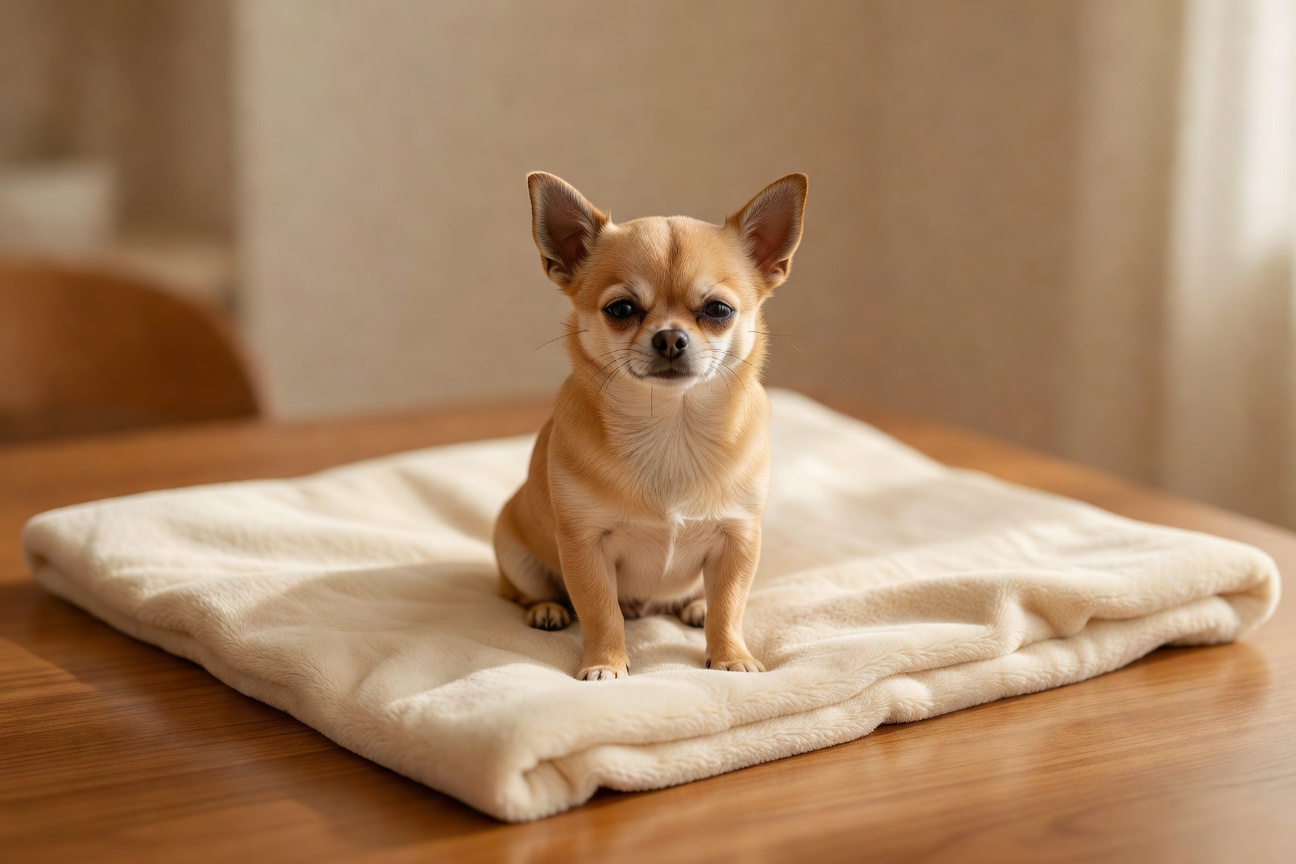
Height is the part owners forget, because the standard barely mentions it. There is no official height range in the AKC document the way there is for, say, a Labrador. In practice, an adult Chihuahua stands roughly five to eight inches at the shoulder, with most clustering around six or seven. The breed is "off-square," meaning slightly longer than tall, so a Chihuahua measured nose to tail will read a little longer than its shoulder height suggests. Weight, not height, is the number that matters in the ring, and weight is the number you should care about at home.
The growth timeline, from palm-sized to finished
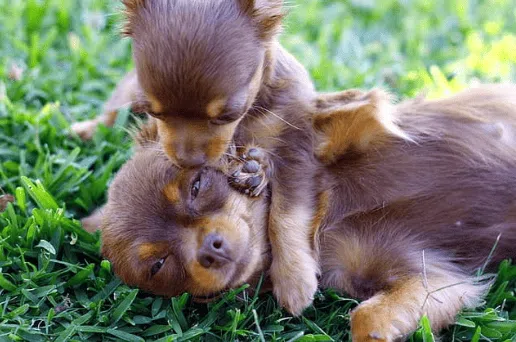
A newborn Chihuahua weighs two to five ounces. That is not a typo. You can hold an entire litter in two cupped hands, which is precisely why responsible breeders weigh puppies on a kitchen scale, in grams, every single day for the first weeks. At that size, a fraction of an ounce lost overnight is a warning sign.
From there the climb is fast and then it flattens. The breed does most of its growing in the first six months, and the bulk of its final height is generally set by around eight or nine months. Frame and skeleton finish before weight does. A Chihuahua typically reaches its adult height by nine to twelve months, then spends the back half of its first year and into the second filling out, gaining muscle tone and the small layer of substance that turns a leggy adolescent into a finished adult. Most are essentially done by their first birthday. Some keep adding a little body until eighteen months to two years, which is the polite explanation for the dog who looked finished at ten months and then quietly thickened.
One caution worth stating plainly: the curve flattens hard after the first year. If your one-year-old is putting on weight, that is almost never late growth. That is gain. The breed is built so close to the ground that an extra pound on a four-pound dog is a twenty-five percent increase, and the joints feel every ounce of it.
What actually decides adult size
Genetics does the heavy lifting. A Chihuahua's adult size is set, more than anything, by the size of the dogs behind it. Two small parents tend to produce small puppies; a line that runs four pounds tends to keep running four pounds. This is why the size of the sire and dam, and the grandparents if you can see them, tells you far more than any chart.
Sex matters, but less than people expect. Males often finish a touch larger than females, though the difference is frequently a few ounces rather than anything you would notice across a room. Nutrition matters too, but not in the direction owners hope. Feeding a puppy more does not build a bigger adult; it builds a fatter one and can strain a developing frame. A balanced diet supports a dog reaching its genetic potential, no further. And general health plays a role: a puppy that fights illness or poor early care may not reach the size its pedigree predicted.
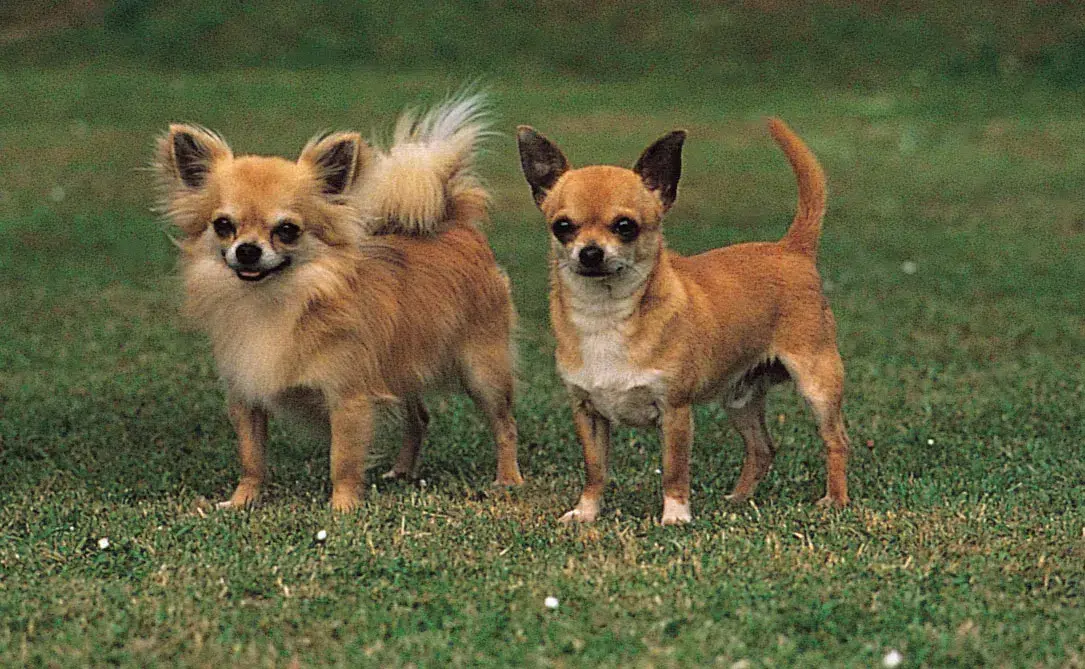
What does not change size is coat. Smooth-coat and long-coat Chihuahuas are the same breed under one standard, judged to the same six-pound ceiling. And while the apple-head and the deer-head differ in skull shape and leg length, with deer-heads often reading a little taller and longer, that is conformation, not a separate size category. A deer-head is not a "bigger breed." It is a Chihuahua with a different head.
The "teacup" problem
Here is where I push back, and where the AKC and I agree for once. There is no such thing as a "teacup" Chihuahua. Not as a breed, not as a recognized size class, not as anything the AKC or the Chihuahua Club of America acknowledges. "Teacup," along with "micro," "mini," and "pocket," is marketing. It is a word attached to the smallest, often runt-sized puppies to justify a premium price.
The trouble is that very small is not the same as very healthy. Chihuahuas already carry breed-typical concerns, including a soft spot on the skull called a molera, a tendency toward low blood sugar in tiny puppies, dental crowding, and luxating patellas. Push the size down below what the line naturally produces and those risks tend to rise, not fall. When a breeder advertises a "teacup" and charges extra for it, what is usually being sold is a dog at the fragile end of the curve, dressed up as a feature. The breed already comes small. You do not need to pay a surcharge to make it smaller.
How to estimate a puppy's adult size
You cannot predict adult weight to the ounce, and anyone who promises you a guaranteed final number is selling something. But you can make a reasonable estimate, and a few methods stack up nicely against each other.
First, look at the parents. This is the single best predictor available. Ask the breeder the adult weights of the sire and dam, and the grandparents if the records exist. A puppy generally finishes within the range its parents occupy.
Second, use the puppy's own early weight as a rough guide. A common rule of thumb takes a Chihuahua's weight at a fixed early age and projects forward, since the breed grows fast then plateaus. One frequently cited approach roughly doubles the weight at around twelve weeks to approximate the adult figure. Treat these as estimates with comfortable error bars, not promises.
Third, watch the proportions. A puppy that looks leggy and a little out of balance, with paws and ears that seem to have arrived ahead of the rest, often has more growing to do. A puppy that already looks compact and in proportion is closer to finished. None of this beats a scale and an honest pedigree, but together they will get you in the right neighborhood.
The thing to hold onto is that a Chihuahua is small by design and built to stay that way. The standard says six pounds and means it. So if you find yourself staring at a four-pound dog with the bark of a forty-pound one, wondering whether it has stopped growing, the answer is almost certainly yes. The volume, on the other hand, is permanent.
Is this Chihuahua right for you? auto_awesome
Want to learn more about your Chihuahua? Compare breeds, check the standard, and find the chihuahua that matches your home.
favorite