
If you have decided that a chihuahua is the right breed for your household, the next set of decisions is about which specific chihuahua. The household-level fit between dog and home depends on temperament, age, sex, source, and the small specific signals you pick up during the meeting. The "I will know when I see her" approach works for some households; the structured approach below works for more of them.
I want to be clear about scope. A separate piece on whether the breed fits your family covers the upstream decision. This piece picks up at the point where the breed is decided and the question is which dog.
The age question, plainly
The age of the dog at acquisition meaningfully shapes the next year of household life. The trade-offs:
article_in_feed
A handpicked find for your tiny companion.
Puppy (8 to 16 weeks): Maximum household input on socialization and training; you shape the adult dog. Also: maximum work, including housetraining and the eight-to-sixteen-week socialization window. The socialization guide covers what the puppy phase requires.
Young adult (1 to 3 years): Past the puppy phase; behavioral patterns are mostly visible. Often the practical sweet spot for households who want a dog who is past housetraining but still has many years ahead.
Adult (3 to 8 years): Established temperament, often well-trained, frequently the best behavioral information available. Many rescue chihuahuas are in this range.
Senior (8+ years): Calmer, fully trained, clearer in temperament, shorter time horizon. The buy-versus-adopt piece covers senior adoption specifically; the time horizon trade-off is real but the benefits are also real.
The sex question, briefly
The differences between male and female chihuahuas are smaller than the breed myths suggest. A few honest points:
- Spay/neuter status matters more than sex per se for most behavioral questions.
- Marking behavior is more common in intact males than in spayed females; neutering reduces but does not always eliminate it.
- Heat cycles in unspayed females are real and produce a few weeks per year of more involved management.
- Temperament differences by sex are, on the available data, smaller than individual variation within sex.
The honest version is that the specific dog's temperament matters more than the dog's sex. Pick the dog who fits, and the sex is a secondary consideration.
The source question, briefly
The reputable-breeder-versus-rescue question is covered in detail elsewhere; the comparison piece covers the trade-offs. The short version:
- Reputable breeder: Higher cost; documented genetic background; predictable temperament from known parents; puppy from week eight. Best for households with specific predictability needs.
- Breed-specific rescue: Lower cost; behavioral information from foster home; usually adult or senior. Best for households open to discovering the dog they adopt.
- Municipal shelter: Lowest cost; less behavioral information; often time-constrained for the dog. Best for households comfortable with more uncertainty in exchange for the lowest cost and most direct contribution to shelter intake reduction.
The third category (high-volume sellers, pet stores, online "breeders" with multiple listings) is not in the same category as any of the above. A separate piece on a Craigslist scam covers what can go wrong here.

What to look for in the meeting, plainly
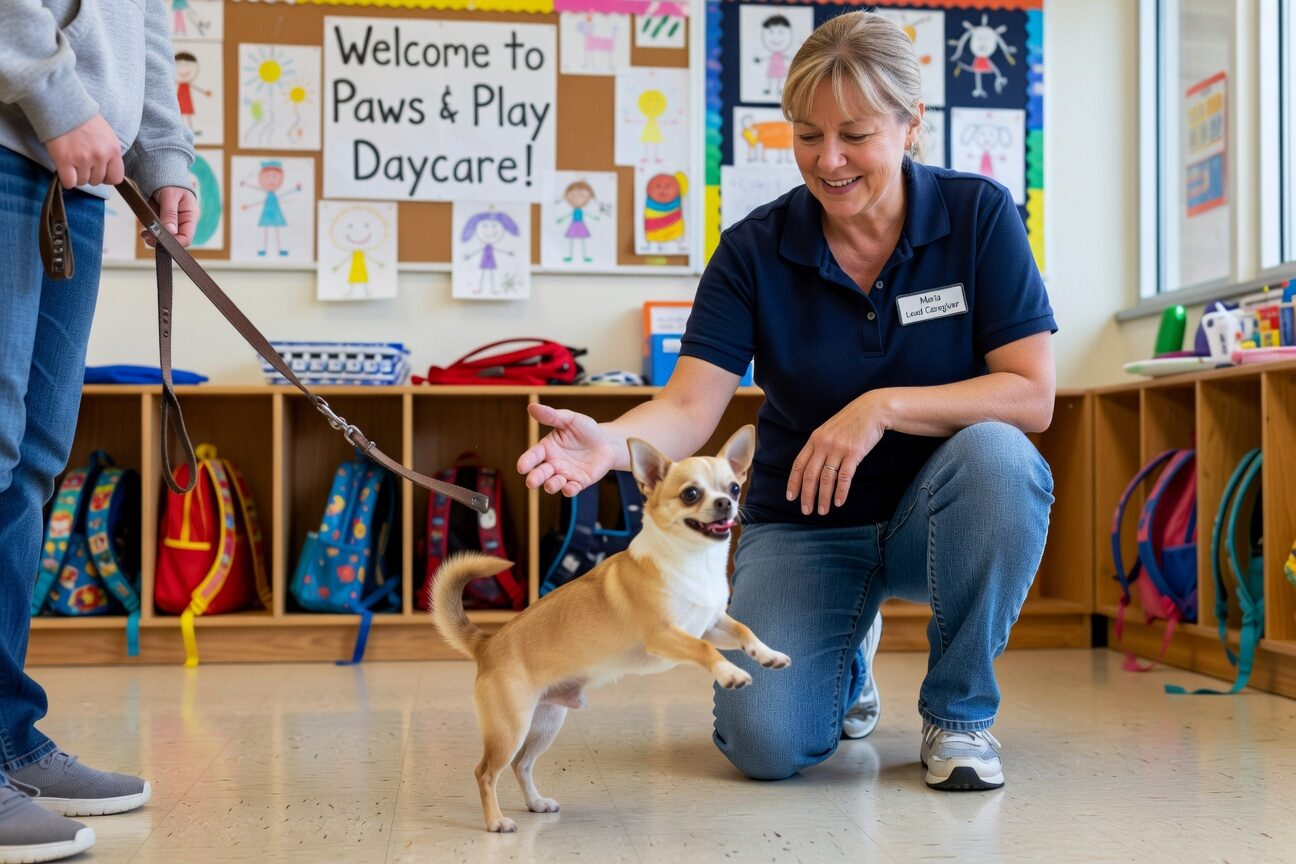
The meet-and-greet (or the visit to the breeder, or the foster-home visit) is the single most important data-gathering moment. What I watch for:
- The dog's response to entry. A confident curious approach is a good sign. Brief caution that resolves into approach is also fine. Sustained avoidance or sustained reactive behavior is a yellow flag worth asking about.
- The dog's response to handling. Pick her up gently (with the breeder's or foster's permission). She should accept the handling within a few seconds; a dog who panics or snaps at the contact is signaling something worth understanding.
- The dog's recovery from mild stress. Drop a small object near her (not at her); see how she responds and how quickly she returns to baseline. A quick recovery is a meaningful temperament indicator.
- The dog's interest in food rewards. A dog who takes a small treat from your hand is, in most cases, going to be easier to train than one who does not.
- The dog's interaction with the breeder or foster. A secure relationship with the source person is a good sign for the dog's general capacity to bond.
What I am less concerned about: the dog showing some shyness or caution during a brief first meeting. Most chihuahuas warm up over multiple visits or over the first few days at home.
The questions to ask, plainly
A short list, regardless of source:
- What is the dog's history? Health, behavior, previous placements.
- What does the dog do well? What does she struggle with?
- What is her temperament with strangers, children, other dogs?
- What medical care has been provided so far?
- Can I see vaccination records, health certifications, parent information (for breeder dogs)?
- What is the return policy if the placement does not work out?
- What ongoing support do you provide?
A reputable breeder and a reputable rescue will both have substantive answers. Evasive answers are themselves data; the evasion is signaling something worth taking seriously.
When the fit is right, briefly
A few specific signs that a particular dog and a particular household are a good match:
- The dog's temperament aligns with the household's energy level and activity patterns.
- The dog's age and stage match what the household has time for.
- Any health considerations the dog has are ones the household is prepared to manage.
- The household members who met the dog all felt the connection (or, at minimum, did not have specific concerns).
- The source person's read of the household-and-dog fit is positive.
When all five of these align, the placement usually works. When two or three are aligned and others are weak, the placement is more uncertain; sometimes worth pursuing, sometimes worth looking for a different dog. A separate piece on the pre-adoption frame covers the broader screening.
When to pause, briefly
A few specific signs that warrant a pause rather than a yes:
- The household members do not agree on the choice.
- Significant questions about the dog's history are unanswered.
- The source is evasive or unwilling to provide documentation.
- The household's time or financial situation has shifted since the breed-decision conversation.
- The dog shows behavior in the meeting that the household is not equipped to manage.
The pause is not a no; it is a structured break to gather more information or to resolve the household-side variable. The right dog will be there in a few weeks, in many cases; the wrong choice is harder to undo.
The bottom line, with the usual caveat
Picking the right specific chihuahua is mostly about temperament fit, age fit, source quality, and the meeting signals. The "I will know when I see her" approach works for some households; the structured approach above works for more of them. Talk to your veterinarian if you have questions about a specific dog's medical history or temperament once you have met her; the pre-placement consultation is a small step that can substantially improve the long-term outcome. The AKC's guidance on reputable breeders covers the broader source-selection frame.
Health at a Glance: What to Watch monitor_heart
| Condition | Key Signs | Prevention Tips |
|---|---|---|
| Dental Disease | Bad breath, tartar, red gums | Daily brushing, dental treats |
| Patellar Luxation | Limping, skipping, leg lifting | Weight control, avoid high jumps |
| Tracheal Collapse | Dry cough, gagging | Harness walking, avoid smoke |
| Heart Disease | Coughing, fatigue, fainting | Regular check-ups, heart-healthy diet |
| Hypoglycemia | Shaking, weakness, lethargy | Small, frequent meals |
Community Insights – FAQ help
help_outline What should every Chihuahua owner know about Health? expand_more
Stay observant — small changes in routine, energy, or appetite are usually the first signal something needs attention.
help_outline Is a tailored approach really necessary for Chihuahuas? expand_more
Yes. Their tiny size means smaller portions, gentler activity, and more frequent check-ins than larger breeds.
help_outline How often should we revisit our routine? expand_more
At least quarterly, and any time you notice a change. Small dogs, small adjustments — early and often.
Have a health question? Ask in the comments and we’ll bring it up with our vet team.
favorite