
When does a female chihuahua go into heat, and what does the cycle actually look like? The short answer: usually between four and eight months for the first cycle, with subsequent cycles every five to nine months thereafter. The longer answer, which is the one your veterinarian wants you to read before you discover blood spots on the bedding and panic-call the clinic, is that the chihuahua's heat cycle runs broadly the same as other small breeds, with one or two breed-specific differences worth knowing.
This piece is the practical reference. None of it replaces an examination by your own veterinarian.
When the First Heat Cycle Arrives
Most female chihuahuas have their first heat between four and eight months of age, which is earlier than most owners expect. AKC's heat-cycle reference treats the toy-breed onset as variable but typically earlier than larger breeds. A heat cycle that arrives at four months is normal; one that has not arrived by twelve months may warrant a vet conversation.
article_in_feed
A handpicked find for your tiny companion.
Subsequent cycles repeat approximately every five to nine months. The chihuahua tends toward the longer end of that range; an interval of six to seven months is typical.
The Four Stages of the Heat Cycle
The Merck Veterinary Manual's reproductive chapter covers the staging in clinical detail; the practical version is below.
Proestrus (seven to ten days). Bloody vulvar discharge. Vulvar swelling. Behavioral changes: the female may be more clingy or irritable, and may attract male dogs but not yet accept them. This is the stage at which most owners first notice the heat.
Estrus (five to ten days). The discharge typically lightens to a pink or straw color. The female is receptive to males during this stage; this is the fertile window. If you have an unspayed female and an intact male in the household, separation during estrus is non-negotiable.
Diestrus (sixty to ninety days). The cycle winds down. Hormones return to baseline.
Anestrus (the longer reproductive rest period). No external signs.
What to Do Practically During Heat
The vulvar discharge produces small amounts of blood that most owners manage with washable doggy diapers; the diaper protects bedding and furniture and is not unsanitary if changed every few hours. AKC's in-heat care reference covers the practical management.
Walks should be supervised and on lead. The female is a target for any intact male within scent range, and male dogs will attempt to mate through fences. Many owners shorten walks during the proestrus and estrus stages; some skip them and substitute backyard time.
Hygiene at home: change bedding regularly; wipe the dog with a soft damp cloth as needed; the dog will groom herself but a chihuahua will not always reach.
When to Call Your Veterinarian
Same-day reasons: heavy or dark-red bleeding (most heats produce only a small amount of blood; a heavy flow can indicate a uterine issue); foul-smelling vaginal discharge (a possible pyometra signal, particularly in older intact females); persistent vomiting or refusal to eat during heat; any sudden lethargy.
Within the week: a cycle that lasts more than three to four weeks; a cycle accompanied by significant behavioral change beyond the typical clinginess; a first heat that has not arrived by twelve months.
On Spaying: The Conversation Worth Having
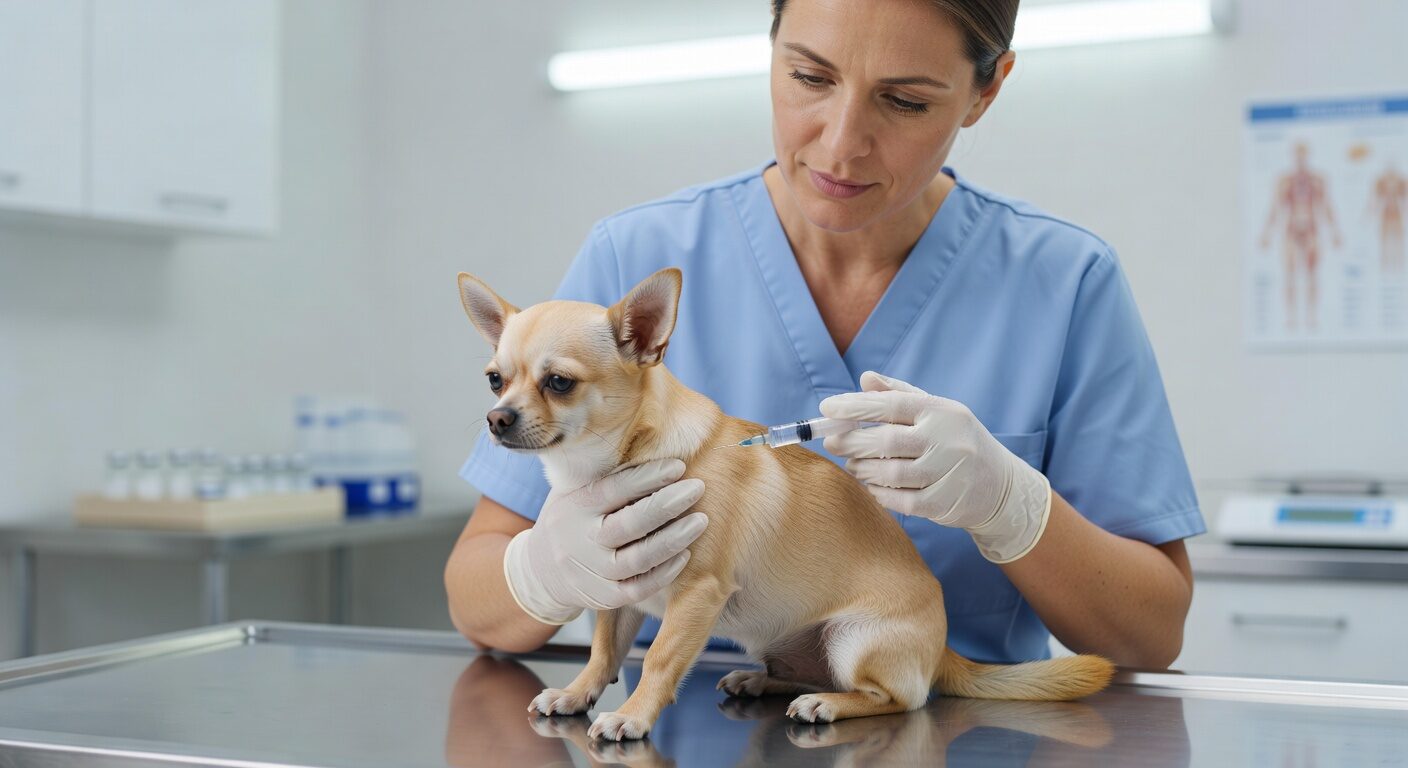
If you do not intend to breed, spaying is a conversation worth having with your veterinarian, ideally before the first heat or shortly after the first cycle. The 2020 AAHA reproductive guidelines treat spay timing as breed-and-individual specific; for chihuahuas, the recommendation is typically after six months but before the second heat. The benefits include the elimination of pyometra risk and a substantial reduction in mammary tumor risk; the trade-offs are surgical and worth weighing with your veterinarian.
The companion helping your chihuahua give birth piece covers the breeding-end considerations if you are intending to breed; the present piece is the management-end version for the household with an unspayed female who is not being bred.
What to Do This Week
One concrete action: if your female chihuahua is approaching four months and has not yet had her first heat, talk to your veterinarian about the spay-or-cycle decision now, before the cycle arrives. The decision is easier made calmly in advance than urgently in response to bedding stains.
For more clinical explainers, browse the Health desk or subscribe for the next dispatch. Talk to your veterinarian about anything that does not look right at home.
Health at a Glance: What to Watch monitor_heart
| Condition | Key Signs | Prevention Tips |
|---|---|---|
| Dental Disease | Bad breath, tartar, red gums | Daily brushing, dental treats |
| Patellar Luxation | Limping, skipping, leg lifting | Weight control, avoid high jumps |
| Tracheal Collapse | Dry cough, gagging | Harness walking, avoid smoke |
| Heart Disease | Coughing, fatigue, fainting | Regular check-ups, heart-healthy diet |
| Hypoglycemia | Shaking, weakness, lethargy | Small, frequent meals |
Community Insights – FAQ help
help_outline What should every Chihuahua owner know about Health? expand_more
Stay observant — small changes in routine, energy, or appetite are usually the first signal something needs attention.
help_outline Is a tailored approach really necessary for Chihuahuas? expand_more
Yes. Their tiny size means smaller portions, gentler activity, and more frequent check-ins than larger breeds.
help_outline How often should we revisit our routine? expand_more
At least quarterly, and any time you notice a change. Small dogs, small adjustments — early and often.
Have a health question? Ask in the comments and we’ll bring it up with our vet team.
favorite