

Before the practical content: if you are reading this because your chihuahua is in labor, your veterinarian's phone number and the address of the nearest twenty-four-hour emergency clinic should be in your hand right now, not on this page. Chihuahuas have one of the highest dystocia rates of any AKC-recognized breed; the Merck Veterinary Manual attributes this to the breed's narrow pelvis combined with the relatively large heads of chihuahua puppies. This article is a companion to professional veterinary care, not a substitute for it.
That said, here is what the chihuahua giving birth signs look like, what to prepare, and what to watch for at home.
Pregnancy Timeline and Pre-Birth Preparation
Canine gestation runs approximately fifty-eight to sixty-eight days, with most chihuahuas delivering around day sixty-three. AKC's pregnancy-stages reference covers the broader timeline; the chihuahua-specific advice is that two veterinary checkups in the final two weeks are non-negotiable. An X-ray at day fifty-five typically counts the puppies and identifies skull-size mismatches that suggest a planned cesarean is the safer route.
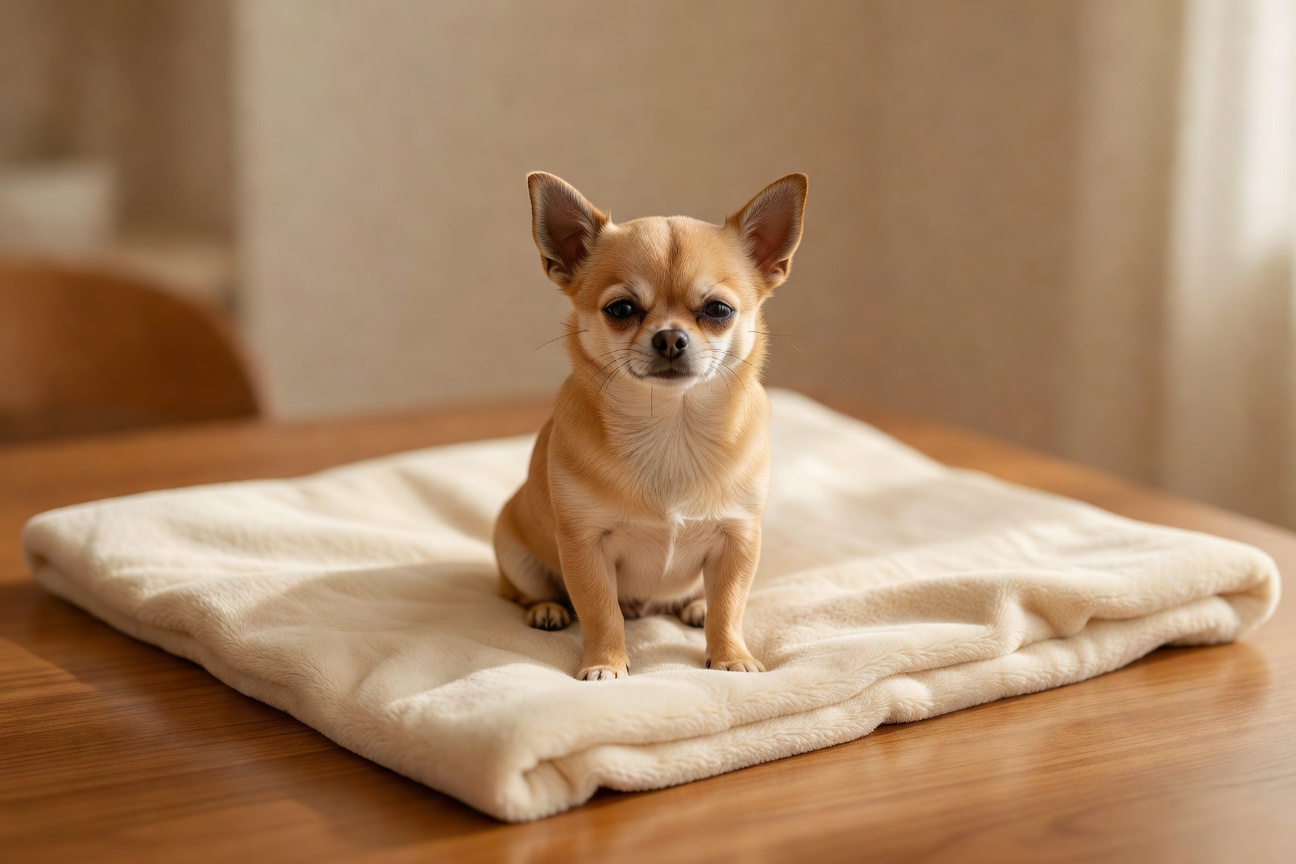
A whelping box should be set up in a quiet, warm corner two weeks before the due date, lined with washable bedding, and large enough for the dam to stretch but small enough to contain newborns. The room temperature should sit at seventy-five to eighty-five degrees Fahrenheit during the first two weeks; newborn chihuahua puppies cannot regulate their own body temperature.
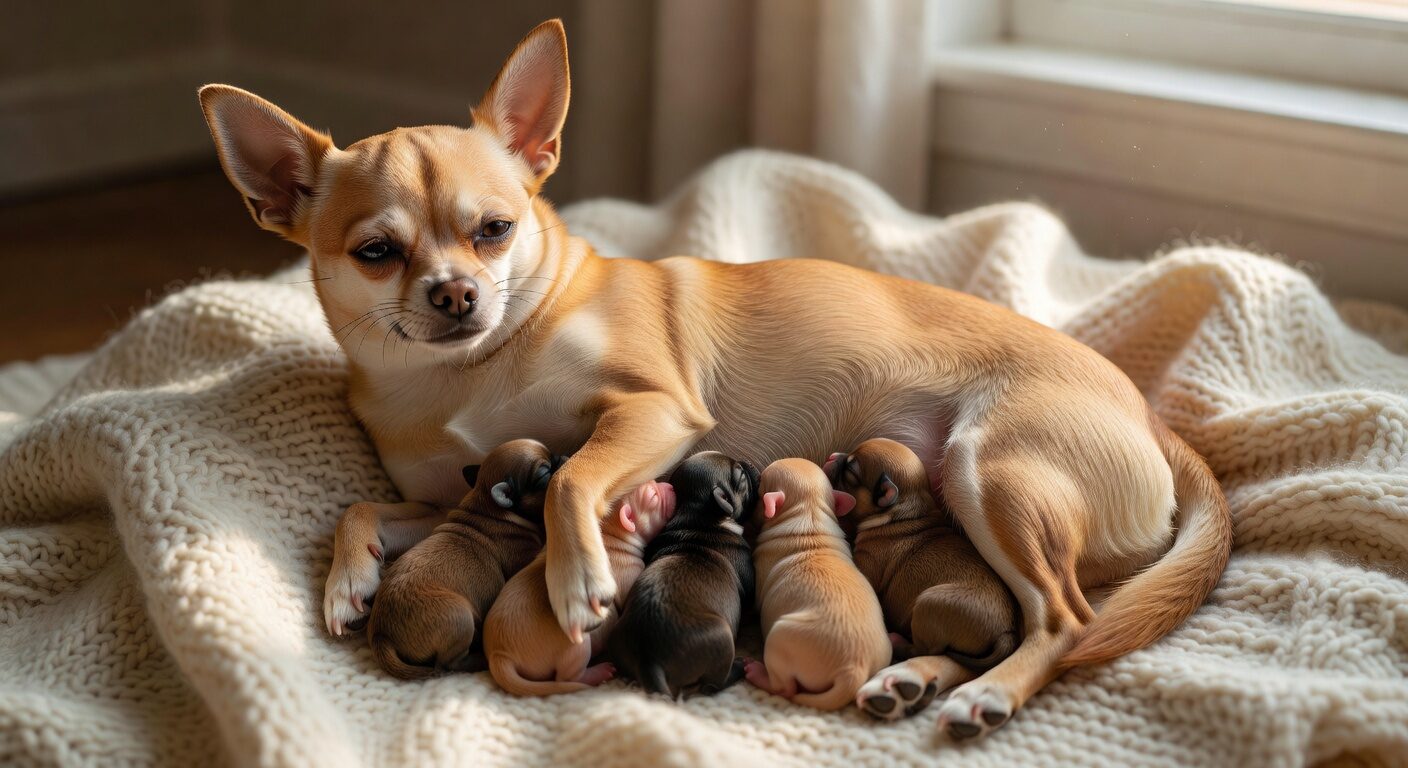
Chihuahua Giving Birth Signs
Twenty-four to forty-eight hours before delivery: a body-temperature drop from the canine baseline of about 101.5°F to below 99°F is the most reliable early indicator. Owners who are tracking pregnancies typically take rectal temperatures twice a day in the final week.
Twelve to twenty-four hours before active labor: nesting behavior, restlessness, refusal of food, panting, and a small mucoid vaginal discharge.
Stage-one labor (six to twelve hours): visible contractions, intermittent panting and digging in the whelping box, the dam typically settling into the box and not wanting to leave it.
Stage-two labor: each puppy delivered in a fluid-filled sac, typically followed within five to thirty minutes by the placenta. The dam usually breaks the sac and chews the cord; if she does not, the breeder or owner does this carefully and quickly.
When to Call the Veterinarian Immediately
Same-hour reasons: more than thirty minutes of strong contractions without a puppy delivered; more than two hours between puppies if the dam is still actively contracting; a green or bloody discharge before any puppies have delivered; any puppy presenting visibly stuck in the birth canal; the dam appearing weak, unresponsive, or having seizures.
Same-day reasons after delivery: the dam not interested in any of the puppies; visible bleeding more than light spotting; placentas not delivered (each placenta should follow each puppy); fever in the dam.
The companion chihuahua puppy care guide covers the first weeks after birth; the broader three things every chihuahua owner must know guide covers the size-related risks that persist.
After the Birth: The First Forty-Eight Hours
Each puppy should nurse within the first hour. The colostrum produced in the first twenty-four hours contains antibodies that the puppy cannot acquire later. Weigh each puppy at birth on a kitchen scale; weigh again every twelve hours. Newborn chihuahua puppies should gain weight steadily; any puppy losing weight by twenty-four hours is a same-day veterinary call.
Watch the dam for signs of eclampsia (postpartum hypocalcemia): restlessness, panting, stiff gait, tremors. Eclampsia is more common in toy breeds and progresses to seizures if untreated. The Merck Veterinary Manual eclampsia reference covers the recognition.
What to Do This Week If Your Chihuahua Is Pregnant
Schedule the late-pregnancy ultrasound. Confirm the emergency clinic's address and twenty-four-hour line. Set up the whelping box. Buy a kitchen scale. Talk to your veterinarian about whether a planned cesarean is appropriate for the litter size you are carrying.
For more clinical explainers, browse the Health desk or subscribe for the next dispatch. Talk to your veterinarian about anything that does not look right at home.
Health at a Glance: What to Watch monitor_heart
| Condition | Key Signs | Prevention Tips |
|---|---|---|
| Dental Disease | Bad breath, tartar, red gums | Daily brushing, dental treats |
| Patellar Luxation | Limping, skipping, leg lifting | Weight control, avoid high jumps |
| Tracheal Collapse | Dry cough, gagging | Harness walking, avoid smoke |
| Heart Disease | Coughing, fatigue, fainting | Regular check-ups, heart-healthy diet |
| Hypoglycemia | Shaking, weakness, lethargy | Small, frequent meals |
Community Insights – FAQ help
help_outline When should I call my vet about a behavior change? expand_more
Sooner than feels reasonable. A change in appetite, energy, or routine that lasts more than 48 hours is worth a phone call, not a wait-and-see.
help_outline How often should a healthy adult chihuahua see the vet? expand_more
Once a year through age seven. Twice a year from eight on. Dental checks are part of every visit.
help_outline Do chihuahuas need different care than larger breeds? expand_more
Yes. Smaller medication dosing, more frequent dental work, and closer monitoring for tracheal and patellar issues are standard in toy-breed care.
Have a health question? Ask your question in the comments. We will bring it up with the vet team.
favorite