
The day I picked up my chihuahua puppy Waffles from the breeder, I drove forty-five minutes on the highway with her loose on my lap, unsecured. I thought she would be calmer if she could feel me. She was not, on any honest reading of the trip, calmer. She trembled the entire way, threw up once on my jeans, and tried to climb under the brake pedal twice. Getting a new chihuahua puppy home safely sounds like the easiest part of the process. It is not, on the available evidence, that easy.
The second time I made the same trip, three years later, for my second puppy Rye, I had a different setup and a different result. The trip was calm; the puppy slept for most of it; the household arrived intact. Below is what I changed and what I would, on the second-trip evidence, recommend to any household making the first trip.
The restraint question, plainly
A loose chihuahua puppy on a lap during a car ride is, on the safety math, not a defensible setup. The puppy can:
article_in_feed
A handpicked find for your tiny companion.
- Be ejected through a window in the event of a sudden stop or accident.
- Climb under the brake or accelerator pedal, producing a worse situation than the original drive.
- Distract the driver, even with the best intentions.
- Become a projectile in a crash, with consequences for both the puppy and the human passengers.
The right setup is a crash-tested travel crate, secured by the seat belt routed through the manufacturer's tie-down points, in the back seat. The Center for Pet Safety publishes ratings; the difference in safety between a tested crate and an untested one is meaningful. A separate piece on road tripping covers the broader vehicle-restraint setup.
The pickup-day preparation
A few specifics that meaningfully changed the second pickup compared to the first:
Familiar item from the breeder. Most reputable breeders will provide a small fleece or blanket that has been with the puppy and her littermates for the previous several days. The familiar smell substantially reduces the stress of the drive. Ask in advance.
A small water bowl with a few cubes of ice. Useful for a long drive; the puppy can sip without spilling significantly. For a forty-five-minute drive, this may not be needed; for anything over an hour, it is.
Pee pads in the carrier. The puppy will, in many cases, urinate during the drive or shortly after arrival. The pee pads make cleanup straightforward.
The carrier introduced before the drive. If the breeder has been able to crate-introduce the puppy in the previous few days, the drive's crate is not a novel object. If not, allow ten minutes of treats-in-crate at the breeder's home before the drive starts.
A brief stop halfway, if the drive is over an hour. The puppy comes out for two or three minutes on a leash, in a quiet area, to relieve herself. Back into the crate for the remainder.

The first hour at home, plainly
The household's behavior during the first hour shapes the puppy's introduction to the new environment more than most owners realize. A few specific recommendations:
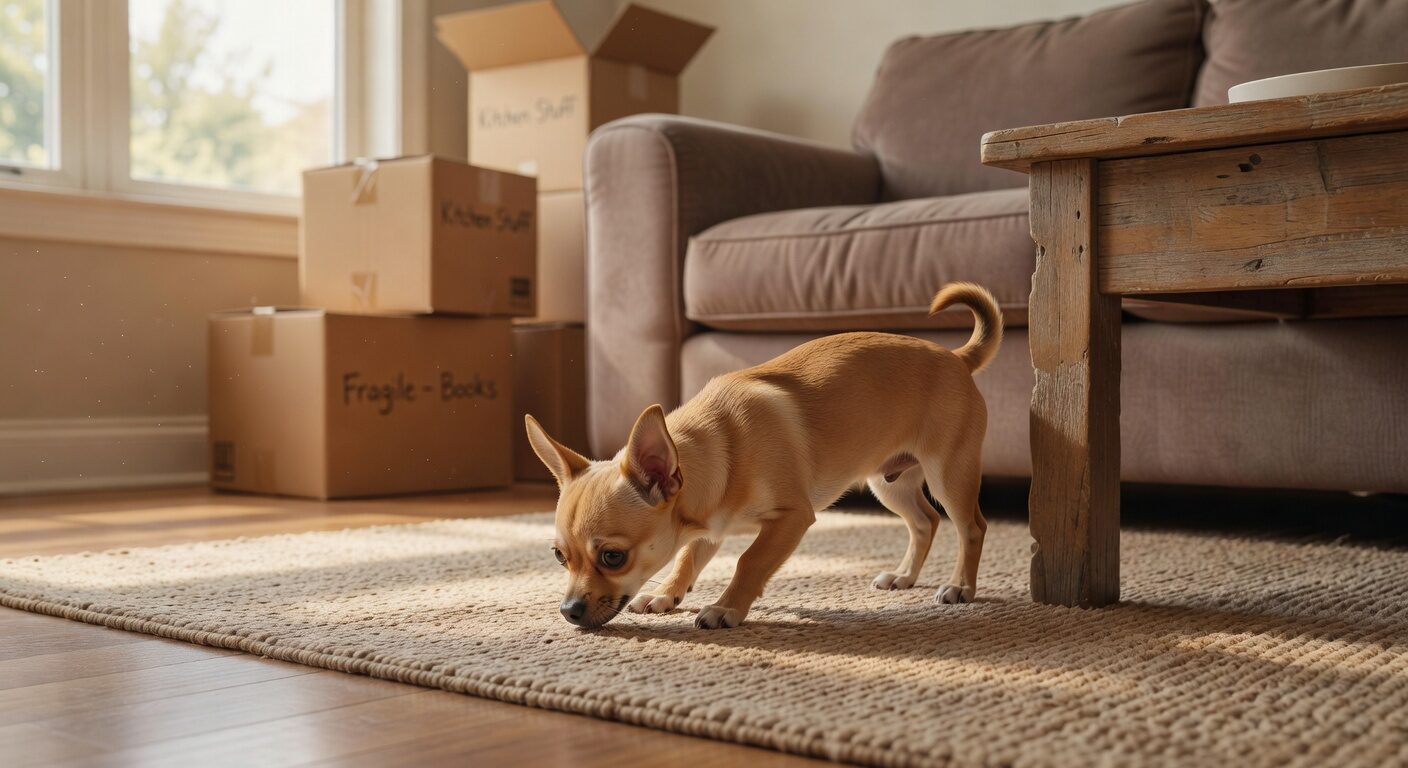
- Set up before the puppy arrives. Crate, bed, water bowl, food bowl, pee pads in their designated spots. Do not be assembling things while the puppy is exploring.
- Keep the household quiet for the first hour. Other family members can meet the puppy briefly; sustained excitement is too much for the day.
- Take the puppy outside immediately on arrival for a brief bathroom opportunity. Reward heavily if she eliminates outside; this starts the housetraining association on the right foot.
- Allow exploration on her terms. The puppy explores the room she is in; she does not, on the first hour, need to see the whole house.
- Offer a small meal of the breeder's food. Stress can suppress appetite; do not force feeding. If she eats, reward with calm presence; if not, the next meal will likely happen.
The first night, briefly
The first night with a new chihuahua puppy is, for most households, harder than expected. Key points:
- Crate near your bed. The puppy can hear your breathing; the proximity reduces the alone-feeling substantially. A separate piece on crate training covers the broader introduction.
- Familiar fleece in the crate, ideally the one from the breeder.
- One bathroom break around 3 a.m. Most chihuahua puppies cannot make it through the first nights without one. Brief, calm, back to crate.
- Some vocalization is expected. Brief settling vocalizations fade in five to ten minutes. Sustained escalating vocalization is a sign the puppy needs something specific (bathroom, water, comfort).
The vet visit window, briefly
Most veterinarians recommend a wellness visit within the first week of the puppy being home. The visit:
- Confirms the breeder's vaccination record matches the dog.
- Establishes a baseline weight and exam.
- Continues the vaccination series if appropriate.
- Begins monthly preventives if the weight is appropriate.
- Answers the household's questions in person.
The vaccination schedule reference covers the timing; the first wellness visit cost is typically $150 to $300 depending on region.
The first week, plainly
A reasonable expectation for the first week:
Day 1: Settled in. Some appetite hesitation. First successful outdoor bathroom trips. First overnight in the crate.
Days 2 to 3: Increasing exploration. Better appetite. The household begins to learn the puppy's rhythms (when she eats, when she naps, when she eliminates).
Days 4 to 7: The first wellness visit. The first introduction to one or two structured items (a sweater, the harness, the leash). Most puppies are, by day seven, settled.
The puppy socialization guide covers the broader weeks-eight-to-sixteen window of which the first week is the start.
What I would tell my first-trip self
A few specific things, in honest order:
- The crate is not optional. A loose puppy on a lap is not a calmer puppy; it is, on the available evidence, a more anxious puppy in a more dangerous setup.
- Spend the ten minutes at the breeder's house introducing the crate before the drive. The investment substantially improves the drive.
- Bring a familiar fleece. The single most calming variable on a forty-five-minute drive.
- Plan for the first night in advance. The crate location, the 3 a.m. break, the calm response to vocalization.
- The first wellness visit within the week is non-optional. Schedule it before the puppy arrives if possible.
The AKC's pre-puppy household checklist covers the broader prep beyond the trip itself.
The bottom line, with the usual caveat
Getting a chihuahua puppy home safely is mostly about the small specifics: the crate, the familiar fleece, the brief stop, the calm first hour. The household that prepares these in advance has, on every available measure, a better first day than the household that improvises. Talk to your veterinarian about your specific puppy and any pre-existing health considerations; the wellness visit is the right place to refine the broader plan.
Health at a Glance: What to Watch monitor_heart
| Condition | Key Signs | Prevention Tips |
|---|---|---|
| Dental Disease | Bad breath, tartar, red gums | Daily brushing, dental treats |
| Patellar Luxation | Limping, skipping, leg lifting | Weight control, avoid high jumps |
| Tracheal Collapse | Dry cough, gagging | Harness walking, avoid smoke |
| Heart Disease | Coughing, fatigue, fainting | Regular check-ups, heart-healthy diet |
| Hypoglycemia | Shaking, weakness, lethargy | Small, frequent meals |
Community Insights – FAQ help
help_outline What should every Chihuahua owner know about Health? expand_more
Stay observant — small changes in routine, energy, or appetite are usually the first signal something needs attention.
help_outline Is a tailored approach really necessary for Chihuahuas? expand_more
Yes. Their tiny size means smaller portions, gentler activity, and more frequent check-ins than larger breeds.
help_outline How often should we revisit our routine? expand_more
At least quarterly, and any time you notice a change. Small dogs, small adjustments — early and often.
Have a health question? Ask in the comments and we’ll bring it up with our vet team.
favorite