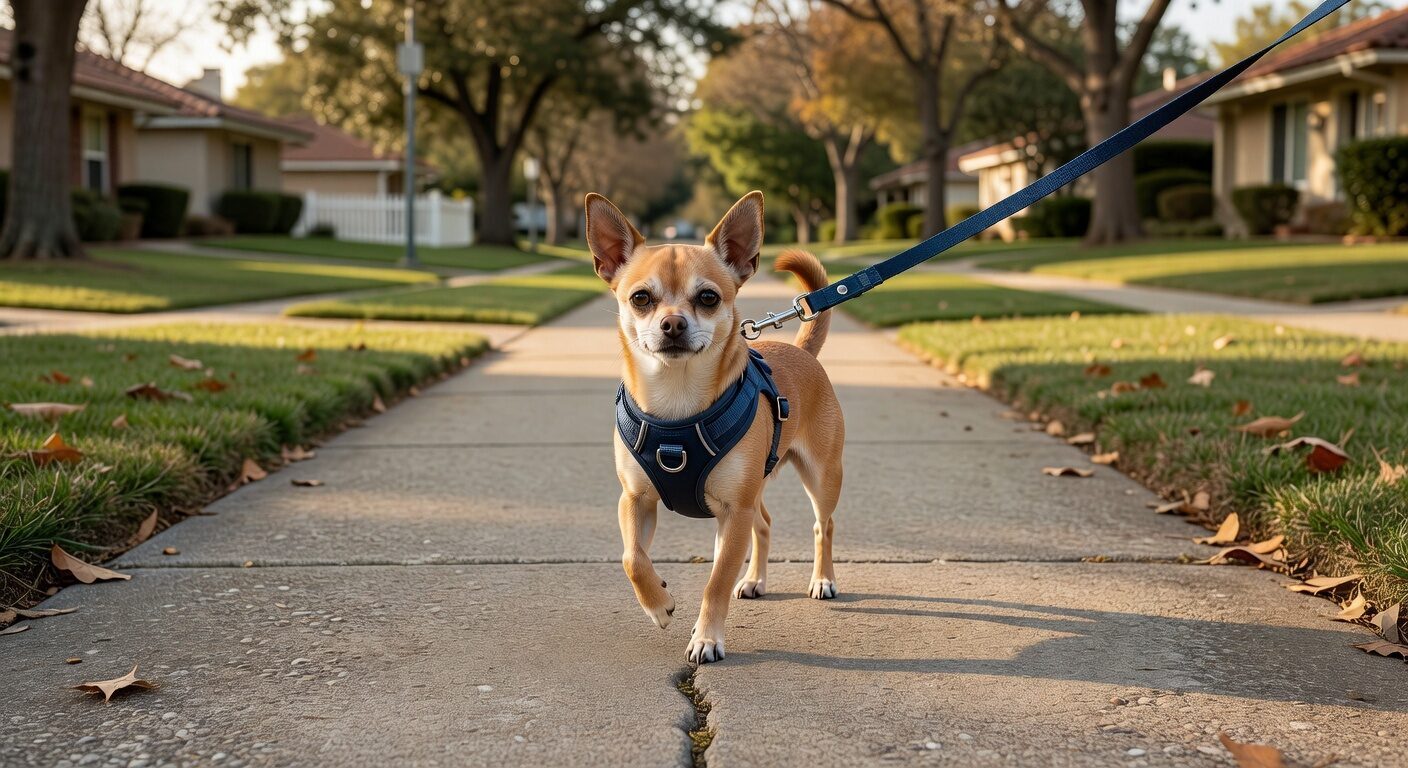

Should you spay or neuter your chihuahua, and if so, when? In short: yes, in most cases, with the timing landing somewhere between six and twelve months for most pet chihuahuas. The trade-offs that have been debated in larger breeds (joint disease, certain cancers) apply less strongly to toy breeds, and the population-level case for spay/neuter in small dogs is, in 2026, still well-supported. The conversation belongs to your veterinarian; what follows is the framework for the conversation.
I am going to walk through what the current research says, the trade-offs by sex, and the timing question.
Why the default for chihuahuas is yes
A few specific reasons the population-level case holds for the breed:
article_in_feed
A handpicked find for your tiny companion.
- Pyometra in females. A serious uterine infection, common in unspayed females over six. Spaying eliminates the risk and meaningfully extends life expectancy in older females.
- Mammary cancer. Risk decreases with spay, particularly with spays before the second heat cycle.
- Testicular cancer in males. Eliminated by neuter.
- Behavioral consistency. Intact males often roam, mark, and respond unpredictably to female dogs in the area; intact females cycle every six to eight months with associated behavioral changes.
- Population control. Chihuahuas are over-represented in U.S. shelter intake. The shelter intake conversation is partly a downstream consequence of unspayed and unneutered breeding.
The research debate, in plain language
The contemporary debate, mostly focused on large breeds, centers on a few studies showing increased risk of certain orthopedic and cancer outcomes in early-spayed/neutered dogs of specific breeds (Hart et al., 2014, on golden retrievers; Torres de la Riva et al., 2013). These findings are real but are largely breed-specific to large and giant breeds; the data for toy breeds, including chihuahuas, does not show the same pattern.
The AAHA Spay/Neuter Canine Guidelines are the document veterinarians are working from. For toy breeds, the recommendation is generally spay or neuter at six to twelve months, depending on the individual dog and the household.
Females, the specific conversation
A few practical notes for female chihuahuas:
- Timing. Most veterinarians recommend spay between six and twelve months, ideally before the second heat cycle. The first heat is usually around six to nine months; spaying just before this minimizes mammary cancer risk while allowing some skeletal maturation.
- Pyometra risk. Increases with each heat cycle. Older intact females are at significant risk.
- Surgical considerations. Spay surgery in a small dog is a more delicate procedure than in a larger one; choose a practice experienced with toy breeds.
- Recovery. Most chihuahuas return to normal activity within seven to ten days. An emergency-vet primer covers what to watch for in the first 48 hours.
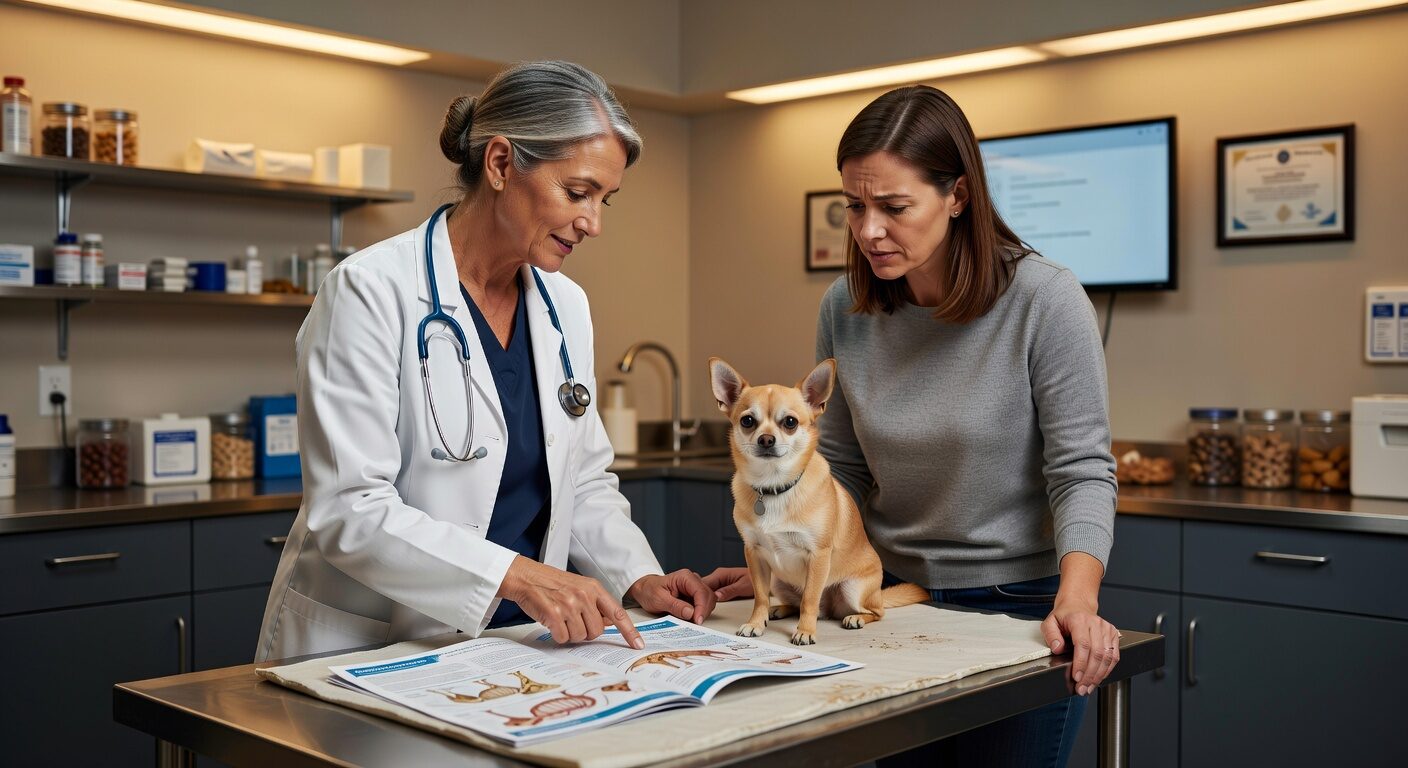
Males, the specific conversation
For male chihuahuas:
- Timing. Six to twelve months is the typical window. Some veterinarians prefer waiting closer to twelve months for full skeletal maturation, particularly in dogs at the larger end of the breed range.
- Behavioral effects. Neutering reduces testosterone-driven behaviors (marking, mounting, roaming) but does not, on the available evidence, change the dog's underlying personality. Anxious dogs do not become calm; calm dogs do not become anxious.
- Health benefits. Eliminates testicular cancer risk; reduces certain prostatic conditions in older males.
- Recovery. Faster than female recovery; most males are back to normal within five to seven days.
The honest trade-offs, briefly
The research that has driven debate in larger breeds has identified a few specific concerns. For chihuahuas, the practical trade-offs are smaller than the headlines suggest:
- Weight gain. Resting energy requirements drop 20 to 30 percent post-spay/neuter. A separate piece on weight gain covers the math; the fix is portion adjustment, not avoidance of the procedure.
- Coat changes. Some dogs develop a slightly fuller, plusher coat post-spay/neuter. Cosmetic, not clinical.
- Joint considerations. The orthopedic data that has worried large-breed owners does not apply with the same strength to chihuahuas; the breed's joint architecture is different and the data is limited.
Alternatives, briefly
A few alternative approaches worth understanding:
- Ovary-sparing spay. Removes the uterus and cervix while preserving the ovaries. Available in some practices. Reduces some but not all of the spay benefits.
- Vasectomy. Sterilization without removing the testicles. Available in some practices. Preserves testosterone-driven behaviors, which most owners do not want.
- Hormone implants. Reversible suppression. Less common in the U.S.
These are real options to discuss with your veterinarian if you have specific reasons to consider them. For most pet chihuahuas, standard spay or neuter remains the recommendation.
Costs, recovery, and the practical week
A brief note on cost. Spay surgery in a small dog typically runs $250 to $700 in private practice, less at low-cost spay/neuter clinics (often $50 to $200 with a slightly different service profile). Neuter is typically $150 to $500 in private practice, less at clinics. Most reputable clinics include pre-surgical bloodwork, anesthesia monitoring, and post-op pain management; ask before booking.
The practical recovery week looks like this. Day 1 to 3: rest, soft food, e-collar to prevent licking the incision, restricted activity. Day 4 to 7: gradual return to normal activity, continued e-collar, daily incision check. Day 10 to 14: suture removal if non-dissolving sutures were used; otherwise a final incision check. Most chihuahuas return to full normal activity within two weeks; full healing takes a month, even when the dog is acting completely recovered earlier.
One thing to do this week
If your chihuahua is between four and ten months old and you have not had the conversation, book a wellness visit and ask your veterinarian for a written recommendation on timing. The recommendation will be specific to your dog's size, weight, and household. The pre-adoption primer covers the surrounding context.
If your dog is older than this and is unspayed or unneutered, the conversation is still worth having; the procedure is still beneficial in most cases, with the trade-offs slightly different at later ages. Talk to your veterinarian; the decision belongs to that conversation, not the internet.
Health at a Glance: What to Watch monitor_heart
| Condition | Key Signs | Prevention Tips |
|---|---|---|
| Dental Disease | Bad breath, tartar, red gums | Daily brushing, dental treats |
| Patellar Luxation | Limping, skipping, leg lifting | Weight control, avoid high jumps |
| Tracheal Collapse | Dry cough, gagging | Harness walking, avoid smoke |
| Heart Disease | Coughing, fatigue, fainting | Regular check-ups, heart-healthy diet |
| Hypoglycemia | Shaking, weakness, lethargy | Small, frequent meals |
Community Insights – FAQ help
help_outline What should every Chihuahua owner know about Health? expand_more
Stay observant — small changes in routine, energy, or appetite are usually the first signal something needs attention.
help_outline Is a tailored approach really necessary for Chihuahuas? expand_more
Yes. Their tiny size means smaller portions, gentler activity, and more frequent check-ins than larger breeds.
help_outline How often should we revisit our routine? expand_more
At least quarterly, and any time you notice a change. Small dogs, small adjustments — early and often.
Have a health question? Ask in the comments and we’ll bring it up with our vet team.
favorite