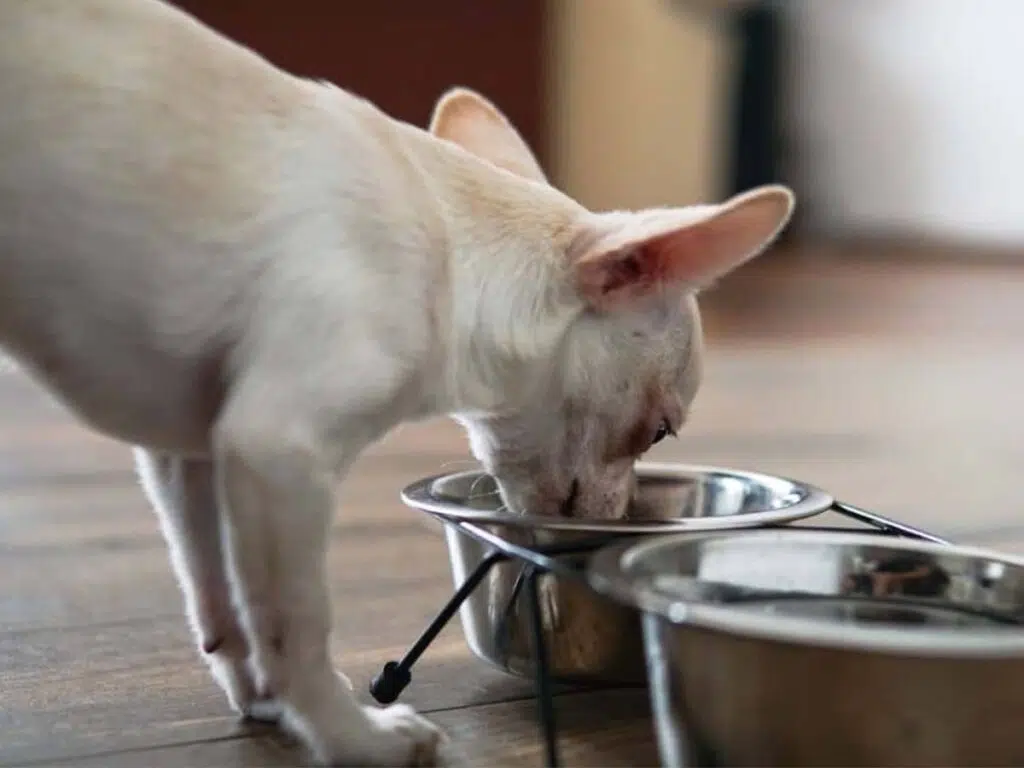


Why has your chihuahua been gaining weight faster than you expected? In a small dog, the math runs steeper than at fifty pounds; a few extra calories a day add up to half a pound a month, and half a pound on a five-pound dog is +10 percent body weight. Most weight gain in chihuahuas is one of five things, and they overlap.
I am going to walk through the five most common drivers I see in the exam room, and what to do about each.
Reason 1: treat creep
The most common reason a chihuahua gains weight is the slow accumulation of small, undocumented treats across the day. A piece of cheese here, a corner of toast there, a couple of training treats, a bedtime biscuit. None of these are the problem; the sum is the problem.

The standard guideline is that treats should make up no more than 10 percent of daily calories. For a chihuahua at 150 to 200 kcal per day, 10 percent is 15 to 20 kcal. A single small training treat is around 3 to 5 kcal; a piece of cheese the size of a dime is closer to 20. The math fills up faster than most owners notice. A short list of low-calorie human foods can help displace the higher-calorie reflexes.
Reason 2: portion drift
The second driver is portion drift, which is what happens when "a scoop" or "a half cup" stops being measured and starts being approximate. Most owners’ approximation drifts upward over time, especially with a dog who looks at the bowl in a way that suggests there is not enough food in it.
The fix is a kitchen scale. Weigh the kibble for one week. The difference between 28 grams and 35 grams looks small in the bowl and large on the dog. The AAHA Weight Management Guidelines are the clinical document; the kitchen scale is the practical one.
Reason 3: the senior slowdown
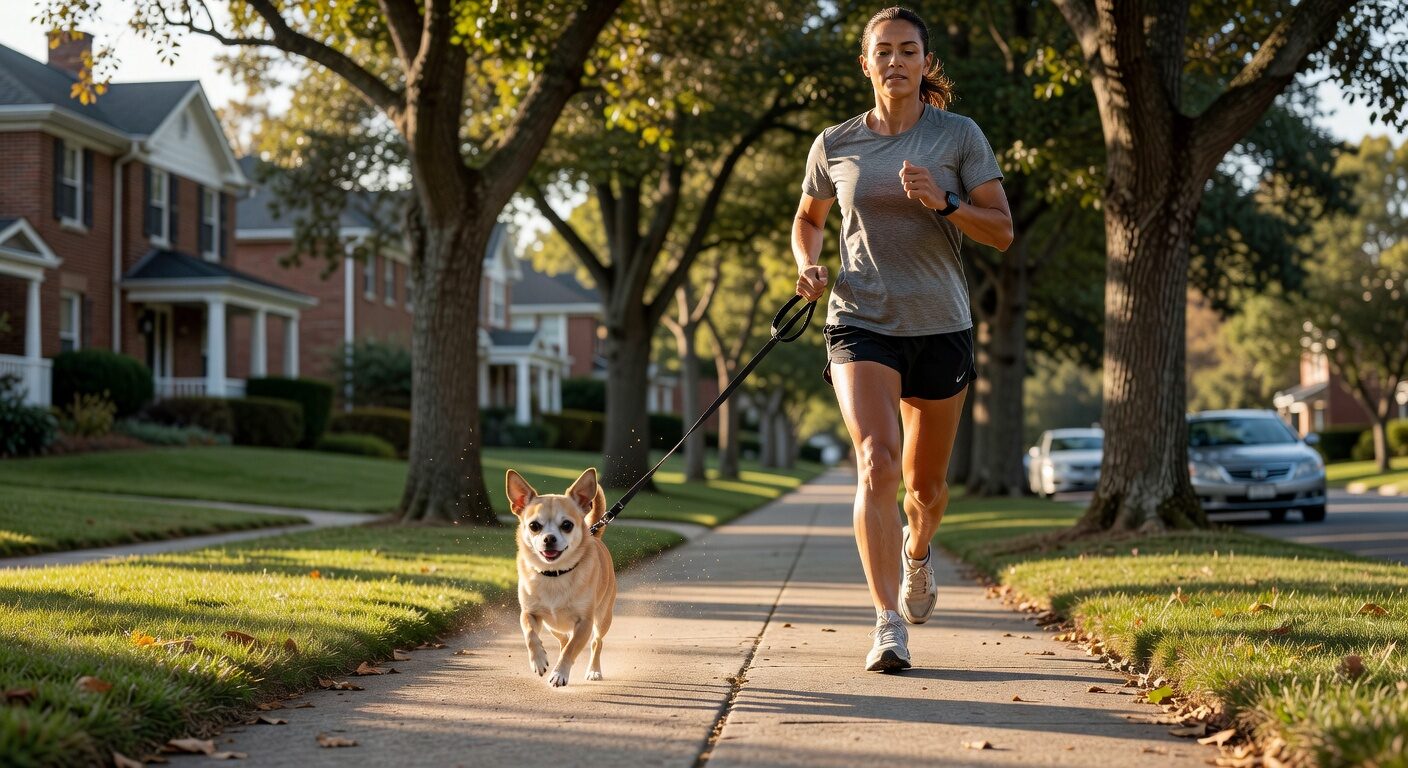
Energy needs decline with age, often by 15 to 20 percent in the senior years. A chihuahua who was eating 175 kcal per day at age six and is still eating 175 kcal per day at age twelve, with a slower walk and more napping, is in a positive caloric balance even though nothing in the routine has changed.
The fix is to recalibrate at the wellness visit, ideally yearly after age seven. A senior maintenance formula tends to be a little lower in calorie density. Combined with a small portion reduction, this is enough for most senior dogs to hold weight steady. The senior health checklist has the rest of the cadence.
Reason 4: medical mimics
A few medical conditions present, in part, as weight gain. Hypothyroidism is the most common; Cushing’s disease (hyperadrenocorticism) is less common but worth ruling out, especially if there is also increased thirst, increased urination, or pot-bellied appearance. Both are diagnosed with bloodwork.
A weight gain that does not correspond to a calorie change deserves a vet visit, not a stricter diet. Unscheduled weight gain in a dog whose food has not changed is a clinical signal; treat it that way.
Reason 5: the spay-neuter metabolic shift
Resting energy requirements drop by approximately 20 to 30 percent after spay or neuter; this is well-established in the veterinary literature. The fix is straightforward: reduce the daily portion by roughly that amount in the weeks following the procedure, and recheck weight monthly for the first six months. Most postoperative weight gain is preventable with this single adjustment.
How treats and meals stack, in practice
I want to be specific about the treat math, because the abstract version does not always land. A typical adult chihuahua at a healthy weight needs roughly 175 kcal a day. A small dental chew is 15 to 25 kcal. Two of those a day is 14 to 28 percent of the daily budget, before any meals. Add a piece of cheese after a successful sit, a quarter of a piece of toast at breakfast, a couple of training treats during a walk, and the bowl portion needs to come down by about a third just to keep the daily total in line.
The practical move is to weigh the daily food in the morning and put it in a small container; everything that comes out of that container, kibble or treats, counts. When the container is empty, the day is over. This single change, in my caseload, accounts for most of the successful weight-loss programs in chihuahuas under twelve.
What to actually do, this week
Three small steps:
- Weigh your dog. A kitchen scale works for a chihuahua; record the number.
- Weigh the food. One week of measured portions tells you what you are actually feeding.
- Schedule a wellness exam if you have not had one in six months, and ask for a body condition score (BCS) on the chart. The 1-to-9 BCS is the language your vet uses; you want a 5/9.
A practical tip: do not add a vigorous exercise plan as the first move. A daily walk is the right base, but the bowl is where most weight is gained and lost. Treat math first, then portion, then activity.
When the situation is more complicated
If your chihuahua has gained more than 10 percent of her body weight in a few months, or if the weight gain is regional (a pot-bellied appearance with thinner limbs), please book a vet visit rather than tightening the diet. A medical mimic that goes unaddressed will not respond to portion control, and the weeks spent restricting calories on the wrong differential are weeks the underlying condition is moving.
For most chihuahuas, though, the answer is the kitchen scale, the treat audit, and the senior recalibration. Small numbers add up at five pounds. So do small fixes.
Health at a Glance: What to Watch monitor_heart
| Condition | Key Signs | Prevention Tips |
|---|---|---|
| Dental Disease | Bad breath, tartar, red gums | Daily brushing, dental treats |
| Patellar Luxation | Limping, skipping, leg lifting | Weight control, avoid high jumps |
| Tracheal Collapse | Dry cough, gagging | Harness walking, avoid smoke |
| Heart Disease | Coughing, fatigue, fainting | Regular check-ups, heart-healthy diet |
| Hypoglycemia | Shaking, weakness, lethargy | Small, frequent meals |
Community Insights – FAQ help
help_outline When should I call my vet about a behavior change? expand_more
Sooner than feels reasonable. A change in appetite, energy, or routine that lasts more than 48 hours is worth a phone call, not a wait-and-see.
help_outline How often should a healthy adult chihuahua see the vet? expand_more
Once a year through age seven. Twice a year from eight on. Dental checks are part of every visit.
help_outline Do chihuahuas need different care than larger breeds? expand_more
Yes. Smaller medication dosing, more frequent dental work, and closer monitoring for tracheal and patellar issues are standard in toy-breed care.
Have a health question? Ask your question in the comments. We will bring it up with the vet team.
favorite