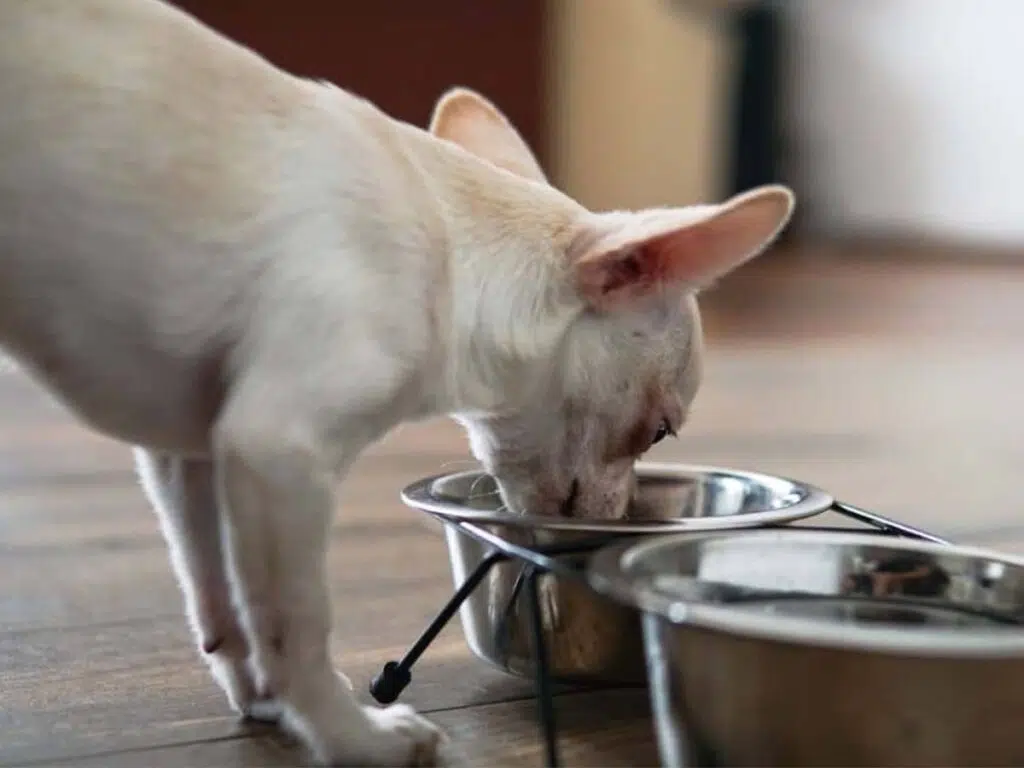


Which fruits and vegetables are safe human foods for chihuahuas, and which are not? The short answer: a small list of each. The longer answer, which is the one your veterinarian wants you to read before the next "is this okay?" Google search at 9 p.m., is that the chihuahua's small body mass changes the math on portion size, and the toxicity threshold for a thirty-pound dog can be a same-day veterinary emergency for a five-pound chihuahua.
This piece organizes what is safe, what is not, and what to do if the wrong piece of food disappears off the counter. None of it replaces an examination by your own veterinarian.
Safe Fruits for Chihuahuas
Blueberries

Small, soft, low-calorie, packed with antioxidants. Two to three blueberries, a few times a week, fits inside the ten-percent treat allowance for most chihuahuas. AKC reference page treats blueberries as a default fruit recommendation for small dogs.
Apple slices
Apples with skin, no seeds, no core. Apple seeds contain amygdalin, a compound that releases trace cyanide when chewed; the amount in a single seed is small for a Labrador and not insignificant for a chihuahua. Cut a quarter-inch slice, remove the seeds and core completely, dice into pea-sized pieces.
Watermelon
Seedless watermelon flesh, rind removed, cut into small pieces. Hydrating, low-calorie, well-tolerated. The natural sugar adds up; keep portions to a teaspoon-sized cube once or twice a week.
Strawberries and cantaloupe
Both are safe in small portions. Strawberries should be quartered to avoid choking; cantaloupe should be peeled and diced. The Merck Veterinary Manual categorizes both as low-risk treats with moderate sugar content.
Safe Vegetables for Chihuahuas
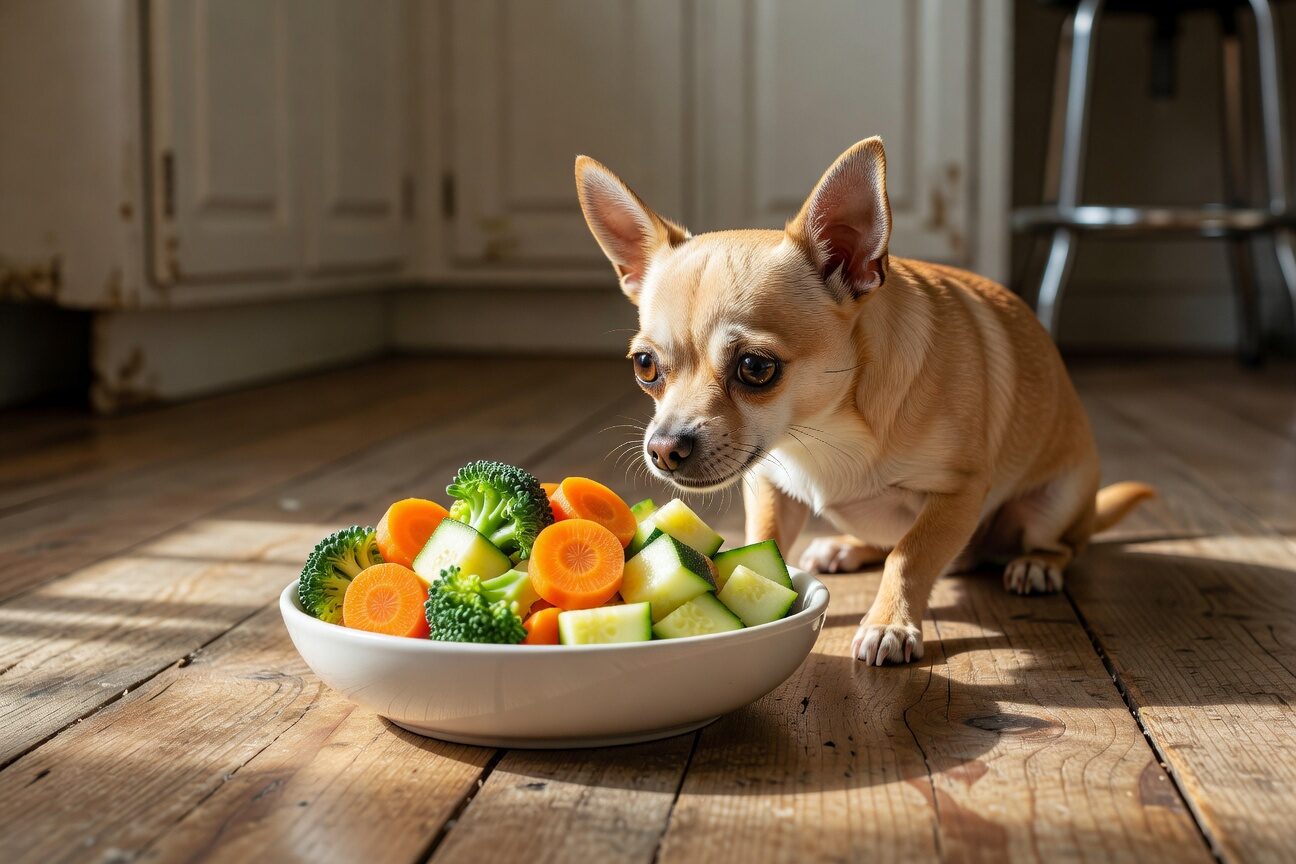
Carrots
Raw or cooked, cut into small coins or sticks for chewing satisfaction. Low-calorie, high in beta-carotene, and one of the most reliably tolerated vegetables in the breed. (Many chihuahua owners report that carrots are also one of the few "healthy" treats the dog will accept without negotiation.)
Green beans
Plain, steamed, no salt, no butter. Green beans are a useful low-calorie filler for a chihuahua on a weight-loss plan. Two or three at a time.
Cucumber, broccoli, sweet potato
All safe in small, plain, well-cooked portions. Sweet potato is starchy; treat it as an occasional addition, not a daily one. Broccoli should be limited to small amounts; large quantities can produce gas and gastrointestinal upset in toy breeds.
Foods Chihuahuas Cannot Eat
The non-negotiable list. The ASPCA Animal Poison Control toxicity reference is the standard source.
Grapes and raisins. Toxic to dogs at unpredictable doses; renal failure has been documented in dogs at very small ingested amounts. Same-day veterinary emergency in a chihuahua.
Onions, garlic, chives, leeks. Allium-family vegetables damage red blood cells. The chihuahua-specific risk is that the toxic dose is proportionally lower; a teaspoon of onion in a leftover dish can be clinically meaningful.
Avocado. Persin in the pit, skin, and leaves; the flesh is technically lower-risk but the dose-to-body-weight ratio in a chihuahua makes the avoidance rule cleaner.
Macadamia nuts, chocolate, anything with xylitol. The xylitol risk is the one most owners under-rate; sugar-free gum, sugar-free peanut butter, and certain "low-calorie" baked goods can contain doses that are lethal in a small dog.
Cherries (pits), tomato leaves and stems (the ripe fruit is borderline; avoid for chihuahuas), citrus peel and pith.
How Much Is Too Much, in a Toy Dog
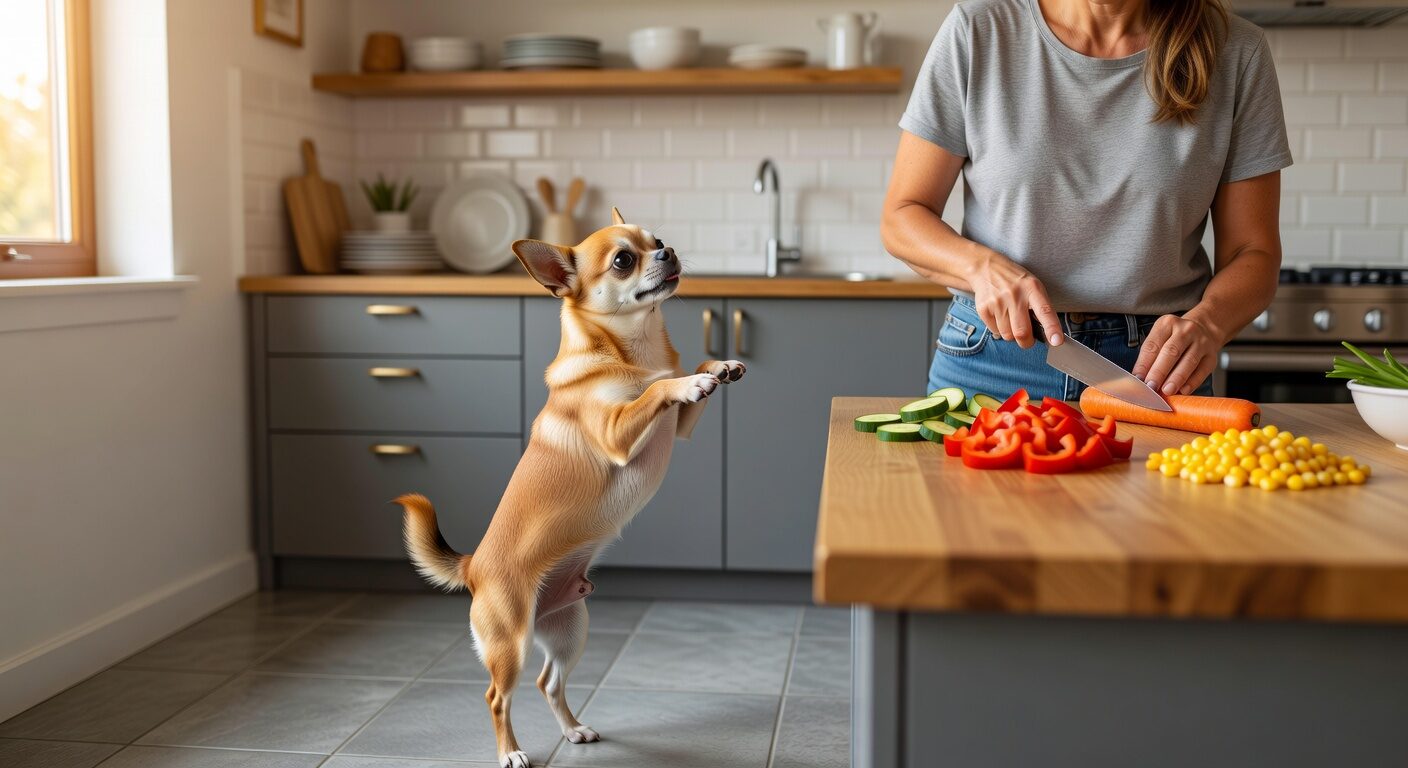
Treats, including fruit and vegetable additions, should not exceed ten percent of daily calories. For a five-pound chihuahua, that is roughly twenty calories a day. A single blueberry is roughly one calorie; a tablespoon of cooked carrot is about three. The math, in plain terms, is that two or three small treats a day is the upper bound, not the floor. AKC's ten-percent rule reference is the standard.
When to Call Your Veterinarian
Same-day reasons: known ingestion of grapes, raisins, onions, garlic, avocado pit, macadamia nuts, chocolate, or anything containing xylitol. Within the hour: known xylitol exposure (the toxic onset can be very fast). Within twenty-four hours: persistent vomiting, refusal to eat, or unusual lethargy after a new food was introduced.
The ASPCA Animal Poison Control Center number is (888) 426-4435. Save it now. The companion stool-color guide covers the digestive markers to watch for; the broader three things every chihuahua owner must know piece covers the breed-specific size math.
If You Cannot Reach Your Own Veterinarian
The Pet Poison Helpline at (855) 764-7661 is the second-line option for after-hours or unreachable-primary-vet scenarios. The consultation fee is real and the answer is fast, which on a five-pound dog with a confirmed toxic ingestion is the trade you want. Save the number next to ASPCA's; they cover different parts of the same problem.
For more clinical explainers, browse the Health desk or subscribe for the next dispatch. Talk to your veterinarian about anything that does not look right at home.
Health at a Glance: What to Watch monitor_heart
| Condition | Key Signs | Prevention Tips |
|---|---|---|
| Dental Disease | Bad breath, tartar, red gums | Daily brushing, dental treats |
| Patellar Luxation | Limping, skipping, leg lifting | Weight control, avoid high jumps |
| Tracheal Collapse | Dry cough, gagging | Harness walking, avoid smoke |
| Heart Disease | Coughing, fatigue, fainting | Regular check-ups, heart-healthy diet |
| Hypoglycemia | Shaking, weakness, lethargy | Small, frequent meals |
Community Insights – FAQ help
help_outline When should I call my vet about a behavior change? expand_more
Sooner than feels reasonable. A change in appetite, energy, or routine that lasts more than 48 hours is worth a phone call, not a wait-and-see.
help_outline How often should a healthy adult chihuahua see the vet? expand_more
Once a year through age seven. Twice a year from eight on. Dental checks are part of every visit.
help_outline Do chihuahuas need different care than larger breeds? expand_more
Yes. Smaller medication dosing, more frequent dental work, and closer monitoring for tracheal and patellar issues are standard in toy-breed care.
Have a health question? Ask your question in the comments. We will bring it up with the vet team.
favorite