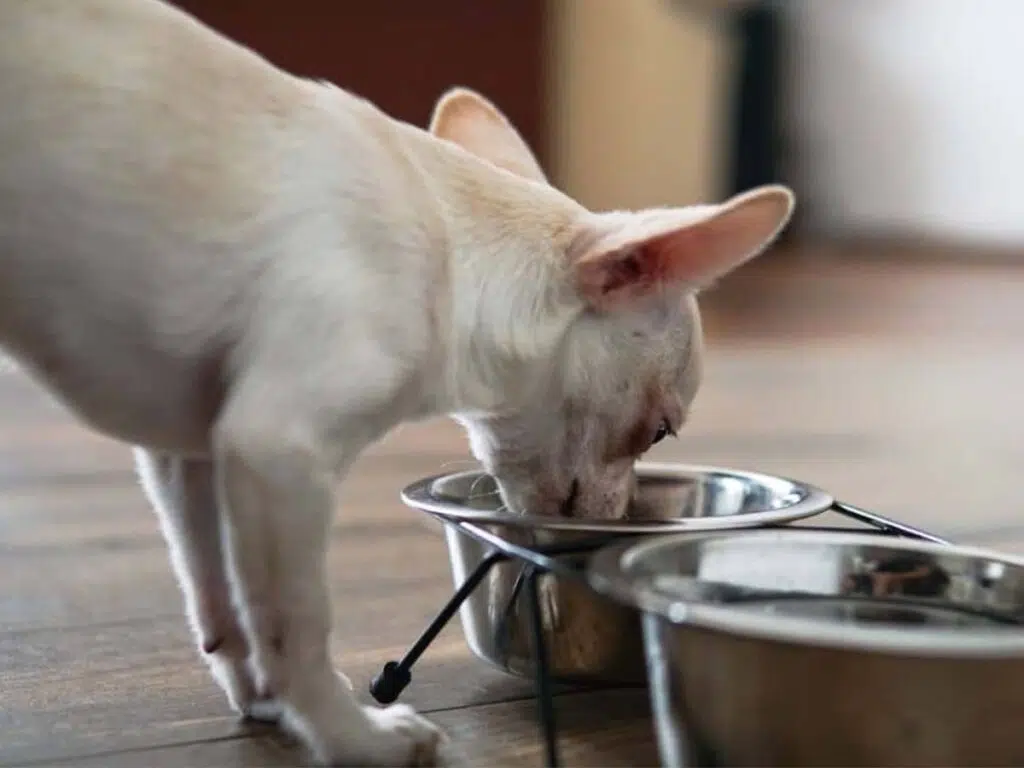


What does your chihuahua's stool tell you? More than most owners realize, and more than your veterinarian has time to explain in a fifteen-minute appointment. The good news: the relevant signals are visible, the response thresholds are clear, and the time-to-act decisions can be made at home, in seconds, without becoming the kind of person who sends photographs to the group chat.
This is the explainer your veterinarian wishes you had read before your first emergency visit. None of it is a substitute for an examination by your own veterinarian.
The Color Chart Every Chihuahua Owner Should Know
Brown

Chocolate brown, consistent texture, easy to pick up. This is the gold standard, and the AKC dog-poop chart is unequivocal on the point. If your chihuahua's stool looks like this every day, the digestive system is doing what it should be doing.
Yellow or orange
A possible bile or liver signal, but also a common consequence of dietary food coloring or a brief upset stomach. One yellow stool is rarely an emergency. Two or three in a row is your call-the-vet threshold. The Merck Veterinary Manual treats persistent color change as a reason for evaluation rather than an emergency in isolation.
Green
Most often grass; chihuahuas eat grass and most owners are surprised by this until they witness it. Green stool without grass-eating points more often to a gallbladder or intestinal cause and warrants a vet conversation, especially if it persists.
Black or tarry
This is the one to act on. Genuinely black, sticky, tar-like stool indicates digested blood from the upper gastrointestinal tract: stomach ulcers, ingested medications, or trauma. Do not wait. Call your veterinarian today.
Red streaks or red blood
Bright red blood, in or on the stool, indicates lower-GI bleeding: colitis, anal-gland disease, or a foreign body. Less immediately dangerous than melena, but still a same-day vet conversation. The companion three things every chihuahua owner must know guide covers the size-specific risks that make even mild bleeding consequential in a five-pound dog.
White or clay-colored
Pale stool suggests that bile is not reaching the intestines, which can mean a bile-duct or hepatic issue. A single pale stool may be incidental; repeated pale stools warrant veterinary investigation. Some dogs on high-calcium diets produce a chalky-pale appearance that is not pathological.
White rice-like specks
Tapeworm segments. Common, treatable, not an emergency, but a vet visit for proper deworming medication is the next step. PetMD's tapeworm guide has clear identification photos.
Consistency Matters as Much as Color
Color gets the attention; consistency tells you the rest. A useful rule: the stool should be firm enough to pick up cleanly, but not pebbled or crumbling. (The clinical reference is the Bristol-style fecal scoring chart used in veterinary practice; the descriptions are clinical but the underlying scale is the same.)
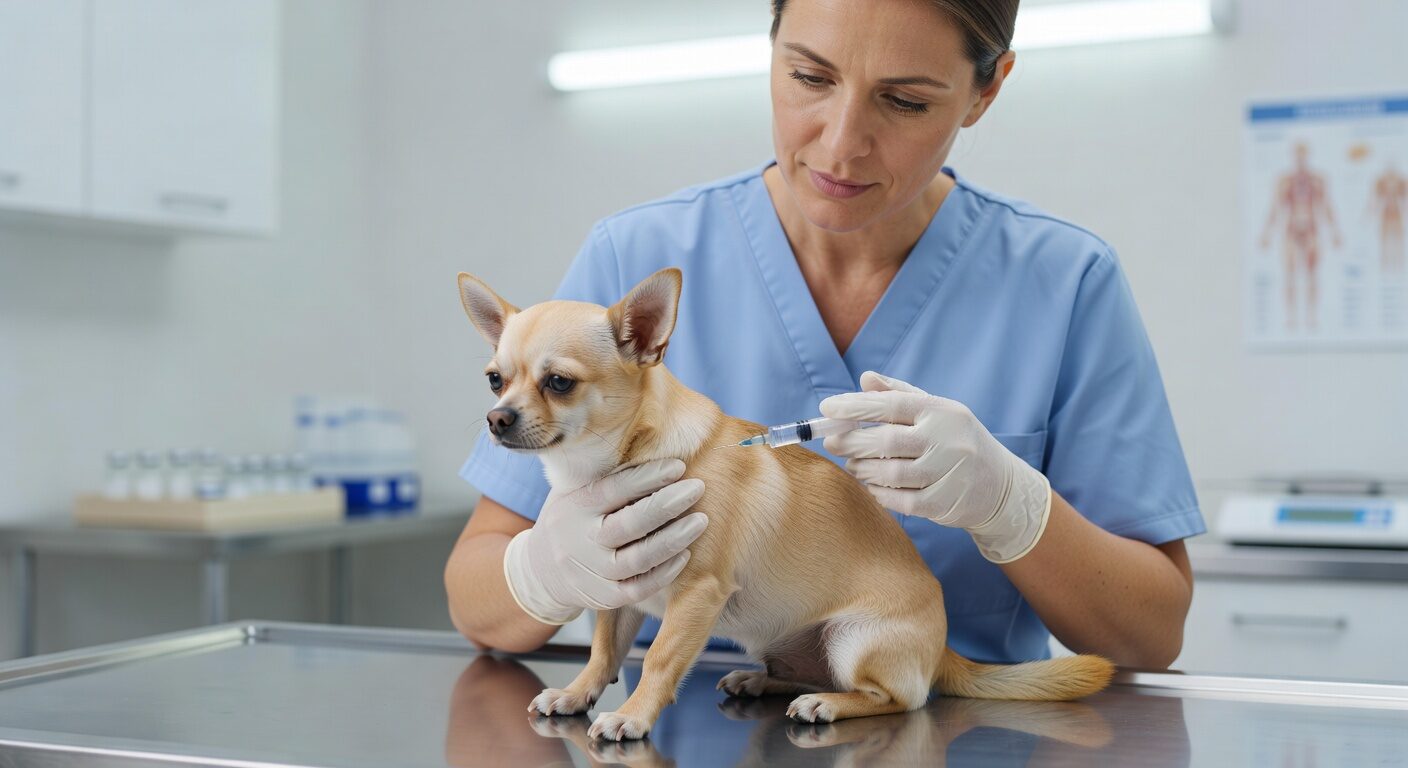
Watery diarrhea lasting more than twenty-four hours in a chihuahua is a same-day emergency. Why? Because at five to seven pounds, dehydration arrives in hours, not days. Merck treats acute diarrhea in toy breeds as a more time-sensitive presentation than the same symptom in larger dogs.
Hard, dry, pebbled stool means inadequate water or fiber. Chihuahuas drink less than larger breeds in absolute volume, and their daily water intake is correspondingly easier to undershoot. Add a splash of water to the kibble; switch to a slightly larger water bowl placed in a quieter location; observe.
When to Call Your Veterinarian
The list of same-day reasons is short. Black tarry stool. Bloody diarrhea that does not stop after one episode. Any stool change combined with vomiting, lethargy, or refusal to eat. Straining to pass stool with no result, which can indicate a blockage. Recent ingestion of a known or suspected toxin followed by any stool change within twenty-four hours; the ASPCA Animal Poison Control Center number, (888) 426-4435, is worth saving in your phone now.
Why It Matters More in This Breed
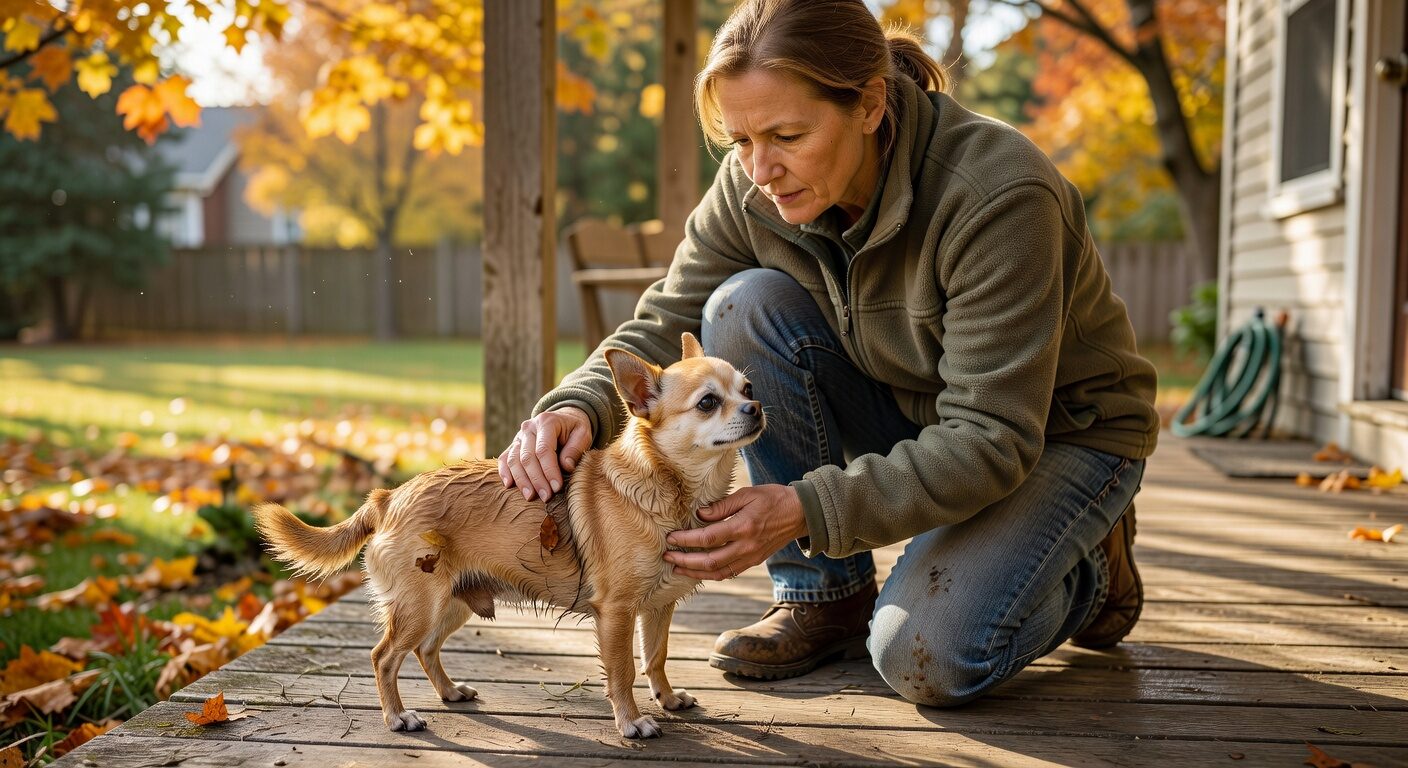
Chihuahuas have faster metabolisms and more sensitive digestive tracts than the average dog, and their small mass means problems escalate faster. A diet change that a Labrador absorbs without comment can produce three days of intestinal upset in a chihuahua. The size-specific math also runs in the other direction: a mild dehydration that a large dog can tolerate for a day becomes a same-day veterinary visit in a four-pound chihuahua.
The wider context on what your chihuahua's body is actually telling you lives in the chihuahua lifespan piece, where the long-arc health habits add up; for the breed-history perspective on why this small dog is built the way it is, the twenty-five facts guide is the reference.
A small final note. The first time my own dog produced a stool that looked wrong, I spent forty-five minutes on the internet before calling the clinic. Twenty minutes of clinic time and a fecal float later, the answer was that she had eaten a blackberry off the sidewalk on a walk. Anticlimactic; reassuring; routine. That is the goal: a fast call to the veterinarian, an unalarming answer most of the time, and the confidence to recognize the small minority of cases that genuinely need attention.
For more clinical explainers in plain English, browse the Health desk or subscribe to get the next dispatch in your inbox. Talk to your veterinarian about anything that does not look right at home.
Health at a Glance: What to Watch monitor_heart
| Condition | Key Signs | Prevention Tips |
|---|---|---|
| Dental Disease | Bad breath, tartar, red gums | Daily brushing, dental treats |
| Patellar Luxation | Limping, skipping, leg lifting | Weight control, avoid high jumps |
| Tracheal Collapse | Dry cough, gagging | Harness walking, avoid smoke |
| Heart Disease | Coughing, fatigue, fainting | Regular check-ups, heart-healthy diet |
| Hypoglycemia | Shaking, weakness, lethargy | Small, frequent meals |
Community Insights – FAQ help
help_outline When should I call my vet about a behavior change? expand_more
Sooner than feels reasonable. A change in appetite, energy, or routine that lasts more than 48 hours is worth a phone call, not a wait-and-see.
help_outline How often should a healthy adult chihuahua see the vet? expand_more
Once a year through age seven. Twice a year from eight on. Dental checks are part of every visit.
help_outline Do chihuahuas need different care than larger breeds? expand_more
Yes. Smaller medication dosing, more frequent dental work, and closer monitoring for tracheal and patellar issues are standard in toy-breed care.
Have a health question? Ask your question in the comments. We will bring it up with the vet team.
favorite