
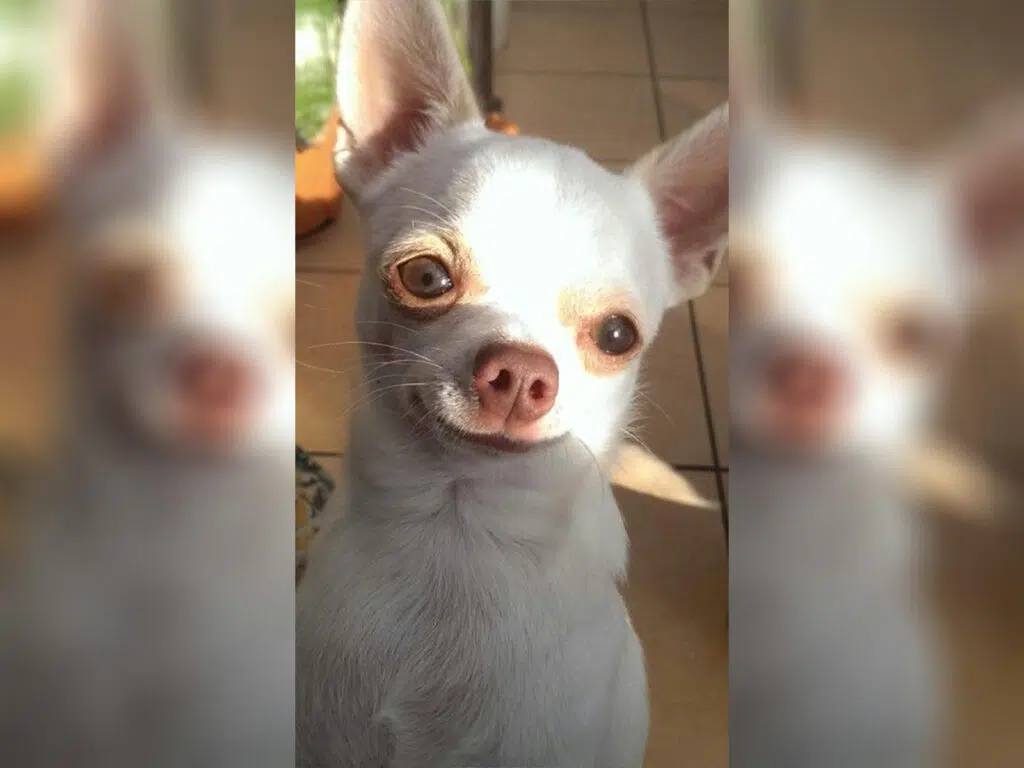
Why do Chihuahuas have such big, round eyes? The short answer is skull shape. A Chihuahua's eyes are not actually larger than you would expect for the breed. They simply sit in a small, rounded head with shallow eye sockets, so the eye takes up more of the face and looks more prominent than it would in a longer-muzzled dog. That wide-awake, slightly startled expression is the breed's signature, and for most Chihuahuas it is completely normal.
Here is the part worth understanding as a pet parent. The same anatomy that gives your Chihuahua those expressive eyes also leaves the surface of the eye a little more exposed than in many other breeds. That does not mean your dog is fragile. It means a few specific conditions show up more often, and knowing them lets you catch trouble early instead of in an emergency.
The anatomy behind the big eyes
Chihuahuas have what veterinarians call a shortened, rounded skull, with an orbit (the bony socket that holds the eye) that is comparatively shallow. The eyeball is a normal size, but it has less bony cover around it. The result is the trademark look: a large-appearing eye that protrudes slightly forward.
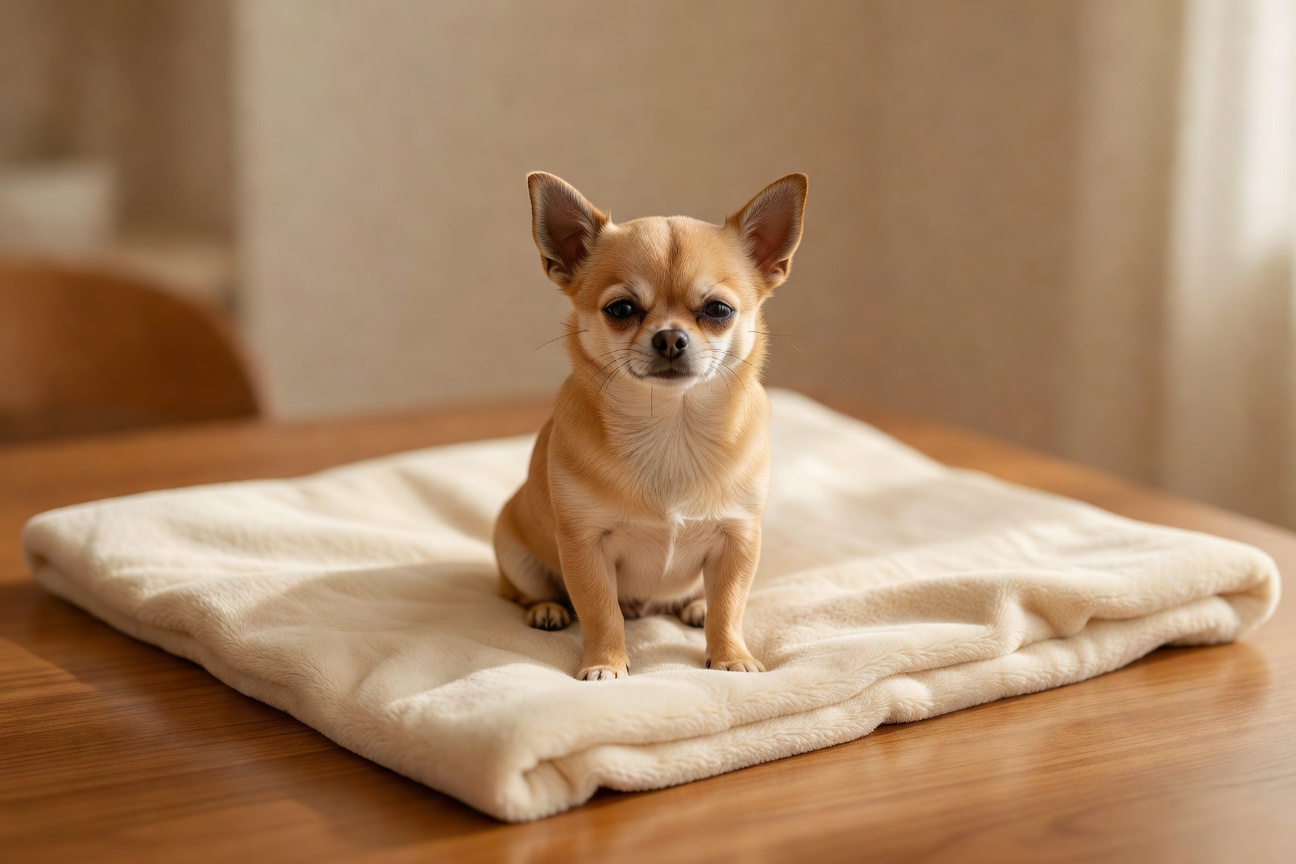
The trade-off is exposure. A more prominent eye with shallow orbital protection has more of its cornea (the clear front surface of the eye) out in the open, where dust, debris, and the edge of the eyelids can reach it. It also has less of a bony cushion if your dog takes a knock to the head or face. This is the anatomy underneath every condition below, so it is worth holding onto: prominent eye, shallow socket, exposed surface.
What this anatomy predisposes them to
None of these are guaranteed, and plenty of Chihuahuas live long lives without any of them. But these are the eye problems your veterinarian watches for in the breed.
Dry eye (keratoconjunctivitis sicca, or KCS). This is when the eye does not make enough tears to keep the cornea moist and protected. Because the Chihuahua's cornea is more exposed to begin with, a drop in tear production hits harder. Dry eye looks like a thick, sticky discharge, redness, squinting, and a cornea that loses its glassy shine and starts to look dull or hazy. It is uncomfortable and, left unmanaged, it can scar the cornea and threaten vision. The good news is that your veterinarian can measure tear production in a couple of minutes with a simple strip test, and most cases are managed well with prescription tear-stimulating drops.
Corneal ulcers. A corneal ulcer is a scratch or erosion on the surface of the eye. With more cornea exposed, a Chihuahua is at higher risk of one, whether from a stray claw, a bush on a walk, a bit of grit, or a dry surface that breaks down. Signs include sudden squinting, tearing, pawing at the eye, holding the eye shut, and obvious pain. This one is genuinely time-sensitive. A small ulcer can deepen quickly, so squinting and a painful, watery eye is a same-day call to your veterinarian, not a wait-and-see.
Tear staining. Those reddish-brown streaks running from the inner corner of the eye down the face are common in Chihuahuas, partly because of the way the eyes sit and how tears drain. On its own, tear staining is usually a cosmetic issue rather than a medical emergency. But a sudden increase in tearing, or staining paired with redness or discharge, can point to a blocked tear duct, an eyelash growing the wrong way, or low-grade irritation, all of which are worth mentioning at your next visit.
Proptosis (the eye coming out of the socket). This is the emergency the breed's anatomy makes possible. Because the orbit is shallow, a relatively minor trauma to the head, a fall, a dog-on-dog scuffle, or even rough handling, can pop the eyeball forward past the eyelids. It looks exactly as alarming as it sounds: the eye is visibly bulging out and the lids are caught behind it. This is a true emergency. The sooner the eye is back in place and protected, the better the odds of saving it and its vision. Keep the eye moist with saline or even clean water if you have nothing else, do not try to push it back in yourself, and get to an emergency veterinarian immediately.
Daily eye care that actually helps
You do not need a complicated routine. A few simple habits go a long way for a breed with exposed eyes.
- Wipe gently, daily if needed. Use a soft, damp cloth or a vet-approved eye wipe to clear discharge and grime from the corners and the fur below the eye. Wipe outward and away from the eye, and use a fresh section of cloth for each eye.
- Keep the face fur trimmed. Hair hanging into the eye is a constant low-grade irritant and a setup for scratches. Ask your groomer or veterinarian to keep the area around the eyes tidy.
- Look at the eyes every day. You already make eye contact with your dog constantly. Use it. You are looking for clear, glassy, equally bright eyes with no squinting, no new discharge, and no redness.
- Reduce trauma risk. Use a harness rather than a collar, supervise play with bigger dogs, and be thoughtful about jumps from furniture. Protecting the head protects the eyes.
- Do not use human or leftover eye drops. Some human medications, especially steroid drops, can make a corneal ulcer dramatically worse. Only use what your veterinarian prescribes for the problem in front of you.
When to call your veterinarian
Here is the clinical-then-practical line. Eyes do not have much margin, and surface problems can move fast, so when in doubt, it is better to be seen.
- Same day, today: the eye is bulging out of the socket (treat this as an emergency), sudden squinting or holding an eye shut, obvious pain or pawing at the eye, a sudden cloudy or blue-gray haze over the eye, or a visible scratch or wound.
- Within a day or two: new or increasing discharge, redness that does not clear, increased tearing, or staining that suddenly gets worse.
- At your next routine visit: mild, stable tear staining with no other signs, or any question you have been meaning to ask about your dog's eyes.
One quick principle to carry with you: a painful eye is always a reason to call. Pain shows up as squinting, tearing, light sensitivity, and pawing, and in the eye it usually means the surface is involved.
The bottom line
Your Chihuahua's big, expressive eyes are a normal feature of a small, round skull with shallow sockets, not a defect. That same anatomy is why the breed runs a little higher on dry eye, corneal ulcers, tear staining, and the rare but serious emergency of proptosis. None of this should make you anxious every time you look at your dog. It should make you observant. A daily glance, a soft wipe when needed, a harness instead of a collar, and a low threshold for calling when an eye looks painful will handle the large majority of what those eyes throw at you.
A note from the vet's side of the table: this article is a plain-English explainer, not a diagnosis for your specific dog. If something about your Chihuahua's eyes looks off, especially if there is squinting or pain, talk to your veterinarian. Knowing what to watch for is what makes you a better advocate at the exam-room door.
For more on these conditions, the American College of Veterinary Ophthalmologists has owner-friendly background on common eye conditions in pets, and the Merck Veterinary Manual covers the basics of eye disorders in dogs.
Health at a Glance: What to Watch monitor_heart
| Condition | Key Signs | Prevention Tips |
|---|---|---|
| Dental Disease | Bad breath, tartar, red gums | Daily brushing, dental treats |
| Patellar Luxation | Limping, skipping, leg lifting | Weight control, avoid high jumps |
| Tracheal Collapse | Dry cough, gagging | Harness walking, avoid smoke |
| Heart Disease | Coughing, fatigue, fainting | Regular check-ups, heart-healthy diet |
| Hypoglycemia | Shaking, weakness, lethargy | Small, frequent meals |
Community Insights – FAQ help
help_outline When should I call my vet about a behavior change? expand_more
Sooner than feels reasonable. A change in appetite, energy, or routine that lasts more than 48 hours is worth a phone call, not a wait-and-see.
help_outline How often should a healthy adult chihuahua see the vet? expand_more
Once a year through age seven. Twice a year from eight on. Dental checks are part of every visit.
help_outline Do chihuahuas need different care than larger breeds? expand_more
Yes. Smaller medication dosing, more frequent dental work, and closer monitoring for tracheal and patellar issues are standard in toy-breed care.
Have a health question? Ask your question in the comments. We will bring it up with the vet team.
favorite