Let me introduce the smallest, loudest security system ever installed in a rented apartment. It weighs four pounds. It has appointed itself head of building safety. And it believes, with total conviction, that the man delivering a pizza three doors down is an existential threat to everyone you love.
This is the apartment chihuahua, and this is its bark. If you live with one behind thin walls and above a neighbor who leaves notes, this guide is for you. The good news: apartment barking is manageable. The better news is that almost none of it is the dog being bad. It is the dog being a chihuahua in a building full of triggers.
Quick answer: Apartment barking is manageable, and almost none of it is the dog being bad: apartments stack triggers, hallway footsteps, elevators, neighboring doors, and other dogs, all within earshot of an alert companion breed. Mask the noise with a white-noise machine or fan, block the dog's view of the door and street, pair low-level trigger sounds with treats, and add daily mental exercise. Barking that starts the moment you leave is usually distress rather than alarm, and needs graduated alone-time instead.
First, understand what you are dealing with
Chihuahuas were bred to be alert companions, which is a polite way of saying they announce things. In a house with a yard, the announcements are spread out. In an apartment, the triggers are stacked on top of each other: footsteps in the hallway, the elevator dinging, a neighbor's door, another dog four units away, and the single most provocative event in the building, someone knocking on a door that is not even yours. To the dog, the hallway is a conveyor belt of intruders. It is doing its job. Its job is just extremely loud.
This matters because you cannot train away instinct by yelling, which the dog cheerfully interprets as you finally joining in. You manage the triggers, and you make being quiet more rewarding than being loud.
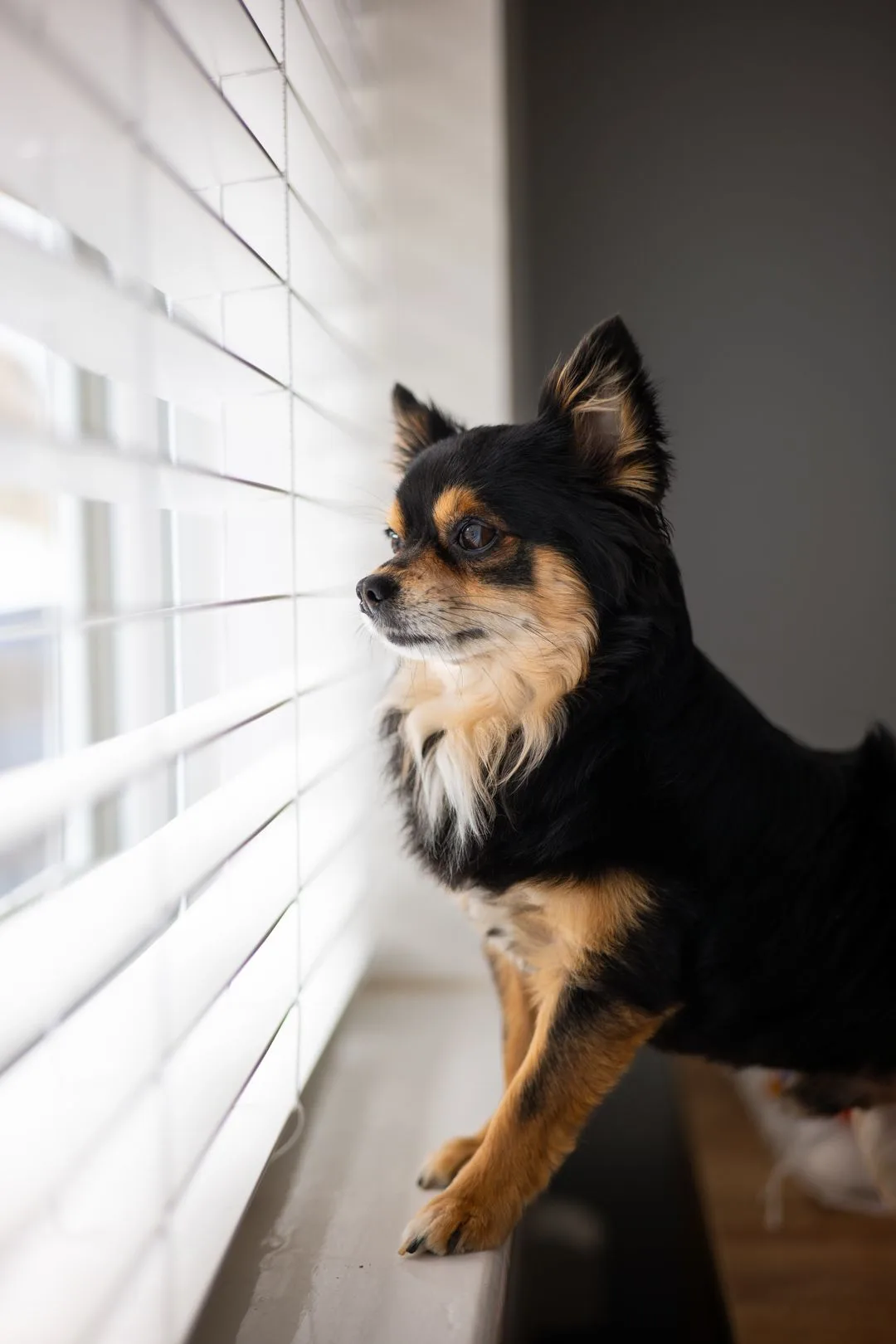
Cut off the surveillance
A huge amount of apartment barking is visual. The dog sits at the window or the door, watches the world go by, and narrates it at volume. Take away the feed and you take away most of the show. Frost the lower part of a street-facing window, close the blinds during peak foot-traffic hours, or simply move the dog's favorite perch away from the front door. If the dog cannot see the mail carrier, the mail carrier ceases, in the dog's mind, to exist. (I am not making this up. This is the entire chihuahua worldview.)
Tire out the brain, not just the legs
A bored chihuahua is a loud chihuahua. These dogs need less physical exercise than a Labrador but just as much mental work, and a tired brain barks less. Rotate a couple of food puzzles, do five minutes of training a few times a day, and give the dog something to chew. A chihuahua that has spent the afternoon working for its food is far more likely to be asleep, gloriously silent, when the elevator dings.

Handle the hallway noises on purpose
Two tools do most of the work here. The first is sound. A white-noise machine or a fan smooths over the hallway sounds that set the dog off, and it works especially well for the footsteps-and-doors category. The second is desensitizing the dog to the triggers themselves: pair the sound of a knock or a closing hallway door with a treat, over and over, at a low enough level that the dog notices but does not lose its mind, and slowly the knock starts to mean chicken instead of invasion. This is the same principle in our fuller guide to the causes and fixes for barking, applied to a building full of doors.
The being-left-alone bark
The other apartment special is the bark that starts the second you leave. A velcro dog in a small space can find your absence genuinely distressing, and distress barking is a different problem from alarm barking. Build up alone-time in small doses, leave a worn t-shirt that smells like you, give a food puzzle timed to your exit, and keep departures and arrivals boring so leaving stops feeling like an event. If the dog is truly panicking rather than protesting, that is worth a conversation with your veterinarian rather than another training video.
Be a decent neighbor while you work on it
Training takes weeks, and your neighbors live on the other side of the drywall right now. A short, friendly note that you are actively working on it buys a lot of goodwill. So does keeping the dog away from shared walls during the workday and never leaving a barking dog alone for hours, which is the fastest route to a complaint and, on the road, the same rule that keeps you welcome in a hotel room. Progress plus courtesy beats perfection.
Frequently asked questions
Why does my chihuahua bark so much in an apartment?
Apartments stack triggers together: hallway footsteps, elevators, neighboring doors, and other dogs, all within earshot of an alert companion breed. The dog is reacting to a constant stream of sounds and sights, not misbehaving. Managing those triggers is most of the fix.
How do I stop my chihuahua barking at hallway noises?
Mask the sounds with a white-noise machine or fan, block the dog's view of the door and street, and desensitize it by pairing low-level trigger sounds with treats. Add daily mental exercise so the dog is calmer overall.
My chihuahua barks the moment I leave. What helps?
That is often distress rather than alarm. Build up alone-time gradually, leave something that smells like you, give a food puzzle as you go, and keep comings and goings low-key. If the dog seems to panic rather than protest, talk to your veterinarian.
Can I get evicted over a barking dog?
Persistent noise complaints can violate a lease, so it is worth taking seriously. Communicate with neighbors, show you are actively training, avoid leaving the dog to bark for long stretches, and manage the triggers. Most buildings work with a tenant who is clearly making an effort.
