
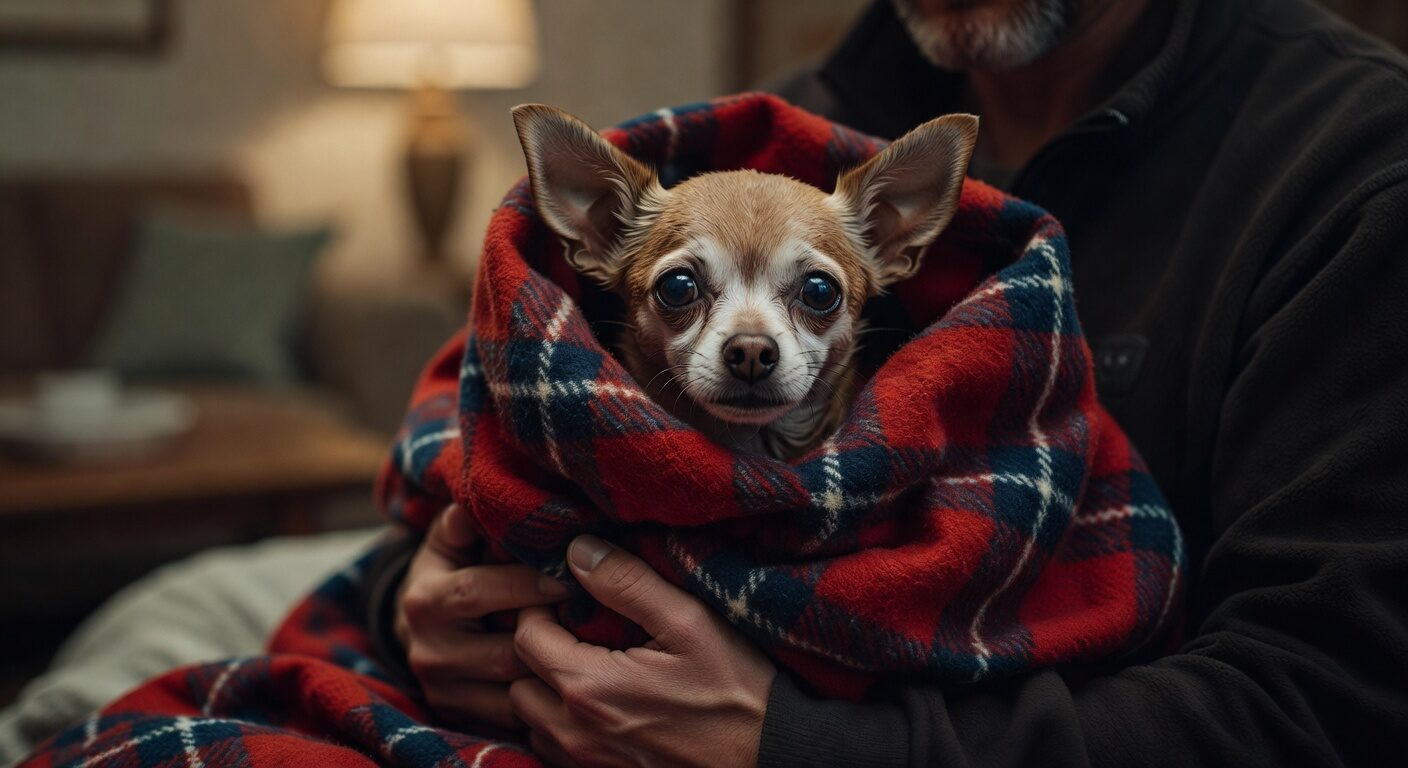
On a Wednesday morning in late January, on a four-lane stretch of an interstate spur outside Tampa, a small tan chihuahua named Manny ran the median at full speed through three lanes of moving traffic. He had escaped from a parked car at a rest area approximately ninety seconds earlier; his owner, a woman in her sixties named Linda Vasquez, had stopped on the way to a veterinary appointment and had not, for reasons that would haunt her for the rest of the week, latched the carrier door.
Know a Chihuahua who needs a second chance? Share their story—and help them find a forever home.
favoriteThree drivers slowed. Two stopped. A Florida Highway Patrol trooper named Sgt. Marcus Reyes, who had been working radar at a turnaround three-quarters of a mile up the interstate, saw the slowing pattern, threw on his lights, and began driving toward the mass.
This is the story of how Manny got off the expressway alive. It is also, more usefully, the story of how three or four ordinary people did three or four ordinary things at the moments those things needed to be done.
The first minute
article_in_feed
A handpicked find for your tiny companion.
Manny crossed the right lane at a pace I would describe, having watched the dashcam footage Sgt. Reyes shared with the local news, as alarmingly fast for a six-pound dog. He cleared the white line at the median, paused, and turned to look back at the rest area. A blue sedan in the left lane braked hard. A second vehicle behind it braked harder. By the time Sgt. Reyes had crossed the half-mile distance from his position, traffic in both directions was at a near-standstill, with hazards on, in a slow rolling ring around the dog.
This is, the FHP would later say, the only thing that made the rescue possible. A bolted small dog on an expressway, in the absence of stopped traffic, has, by their internal estimate, a survival window of fewer than ninety seconds. Manny survived because three drivers stopped, and the drivers behind them stopped, and the cascade of brake lights gave the trooper a working scene to enter.
The rescue
Sgt. Reyes parked his patrol car perpendicular to the median, lights on, and walked, not ran, toward Manny. A woman in a gray Subaru in the second lane had gotten out of her car with her own dog’s leash and was approaching from the opposite side; the trooper waved her back to her vehicle, in the manner of someone who has done this kind of dynamic management before.
He approached Manny in a curve, not a straight line. He sat down on the asphalt about eight feet away. He took a piece of jerky from a small bag in his pocket (which he later told reporters he keeps for exactly this kind of call). He waited. Manny took thirty seconds to decide. He came over. Sgt. Reyes scooped him up and carried him to the patrol car.

The medical course
Manny was checked at the veterinary clinic Linda was already driving toward. The veterinarian, a Dr. Karen Holst, found a small abrasion on the right rear paw pad, a heart rate of 178 (elevated; normal range for a small dog is 110 to 140 at rest), and otherwise no injuries. He was rehydrated, monitored for an hour, and sent home with instructions to watch for delayed soft-tissue swelling. By that evening he was eating dinner.
The next day, Linda took the carrier to the local pet store and replaced the latch with a metal carabiner backup. The store had a small bin of them at the register, evidently because she was not the first person to ask.
What to do if your dog ever bolts
The Humane Society and most regional emergency-vet networks publish guidance on this. A few items that are consistent across sources:
- Do not chase. A chase increases the dog’s flight speed and reduces the chance of recovery. Sit, crouch low, turn sideways, become uninteresting and food-bearing. The Humane Society’s lost-pet guidance covers this in more detail.
- Carry a small high-value treat in your car. Jerky, freeze-dried liver, anything strong-smelling. The trooper had jerky for a reason.
- Keep a current flat-collar tag with a phone number that rings on your mobile. Microchips are the backup; the tag is the front line.
- Two-point containment in the car. A latched carrier inside a closed car door is the system. A carabiner or zip tie on the carrier latch costs nothing and prevents the most common escape failure.
The emergency vet visit primer covers what to bring if your dog has a medical event after a bolt; the after-care, in Manny’s case, was minor, but it is worth reading once before you need it.
The people nearby, again
I keep writing this sentence. It is true every time. The dogs in these stories survive because the people nearby do not look away. The drivers who slowed. The driver who stopped. The trooper who had jerky. Linda, who drove to her veterinary appointment with a small dog she had nearly lost on the median; a story I wrote last fall ended with the same sentence; another from the year before ended with it too.
If you have read this far and you have a small dog who travels in a carrier, please look at the latch tonight. The carabiner is two dollars at the hardware store. The cascade of stopped traffic is something you will not be able to count on in your own thirty-second window.
Manny is fine. He is, as of this writing, asleep on the foot of Linda’s bed. The carrier is on the floor in the hallway, with a metal carabiner on the latch, in the position of an object that has been corrected.
How You Can Help volunteer_activism
Every action creates a ripple. Here's how you can make a difference.
Adopt
Open your heart and home to a Chihuahua in need.
Foster
Provide a safe place for healing and recovery.
Donate
Support medical care, food, and emergency rescues.
Volunteer
Offer your time and skills to local rescues.
Share
Spread stories that help save more lives.
Frequently Asked Questions help
help_outline What should every Chihuahua owner know about Rescue? expand_more
Stay observant — small changes in routine, energy, or appetite are usually the first signal something needs attention.
help_outline Is a tailored approach really necessary for Chihuahuas? expand_more
Yes. Their tiny size means smaller portions, gentler activity, and more frequent check-ins than larger breeds.
help_outline How often should we revisit our routine? expand_more
At least quarterly, and any time you notice a change. Small dogs, small adjustments — early and often.
Share Hope’s Story Your share could be the reason another dog gets found.
favorite