
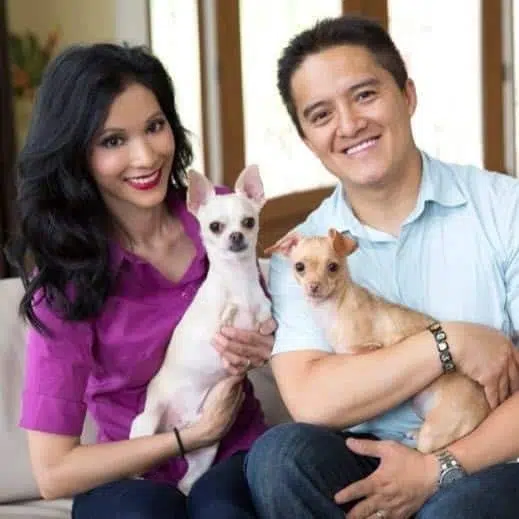
Therese Vu and her husband, Duc Tran, had buried two dogs after sixteen years together, and they had decided they were done. The house was quiet. That was the plan. Then they saw a brother-and-sister pair of chihuahuas, both missing their front legs, on the adoption listings of a rescue called Angels Among Us, and the plan did not survive the first few seconds of meeting them.
Tag @ChihuahuaCorner if you know a chihuahua who needs a second chance. We follow up on every lead we can verify.
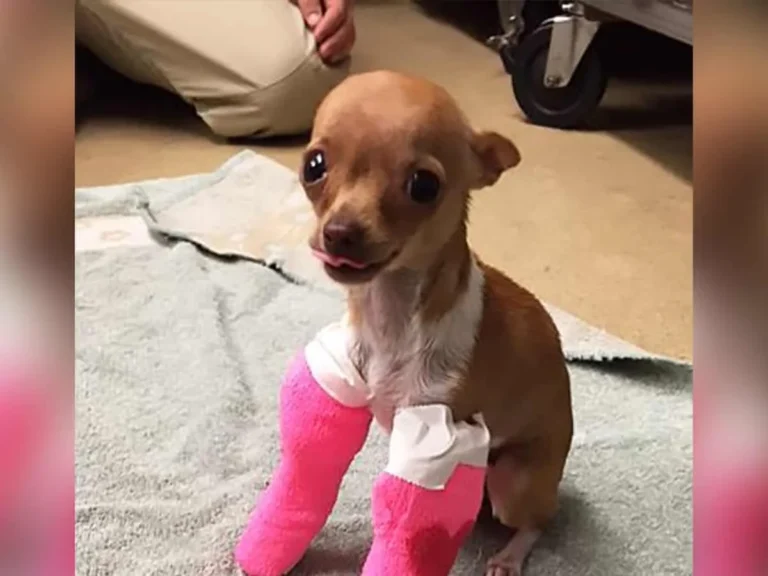
favoriteThe dogs are named Kanga and Roo. Kanga is the white male; Roo is the brown female. They were born without front legs, and the missing limbs are most likely the result of overbreeding. Their breeder surrendered them when the care turned out to be more than the operation wanted to take on, which is how they ended up with the rescue, and how Vu and Tran ended up rearranging their lives around two dogs who get around on two legs.
"As soon as I saw Kanga and Roo, I just knew they were meant to be ours," Vu says. "Within the first few seconds of interacting with them, they captured our hearts, took over our home, and completely changed our world."
By the time of the original reporting the dogs were five years old, and there is nothing tentative about them. They scoot. Indoors, outdoors, across a yard, up against a problem and then around it. Kanga and Roo were born this way, so there is no before-and-after in their heads, no version of themselves they are mourning. They are just dogs, and a stair is just a thing to be solved.
What "special needs" actually asks of you
The temptation with a story like this is to skip straight to the snuggling and leave out the work. So here is the work, because it is the part that decides whether an adoption like this holds. Vu and Tran did their research before they ever drove out to meet the dogs, and then they did the unglamorous part: they made the house fit the animal instead of expecting the animal to fit the house.
For Kanga and Roo that meant padding. They lined the floors so the two could push themselves around without grinding down their chests and chins on hard surfaces, which is the first real concern with a dog who travels on its sternum. Pressure sores and abrasion are the quiet, daily problem of a mobility-limited small dog, and they are almost entirely a question of what the dog is moving across. Soft flooring is not decoration. It is medicine you only buy once.
Then there are the carts. Kanga and Roo each have their own set of wheels, fitted to the individual dog, because a cart that fits one eight-pound chihuahua will not fit another. Custom canine wheelchairs from established makers generally run from a couple hundred dollars into the high hundreds depending on size and adjustability, and they are not a one-time purchase over a dog's life; growing dogs, aging dogs, and dogs whose needs shift all get refit. Organizations like the nonprofit HandicappedPets exist specifically to help families source and afford this equipment, which tells you how routine the need actually is.
The couple got lucky on one front. A friend who works in human prosthetics made the dogs small sweaters out of the same material prosthetic-wearers use to prevent chafing and skin irritation, no armholes required. That is a bespoke solution most adopters will not have on speed dial, but it points at a real category of expense: the soft goods, the harnesses, the protective gear, the things that wear out and get replaced. None of it is dramatic. All of it adds up.
The honest math, and the honest reward
If you are weighing a disabled small dog, it helps to hear the numbers without the soft focus. Beyond the cart and the floor padding, the recurring costs tend to cluster around skin care, the occasional vet visit for a pressure point or a urinary issue (dogs who drag can be prone to bladder and hygiene complications), and replacement gear. The American Society for the Prevention of Cruelty to Animals keeps a running estimate of baseline annual dog costs, and special-needs care sits on top of that baseline rather than replacing it. You can see the ASPCA's general figures in its guide to pet-care costs.
The veterinary world has steadily gotten better at supporting these animals; the American Veterinary Medical Association now recognizes rehabilitation and mobility care as a real part of practice, and a growing number of clinics offer it. None of that erases the truth that a two-legged dog is a longer commitment of attention than a four-legged one. It just means you are not doing it alone, and you are not doing it without a map.
Here is the part the spreadsheet misses. The people who adopt these dogs almost never describe the cost first. They describe the dog. Kanga, by the family's account, likes to use Roo as a pillow. The two of them have energy to burn and a habit of going to greet anyone new. Adopters of disabled animals report, again and again, that the gear and the vet bills receded in their memory while the animal itself stayed vivid, which is roughly the opposite of how we expect difficulty to work.
Why the two of them came as a pair
Kanga and Roo were adopted together, and they were listed together, and that was not an accident. Rescues bond-test littermates and longtime companions, and when two animals are clearly attached they are often placed as a unit. The logic is plain: a bonded pair that is split can decline, eat poorly, and grieve, and the rescue would rather wait for the right single home than break a working bond for the sake of a faster placement. The shelter math is not sentimental. It is welfare data.
For special-needs siblings the case is even stronger. Kanga and Roo do not leave each other's side; one is forever the other's pillow, lookout, and playmate. Two dogs who already know how to navigate the world on two legs, together, are easier on each other than either would be alone in a strange house learning the floor plan solo. The ASPCA and most reputable rescues will tell adopters the same thing: a second dog is frequently the best medicine for the first, and a pre-bonded pair arrives with that medicine already administered. You can read more on adopting more than one dog at a time in the ASPCA's general dog-care resources.
Vu and Tran have used the dogs' small public following to make a point they care about, which is the cost of overbreeding and inbreeding, the same practices that most likely cost Kanga and Roo their front legs in the first place. It is the rare feel-good story that comes with a warning label attached, and they attached it on purpose.
You can still follow the two of them on the family's Kanga and Roo Facebook page, and if their story moves you the most useful thing you can do with that feeling is send it toward a rescue like Angels Among Us, the kind of organization that keeps a brother and sister together until the right home comes along.
It usually does. Kanga and Roo are proof of the unremarkable miracle at the center of all of this: a dog that looks a little different, on a padded floor, in a house that decided to make room. Roo, for the record, does not appear to mind being a pillow.
How You Can Help volunteer_activism
Five concrete ways to help. Pick one and start this week.
Adopt
Adopt a chihuahua from a local rescue or transport network.
Foster
Foster a dog while the rescue finds a permanent home.
Donate
Recurring monthly donations cover the bills rescues plan around.
Volunteer
Offer your time and skills to a rescue near you.
Share
Share the dogs your local rescue is trying to place this week.
Frequently Asked Questions help
help_outline How do I start fostering a chihuahua? expand_more
Find the rescue closest to you, send in the foster application, and ask for a home check date. The process usually takes two to four weeks.
help_outline Why are chihuahuas so often in shelters? expand_more
Southern California shelter intake has been the largest single source for two decades, driven by backyard breeding and inconsistent spay-and-neuter access. Transport programs move dogs north to foster networks across the country.
help_outline What does a rescue actually need from a donor? expand_more
Recurring monthly support, foster homes, and in-kind donations of crates and exercise pens. Most rescues list the same three needs in the same order.
Share Hope’s Story Your share can be the reason another small dog gets home.
favorite