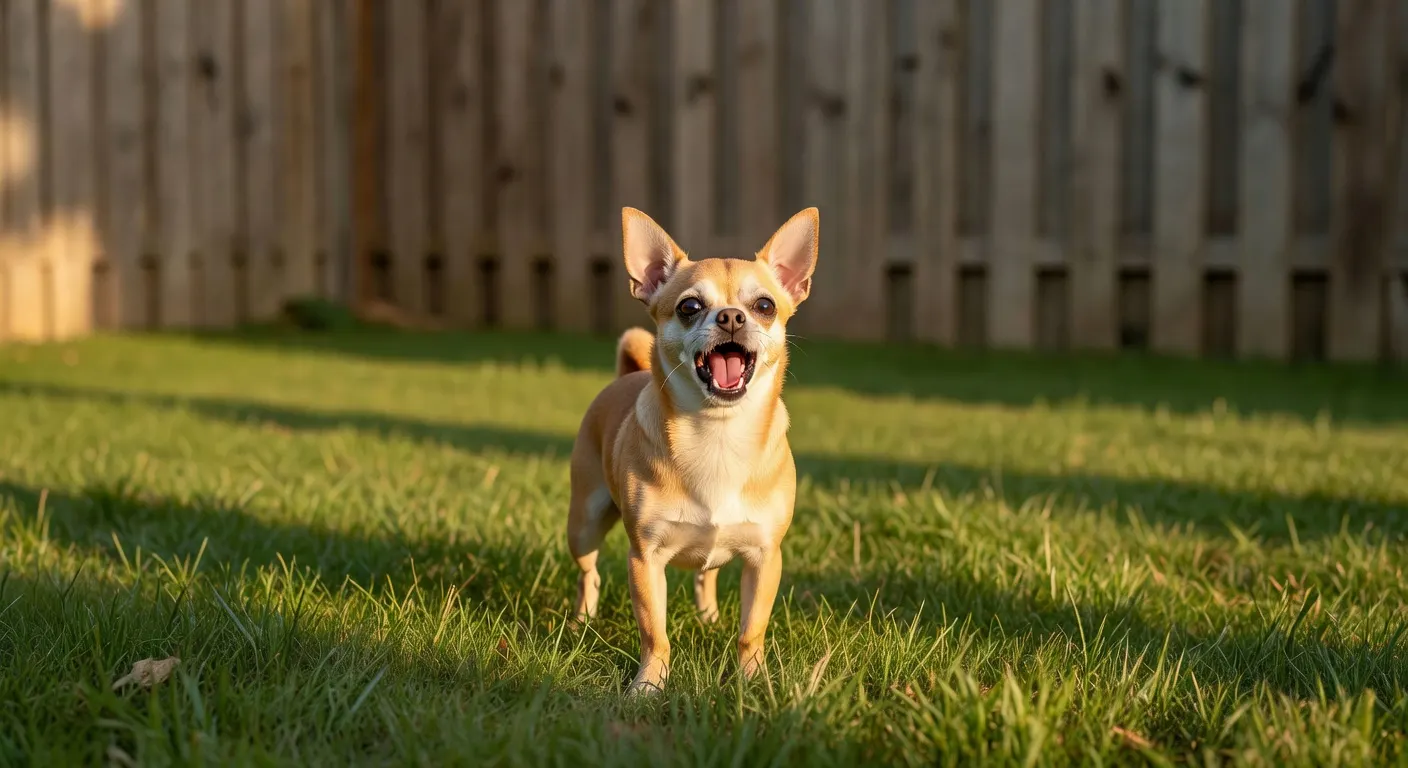

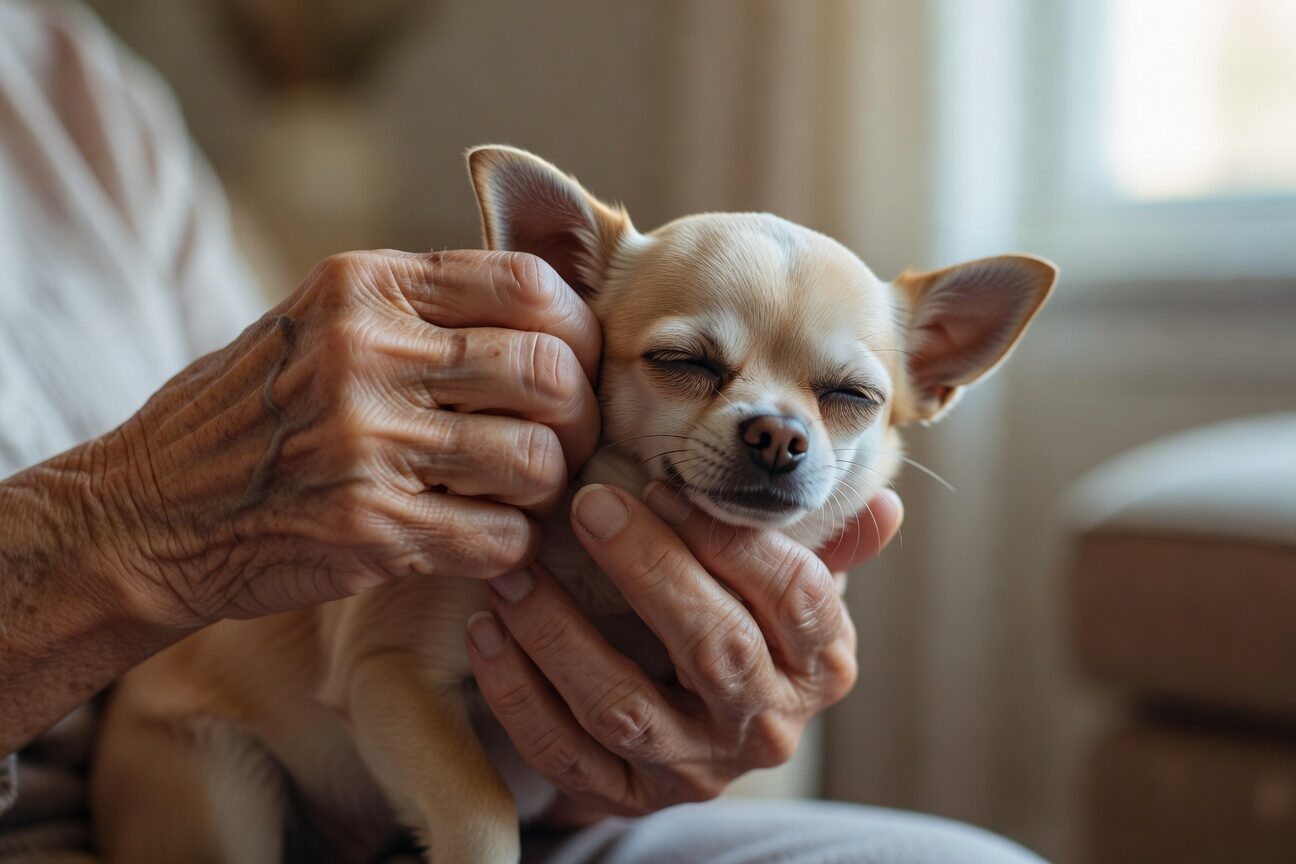
On Tuesday afternoons in a nursing home in Lakewood, a quiet suburb of Denver, a chihuahua named Pudding makes a circuit of forty-three resident rooms with her handler, a retired pediatric nurse named Margaret Hsu. The circuit takes ninety minutes. Pudding spends approximately two minutes in each room. She is six years old, weighs four pounds, and has been blind since the age of two from bilateral congenital cataracts that were not, in her early life, well-managed. She was certified as a therapy dog through Pet Partners in the autumn of 2024.
Share your story with us! Tag @ChihuahuaCorner or use #TinyButLegendary
favoriteI drove out to Lakewood in March, with the home’s permission, to follow the circuit and write down what therapy work with a chihuahua actually looks like. The answer, I found, was less dramatic and more useful than I had expected.
The circuit, room by room
The first room on the Tuesday route is the room of a woman in her late eighties named Eleanor. Eleanor has dementia. She has stopped, in the last six months, recognizing most visitors. She does, on consistent observation, recognize Pudding. The circuit begins with Pudding lifted onto the bed, on a small folded towel that lives in Margaret’s bag, and Eleanor places her hand on Pudding’s back. They sit together for two minutes. Margaret does not narrate. The bed is quiet. Eleanor smiles, twice, in those two minutes; the smile is the data the home’s therapy program is collecting.
article_in_feed
A handpicked find for your tiny companion.
The second room is a man in his seventies named Frank, recovering from hip surgery. Pudding sits on the bed near his good leg. Frank scratches behind her ears. He talks to her about a chihuahua he had as a child, named Pepper, who had similar markings. Margaret listens and does not redirect. Frank does most of the talking; this is, in the published therapy-dog literature, a recurrent finding.
The circuit continues, room by room, for ninety minutes. Pudding does not, on the available evidence, need to do anything specific. The dog’s job is to be small, calm, and present. The handler’s job is to be quiet and to track time.

What the therapy-dog research says, briefly
The contemporary research on animal-assisted intervention in long-term care settings is encouraging without being overstated. A 2018 systematic review by Bert and colleagues in Geriatric Nursing found small but consistent improvements in measures of social engagement, mood, and reported well-being among nursing-home residents who participated in regular animal-assisted programs. The effect sizes are modest; the consistency across studies is the more interesting finding.
A few practical notes from that literature, since this article is going to be read by people considering similar work:
- Short, predictable visits work better than long, irregular ones. The cadence is the active ingredient.
- The dog’s temperament is the rate-limiting factor; reactive or anxious dogs are not good candidates.
- Small, calm dogs are particularly effective with frail residents who cannot manage a larger dog on the lap.
- The handler matters as much as the dog. A quiet, attentive handler reads the room and adjusts the visit.
The Pet Partners certification process, which Pudding completed, is the most widely recognized in the United States and is worth knowing about if you are considering this work with your own small dog.
Why blindness is not, on its own, a barrier
Pudding’s blindness was, when Margaret first asked about therapy certification, a question the local Pet Partners evaluator looked at carefully. The conclusion, after observation, was that Pudding’s blindness was not, in her case, a disqualifier. She navigates by smell and sound. She is comfortable with handling. She does not startle. She has, over four years of training, learned the shape of Margaret’s bag, the texture of the certification vest, and the cadence of a visit.
A blind therapy dog, paradoxically, can have advantages. She does not react to visual cues that startle other dogs. She is comfortable with close handling because her world is, by default, close. The residents understand her status and, in many cases, talk about it openly with Margaret in a way that invites the resident’s own experience of vision loss into the conversation. A separate piece on living with a blind chihuahua covers the practical care.
How this kind of dog becomes a therapy dog
The path, briefly, in case anyone reading is considering it:
- Adopt or live with a calm, well-socialized small dog. Therapy work is not a fix for a reactive dog; it is a frame for a calm one.
- Complete a basic obedience course, plus a Canine Good Citizen evaluation. A basic obedience plan is most of the foundation.
- Apply to a recognized therapy-dog certification program (Pet Partners, Therapy Dogs International).
- Complete the handler course, which is more about you than about the dog.
- Pass the team evaluation. Both you and the dog are evaluated.
- Find a placement. Nursing homes, hospitals, hospices, schools, and libraries all run programs.
The total timeline from adoption to active certification is typically eighteen to twenty-four months. The pace is the point.
The quiet paragraph
I drove home from Lakewood down I-70 with Pudding asleep in a small soft crate in the back seat of Margaret’s car. We had pulled into a coffee shop in Golden so Margaret could write up the visit notes she sends to the home’s program coordinator each Tuesday evening. The notes are short. Eleanor smiled. Frank told the chihuahua story. A man in room 27, whose wife of fifty-three years died in November, held Pudding’s small soft body against his chest and did not, for two minutes, say anything.
The notes are, in their way, the entire story. The dog is small. The handler is quiet. The visits are short. The cadence is weekly. The effect compounds over months, in measurable and unmeasurable ways. The bond between a small dog and a person is not, in the end, breed-specific; it is, in some quiet structural way, what these visits are made of.
If you have a calm small dog and a free Tuesday afternoon, the local nursing home is, in most parts of the country, looking. The certification path is real. The work is small and steady. The man in room 27 will not, this week, remember Pudding’s name. He will, on Tuesday at 2:45 p.m., be waiting at his door.
Community Insights favorite
We asked our readers: Has your Chihuahua done something bold? Here's what you shared.
“My Chi chased a raccoon out of our garage!”
“Tiny but mighty! These dogs have no idea how small they are.”
“It’s not just a story — it’s the Chihuahua spirit.”
Share your story with us! Tag @ChihuahuaCorner or use #TinyButLegendary
Know a Chihuahua with a legendary story? We’d love to feature them — submit your story.
favorite